Telecom engineering reference for protocols, messages, call flows, troubleshooting, releases, and tools.
Menu
NASLTEUE to MME3GPP TS 24.301
LTE ESM Information Response
ESM Information Response is the LTE NAS session-management message the UE sends to return APN or protocol configuration detail after ESM Information Request.
Message Fact Sheet
Protocol
nas
Network
lte
Spec
3GPP TS 24.301
Spec Section
6.6.1.2, 8.3.14
Direction
UE to MME
Message Type
ESM signaling
Full message name
LTE ESM Information Response
Protocol
NAS
Technology
LTE
Direction
UE to MME
Interface
N1 over LTE access / S1-MME control path
Signaling bearer / channel
NAS signaling / Sent after ESM Information Request in the same protected PDN branch.
Typical trigger
Triggered by receipt of ESM Information Request.
Main purpose
Returns the protected APN and protocol configuration options the network requested so the PDN-connectivity branch can continue.
Main specification
3GPP TS 24.301, 6.6.1.2, 8.3.14
Release added
Release 8
Procedures where used
ESM Information Request Procedure, UE Requested PDN Connectivity Procedure
What is LTE ESM Information Response in simple terms?
ESM Information Response is the LTE NAS session-management message the UE sends to return APN or protocol configuration detail after ESM Information Request.
Returns the protected APN and protocol configuration options the network requested so the PDN-connectivity branch can continue.
Why this message matters
ESM Information Response is the UE returning the missing APN or protocol detail the network asked for.
Where this message appears in the call flow
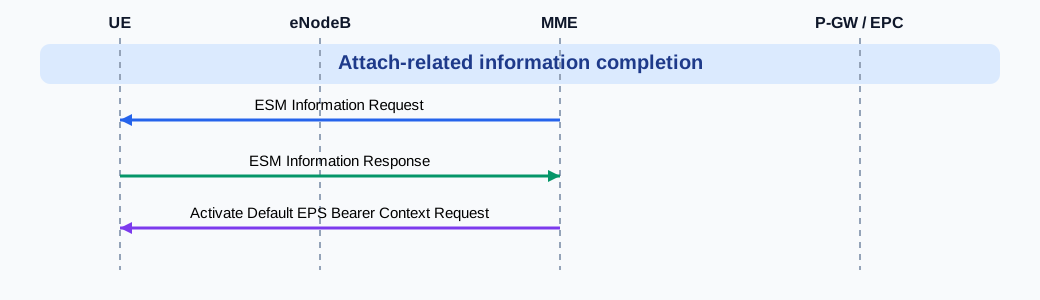
Initial attach PDN information completion
During attach, the UE returns the missing APN or protocol detail so the PDN branch can continue.
Call flow position: UE response that returns the detail needed to continue attach-related PDN setup.
Typical state: The PDN branch is still pending and waits for this answer before bearer activation or reject handling.
Preconditions:
The network sent ESM Information Request.
Next likely message: Activate Default EPS Bearer Context Request or PDN Connectivity Reject
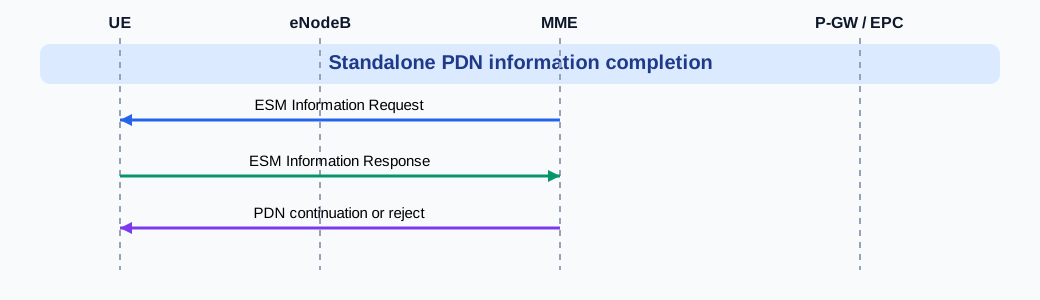
Standalone PDN connectivity information completion
In a standalone PDN setup branch, the response closes the protected information exchange and lets bearer handling continue.
Call flow position: UE response that returns the detail needed to continue a standalone PDN setup branch.
Typical state: The UE is already registered and only completes the information exchange needed for PDN handling.
Preconditions:
A standalone PDN branch triggered ESM Information Request.
Next likely message: Activate Default EPS Bearer Context Request or PDN Connectivity Reject
Interface: N1 over LTE access / S1-MME control path
Domain: Core-side EPS session management signaling for protected APN and protocol detail transfer.
Signaling bearer: NAS signaling
Logical channel: Sent after ESM Information Request in the same protected PDN branch.
Transport / encapsulation: EPS NAS ESM message sent by the UE while the PDN-connectivity procedure is still pending.
Security context: Protected by the active NAS security context because the response may contain APN or protocol configuration information.
Message Structure Overview
ESM Information Response returns the APN or protocol detail the network requested before continuing PDN handling.
ASN.1 Message Syntax for LTE ESM Information Response
ESM Information Response
  Access point name                    OPTIONAL
  Protocol configuration options       OPTIONAL
  Extended protocol configuration options OPTIONAL
How to read this message syntax
Read this response together with the earlier request and the later bearer-activation or reject branch.
LTE ESM Information Response - Example Dump
ESM Information Response
  Protocol discriminator: EPS session management
  EPS bearer identity: 0
  Procedure transaction identity: 3
  Message type: ESM Information Response
  Access point name: ims
  Protocol configuration options: DNS request
How to read this dump
The APN or protocol configuration fields are the main reason this message matters.
Important Information Elements
IE
Required
Description
Access point name
Optional
Returns the APN the network asked the UE to provide in protected form.
Protocol configuration options
Optional
Returns the protocol-configuration detail needed to continue PDN setup.
Extended protocol configuration options
Optional
Carries protected configuration detail when the extended format is used end to end.
Detailed field explanation
Access point name
Returns the APN the network asked the UE to provide in protected form.
Presence: Optional
In practice: In practice, compare this field with the original request and with any later release-dependent optional fields so you can see whether the network accepted the same service model the UE asked for.
Protocol configuration options
Returns the protocol-configuration detail needed to continue PDN setup.
Presence: Optional
In practice: In practice, compare this field with the original request and with any later release-dependent optional fields so you can see whether the network accepted the same service model the UE asked for.
Extended protocol configuration options
Carries protected configuration detail when the extended format is used end to end.
Presence: Optional
In practice: This is where DNS and other operational configuration can hide. When the session is accepted but applications still fail, EPCO is often one of the first optional fields worth validating.
What to check in logs and traces
Confirm that this response matches an earlier ESM Information Request.
Inspect APN and protocol configuration content.
Check whether the branch continues into default bearer activation or reject handling.
Common Issues and Troubleshooting
PDN setup still fails after the information exchange.
Likely cause: The network may reject the returned APN or protocol detail, or the branch may fail in later bearer activation.
What to inspect: Read ESM Information Request, ESM Information Response, and the next PDN/bearer message as one chain.
Next step: Treat this response as the turning point between setup detail exchange and final PDN outcome.
LTE / 5G / Variant Comparison
Compared with ESM Information Request
The request asks for missing protected detail. The response returns that detail so the PDN branch can continue.
FAQ
What is ESM Information Response in LTE?
It is the UE message that returns protected APN or protocol configuration detail after ESM Information Request.
What should I inspect first?
Start with the APN and protocol configuration information that the UE returned.
Decode this message with the 3GPP Decoder, inspect the related message database, or open the matching call flow to see where this signaling step fits in the full procedure.