Telecom engineering reference for protocols, messages, call flows, troubleshooting, releases, and tools.
Menu
NASLTEMME to UE3GPP TS 24.301
LTE Identity Request
Identity Request is the EPS NAS message the MME sends when it needs the UE to provide a specific identity before the NAS procedure can continue.
Message Fact Sheet
Protocol
nas
Network
lte
Spec
3GPP TS 24.301
Spec Section
5.4.4, 8.2.18
Direction
MME to UE
Message Type
EMM signaling
Full message name
LTE Identity Request
Protocol
NAS
Technology
LTE
Direction
MME to UE
Interface
N1 over LTE access / S1-MME control path
Signaling bearer / channel
NAS signaling / Commonly carried in downlink NAS transport during attach, TAU, or service-request continuation
Typical trigger
Sent when the MME cannot continue with only the temporary identity or stored context presented earlier and needs a specific UE identity to continue the EPS procedure.
Main purpose
Requests a specific UE identity such as IMSI, IMEI, or IMEISV when the current temporary identity or stored context is not enough for the network to continue attach, TAU, or service restoration.
Main specification
3GPP TS 24.301, 5.4.4, 8.2.18
Release added
Release 8
Procedures where used
EPS Identification Procedure, LTE Attach Procedure, Tracking Area Updating Procedure, LTE Service Request Procedure
Identity Request is the EPS NAS message the MME sends when it needs the UE to provide a specific identity before the NAS procedure can continue.
Requests a specific UE identity such as IMSI, IMEI, or IMEISV when the current temporary identity or stored context is not enough for the network to continue attach, TAU, or service restoration.
Why this message matters
Identity Request is the network asking the UE to provide a specific identity before the LTE/EPS procedure can continue.
Where this message appears in the call flow
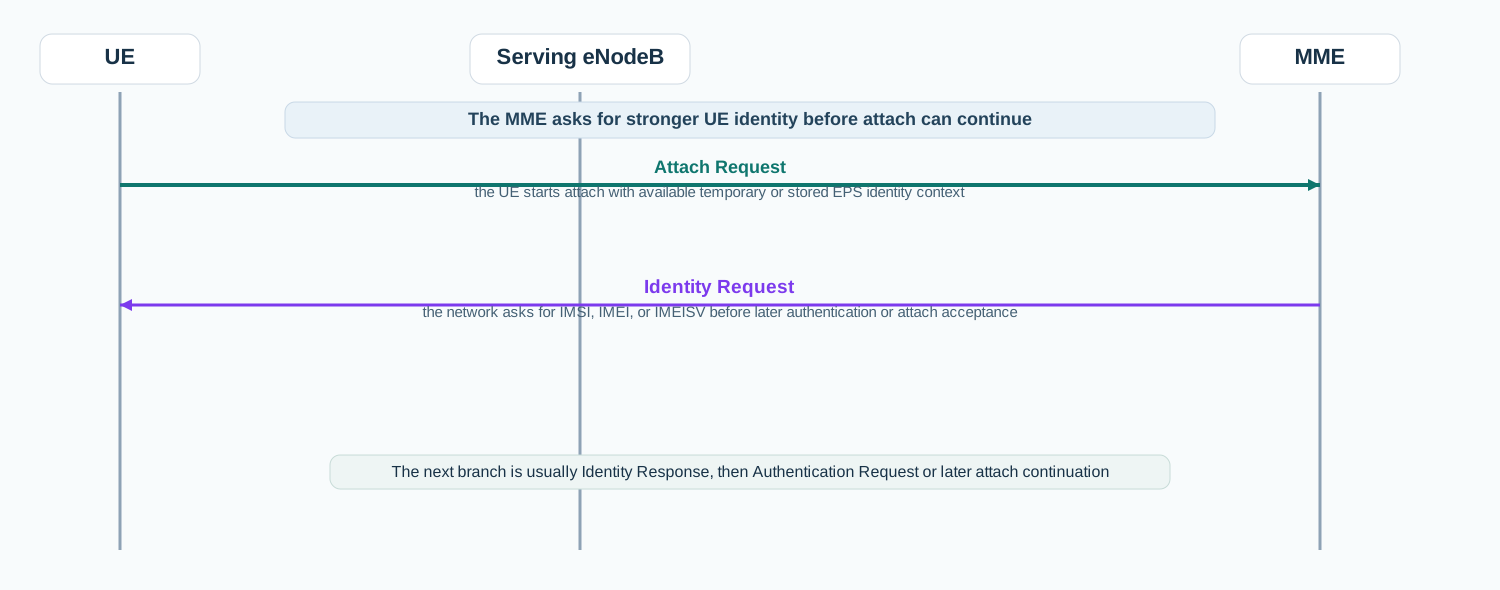
Initial LTE attach identity continuation
In the attach path, Identity Request appears when the MME needs a stronger UE identity before it can continue toward authentication or attach acceptance.
Call flow position: Network request sent after Attach Request when the MME needs a more explicit UE identity before attach can continue.
Typical state: UE has started attach, but the network is not ready to continue directly into authentication or attach acceptance.
Preconditions:
The UE sent Attach Request.
The temporary or stored identity context is not sufficient for direct continuation.
Next likely message: Identity Response or later attach continuation
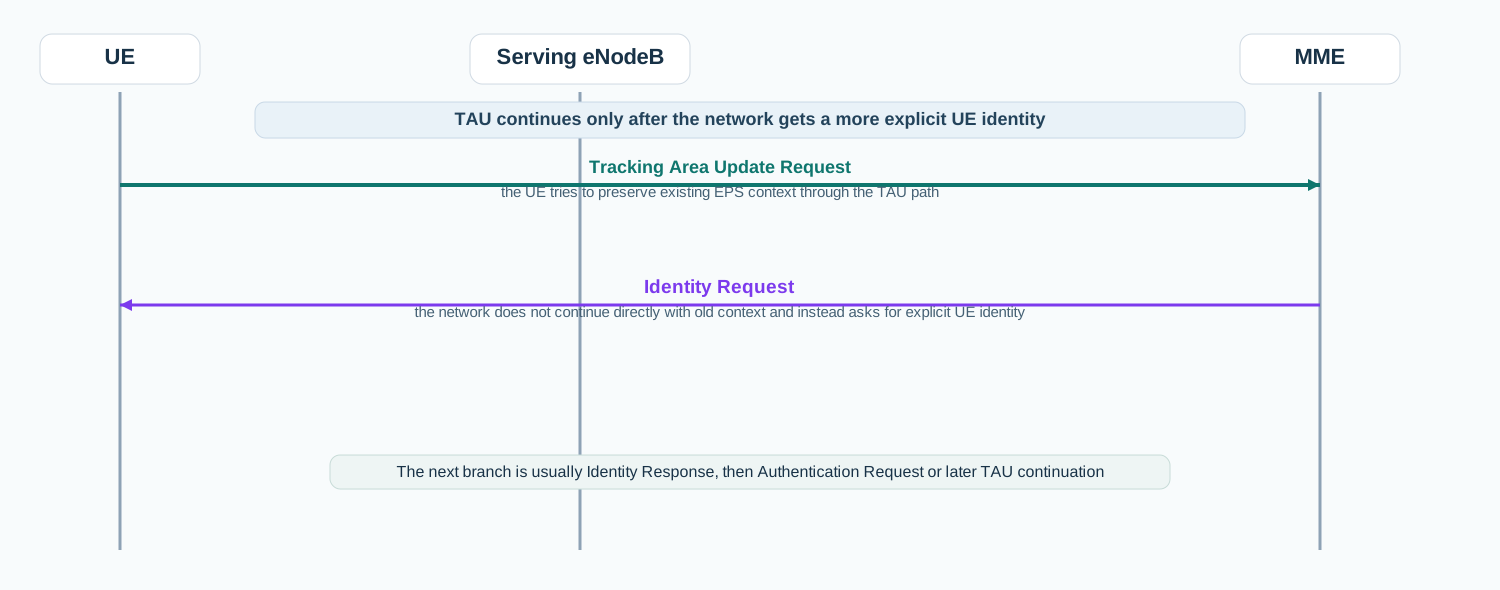
Tracking area update identity continuation
In the TAU path, Identity Request explains why the MME did not continue directly with the stored EPS context and instead asked for explicit UE identity.
Call flow position: Request sent during TAU when the MME needs specific UE identity before accepting the mobility-refresh branch.
Typical state: UE is trying to preserve existing EPS context through TAU, but the network wants stronger identification first.
Preconditions:
The UE sent Tracking Area Update Request.
The MME needs a more explicit identity than the old context provides.
Next likely message: Identity Response, Authentication Request, or later TAU continuation
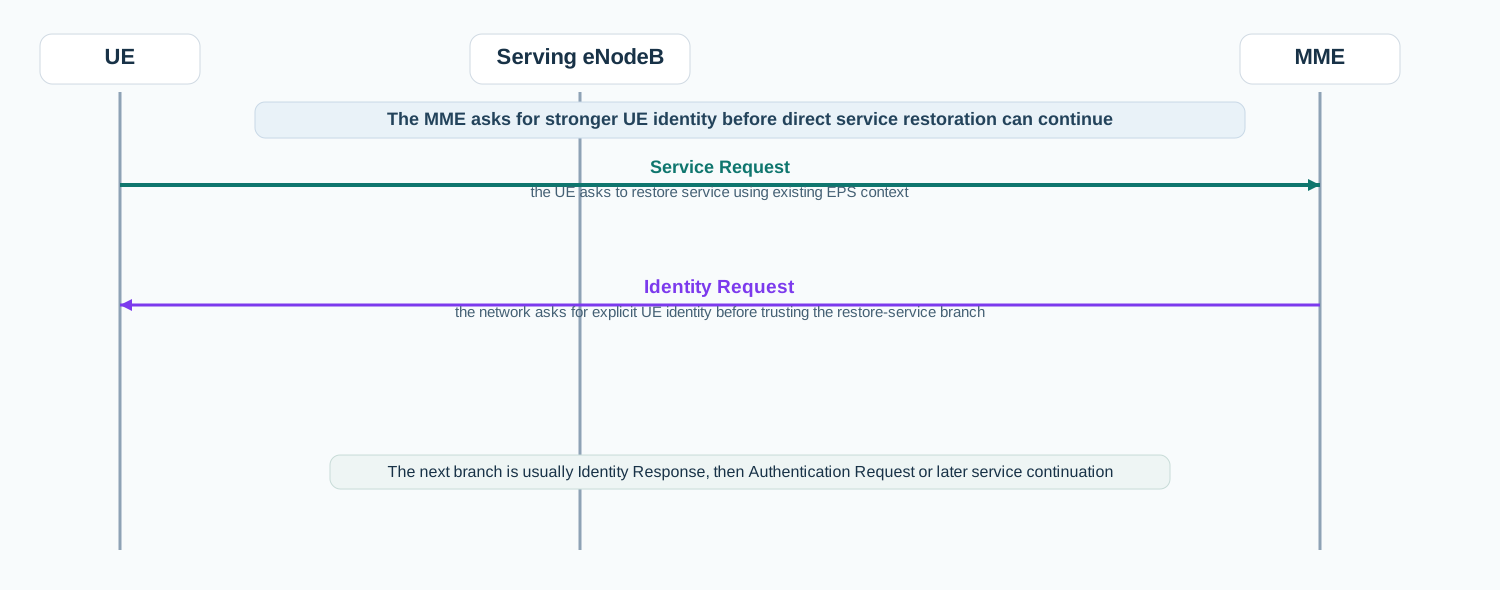
Service restoration identity continuation
In the service-restoration path, Identity Request shows that the network needed stronger identification before it could trust the restore branch.
Call flow position: Request sent after Service Request when the stored EPS context is not enough for direct service restoration.
Typical state: UE is trying to restore service using existing context, but the network needs stronger identification before it can continue.
Preconditions:
The UE sent Service Request.
The current identity context is not sufficient for the restore path.
Next likely message: Identity Response, Authentication Request, or later service continuation
Interface: N1 over LTE access / S1-MME control path
Domain: Core-side EPS mobility management signaling used when the network needs stronger or more specific UE identity before later continuation
Signaling bearer: NAS signaling
Logical channel: Commonly carried in downlink NAS transport during attach, TAU, or service-request continuation
Transport / encapsulation: EPS NAS message sent by the MME and delivered to the UE through the eNodeB during the EPS identification procedure
Security context: Identity Request sits early in the common NAS path, so the exact protection state depends on the procedure stage and whether an earlier security context is already usable.
Message Structure Overview
Identity Request is an EPS mobility-management message rather than an ASN.1 LTE RRC structure.
The practical reading path starts with the higher-level procedure that triggered the request, then the requested identity type.
In real traces, this message explains why the network did not continue directly with authentication, accept, or service restoration.
ASN.1 Message Syntax for LTE Identity Request
Identity Request
  identity type
  spare half octet
How to read this message syntax
Identity Request is a NAS layer-3 message, not an ASN.1 LTE RRC message. The message is small, so the main questions are which procedure triggered it and which identity type the MME requested.
Start with the higher-level procedure: attach, TAU, or service restoration.
The requested identity type is the main field because it explains what the network was missing.
The next important check is whether the UE answered with Identity Response or whether the procedure moved into a reject branch.
Important Information Elements
IE
Required
Description
Identity type
Yes
Tells the UE which specific identity the network is requesting, such as IMSI, IMEI, or IMEISV.
Detailed field explanation
Identity type
Tells the UE which specific identity the network is requesting, such as IMSI, IMEI, or IMEISV.
Presence: Required
In practice: In practice, compare this field with the original request and with any later release-dependent optional fields so you can see whether the network accepted the same service model the UE asked for.
What to check in logs and traces
Confirm which NAS procedure triggered Identity Request.
Check the requested identity type first.
Verify whether the earlier temporary identity or stored context was sufficient.
Correlate the message with Identity Response and any later Authentication Request or reject branch.
Common Issues and Troubleshooting
Attach does not continue directly into authentication or accept.
Likely cause: The MME may need IMSI, IMEI, or IMEISV because the earlier identity context was not enough for direct continuation.
What to inspect: Check Attach Request, Identity Request, the requested identity type, and the later Identity Response.
Next step: Treat it as an identification branch before blaming later authentication or attach accept handling.
TAU or service restoration unexpectedly detours into common NAS handling.
Likely cause: The stored EPS context may not have been trusted enough for direct continuation, so the MME inserted the identification procedure first.
What to inspect: Check the earlier old-context identity, the requested identity type, and what message followed Identity Request.
Next step: Decide first whether the issue is missing identity context or a broader mobility problem.
The UE keeps restarting a procedure after identity exchange.
Likely cause: The returned identity may still not satisfy the network, or the procedure may move into authentication or reject handling afterward.
What to inspect: Compare Identity Request, Identity Response, Authentication Request, and the final accept or reject branch.
Next step: Read the trace as a full identification sequence, not just as a single-message failure.
LTE / 5G / Variant Comparison
Compared with Attach Request
Attach Request is the UE starting the attach procedure with whatever identity context it has. Identity Request is the network asking for a more specific identity before attach can continue.
Compared with Authentication Request
Identity Request asks who the UE is. Authentication Request challenges the UE to prove that identity before later security and accept handling can continue.
Compared with Identity Response
Identity Request is the network prompt. Identity Response is the UE answer carrying the requested identity.
FAQ
What is Identity Request in LTE?
It is the EPS NAS message the network sends when it wants the UE to provide a specific identity such as IMSI, IMEI, or IMEISV before the procedure can continue.
What should I inspect first in Identity Request?
Start with the higher-level NAS procedure that triggered it, then inspect the requested identity type.
What usually comes after Identity Request?
The UE usually sends Identity Response, and the procedure then continues into authentication, acceptance, or a reject branch depending on the wider context.
Why is Identity Request important in troubleshooting?
Because it shows that the MME did not trust the earlier identity context enough to continue directly, which often changes how the whole NAS procedure should be read.
Decode this message with the 3GPP Decoder, inspect the related message database, or open the matching call flow to see where this signaling step fits in the full procedure.