LTE CSFB Procedure Call Flow
LTE CSFB is the procedure that moves voice-related service from LTE toward a legacy circuit-switched domain when VoLTE is not the active service path.
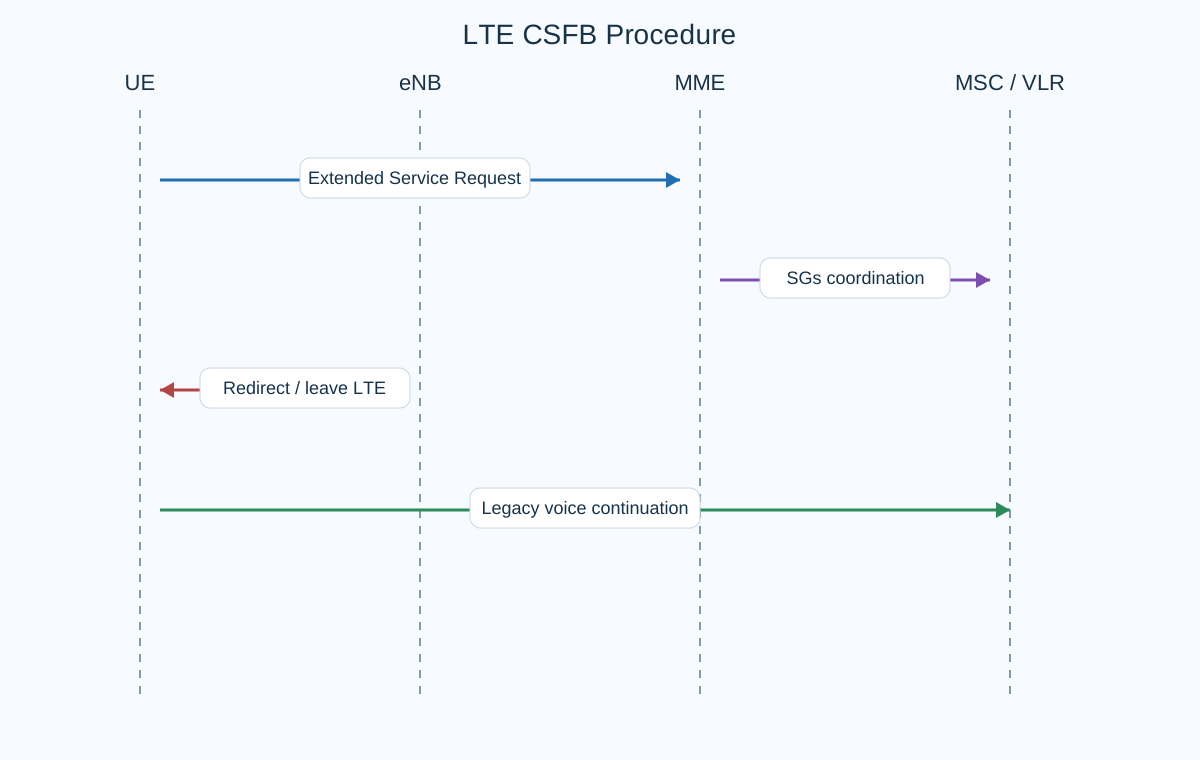
This page follows the LTE-side trigger, SGs-side coordination, and the move out of LTE toward legacy voice handling.
Introduction
CSFB can start from a mobile-originated call attempt or a mobile-terminated paging path. The LTE side restores the UE if needed, coordinates with the legacy side through SGs-related handling, and then moves the UE out of LTE toward the target legacy system.
The main nodes are the UE, eNB, MME, and the legacy CS side represented by the MSC / VLR.
What Is CSFB Procedure in Simple Terms?
- What starts the procedure: A voice service request needs legacy CS handling instead of staying fully on LTE.
- What the UE and network want to achieve: Move the UE from LTE packet service toward a legacy voice-capable system without losing the voice attempt.
- What success looks like: The UE leaves LTE and the voice attempt continues on the target legacy side.
- What failure means: The voice attempt stops during LTE-side preparation, SGs handling, or the move to the target system.
Why this procedure matters
CSFB still matters in mixed deployments where VoLTE is unavailable or intentionally bypassed. A large number of voice failures start in the LTE preparation part rather than in the legacy side alone.
Quick Fact Sheet
| Procedure name | LTE CSFB Procedure |
|---|---|
| Domain | Legacy voice fallback from LTE |
| Main trigger | Voice service needs CS-domain continuation instead of VoLTE |
| Start state | UE is attached to LTE and voice service must leave EPS-only handling |
| End state | UE moves toward legacy CS service handling |
| Main nodes | UE, eNB, MME, MSC / VLR |
| Main protocols | NAS, S1AP, SGs, RRC |
| Main success outcome | Fallback preparation completes and the UE reaches the target voice branch |
| Main failure outcome | Voice attempt fails before or during the move out of LTE |
| Most important messages | Extended Service Request, SGsAP messages, redirection or handover command |
| Main specs | TS 23.272, TS 24.301 |
Preconditions
- The UE is attached to LTE and has valid EPS mobility context.
- CS fallback support and SGs coordination are provisioned in the network.
- The legacy target system is available to receive the voice attempt.
Nodes and Interfaces
Nodes involved
| Node | Role in this procedure |
|---|---|
| UE | Starts or receives the voice-related service trigger and executes the move out of LTE. |
| eNB | Carries the LTE access signaling and commands the UE toward the target legacy system. |
| MME | Coordinates the LTE and legacy voice path through SGs-related handling. |
| MSC / VLR | Represents the legacy CS side that will continue the voice attempt. |
Interfaces used
| Interface | Path | Role |
|---|---|---|
| LTE Uu | UE <-> eNB | Carries the LTE access and redirection or handover command. |
| S1-MME | eNB <-> MME | Carries LTE control-plane support during fallback preparation. |
| SGs | MME <-> MSC / VLR | Carries the legacy coordination behind CS fallback. |
End-to-End Call Flow
UE            eNB            MME            MSC / VLR
|--voice trigger---->|              |                 |
|                    |--S1 / NAS--->|--SGs handling-->|
|                    |<--redirect----|<--SGs result----|
|<--leave LTE--------|              |                 |
Major Phases
| Phase | What happens |
|---|---|
| 1. Voice trigger | The UE starts or receives a voice-related event that must use legacy service. |
| 2. SGs coordination | The MME exchanges the fallback context with the legacy CS side. |
| 3. LTE exit branch | The eNB or MME triggers the move out of LTE toward the target system. |
| 4. Legacy continuation | The voice attempt proceeds on the target CS side if fallback succeeds. |
Step-by-Step Breakdown
Step 1: Start the fallback trigger
Sender -> receiver: UE -> eNB / MME
Message(s): Extended Service Request or paging-driven continuation
Purpose: Start the LTE-side branch that indicates legacy CS handling is needed.
State or context change: The MME now knows the voice attempt should leave pure EPS service.
Note: This is the main LTE pivot for CSFB call correlation.
Step 2: Coordinate with the legacy side
Sender -> receiver: MME <-> MSC / VLR
Message(s): SGsAP coordination
Purpose: Prepare the legacy CS side for the fallback voice attempt.
State or context change: The target voice branch is now known before the UE leaves LTE.
Note: If this part is weak, the UE may leave LTE without a usable target continuation.
Step 3: Command the UE out of LTE
Sender -> receiver: eNB / MME -> UE
Message(s): Redirection or interworking handover command
Purpose: Tell the UE to leave LTE toward the target system.
State or context change: The UE exits LTE and starts target-side voice continuation.
Note: The exact branch can be redirection or a prepared interworking move depending on network design.
Step 4: Continue on the target side
Sender -> receiver: UE -> legacy target system
Message(s): Legacy access continuation
Purpose: Continue the voice attempt on the target CS side.
State or context change: The call no longer depends on LTE for voice continuity.
Note: The LTE page stops at the boundary where the legacy system takes over.
Important Messages
| Message | Protocol | Direction | Purpose in this procedure | What to inspect briefly |
|---|---|---|---|---|
| Extended Service Request | NAS | UE -> MME | Starts the CS fallback request from the LTE side. | Check whether the service type matches the expected CS fallback scenario. |
| Paging | S1AP | MME -> eNB | Useful for mobile-terminated fallback when the UE must first be made reachable. | Check whether LTE reachability was restored before the fallback branch continued. |
| SGsAP coordination | SGs | MME <-> MSC / VLR | Prepares the legacy side for the voice attempt. | Check whether the legacy side accepted and preserved the fallback context. |
| Redirection or target command | RRC / NAS | eNB / MME -> UE | Moves the UE out of LTE toward the legacy target system. | Check the target system details and timing of the move out of LTE. |
Important Parameters to Inspect
| Parameter | What it is | Where it appears | Why it matters | Common issues |
|---|---|---|---|---|
| Service type | The fallback-related reason carried in the LTE service request. | Extended Service Request | Shows that the request is really for CS fallback and not ordinary data service restoration. | The call is correlated as ordinary service request instead of fallback. |
| SGs association | The legacy coordination relationship between MME and MSC / VLR. | SGs handling | Explains whether the legacy side can actually continue the voice attempt. | The LTE side is ready, but the legacy side has no usable context. |
| Target RAT | The legacy system selected for fallback. | Redirection or target command | Confirms whether the UE was sent to the expected target technology. | The UE leaves LTE toward the wrong target side. |
| Fallback timing | The interval between LTE trigger and target-system move. | Full fallback branch | Important for late fallback and user-visible call setup delay. | The trigger is early enough, but the move out of LTE is still too slow. |
| Mobile-originated vs mobile-terminated context | Whether the voice attempt started from the UE or from network reachability restoration. | Early fallback branch | Helps explain the expected first trigger and message order. | The trace is interpreted using the wrong fallback direction. |
Successful Completion
Success means the LTE-side fallback branch completes and the voice attempt continues on the target legacy system.
Common Failures and Troubleshooting
| Symptom | Likely cause | Where to inspect | Relevant message(s) | Relevant interface(s) | Likely next step |
|---|---|---|---|---|---|
| Fallback trigger appears, but the UE never leaves LTE | The SGs side or the target selection step did not complete correctly. | Extended Service Request, SGs handling, and the absence of the LTE exit command. | Extended Service Request, SGsAP coordination | NAS, SGs, LTE Uu | Check whether the legacy side was actually prepared before expecting the move. |
| UE leaves LTE but voice attempt still fails | The target legacy continuation failed after LTE-side preparation looked normal. | The target continuation branch after redirection or handover. | Target command | Legacy target side | Continue analysis on the target legacy system. |
| Mobile-terminated fallback looks like paging failure only | The LTE reachability branch is being read without the later CS fallback context. | Paging, service restoration, and SGs coordination together. | Paging, Extended Service Request | S1-MME, SGs | Correlate the paging branch with the later fallback branch rather than reading them separately. |
What to Check in Logs and Traces
- Decide first whether the trace is mobile-originated or mobile-terminated fallback.
- Use Extended Service Request and SGs handling as the main LTE-side fallback checkpoints.
- Do not stop analysis at the LTE exit command; verify that the target legacy side really continued the voice attempt.
Related Pages
Related sub-procedures
Related message reference pages
Related troubleshooting pages
Notes
CSFB is the LTE-side bridge into legacy voice service. The exact target continuation changes by RAT, but the LTE preparation branch still determines whether the voice attempt gets that far.
FAQ
What is the main LTE message behind CSFB?
In many cases the main LTE-side trigger is Extended Service Request.
Is CSFB the same as ordinary handover?
No. It is a voice-service fallback procedure with SGs and legacy CS coordination behind it.