LTE RRC Overview
LTE RRC is the radio resource control protocol between the UE and the eNodeB. It is the main control-plane protocol for broadcast configuration, connection control, measurements, mobility, paging-related behavior, security activation, release, and dedicated radio configuration in LTE.
RRC sits above the lower radio layers and below broader EPS mobility and service procedures. It matters because many live behaviors visible in access, paging, handover, measurement reporting, and security activation are controlled through RRC messages and IEs.
Quick facts
| Technology | LTE / E-UTRA |
|---|---|
| Protocol | RRC |
| Main spec | 3GPP TS 36.331 |
| Architecture context | 3GPP TS 36.300 |
| Release | Release 18 |
| Above RRC | NAS mobility and service procedures in EPS |
| Below RRC | PDCP, RLC, MAC, and PHY |
| Core topics | States, system information, connection setup, reconfiguration, release, paging, measurements, mobility, security, messages, and IEs |
RRC topics
RRC States | LTE RRC Messages | System Information | Paging | Measurements | Handover | Initial Access | X2 Handover | S1 Handover | EPS NAS Messages | LTE Reference Hub
Contents
Overview
LTE RRC is the layer where the network tells the UE how to behave on the radio side. It carries broadcast information, establishes and modifies dedicated radio configuration, controls measurements and mobility, activates access security context, and determines whether the UE is idle or connected.
Read LTE RRC as a protocol hub rather than as a single procedure. The useful path is: identify whether the UE is in idle or connected mode, identify the active procedure, inspect the messages, then inspect the IEs that carried the actual configuration and how they changed Layer 2 and radio behavior.
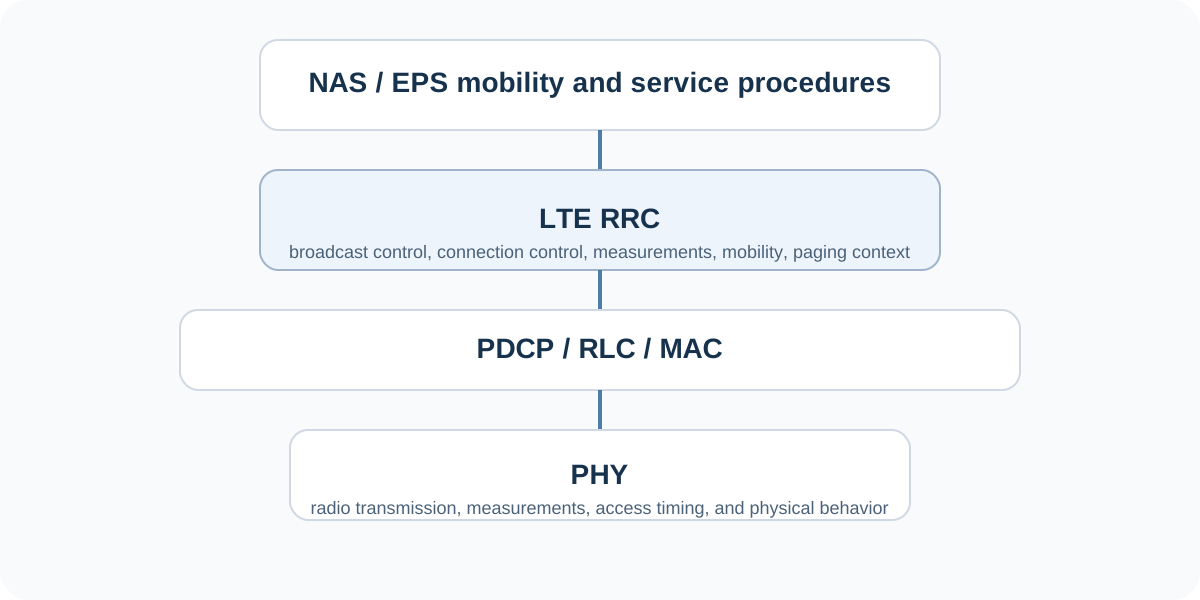
Position in the stack
RRC sits below EPS NAS service and mobility signaling and above the lower radio layers. It does not carry user data itself. Instead, it controls how the radio connection is created, maintained, optimized, or released.
| Layer or area | Relation to RRC |
|---|---|
| NAS | Uses the radio connection provided through RRC procedures and shares control flow with attach, TAU, paging, and service handling. |
| RRC | Controls broadcast information, dedicated radio configuration, measurements, mobility, paging context, and state handling. |
| PDCP / RLC / MAC | Receive configuration and behavior changes carried in RRC messages such as setup and reconfiguration. |
| PHY | Executes the radio behavior configured through RRC, including measurements, access timing, and cell-related configuration. |
Main functions
| Function | Meaning | Why it matters |
|---|---|---|
| Broadcast control | Delivers MIB and SIB information that tells the UE how to access and behave in the cell. | Entry failures often begin with missing or wrong system information rather than dedicated signaling. |
| Connection control | Establishes, modifies, and releases the dedicated radio connection. | Controls the path into service and many failures around setup, reconfiguration, and release. |
| Measurement control | Configures what to measure, how to filter it, and when to report it. | Directly affects mobility, coverage interpretation, and reporting behavior. |
| Mobility control | Drives handover preparation, target-cell behavior, and connected-mode movement decisions. | Many mobility issues appear first as RRC configuration or procedure issues. |
| Paging-related behavior | Works with idle-mode configuration and reachability assumptions that determine how the UE responds to paging. | Useful when a UE is camped but service wake-up or reachability looks wrong. |
| Security activation | Activates and updates access-side security configuration. | Needed for stable continuation after setup and before sensitive signaling or traffic handling. |
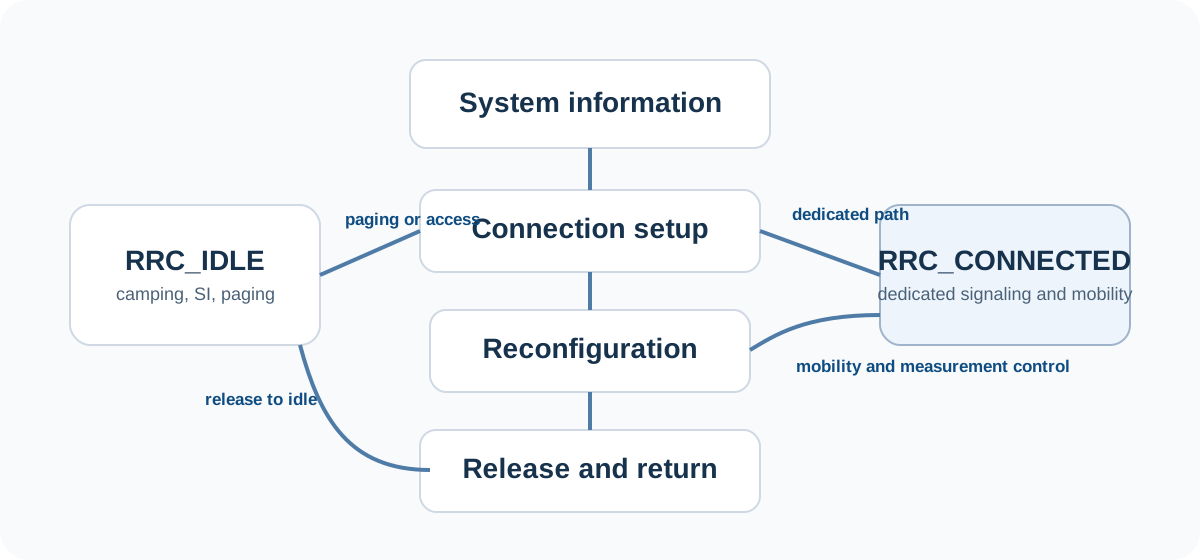
RRC states
LTE uses two main RRC states: RRC_IDLE and RRC_CONNECTED. Idle mode covers camping, paging monitoring, and cell reselection. Connected mode covers dedicated signaling, measurements, scheduling context, and mobility under active connection control.
| State | Main behavior | What to inspect |
|---|---|---|
| RRC_IDLE | Camping, system information reading, paging monitoring, and cell reselection. | Check system information, paging configuration, cell selection or reselection assumptions, and idle mobility context. |
| RRC_CONNECTED | Dedicated signaling, measurements, mobility control, bearer updates, and active radio configuration. | Check setup, reconfiguration, measurement objects, handover preparation, release triggers, and security progression. |
Main procedures
The most practical LTE RRC procedures to open first are initial access, setup, system information reading, paging, measurement reporting, handover, reconfiguration, and release. These procedures also connect directly to EPS NAS work such as Tracking Area Update.
| Procedure | Main purpose | Useful next page |
|---|---|---|
| System information reading | Gives the UE the broadcast configuration needed for access, idle behavior, and measurement assumptions. | System Information |
| Connection setup | Creates the dedicated radio connection and opens the path for NAS signaling and service setup. | LTE UE Initial Access |
| Paging response path | Moves the UE from idle reachability into service or signaling continuation. | Paging |
| Measurement reporting | Reports serving and neighbor quality to support mobility and radio control decisions. | RRC Measurements |
| Handover and mobility | Moves the connection between cells while preserving continuity. | Handover Overview |
| Release | Returns the UE to idle mode after the connection is no longer needed. | LTE Reference Hub |
Messages and IEs
LTE RRC messages are the signaling containers exchanged between the UE and eNodeB. IEs are the fields and structures inside those messages that carry the actual configuration. Use the LTE RRC message library when the trace already exposes a message name, and pair it with the procedure page when sequence context matters more than the single decode.
| Area | What it carries |
|---|---|
| Broadcast messages | MIB and SIB-related information for access, idle behavior, and common cell configuration. |
| Connection control messages | Setup, reconfiguration, and release signaling for dedicated radio behavior. |
| Measurement and mobility IEs | Measurement objects, reporting configuration, filtering, and mobility-related configuration. |
| Security-related signaling | Access-side security activation and configuration carried in dedicated control signaling. |
System information
System information is the broadcast side of LTE RRC. It tells the UE how to access the cell, how to behave in idle mode, what measurement assumptions apply, and how paging and reselection should be interpreted. Read it together with initial access, paging, and measurement configuration.
Open the dedicated reference page: LTE RRC System Information.
Cross-layer interaction
| Layer or area | Relation to LTE RRC |
|---|---|
| NAS / EPS | Depends on RRC connection setup and maintenance to carry attach, TAU, service, paging, and security-related continuation. |
| PDCP / RLC / MAC | Receive bearer, logical-channel, and behavior changes that were signaled through RRC. |
| PHY | Uses the configuration and timing assumptions that RRC carried for access, measurement, and connected behavior. |
Many LTE issues that first appear as RRC failures are actually cross-layer problems. Read MAC, RLC, security, and radio behavior together when the trace does not fail at a clean message boundary.
RRC in call flows
| Procedure area | Why RRC matters |
|---|---|
| Initial access | RRC completes the move from broadcast and random access context into dedicated connection setup. |
| Paging and service resumption | RRC bridges idle-mode reachability and the return to active service handling. |
| Tracking Area Update | NAS TAU relies on the RRC path that carried the UE into signaling-capable state. |
| Handover | RRC measurement and reconfiguration logic controls how connected mobility is prepared and executed. |
| Voice and fallback | Voice continuity and fallback scenarios depend on RRC state, mobility context, and access continuity. |
Release 18 scope
Release 18 LTE RRC still matters because LTE remains active in wide-area service, VoLTE continuity, EPS mobility, fallback behavior, and multi-RAT deployments. Current LTE RRC reading often sits beside NR, IMS, and legacy interworking rather than inside a standalone LTE-only workflow.
| Area | Current reading value |
|---|---|
| Broadcast and idle behavior | Still central for access, reselection, paging, and service reachability. |
| Measurements and mobility | Still central for handover, neighbor relations, and quality-driven behavior. |
| EPS continuity | Still central for attach, TAU, VoLTE, and fallback-oriented service paths. |
| Interworking | Still important where LTE appears beside NR and legacy mobility or voice procedures. |
Troubleshooting
| Symptom | RRC area to inspect | Why |
|---|---|---|
| Cannot get into service | System information, access path, setup signaling | Many entry failures begin before NAS meaningfully progresses. |
| Paging mismatch | Idle configuration, paging assumptions, system information | Reachability issues often come from idle-mode configuration rather than from the paging message alone. |
| Unexpected handover behavior | Measurements, reporting, reconfiguration, target-cell signaling | Mobility issues often begin in measurement logic or reconfiguration content. |
| Service breaks after setup | Security activation, reconfiguration, EPS continuation | The break point may be after connection setup but before stable dedicated behavior. |
| TAU or service path looks incomplete | RRC state transition and signaling availability | NAS may appear to fail when the radio-side control path never stabilized correctly. |
References
- 3GPP TS 36.331, E-UTRA Radio Resource Control (RRC) protocol specification, Release 18.
- 3GPP TS 36.300, E-UTRA and E-UTRAN overall description, Release 18.
- 3GPP TS 36.304, UE procedures in idle mode, Release 18.
- 3GPP TS 36.321, MAC protocol specification, Release 18.
- 3GPP TS 36.213, physical layer procedures, Release 18.
- 3GPP TS 23.401, GPRS enhancements for E-UTRAN access, Release 18.
- 3GPP TS 24.301, Non-access-stratum protocol for EPS, Release 18.
FAQ
What is LTE RRC?
LTE RRC is the radio resource control protocol between the UE and eNodeB. It manages broadcast information, connection control, measurements, mobility, paging-related behavior, security activation, and radio configuration in LTE.
Which spec defines LTE RRC?
The main LTE RRC specification is 3GPP TS 36.331. Architectural context comes from 3GPP TS 36.300.
What are the LTE RRC states?
The main LTE RRC states are RRC_IDLE and RRC_CONNECTED.
What is the difference between a message and an IE?
A message is the signaling container exchanged between the UE and eNodeB. An IE is the actual field or object inside that message.
What should I open next after this page?
Open the LTE RRC Message Library, the System Information page, and Handover Overview first.