UE Context Resume Failure is the NGAP UE Context Management message sent by the AMF to the NG-RAN node when the AMF cannot accept a UE Context Resume Request. It is the unsuccessful outcome of the UE Context Resume procedure and indicates that the previously suspended UE context could not be resumed.
AMF has evaluated a UE Context Resume Request from NG-RAN and cannot accept or process restoration of the suspended UE context.
Main purpose
Tells NG-RAN that the resume attempt failed, prevents NG-RAN from treating the UE context as active again, returns the failure reason through Cause, may provide protocol diagnostics, and separates failed resume from initial context setup or UE context release.
What is UE Context Resume Failure in simple terms?
UE Context Resume Failure is the NGAP UE Context Management message sent by the AMF to the NG-RAN node when the AMF cannot accept a UE Context Resume Request. It is the unsuccessful outcome of the UE Context Resume procedure and indicates that the previously suspended UE context could not be resumed.
Tells NG-RAN that the resume attempt failed, prevents NG-RAN from treating the UE context as active again, returns the failure reason through Cause, may provide protocol diagnostics, and separates failed resume from initial context setup or UE context release.
Why this message matters
UE Context Resume Failure means AMF did not restore the suspended UE context. Read Cause first and do not assume the UE context is active again.
Where this message appears in the call flow
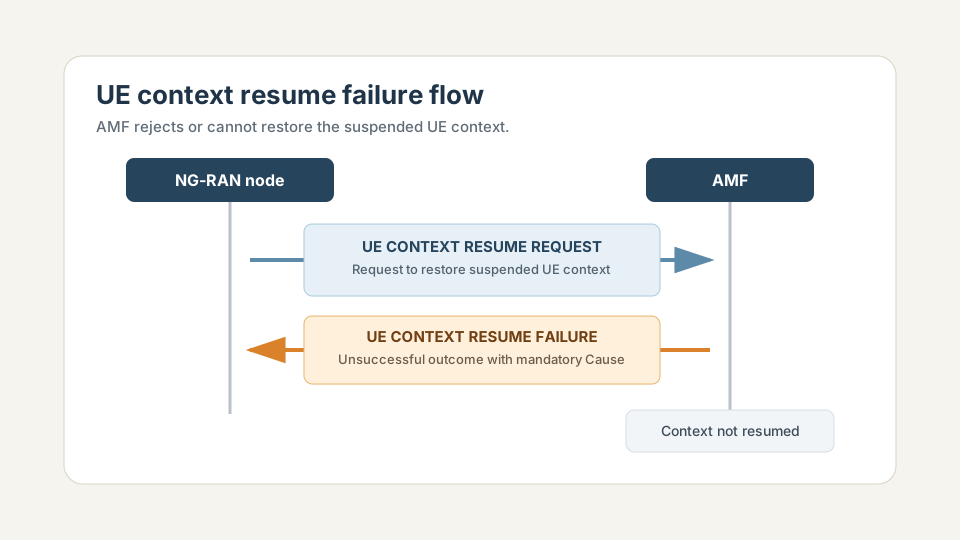
UE Context Resume failure outcome
Failure branch: AMF rejects or cannot restore the suspended UE context and returns UE Context Resume Failure with Cause.
Call flow position: AMF sends this unsuccessfulOutcome after receiving UE Context Resume Request and rejecting or failing restoration of the suspended context.
Typical state: The suspended UE context is not restored to active handling. NG-RAN must not assume active UE context restoration for this attempt.
Preconditions:
A UE context was previously suspended, or NG-RAN believes a suspended context exists.
NG-RAN sent UE Context Resume Request.
AMF UE NGAP ID and RAN UE NGAP ID identify the suspended UE-associated context.
AMF checked whether the suspended context could be resumed.
Next likely message: Fallback setup, release, retry, or another recovery procedure depending on Cause and network state
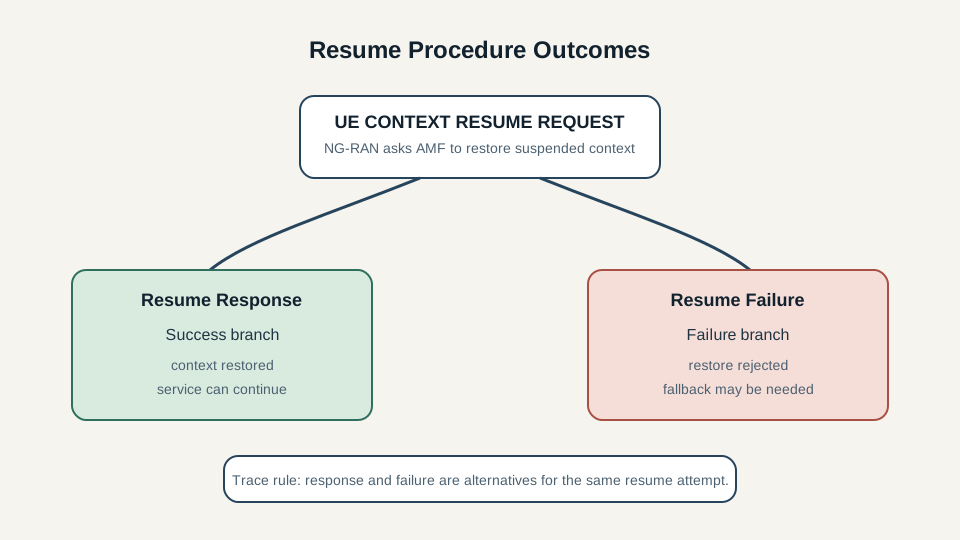
Resume response comparison
Outcome comparison: Resume Response restores the suspended context; Resume Failure rejects the restore attempt.
Call flow position: This message is the unsuccessful branch that replaces UE Context Resume Response when AMF cannot restore the retained context.
Typical state: No active restored context is created for this failed resume attempt.
Preconditions:
No UE Context Resume Response exists for the same attempt.
The Cause IE explains why resume could not be accepted.
Next likely message: Recovery or fallback handling rather than active context continuation
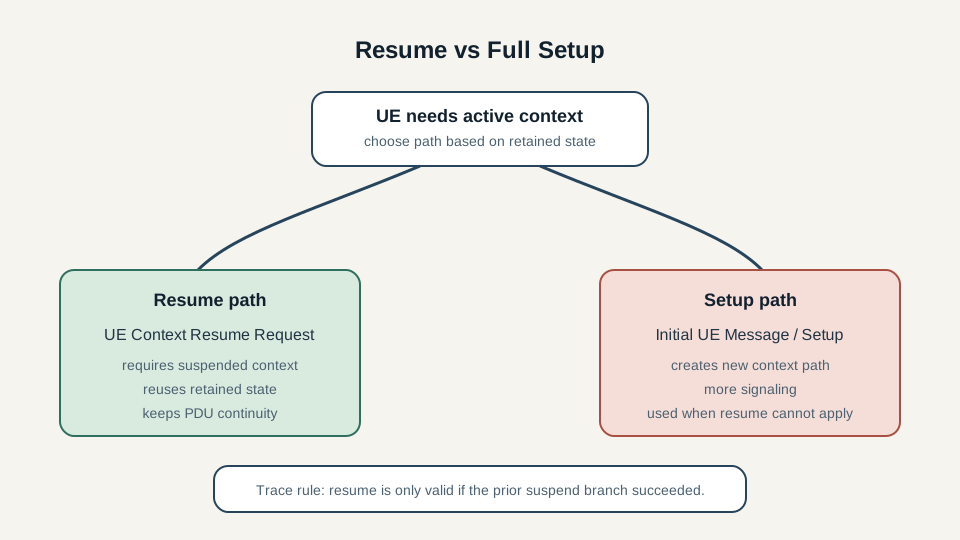
Suspend and setup relationship
Fallback distinction: resume reuses retained state, while setup creates a fresh context path if recovery requires it.
Call flow position: Resume Failure depends on the suspend/resume timeline and must be kept separate from fresh setup or release branches.
Typical state: The suspended context may be missing, expired, mismatched, or otherwise unusable.
Preconditions:
Trace analysis distinguishes prior successful suspend, failed resume, fallback setup, and release handling.
Next likely message: Initial Context Setup Request only if a fallback setup path is later initiated
Transport / encapsulation: NGAP over SCTP/IP between AMF and NG-RAN
Security context: The message rejects restoration of a previously suspended UE-associated NGAP context. It does not by itself activate the context, create a fresh context, or release the context.
Message Structure Overview
UE Context Resume Failure is the AMF-to-NG-RAN unsuccessfulOutcome for the UE Context Resume procedure.
It follows UE Context Resume Request when AMF cannot restore the suspended UE context.
AMF UE NGAP ID and RAN UE NGAP ID are mandatory and provide request/failure correlation.
Cause is mandatory and is the primary troubleshooting field.
Criticality Diagnostics is optional and provides protocol-level diagnostics if present.
The message rejects resume handling; it does not activate the UE context.
Fallback may require fresh setup, release, retry, or another recovery procedure depending on implementation and Cause.
ASN.1 for UE Context Resume Failure
UEContextResumeFailure ::= SEQUENCE {
  protocolIEs ProtocolIE-Container { {UEContextResumeFailure-IEs} },
  ...
}

UEContextResumeFailure-IEs NGAP-PROTOCOL-IES ::= {
  { ID id-AMF-UE-NGAP-ID          CRITICALITY reject TYPE AMF-UE-NGAP-ID          PRESENCE mandatory } |
  { ID id-RAN-UE-NGAP-ID          CRITICALITY reject TYPE RAN-UE-NGAP-ID          PRESENCE mandatory } |
  { ID id-Cause                   CRITICALITY ignore TYPE Cause                   PRESENCE mandatory } |
  { ID id-CriticalityDiagnostics  CRITICALITY ignore TYPE CriticalityDiagnostics  PRESENCE optional  },
  ...
}
How to read this ASN.1
Decode the UE identity pair first, then read Cause. Cause explains why the suspended context could not be restored and should drive the fallback analysis.
Treat this as a teaching example based on the expected message structure, not as a captured network trace.
This is the rejected resume branch and therefore carries a mandatory Cause IE.
Use the UE identity pair to correlate this failure with the original UE Context Resume Request and prior suspended context.
Do not treat this failure as active context restoration or as Initial Context Setup.
Important Information Elements
IE
Presence
Description
Message Type
Mandatory
Identifies the NGAP PDU as UE CONTEXT RESUME FAILURE.
AMF UE NGAP ID
Mandatory
Mandatory AMF-side UE identifier used to correlate the failure with the original resume request and suspended UE context.
RAN UE NGAP ID
Mandatory
Mandatory NG-RAN-side UE identifier used to bind the failure to the correct radio-side UE context.
Cause
Mandatory
Mandatory failure reason that explains why AMF rejected or could not process the resume request.
Criticality Diagnostics
Optional
Optional protocol diagnostics related to IE handling, procedure, or criticality issues in the failed resume attempt.
Detailed field explanation
Message Type
Identifies the NGAP PDU as UE CONTEXT RESUME FAILURE.
Presence: Mandatory
In practice: In practice, compare this field with the original request and with any later release-dependent optional fields so you can see whether the network accepted the same service model the UE asked for.
AMF UE NGAP ID
Mandatory AMF-side UE identifier used to correlate the failure with the original resume request and suspended UE context.
Presence: Mandatory
In practice: In practice, compare this field with the original request and with any later release-dependent optional fields so you can see whether the network accepted the same service model the UE asked for.
RAN UE NGAP ID
Mandatory NG-RAN-side UE identifier used to bind the failure to the correct radio-side UE context.
Presence: Mandatory
In practice: In practice, compare this field with the original request and with any later release-dependent optional fields so you can see whether the network accepted the same service model the UE asked for.
Cause
Mandatory failure reason that explains why AMF rejected or could not process the resume request.
Presence: Mandatory
In practice: In practice, compare this field with the original request and with any later release-dependent optional fields so you can see whether the network accepted the same service model the UE asked for.
Criticality Diagnostics
Optional protocol diagnostics related to IE handling, procedure, or criticality issues in the failed resume attempt.
Presence: Optional
In practice: In practice, compare this field with the original request and with any later release-dependent optional fields so you can see whether the network accepted the same service model the UE asked for.
What to check in logs and traces
Confirm the failure follows a matching UE Context Resume Request.
Confirm direction is AMF to NG-RAN node.
Match AMF UE NGAP ID and RAN UE NGAP ID with the resume request.
Confirm an earlier UE Context Suspend Response exists for the same context.
Decode the Cause IE first.
Check Criticality Diagnostics if present.
Confirm no UE Context Resume Response exists for the same attempt.
Check whether fallback setup, release, or another recovery procedure follows.
Common Issues and Troubleshooting
Resume Failure appears without a valid prior suspended context.
Likely cause: Resume may have been attempted after suspend failed, expired, released, or was never present in the trace.
What to inspect: Search backward for UE Context Suspend Request and UE Context Suspend Response with matching UE identifiers.
Next step: Validate the suspend-to-resume timeline before deciding whether the resume failure is expected.
UE context is treated as active after Resume Failure.
Likely cause: The unsuccessfulOutcome branch is being confused with UE Context Resume Response.
What to inspect: Check the NGAP PDU type, message name, and mandatory Cause IE.
Next step: Mark the resume attempt as failed and wait for explicit fallback, setup, release, or retry signaling.
Cause IE is ignored in troubleshooting.
Likely cause: Analysis is focused only on the message name rather than the failure reason.
What to inspect: Decode Cause and map it to context-not-found, expired context, state mismatch, protocol, transport, or misc context as applicable.
Next step: Use Cause to decide whether the issue is context retention, identity correlation, security, policy, or IE handling.
Resume Failure is confused with Initial Context Setup Failure.
Likely cause: Retained-context restoration and fresh setup fallback are being collapsed into one branch.
What to inspect: Separate the failed resume attempt from any later Initial Context Setup Request, Response, or Failure.
Next step: Analyze fallback setup only after confirming the resume branch failed.
Failure is linked to the wrong UE.
Likely cause: Concurrent suspend, resume, release, or fresh setup branches caused weak UE ID correlation.
What to inspect: Correlate AMF UE NGAP ID and RAN UE NGAP ID across suspend, resume, failure, and fallback messages.
Next step: Resolve UE identity correlation before interpreting the Cause.
LTE / 5G / Variant Comparison
Compared with UE Context Resume Request
Resume Request is NG-RAN asking to restore suspended context. Resume Failure is AMF rejecting or failing that restore attempt.
Compared with UE Context Resume Response
Resume Response is the successful branch. Resume Failure is the rejected branch and carries Cause.
Compared with Initial Context Setup
Resume Failure means retained context could not be restored. Initial Context Setup creates or establishes a UE context path.
Relationship with UE Context Suspend
Suspend Response creates the suspended state that Resume Request tries to restore. Resume Failure means that retained state could not be restored.
FAQ
What is UE Context Resume Failure in NGAP?
It is the AMF-to-NG-RAN unsuccessfulOutcome sent when AMF cannot accept or process a UE Context Resume Request.
Who sends UE Context Resume Failure?
The AMF sends UE Context Resume Failure to the NG-RAN node.
What message triggers UE Context Resume Failure?
UE Context Resume Request from NG-RAN triggers the failure when AMF rejects or cannot process restoration of the suspended context.
What does the Cause IE mean?
Cause explains why the resume attempt failed. It is the most important field for troubleshooting this message.
Does Resume Failure activate the UE context?
No. Resume Failure means the suspended context was not restored to active handling.
What happens after Resume Failure?
NG-RAN may need fallback handling such as fresh setup, release, retry, or another recovery procedure depending on implementation and Cause.
What is the difference between Resume Response and Resume Failure?
Resume Response means AMF accepted and restored the suspended context. Resume Failure means AMF rejected or could not resume it and includes Cause.
How do you troubleshoot UE Context Resume Failure?
Match both UE NGAP IDs with the Resume Request, verify an earlier Suspend Response exists, confirm direction is AMF to NG-RAN, decode Cause first, check Criticality Diagnostics if present, and verify no Resume Response exists for the same attempt.
Decode this message with the 3GPP Decoder, inspect the related message database, or open the matching call flow to see where this signaling step fits in the full procedure.