XnAP5GTarget NG-RAN node -> Source NG-RAN node; also M-NG-RAN node -> S-NG-RAN node in DC branches3GPP TS 38.423
5G XnAP - UE Context Release
UE Context Release is the XnAP message used to indicate that radio and control-plane resources for the associated UE context may be released at the other node after handover success, dual-connectivity release, or UE context retrieval completion.
The target or new NG-RAN node has completed enough of the mobility or context-transfer branch that the old node is allowed to release radio and control-plane resources for the UE.
Main purpose
Indicates that the peer node may release radio and control-plane resources for the associated UE context because the transferred or prepared branch has progressed far enough for old resources to be cleaned up.
UE Context Release is the XnAP message used to indicate that radio and control-plane resources for the associated UE context may be released at the other node after handover success, dual-connectivity release, or UE context retrieval completion.
Indicates that the peer node may release radio and control-plane resources for the associated UE context because the transferred or prepared branch has progressed far enough for old resources to be cleaned up.
Why this message matters
UE Context Release is the XnAP message that tells the old side of the connection it can now release the no-longer-needed UE context.
Where this message appears in the call flow
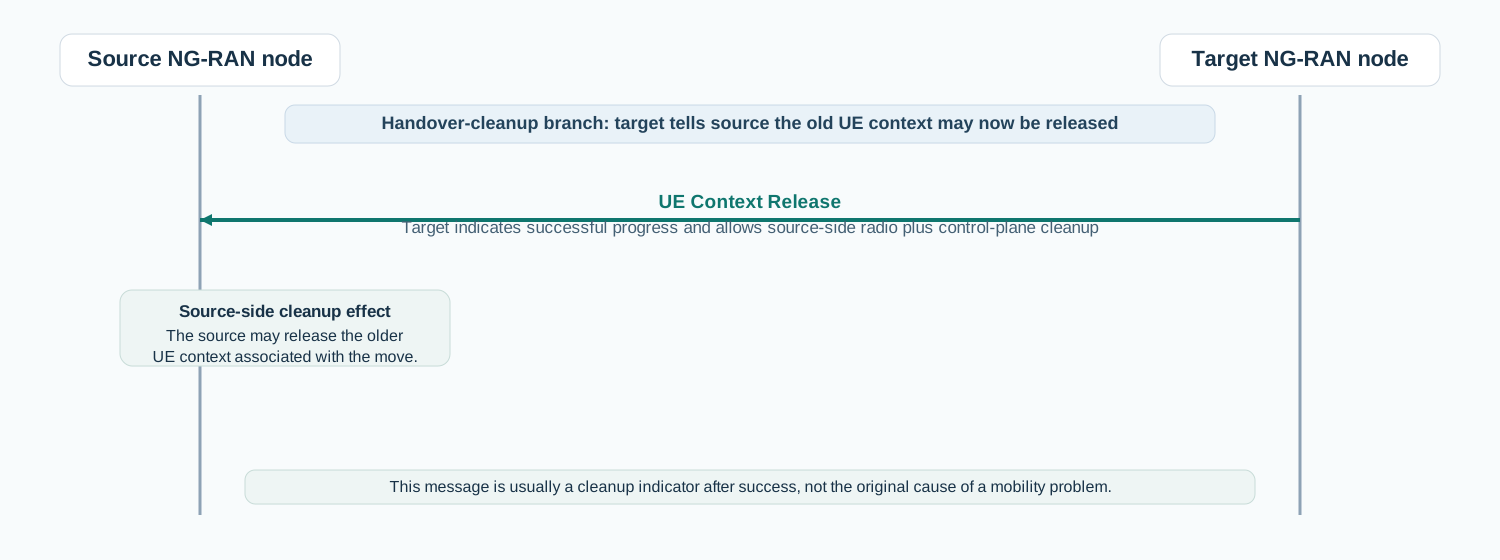
Release after handover success
Handover-cleanup branch: the target tells the source that the old UE context may be released after successful target-side progress.
Call flow position: The target NG-RAN node tells the source NG-RAN node that radio and control-plane resources for the old UE context may now be released.
Typical state: The target side is established enough that the source does not need to keep the full old context.
Preconditions:
The handover branch has progressed to successful target access.
The source and target still share the UE-associated Xn identifiers for the branch.
Next likely message: Source-side local release of the old UE context
Dual-connectivity context release
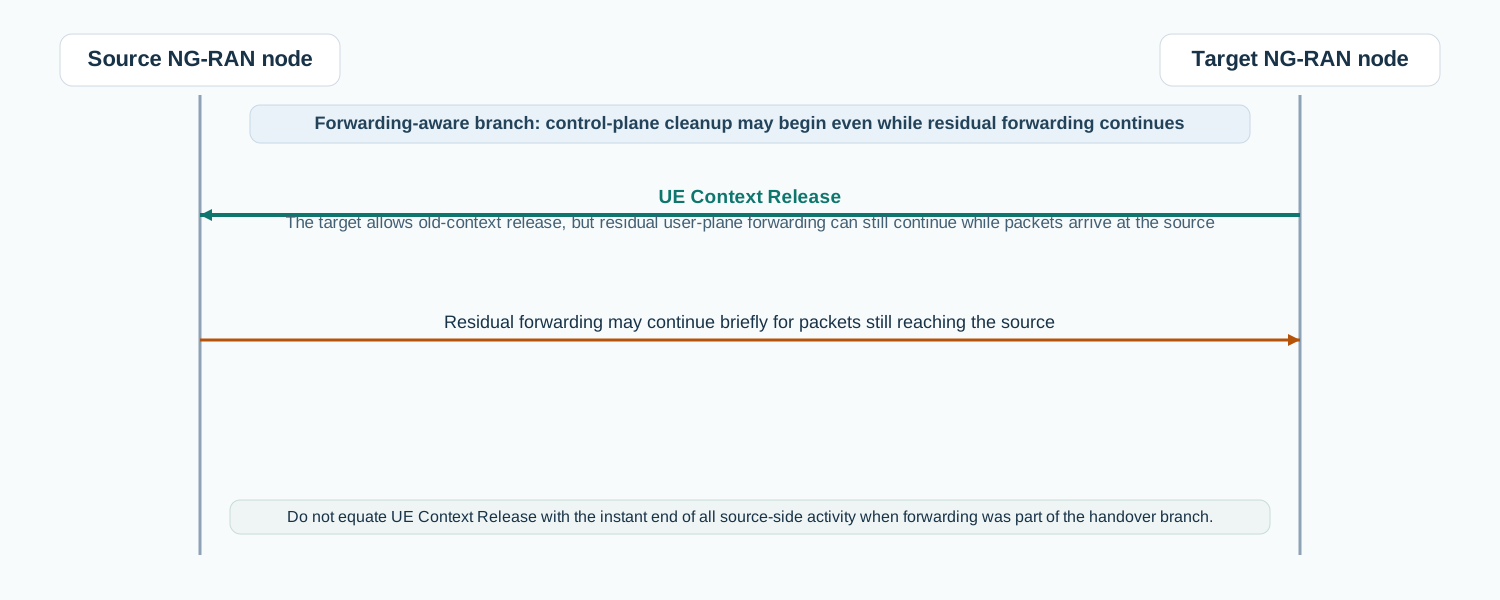
Forwarding-aware branch: control-plane release can start even while residual forwarding continues as long as packets still arrive at the source.
Call flow position: The M-NG-RAN node instructs the S-NG-RAN node that the UE context may be removed, or in special mobility branches only the UE-associated signaling connection is released.
Typical state: The DC branch is moving from coordinated use to cleanup or signaling-only release.
Preconditions:
The release concerns a DC relationship rather than plain handover.
The M-NG-RAN node determined which resources may be removed and which, if any, remain kept.
Next likely message: S-side local release or signaling-connection cleanup
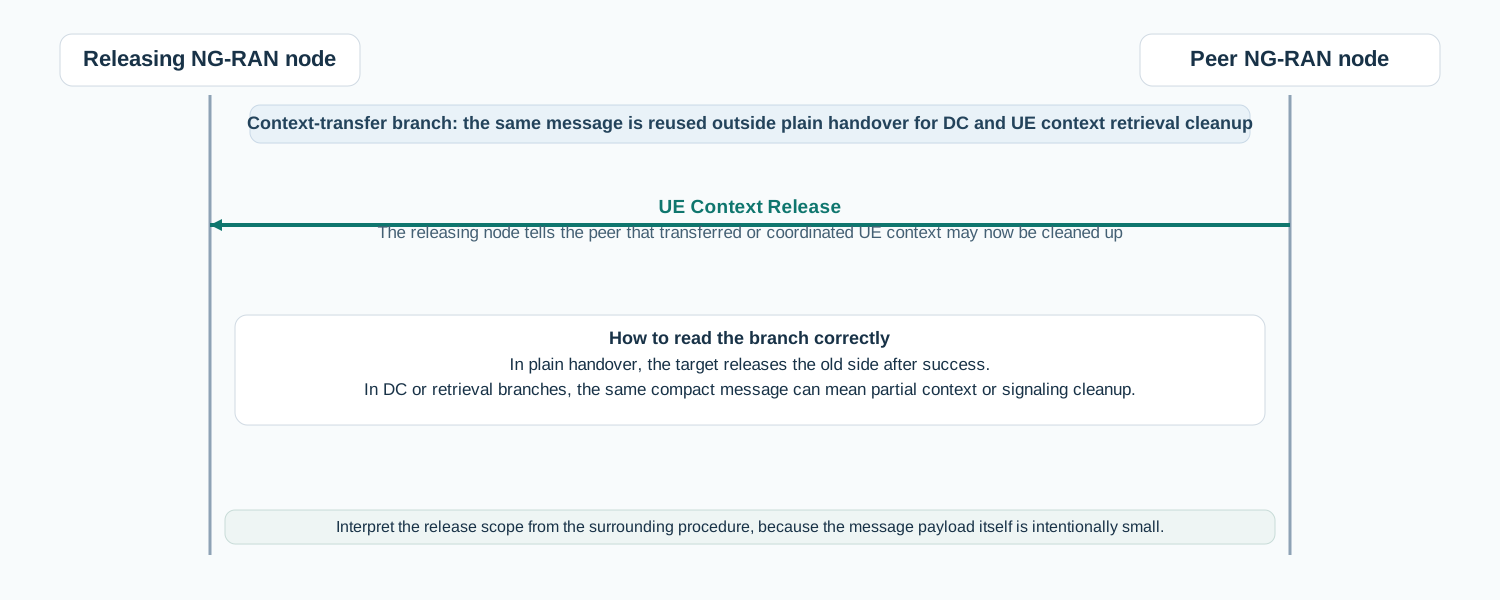
Release after UE context retrieval
Context-transfer branch: the same message is reused outside plain handover for DC and UE context retrieval cleanup.
Call flow position: The new NG-RAN node tells the old NG-RAN node that resources for the associated transferred context may be released.
Typical state: The context transfer succeeded far enough that the old node can clean up.
Preconditions:
UE context retrieval completed successfully.
The old node no longer needs to keep the transferred UE context active.
Next likely message: Old-node cleanup of radio and control-plane resources
Call flow position
Previous message(s):SN Status Transfer, Successful target access or transferred-context completion, Prepared handover completion
Transport / encapsulation: XnAP over SCTP/IP between the participating NG-RAN nodes
Security context: UE Context Release does not create or refresh security. It is a cleanup indication telling the peer node that the older or no-longer-needed UE-associated context can be released.
Message Structure Overview
UE Context Release is a compact XnAP initiatingMessage that indicates old resources may be released.
For handover, it is sent by the target NG-RAN node to the source NG-RAN node to signal handover success and trigger release of old resources.
The message is also used in dual connectivity and UE context retrieval cleanup branches.
There is no defined unsuccessful operation for the elementary procedure.
This message is intentionally small. Nearly all of its engineering meaning comes from its position in the procedure rather than from payload complexity.
The message does not need a large payload because the release meaning is procedural: it tells the peer old resources may now be released.
For handover, the target uses this message to inform the source of handover success and trigger release of the old context.
If data forwarding has been performed, the source should continue forwarding user-plane data as long as packets are still received at the source node.
Important Information Elements
IE
Presence
Description
Source NG-RAN node UE XnAP ID
Mandatory
Mandatory source-side UE identifier for the UE-associated logical Xn connection.
Target NG-RAN node UE XnAP ID
Mandatory
Mandatory target-side UE identifier for the same UE-associated logical Xn connection.
Detailed field explanation
Source NG-RAN node UE XnAP ID
Mandatory source-side UE identifier for the UE-associated logical Xn connection.
Presence: Mandatory
In practice: In practice, compare this field with the original request and with any later release-dependent optional fields so you can see whether the network accepted the same service model the UE asked for.
Target NG-RAN node UE XnAP ID
Mandatory target-side UE identifier for the same UE-associated logical Xn connection.
Presence: Mandatory
In practice: In practice, compare this field with the original request and with any later release-dependent optional fields so you can see whether the network accepted the same service model the UE asked for.
What to check in logs and traces
Match Source NG-RAN node UE XnAP ID and Target NG-RAN node UE XnAP ID to the existing Xn branch before releasing anything in analysis.
Confirm the release follows successful target-side progress rather than a failed preparation branch.
If forwarding was used, separate release of control-plane context from continuation of source-side forwarding while packets are still arriving.
In DC branches, confirm whether the release concerns full S-side context removal or only UE-associated signaling connection cleanup.
Common Issues and Troubleshooting
The source releases context too early and traffic continuity looks broken.
Likely cause: UE Context Release may have been interpreted as immediate end of all forwarding, even though the spec allows continued forwarding while packets are still received at the source.
What to inspect: Check whether forwarding was active and whether packets were still arriving at the source after UE Context Release.
Next step: Separate control-plane context cleanup from residual forwarding behavior.
Old UE context stays around even though handover succeeded.
Likely cause: UE Context Release may be missing, delayed, or correlated against the wrong UE XnAP IDs.
What to inspect: Verify the target actually sent UE Context Release for the same source and target UE identifiers.
Next step: Fix release correlation before treating the source as failing to clean up state.
Dual-connectivity cleanup removes more than expected.
Likely cause: The branch may have been read as full UE context removal even though the scenario only required release of the UE-associated signaling connection.
What to inspect: Classify whether the release is plain handover, DC cleanup, or UE context retrieval cleanup first.
Next step: Interpret the release scope using the surrounding procedure, not the small message payload alone.
LTE / 5G / Variant Comparison
Compared with SN Status Transfer
SN Status Transfer preserves bearer continuity across the move. UE Context Release later tells the old side that context may now be cleaned up.
Compared with NGAP UE Context Release Command
NGAP UE Context Release Command is AMF-to-NG-RAN cleanup on N2. XnAP UE Context Release is peer-node cleanup signaling inside NG-RAN.
Compared with Handover Request Acknowledge
Handover Request Acknowledge creates the prepared handover state. UE Context Release comes later to tell the old side it may release now-unneeded resources.
FAQ
What is UE Context Release in 5G XnAP?
It is the XnAP message used to indicate that radio and control-plane resources for the associated UE context may be released at the peer node.
Who sends UE Context Release during handover?
During handover, the target NG-RAN node sends UE Context Release to the source NG-RAN node.
Does UE Context Release mean forwarding stops immediately?
Not necessarily. If data forwarding has been performed, the source should continue forwarding as long as packets are still received at the source.
What are the key IEs in UE Context Release?
The message is intentionally small and is identified by the Source NG-RAN node UE XnAP ID and Target NG-RAN node UE XnAP ID.
Decode this message with the 3GPP Decoder, inspect the related message database, or open the matching call flow to see where this signaling step fits in the full procedure.