5G Architecture Overview
A 5G architecture overview should answer one practical question first: what are the main parts of the 5G system, and how do they work together? At the highest level, the answer is simple. A device reaches the network through the NG-RAN, the 5G Core handles mobility, session control, policy, and routing, and services such as voice or application traffic sit on top of that transport path.
This page keeps the explanation intentionally high level. The goal is to make the full system easy to place before you go deeper into NG-RAN structure, 5GC functions, interfaces, or call flows.
Quick facts
| Main system blocks | UE, NG-RAN, and 5GC, with IMS and data networks sitting above the transport architecture. |
|---|---|
| Core design style | Service-Based Architecture in the 5GC control plane, with distinct user-plane handling through the UPF. |
| Most important interfaces | N1, N2, N3, N4, N6, N9, plus F1, E1, and Xn in NG-RAN deployments. |
| Best next step | Use this page to get oriented, then move into the NG-RAN hub, the 5GC hub, or the interfaces hub. |
| Specification baseline | 3GPP TS 23.501 with supporting context from TS 23.502, TS 24.501, TS 38.300, and the official 3GPP 5G system overview. |
What 5G architecture means
The official 3GPP view of the 5G system starts with three big blocks: the UE, the NG-RAN, and the 5GC. That is also the best way to remember the system when you first read it. The UE enters through the radio network, the radio network connects into the core, and the core exposes services and transport toward IMS or external data networks.
From there, 5G becomes more detailed than LTE because the core is built from network functions rather than a smaller set of fixed entities, and those functions interact through a service-based architecture. That modularity is one of the defining ideas of the 5GC.
Overview diagram
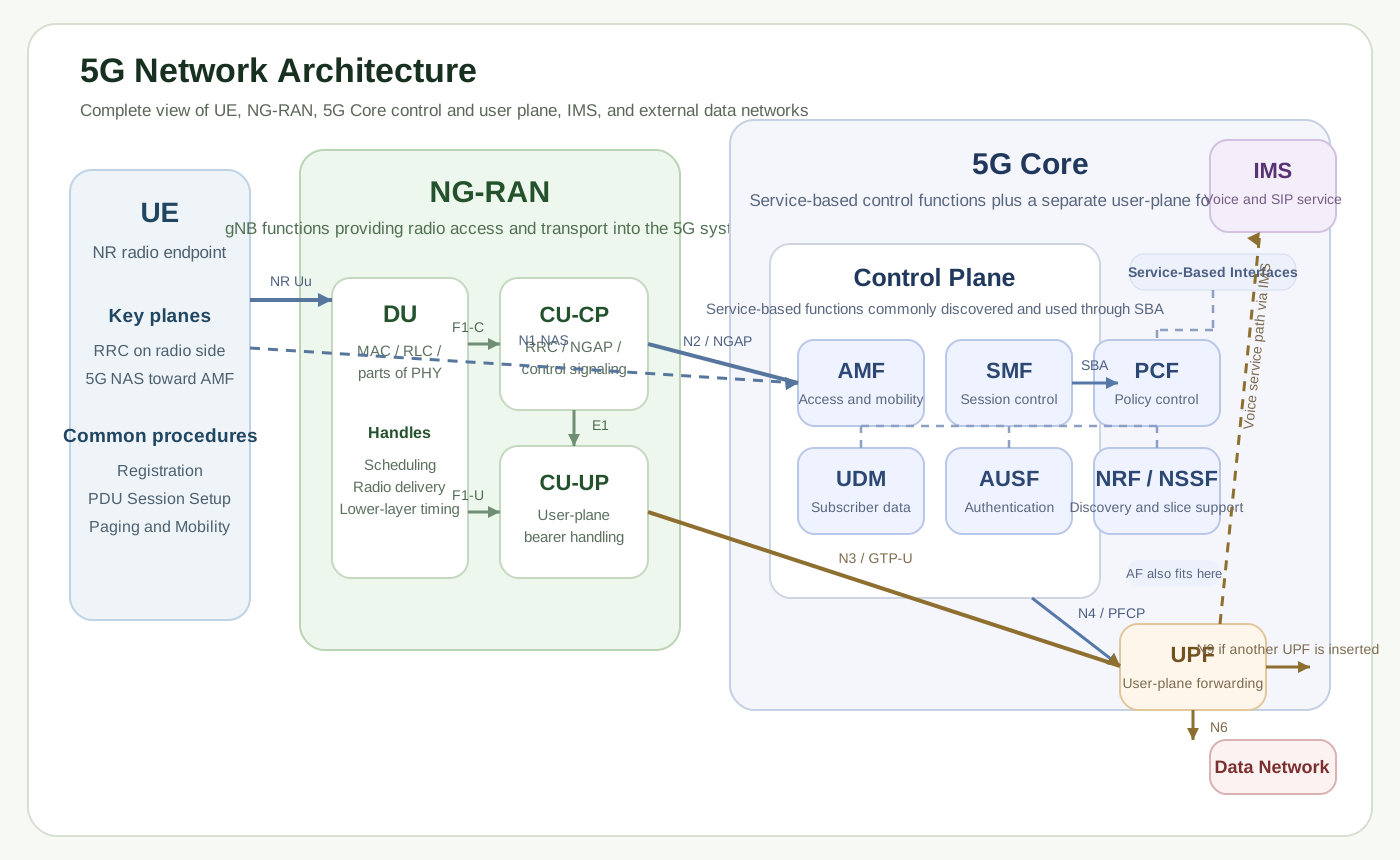
Main building blocks
| Building block | What it represents |
|---|---|
| UE | The device side of the system, running access procedures, RRC, and 5G NAS signaling. |
| NG-RAN | The radio access network built around the gNB, commonly with CU and DU splits in practical deployments. |
| 5GC | The core network that handles registration, mobility, session control, policy, subscriber data, and forwarding decisions. |
| IMS | The service layer commonly used for voice and multimedia services such as VoNR. |
| Data Network (DN) | The external service side, such as operator services, Internet access, enterprise access, or third-party services. |
The official 3GPP 5G system overview uses this same broad framing: UE, NG-RAN, 5GC, and the service side beyond the UPF. That makes it a good mental bridge between the public overview and the deeper 5GS reference architecture.
Control plane and user plane
One of the fastest ways to understand 5G architecture is to separate the control plane from the user plane. The control plane decides what should happen. The user plane carries the actual traffic.
| Plane | Typical functions and behavior |
|---|---|
| Control plane | AMF, SMF, UDM, AUSF, PCF, NRF, NSSF, AF, and other functions that handle access, mobility, policy, discovery, and session control. |
| User plane | Primarily the UPF, which forwards traffic toward data networks and anchors the transport side of PDU sessions. |
This split matters because many troubleshooting paths start with one question: did the control plane fail, or did the user plane fail after control looked healthy?
SA versus NSA
The official 3GPP 5G system overview still makes the distinction between non-standalone (NSA) and standalone (SA) because they describe two very different architectural realities.
| Deployment mode | Architecture view |
|---|---|
| NSA | NR is used together with LTE and EPC. This gives earlier access to NR radio capability, but it does not expose the full standalone 5GS architecture. |
| SA | NR connects directly to the 5GC. This is the architecture mode that exposes the full 5GS model. |
For most architecture study, this page should be read mainly from the standalone point of view, because that is where the NG-RAN and 5GC design shows up fully.
The NSA architecture
In non-standalone deployments, NR is added on top of an LTE anchor. The UE still depends on the LTE side for key control procedures, while NR mainly extends radio capacity and throughput. In practical terms, that means the architecture still leans on the EPC and the LTE signaling path even though the user may be receiving traffic over NR.
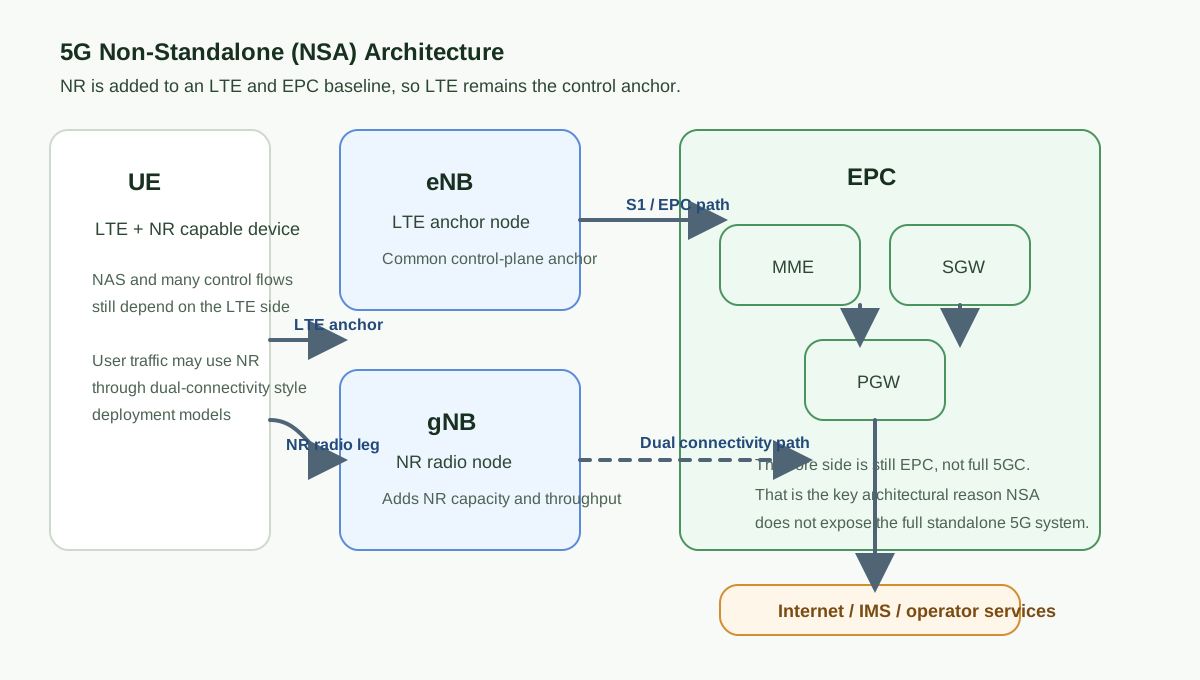
| NSA point | What it means in practice |
|---|---|
| Core side | The core network remains EPC-based rather than moving to the full 5GC model. |
| Anchor node | LTE usually stays in the anchor role for control-plane handling. |
| Why it was used | It allowed operators to introduce NR faster without waiting for a full standalone migration. |
| Study clue | If you still see EPC, LTE anchor behavior, or EN-DC style thinking, you are not looking at full standalone 5G. |
The SA architecture
In standalone deployments, NR connects directly to the 5G Core. This is the architecture that exposes the full 5GS model, including NG-RAN, 5GC network functions, service-based control interactions, and UPF-based user-plane forwarding toward data networks and IMS services.
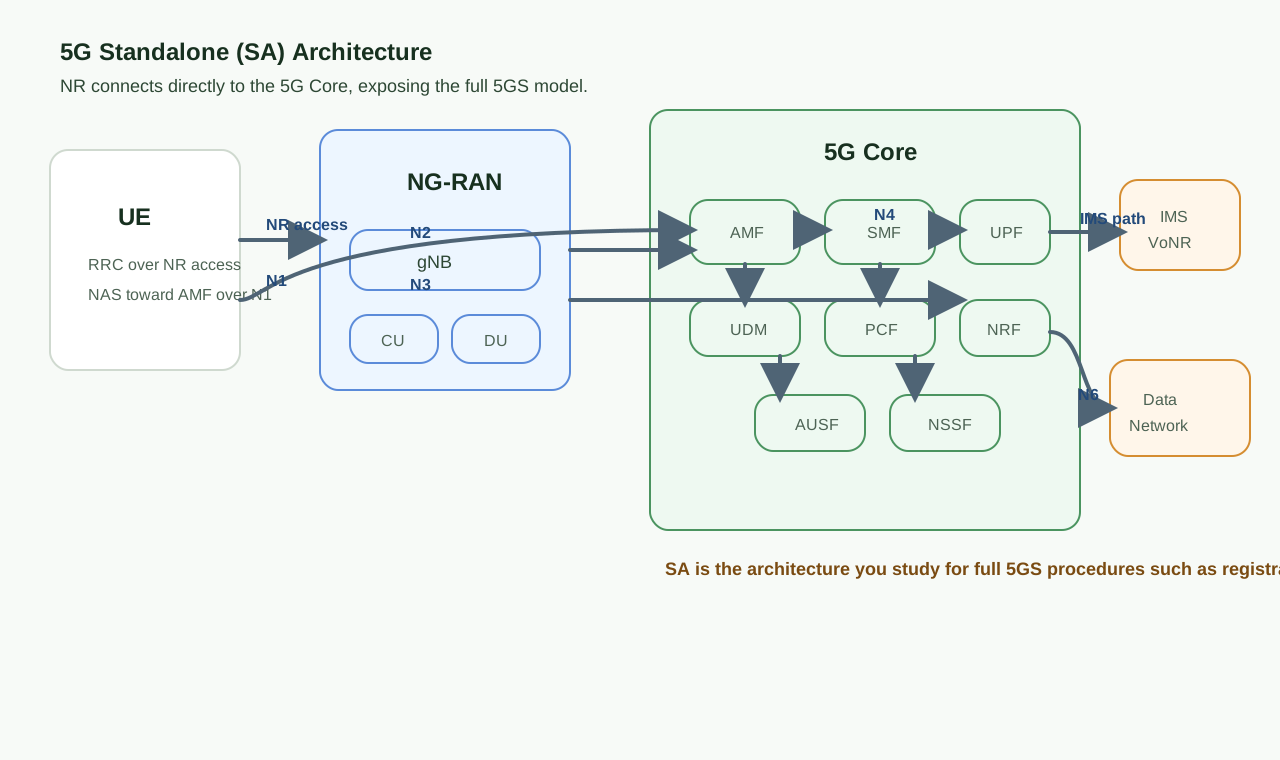
| SA point | What it means in practice |
|---|---|
| Core side | The radio network connects into the 5GC instead of EPC. |
| Key signaling path | Registration, mobility, and session setup are read through N1, N2, N3, and the 5GC control functions. |
| Why it matters | It exposes the architecture used for network slicing, modern policy control, VoNR, and the broader 5GS service model. |
| Study clue | If you see gNB, AMF, SMF, UPF, and service-based core functions working together, you are looking at SA. |
Interfaces to remember
| Interface | Why it matters in the overview |
|---|---|
| N1 | Main UE-to-core NAS signaling path. |
| N2 | Main control-plane interface between gNB and AMF. |
| N3 | Main user-plane interface between gNB and UPF. |
| N4 | Main control interface between SMF and UPF. |
| N6 | The edge of the 5G system toward external data networks. |
| F1, E1, Xn | The NG-RAN structural interfaces that become important in split and multi-node deployments. |
Used in procedures
- Initial registration is the cleanest first procedure for placing UE, gNB, AMF, and related control functions.
- Authentication procedure shows how AUSF and subscriber-related functions fit into the system.
- PDU session setup shows how SMF and UPF extend the architecture into the user plane.
- Paging shows how the RAN and core coordinate UE reachability.
- VoNR and IMS show how service-layer voice uses the same basic 5G system transport path.
FAQ
What are the main parts of 5G architecture?
At a high level, 5G architecture is built around the UE, the NG-RAN, and the 5G Core, with IMS and external data networks connected beyond that transport path.
What is the main difference between 5G architecture and LTE architecture?
The 5G Core is more modular and service-based, and the architecture separates user-plane forwarding through the UPF more explicitly.
Should I learn SA or NSA first?
For architecture study, SA is the better foundation because it shows the full NG-RAN plus 5GC system model.
Key takeaways
- The shortest useful summary of 5G architecture is UE + NG-RAN + 5GC + service side.
- The most useful practical split is control plane versus user plane.
- SA is the architecture mode that shows the full standalone 5GS design, while NSA still relies on LTE and EPC.
- The full 5GS reference model is broader than the early textbook AMF-SMF-UPF picture.