Bearer Context Release Command is the E1AP message the gNB-CU-CP sends to the gNB-CU-UP to release the existing bearer context for one UE when the user-plane branch is no longer needed or must be cleaned up.
Message Fact Sheet
Protocol
e1ap
Network
5g
Spec
3GPP TS 37.483
Spec Section
Bearer Context Release procedure and related IE definitions (Release 18 baseline)
The CU-CP decides that the CU-UP bearer context is no longer required because of release, handover cleanup, failure recovery, or another bearer-teardown event.
Main purpose
Tells the CU-UP to release bearer state for one UE so user-plane resources can be cleaned up under CU-CP control.
Main specification
3GPP TS 37.483, Bearer Context Release procedure and related IE definitions (Release 18 baseline)
What is Bearer Context Release Command in simple terms?
Bearer Context Release Command is the E1AP message the gNB-CU-CP sends to the gNB-CU-UP to release the existing bearer context for one UE when the user-plane branch is no longer needed or must be cleaned up.
Tells the CU-UP to release bearer state for one UE so user-plane resources can be cleaned up under CU-CP control.
Why this message matters
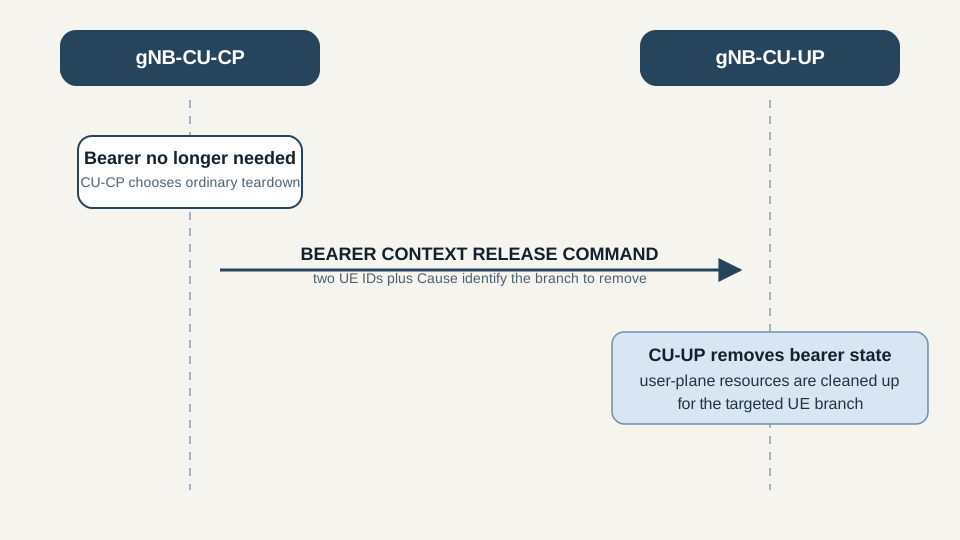
Bearer Context Release Command is the CU-CP telling the CU-UP to tear down the UE's bearer context.
Where this message appears in the call flow
Normal bearer-context teardown
Normal release branch: the CU-CP orders the CU-UP to remove bearer state that is no longer needed.
Call flow position: The CU-CP no longer needs the CU-UP bearer branch for the UE and orders release.
Typical state: The CU-UP still holds the bearer state, but the control plane has decided that the user-plane branch should be removed.
Preconditions:
A bearer context exists at the CU-UP.
The CU-CP has determined that the CU-UP branch should end.
Next likely message: Bearer Context Release Complete
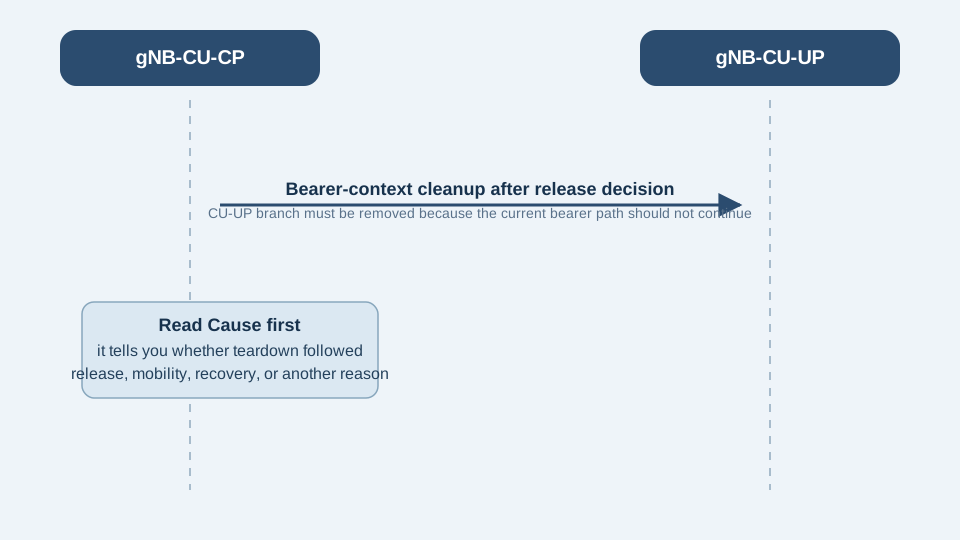
Bearer-context cleanup after release decision
Cleanup branch: the same release command can remove CU-UP bearer state after the CU-CP decides that the current bearer branch should not continue.
Call flow position: The release command is used to clean up CU-UP bearer state after the control plane decides that the current bearer branch should end.
Typical state: The CU-UP must remove bearer resources that should not survive the current release decision.
Preconditions:
The release reason is known at the control plane.
The targeted CU-UP bearer context can be identified by the two UE E1AP IDs.
Next likely message: Bearer Context Release Complete
The release command is structurally smaller than setup or modification because its main job is to identify the existing bearer context and explain why it should be removed.
5G E1AP - Bearer Context Release Command - Example Dump
Read Cause first because it tells you whether the release is ordinary teardown, mobility cleanup, or another failure-driven branch.
The two UE E1AP IDs are critical because release applies to an already existing bearer context.
Important Information Elements
IE
Presence
Description
gNB-CU-CP UE E1AP ID
Mandatory
Mandatory CU-CP side UE identifier used to correlate the release command with the existing bearer context.
gNB-CU-UP UE E1AP ID
Mandatory
Mandatory CU-UP side UE identifier used to identify the bearer context to be released.
Cause
Mandatory
Mandatory release reason explaining why the CU-CP is ordering bearer-context teardown.
Bearer Context Status Change
Optional
Optional status-oriented context that can help describe the bearer state transition associated with the release command.
Detailed field explanation
gNB-CU-CP UE E1AP ID
Mandatory CU-CP side UE identifier used to correlate the release command with the existing bearer context.
Presence: Mandatory
In practice: In practice, compare this field with the original request and with any later release-dependent optional fields so you can see whether the network accepted the same service model the UE asked for.
gNB-CU-UP UE E1AP ID
Mandatory CU-UP side UE identifier used to identify the bearer context to be released.
Presence: Mandatory
In practice: In practice, compare this field with the original request and with any later release-dependent optional fields so you can see whether the network accepted the same service model the UE asked for.
Cause
Mandatory release reason explaining why the CU-CP is ordering bearer-context teardown.
Presence: Mandatory
In practice: In practice, compare this field with the original request and with any later release-dependent optional fields so you can see whether the network accepted the same service model the UE asked for.
Bearer Context Status Change
Optional status-oriented context that can help describe the bearer state transition associated with the release command.
Presence: Optional
In practice: In practice, compare this field with the original request and with any later release-dependent optional fields so you can see whether the network accepted the same service model the UE asked for.
What to check in logs and traces
Match both UE E1AP IDs with the existing CU-UP bearer context.
Inspect Cause before drawing conclusions about why the user-plane branch ended.
Correlate the release command with the preceding setup or modification history of the same bearer context.
Common Issues and Troubleshooting
User-plane traffic disappears and the CU-UP bearer state ends unexpectedly.
Likely cause: A Bearer Context Release Command may have been sent because the control plane decided to tear down the branch.
What to inspect: Check the release cause and correlate it with preceding mobility, rejection, or teardown procedures.
Next step: Treat the release command as the authoritative control-plane teardown instruction for the CU-UP branch.
LTE / 5G / Variant Comparison
Compared with Bearer Context Modification Request
Modification changes an active bearer context in place. Release tears the bearer context down.
FAQ
What is Bearer Context Release Command in 5G E1AP?
It is the E1AP message the gNB-CU-CP sends to the gNB-CU-UP to release an existing bearer context for one UE.
What is mandatory in Bearer Context Release Command?
The core mandatory fields are the CU-CP UE E1AP ID, the CU-UP UE E1AP ID, and Cause.
Decode this message with the 3GPP Decoder, inspect the related message database, or open the matching call flow to see where this signaling step fits in the full procedure.