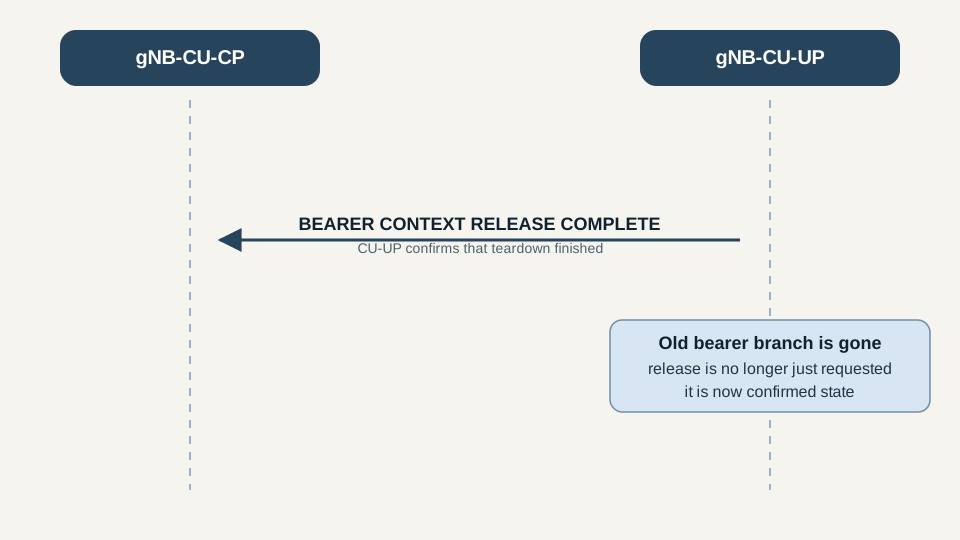
Bearer Context Release Complete is the E1AP successful outcome the gNB-CU-UP returns after bearer-context teardown has finished for the targeted UE branch.
Message Fact Sheet
Protocol
e1ap
Network
5g
Spec
3GPP TS 37.483
Spec Section
Bearer Context Release completion outcome and related IE definitions (Release 18 baseline)
The CU-UP has finished processing Bearer Context Release Command or Bearer Context Release Request and can confirm that teardown is complete.
Main purpose
Confirms that the CU-UP finished the requested bearer-context teardown and that the targeted user-plane branch has been removed.
Main specification
3GPP TS 37.483, Bearer Context Release completion outcome and related IE definitions (Release 18 baseline)
Release added
Release 17
Procedures where used
Bearer Context Release, Bearer cleanup completion
What is Bearer Context Release Complete in simple terms?
Bearer Context Release Complete is the E1AP successful outcome the gNB-CU-UP returns after bearer-context teardown has finished for the targeted UE branch.
Confirms that the CU-UP finished the requested bearer-context teardown and that the targeted user-plane branch has been removed.
Why this message matters
Bearer Context Release Complete is the CU-UP telling the CU-CP that bearer teardown is finished.
Where this message appears in the call flow
Bearer teardown confirmed at CU-UP
Completion branch: the CU-UP confirms that the targeted bearer branch was fully removed.
Call flow position: The CU-UP has completed the requested bearer cleanup and reports final completion back to the CU-CP.
Typical state: The targeted bearer context is no longer active at the CU-UP.
Preconditions:
A release-side procedure was already in progress.
The CU-UP finished the requested teardown path.
Next likely message: Later control-plane continuation on a fresh or different bearer branch
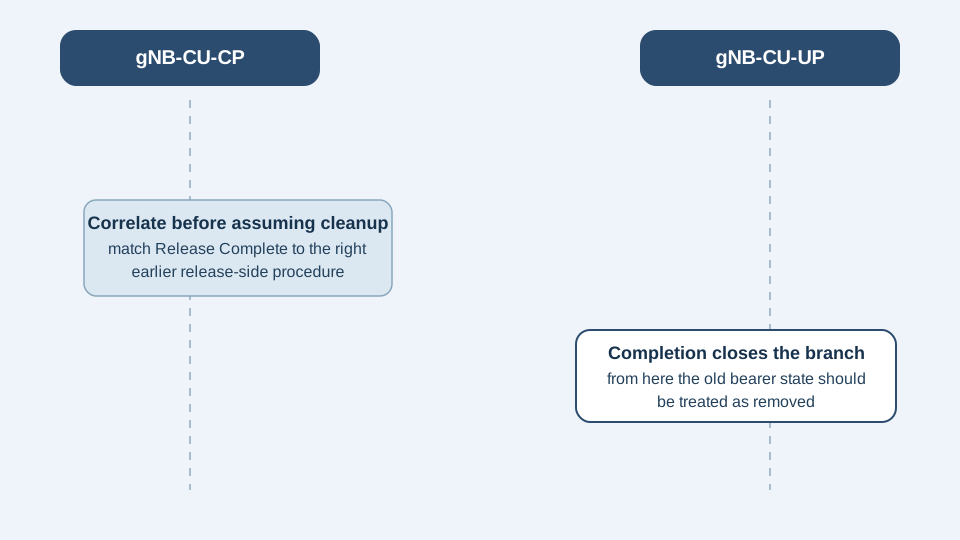
Release completion correlation
Correlation branch: Release Complete closes the release-side procedure and lets the CU-CP treat the old bearer context as gone.
Call flow position: The completion outcome closes the release-side branch for the targeted bearer context.
Typical state: The CU-CP can now treat the old CU-UP bearer state as gone.
Preconditions:
The earlier release-side procedure can be identified by the two UE E1AP IDs.
Next likely message: Subsequent setup or no further action on the released branch
Match the completion to the earlier release-side procedure before doing anything else.
This message is the point where teardown becomes confirmed state rather than just a command.
Important Information Elements
IE
Presence
Description
gNB-CU-CP UE E1AP ID
Mandatory
Mandatory CU-CP side UE identifier used to correlate the release completion with the earlier release-side procedure.
gNB-CU-UP UE E1AP ID
Mandatory
Mandatory CU-UP side UE identifier for the bearer context that was released.
Criticality Diagnostics
Optional
Optional diagnostics if the CU-UP needs to expose protocol handling detail about the completed release.
Detailed field explanation
gNB-CU-CP UE E1AP ID
Mandatory CU-CP side UE identifier used to correlate the release completion with the earlier release-side procedure.
Presence: Mandatory
In practice: In practice, compare this field with the original request and with any later release-dependent optional fields so you can see whether the network accepted the same service model the UE asked for.
gNB-CU-UP UE E1AP ID
Mandatory CU-UP side UE identifier for the bearer context that was released.
Presence: Mandatory
In practice: In practice, compare this field with the original request and with any later release-dependent optional fields so you can see whether the network accepted the same service model the UE asked for.
Criticality Diagnostics
Optional diagnostics if the CU-UP needs to expose protocol handling detail about the completed release.
Presence: Optional
In practice: In practice, compare this field with the original request and with any later release-dependent optional fields so you can see whether the network accepted the same service model the UE asked for.
What to check in logs and traces
Correlate Release Complete with the earlier command or request using both UE identifiers.
Confirm the old bearer branch should now be treated as gone.
If later traffic appears, check whether a new branch was created rather than assuming the old one survived.
Common Issues and Troubleshooting
The CU-CP assumes the bearer is gone, but traces still look ambiguous about cleanup timing.
Likely cause: The release completion may be missing, late, or mis-correlated.
What to inspect: Check for Bearer Context Release Complete and match it to the earlier release-side procedure.
Next step: Treat completion as the authoritative point where the old CU-UP bearer branch is confirmed removed.
Decode this message with the 3GPP Decoder, inspect the related message database, or open the matching call flow to see where this signaling step fits in the full procedure.