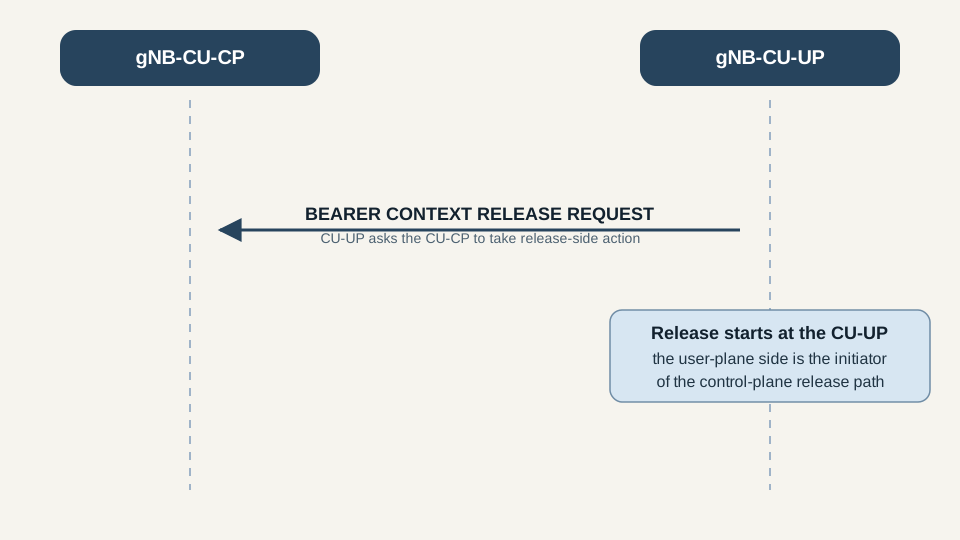
Bearer Context Release Request is the E1AP message the gNB-CU-UP sends to the gNB-CU-CP when the CU-UP needs the control plane to handle release of an existing bearer context.
Message Fact Sheet
Protocol
e1ap
Network
5g
Spec
3GPP TS 37.483
Spec Section
Bearer Context Release Request procedure and related IE definitions (Release 18 baseline)
What is Bearer Context Release Request in simple terms?
Bearer Context Release Request is the E1AP message the gNB-CU-UP sends to the gNB-CU-CP when the CU-UP needs the control plane to handle release of an existing bearer context.
Tells the CU-CP that the CU-UP requires control-plane action to release the current bearer branch for a UE.
Why this message matters
Bearer Context Release Request is the CU-UP asking the CU-CP to start release handling for a bearer branch.
Where this message appears in the call flow
CU-UP initiated bearer-release escalation
Escalation branch: the CU-UP tells the CU-CP that the active bearer branch should move onto the release path.
Call flow position: The CU-UP asks the CU-CP to take release-side control-plane action for an active bearer branch.
Typical state: The bearer branch still exists, but the CU-UP is signaling that it should be released.
Preconditions:
A bearer context exists at the CU-UP.
The CU-UP has determined that the branch should end.
Next likely message: Bearer Context Release Command or another release-side control-plane continuation
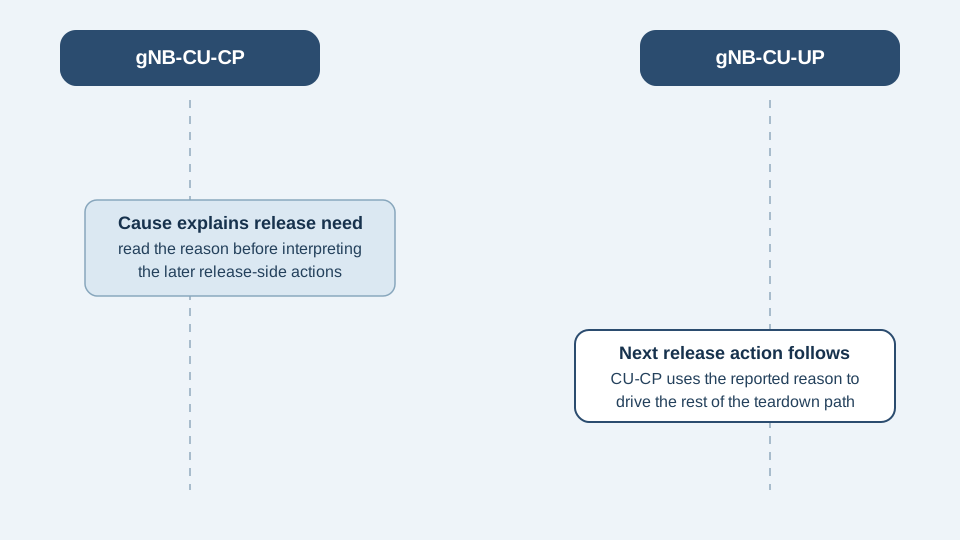
Cause-driven release handling
Cause branch: the release reason reported by the CU-UP guides how the CU-CP handles the teardown sequence.
Call flow position: The request exposes why the CU-UP wants the bearer branch torn down.
Typical state: The CU-CP must interpret the reason and decide how to proceed with release handling.
Preconditions:
The CU-UP can identify the bearer branch and provide the reason for release escalation.
Next likely message: Release-side control-plane action based on the reported reason
Start by noticing the direction: Release Request comes from the CU-UP.
Cause is the first field to inspect because it explains why the user plane is asking for release-side control-plane action.
Important Information Elements
IE
Presence
Description
gNB-CU-CP UE E1AP ID
Mandatory
Mandatory CU-CP side UE identifier used so the control plane can correlate the release request with the right bearer branch.
gNB-CU-UP UE E1AP ID
Mandatory
Mandatory CU-UP side UE identifier for the bearer context the CU-UP wants released.
Cause
Mandatory
Mandatory reason explaining why the CU-UP is requesting control-plane driven release handling.
Detailed field explanation
gNB-CU-CP UE E1AP ID
Mandatory CU-CP side UE identifier used so the control plane can correlate the release request with the right bearer branch.
Presence: Mandatory
In practice: In practice, compare this field with the original request and with any later release-dependent optional fields so you can see whether the network accepted the same service model the UE asked for.
gNB-CU-UP UE E1AP ID
Mandatory CU-UP side UE identifier for the bearer context the CU-UP wants released.
Presence: Mandatory
In practice: In practice, compare this field with the original request and with any later release-dependent optional fields so you can see whether the network accepted the same service model the UE asked for.
Cause
Mandatory reason explaining why the CU-UP is requesting control-plane driven release handling.
Presence: Mandatory
In practice: In practice, compare this field with the original request and with any later release-dependent optional fields so you can see whether the network accepted the same service model the UE asked for.
What to check in logs and traces
Confirm the message direction is CU-UP to CU-CP.
Match both UE identifiers with the active bearer branch under discussion.
Read Cause before deciding what release-side handling should follow.
Common Issues and Troubleshooting
The CU-UP wants the bearer branch torn down, but the control-plane side of the trace looks delayed or inconsistent.
Likely cause: Bearer Context Release Request may be missing, mis-correlated, or not being handled as the release trigger.
What to inspect: Read Bearer Context Release Request and correlate Cause with the later release-side control-plane actions.
Next step: Drive the release sequence from the CU-UP initiated request before interpreting later command or completion messages.
LTE / 5G / Variant Comparison
Compared with Bearer Context Release Command
Release Request is CU-UP initiated and asks the CU-CP to take release action. Release Command is CU-CP initiated and orders the CU-UP to perform release.
FAQ
What is Bearer Context Release Request in 5G E1AP?
It is the E1AP message the CU-UP sends when it needs the CU-CP to handle release of an existing bearer branch.
Why is Bearer Context Release Request important?
It is important because it shows that the release path was initiated from the CU-UP side rather than from the CU-CP side.
Decode this message with the 3GPP Decoder, inspect the related message database, or open the matching call flow to see where this signaling step fits in the full procedure.