Downlink RAN Status Transfer is the AMF-to-target-NG-RAN message used during lossless handover to deliver the RAN status transfer information that was previously reported from the source side.
Message Fact Sheet
Protocol
ngap
Network
5g
Spec
3GPP TS 38.413
Spec Section
Clause 8.4.7 and clause 9.2.3.14 (Release 18 baseline)
Direction
AMF -> target NG-RAN node
Message Type
UE Mobility Management Message
Full message name
5G NGAP - Downlink RAN Status Transfer
Protocol
NGAP
Technology
5G
Direction
AMF -> target NG-RAN node
Interface
N2 / NG-C
Signaling bearer / channel
UE-associated NGAP signaling / SCTP carried NGAP initiatingMessage in the Downlink RAN Status Transfer procedure
Typical trigger
The AMF has received source-side status-transfer information through UPLINK RAN STATUS TRANSFER and now needs to relay that state to the target NG-RAN during lossless handover.
Main purpose
Forwards source-side PDCP and DRB status toward the target NG-RAN so the target side can continue packet handling with the correct sequence continuity, forwarding state, and lossless-handover context.
Downlink RAN Status Transfer, UE Mobility Management, N2 handover, Lossless handover continuity, PDCP status transfer handling
What is Downlink RAN Status Transfer in simple terms?
Downlink RAN Status Transfer is the AMF-to-target-NG-RAN message used during lossless handover to deliver the RAN status transfer information that was previously reported from the source side.
Forwards source-side PDCP and DRB status toward the target NG-RAN so the target side can continue packet handling with the correct sequence continuity, forwarding state, and lossless-handover context.
Why this message matters
Downlink RAN Status Transfer is the AMF passing source-side packet-status information to the target NG-RAN so the target can continue lossless handover with the right PDCP state.
Where this message appears in the call flow
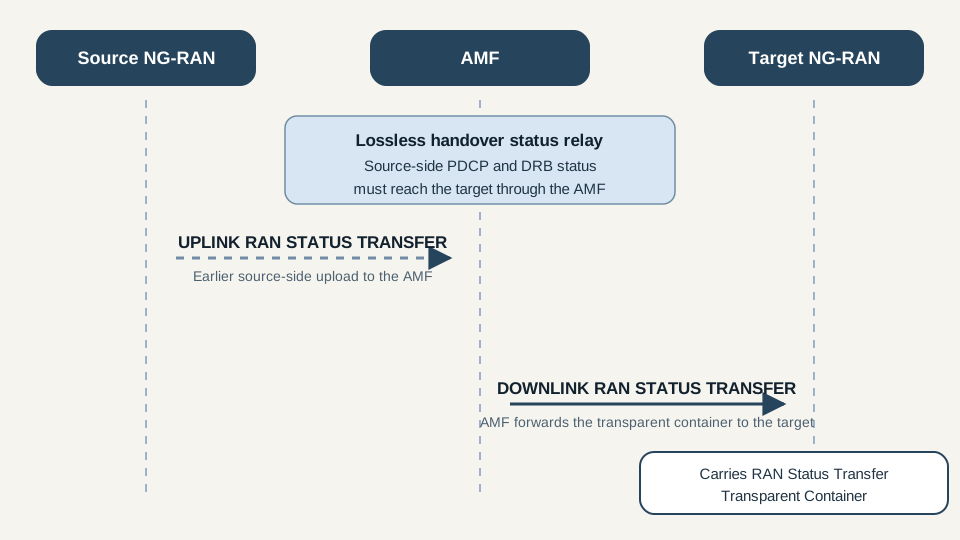
Lossless handover status relay
Relay branch: after the source side reports status upward, the AMF forwards that status to the target NG-RAN with DOWNLINK RAN STATUS TRANSFER.
Call flow position: After the source NG-RAN has already sent UPLINK RAN STATUS TRANSFER to the AMF, the AMF forwards the status-transfer payload downward to the target NG-RAN.
Typical state: The handover is already in progress, and the target side is being aligned with the source-side PDCP and DRB status so packet handling can continue without avoidable loss or duplication.
Preconditions:
The handover path uses status transfer for lossless continuity.
The source NG-RAN already provided RAN status transfer information to the AMF.
The target NG-RAN already has the UE context needed to correlate AMF UE NGAP ID and RAN UE NGAP ID.
Next likely message: Target-side packet handling continues using the transferred status, followed later by Handover Notify and Path Switch Request in the wider mobility branch
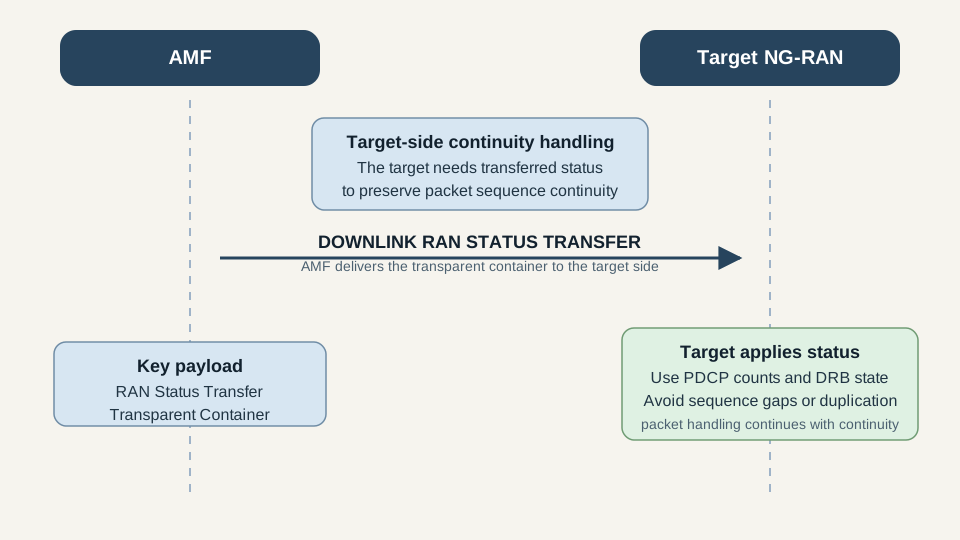
Target-side PDCP continuity handling
Continuity branch: the target uses the transparent-container status to continue packet handling with the correct PDCP sequence state.
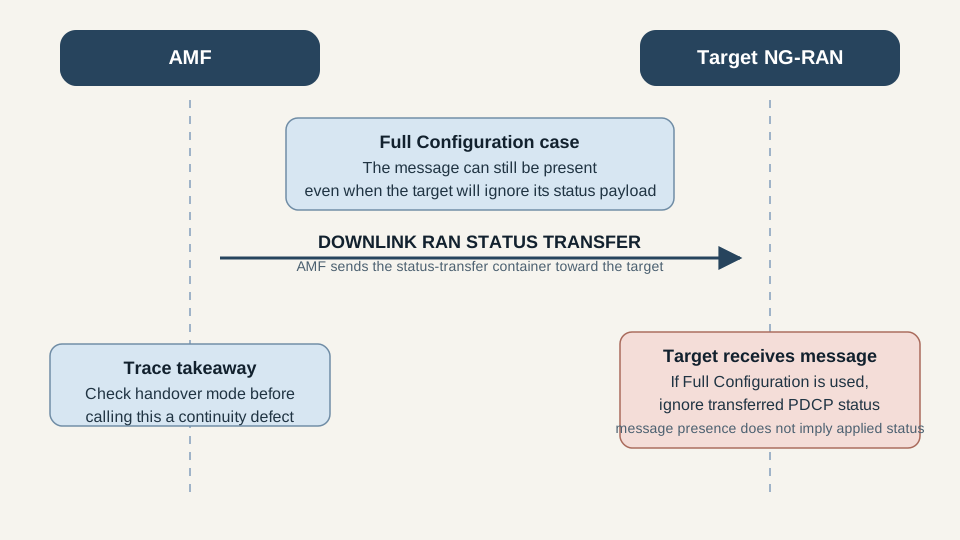
Full Configuration bypass behavior
Configuration branch: when the handover uses Full Configuration, the target receives the message but ignores the transferred status information.
Domain: UE mobility management and lossless handover status continuity
Signaling bearer: UE-associated NGAP signaling
Logical channel: SCTP carried NGAP initiatingMessage in the Downlink RAN Status Transfer procedure
Transport / encapsulation: NGAP over SCTP/IP between AMF and target NG-RAN
Security context: The message is sent on an existing UE-associated NGAP context during handover handling. Its job is continuity of radio-user-plane status, not security establishment.
Message Structure Overview
DOWNLINK RAN STATUS TRANSFER is an AMF-to-target initiatingMessage in the NGAP UE mobility management set.
The message is compact because almost all of its operational value lives inside the mandatory RAN Status Transfer Transparent Container.
AMF UE NGAP ID and RAN UE NGAP ID are both mandatory because the AMF must map the transferred status to the correct target-side UE context.
This message is the downward counterpart to source-side UPLINK RAN STATUS TRANSFER.
Its purpose is not to decide handover admission, but to preserve PDCP sequence continuity and reduce packet loss or duplication during a lossless move.
If the handover uses Full Configuration, the target NG-RAN ignores the transferred status information instead of applying it.
ASN.1 for 5G NGAP - Downlink RAN Status Transfer
DownlinkRANStatusTransfer ::= SEQUENCE {
  protocolIEs ProtocolIE-Container { {DownlinkRANStatusTransfer-IEs} },
  ...
}

DownlinkRANStatusTransfer-IEs NGAP-PROTOCOL-IES ::= {
  { AMF UE NGAP ID, mandatory } |
  { RAN UE NGAP ID, mandatory } |
  { RAN Status Transfer Transparent Container, mandatory },
  ...
}

RAN Status Transfer Transparent Container ::= OCTET STRING
How to read this ASN.1
Read the message in two passes: first confirm the AMF UE NGAP ID and target-side RAN UE NGAP ID point to the expected handover branch, then inspect the RAN Status Transfer Transparent Container because that is where the practical PDCP and DRB state lives.
5G NGAP - Downlink RAN Status Transfer - Example Dump
Treat this as a teaching example based on the spec structure, not as a captured trace.
The top-level message is simple, but the transparent container is the operational center of gravity.
When debugging handover packet continuity, this message matters only if the handover branch is meant to preserve source-side PDCP status.
If Full Configuration is used, the target may legitimately ignore the transferred status even though the message is present.
Important Information Elements
IE
Presence
Description
Message Type
Mandatory
Identifies the NGAP PDU as DOWNLINK RAN STATUS TRANSFER.
AMF UE NGAP ID
Mandatory
Mandatory AMF-side UE identifier used to bind the message to the correct handover context.
RAN UE NGAP ID
Mandatory
Mandatory target-side UE identifier used to correlate the transferred status with the active target NG-RAN UE context.
RAN Status Transfer Transparent Container
Mandatory
Mandatory payload carrying the status-transfer content, including PDCP and DRB-related state that the target side uses during lossless handover handling.
Detailed field explanation
Message Type
Identifies the NGAP PDU as DOWNLINK RAN STATUS TRANSFER.
Presence: Mandatory
In practice: In practice, compare this field with the original request and with any later release-dependent optional fields so you can see whether the network accepted the same service model the UE asked for.
AMF UE NGAP ID
Mandatory AMF-side UE identifier used to bind the message to the correct handover context.
Presence: Mandatory
In practice: In practice, compare this field with the original request and with any later release-dependent optional fields so you can see whether the network accepted the same service model the UE asked for.
RAN UE NGAP ID
Mandatory target-side UE identifier used to correlate the transferred status with the active target NG-RAN UE context.
Presence: Mandatory
In practice: In practice, compare this field with the original request and with any later release-dependent optional fields so you can see whether the network accepted the same service model the UE asked for.
RAN Status Transfer Transparent Container
Mandatory payload carrying the status-transfer content, including PDCP and DRB-related state that the target side uses during lossless handover handling.
Presence: Mandatory
In practice: In practice, compare this field with the original request and with any later release-dependent optional fields so you can see whether the network accepted the same service model the UE asked for.
What to check in logs and traces
Confirm DOWNLINK RAN STATUS TRANSFER appears after the source-side uplink status-transfer stage.
Match AMF UE NGAP ID and RAN UE NGAP ID to the target-side handover context before decoding the container.
Verify that RAN Status Transfer Transparent Container is present and non-empty.
Check whether the handover uses Full Configuration before assuming the target should apply the transferred status.
Correlate packet duplication, packet loss, or PDCP sequence gaps with whether the target applied or ignored the transferred state.
Read this message together with later Handover Notify and Path Switch Request so the full mobility branch stays aligned.
Common Issues and Troubleshooting
The source reported status upward, but the target side still shows continuity gaps.
Likely cause: DOWNLINK RAN STATUS TRANSFER may be missing, delayed, mapped to the wrong target UE context, or not applied at the target.
What to inspect: Check for UPLINK RAN STATUS TRANSFER first, then verify DOWNLINK RAN STATUS TRANSFER for the same UE identity pair and inspect the target-side handling of the transparent container.
Next step: Fix the AMF relay or target-side context correlation before blaming generic radio interruption.
The target receives the message, but packet duplication or packet loss still appears during handover.
Likely cause: The PDCP status inside the transparent container may be inconsistent, incomplete, or ignored because the handover uses Full Configuration.
What to inspect: Decode the DRB and PDCP status details if available, and confirm whether Full Configuration applies on that handover branch.
Next step: Treat PDCP continuity handling as the primary debug path rather than assuming the message presence alone guarantees lossless behavior.
Trace correlation shows the wrong UE context on the target side.
Likely cause: AMF UE NGAP ID or RAN UE NGAP ID may not match the actual active target context.
What to inspect: Compare the identifiers against earlier Handover Request Acknowledge and later Handover Notify or Path Switch Request for the same move.
Next step: Correct UE-context mapping so the transferred status lands on the intended target-side UE instance.
Engineers expect the target to use the transferred state, but it does not.
Likely cause: The handover may be using Full Configuration, in which case the target ignores the received status-transfer information.
What to inspect: Check the handover mode and target-side configuration logic before calling the behavior an implementation defect.
Next step: Separate valid Full Configuration behavior from real lossless-handover failures.
The message exists in traces, but it is unclear whether it had any operational effect.
Likely cause: The message is being read in isolation rather than together with target-side packet handling and later mobility events.
What to inspect: Correlate the container arrival with target-side PDCP continuity, forwarding behavior, and post-handover packet sequencing.
Next step: Use end-to-end packet continuity and target-side status application as the success criteria, not message presence alone.
LTE / 5G / Variant Comparison
Compared with Uplink RAN Status Transfer
UPLINK RAN STATUS TRANSFER carries source-side status from the source NG-RAN up to the AMF. DOWNLINK RAN STATUS TRANSFER is the AMF-to-target relay that delivers that status to the target side.
Compared with Handover Command
Handover Command tells the source side to execute the handover. DOWNLINK RAN STATUS TRANSFER does not command execution; it preserves packet-handling continuity at the target side.
Compared with Path Switch Request
DOWNLINK RAN STATUS TRANSFER handles lossless PDCP continuity during the move. Path Switch Request is the later target-to-AMF message that moves the core-side user-plane path after the UE is already on the target side.
FAQ
What is Downlink RAN Status Transfer in 5G NGAP?
It is the AMF-to-target-NG-RAN message used during lossless handover to deliver source-side RAN and PDCP status to the target side.
Who sends Downlink RAN Status Transfer?
The AMF sends DOWNLINK RAN STATUS TRANSFER to the target NG-RAN node.
What does the RAN Status Transfer Transparent Container carry?
It carries the status-transfer payload the target needs for lossless handling, including PDCP and DRB-related state.
How is it related to Uplink RAN Status Transfer?
UPLINK RAN STATUS TRANSFER carries the status from the source NG-RAN to the AMF, and DOWNLINK RAN STATUS TRANSFER is the AMF-to-target message that relays it onward.
Why is PDCP status important during handover?
It helps the target continue packet handling with the right sequence continuity so packet loss, duplication, and gaps are reduced during the move.
What happens if Full Configuration is used?
The target NG-RAN ignores the received status-transfer information even if the message is present.
Can missing status transfer cause packet loss?
Yes. If the lossless-handover branch expects transferred PDCP status and the target does not receive or apply it, packet loss, duplication, or sequence mismatch can result.
Is this a UE-associated NGAP procedure?
Yes. DOWNLINK RAN STATUS TRANSFER is carried as UE-associated NGAP signaling.
Decode this message with the 3GPP Decoder, inspect the related message database, or open the matching call flow to see where this signaling step fits in the full procedure.