Handover Success is the AMF-to-source-NG-RAN message used during DAPS handover to inform the source side that the UE has successfully accessed the target NG-RAN node.
UE-associated NGAP signaling / SCTP carried NGAP initiatingMessage from AMF to source NG-RAN in the Handover Success procedure
Typical trigger
The AMF receives Handover Notify from the target NG-RAN with Notify Source NG-RAN Node IE included and, if supported, informs the source NG-RAN that target access succeeded during DAPS handover.
Main purpose
Informs the source NG-RAN that the UE has successfully accessed the target NG-RAN during DAPS handover after the AMF receives a qualifying Handover Notify from the target side.
Handover Success is the AMF-to-source-NG-RAN message used during DAPS handover to inform the source side that the UE has successfully accessed the target NG-RAN node.
Informs the source NG-RAN that the UE has successfully accessed the target NG-RAN during DAPS handover after the AMF receives a qualifying Handover Notify from the target side.
Why this message matters
Handover Success is the AMF telling the source NG-RAN, during DAPS handover, that the UE really reached the target side.
Where this message appears in the call flow
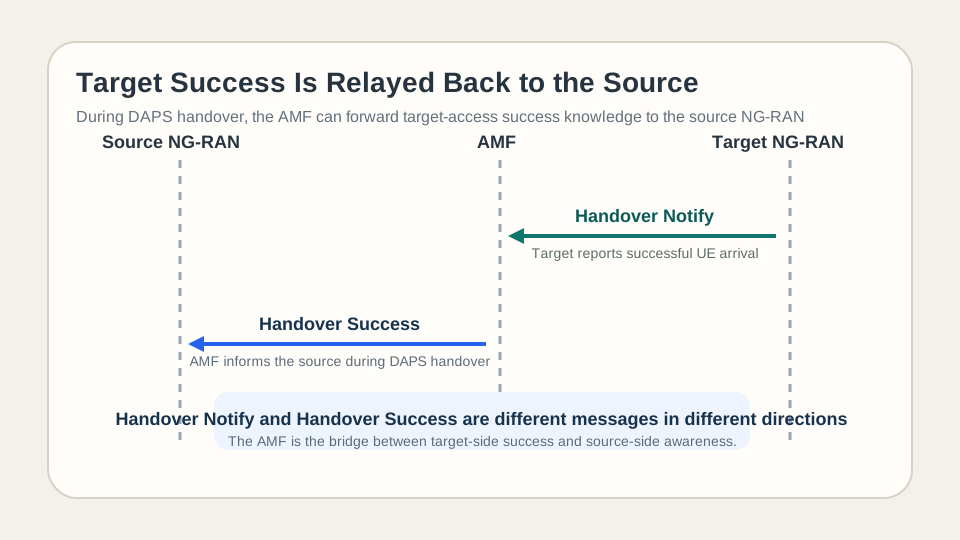
AMF-mediated DAPS handover success notification
Relay branch: the target reports successful arrival, and the AMF propagates that success to the source side during DAPS handover.
Call flow position: After the target NG-RAN reports successful UE arrival with Handover Notify, the AMF notifies the source NG-RAN that target access succeeded.
Typical state: The target side has already confirmed UE access, and the source side is now being informed through a dedicated DAPS-handover notification procedure.
Preconditions:
The handover scenario is a DAPS handover.
The target NG-RAN sent Handover Notify to the AMF.
Handover Notify included Notify Source NG-RAN Node IE when source notification is expected.
The AMF supports sending Handover Success toward the source NG-RAN.
Next likely message: Source-side DAPS handling continues with knowledge that the UE successfully accessed the target
Target success is relayed back to the source
Relay branch: the target reports successful arrival, and the AMF propagates that success to the source side during DAPS handover.
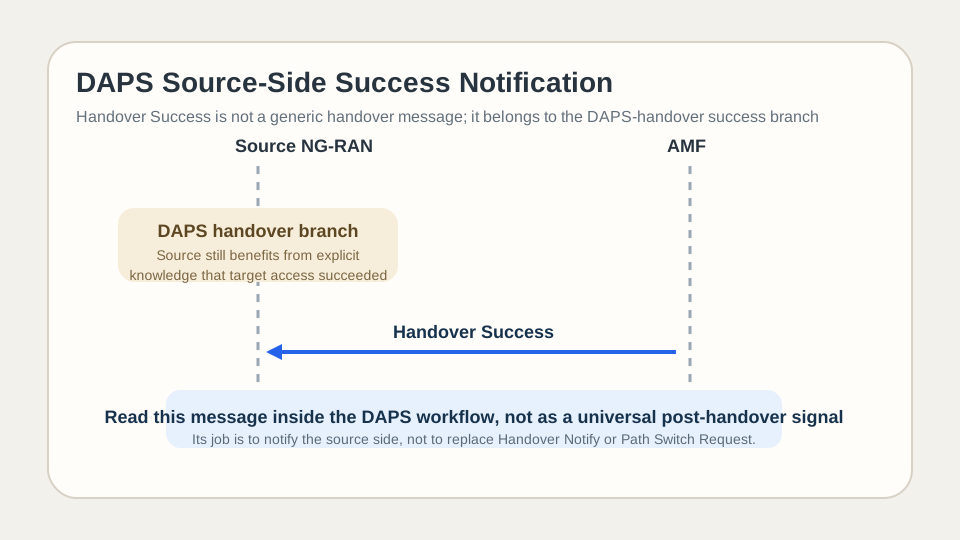
DAPS source-side success notification
DAPS branch: Handover Success is a source-facing notification used in the DAPS-specific success procedure.
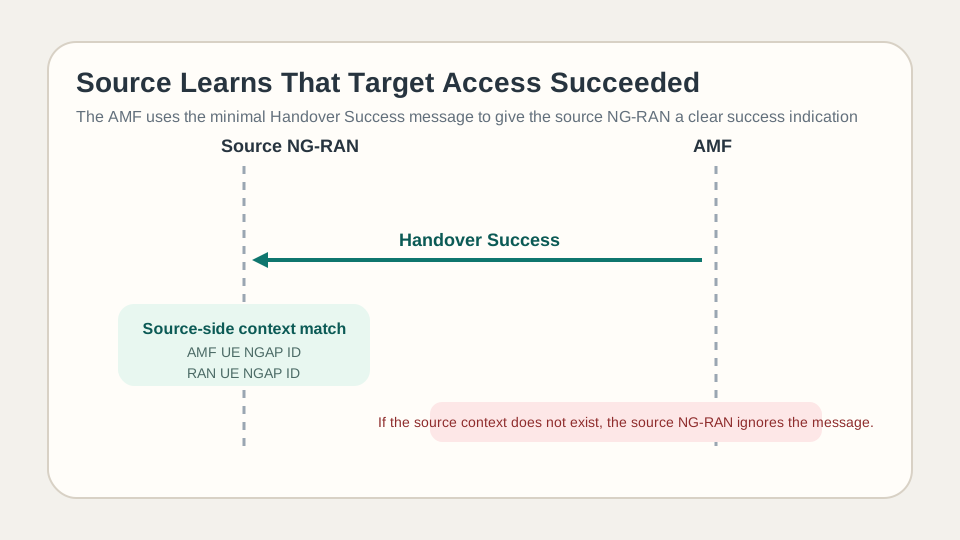
Source learns that target access succeeded
Awareness branch: the source NG-RAN receives a clean NGAP indication that the UE successfully accessed the target.
Call flow position
Previous message(s):Handover Notify, Successful UE access at the target NG-RAN
Next message(s): DAPS source-side behavior after successful target access awareness, Source-side handover state progression, Later post-handover procedures as applicable
Message direction and transport
Sender and receiver: AMF -> source NG-RAN node
Interface: N2 / NG-C
Domain: UE mobility management and DAPS handover success notification
Signaling bearer: UE-associated NGAP signaling
Logical channel: SCTP carried NGAP initiatingMessage from AMF to source NG-RAN in the Handover Success procedure
Transport / encapsulation: NGAP over SCTP/IP between AMF and source NG-RAN
Security context: The message is sent on an existing UE-associated handover context. Its role is source-side success notification during DAPS handover rather than target preparation or path-switch signaling.
Message Structure Overview
Handover Success is a compact AMF-to-source message used only in the DAPS handover context.
The message is triggered by a qualifying Handover Notify from the target side rather than by the source side directly.
Its payload is intentionally minimal and consists only of the UE identity pair plus the message identity.
Operationally, it closes the notification gap between target-side success and source-side awareness.
If the referenced source-side context does not exist, the source NG-RAN ignores the message.
Decode Handover Success very simply: first match AMF UE NGAP ID and RAN UE NGAP ID to the source-side UE context, then confirm that the surrounding call flow is a DAPS handover branch that previously included Handover Notify from the target side.
Treat this as a teaching example based on the spec structure, not as a captured trace.
The message is intentionally minimal because its purpose is source-side notification of successful target access, not detailed handover control.
Read it together with the preceding Handover Notify and the DAPS-handover context.
Important Information Elements
IE
Presence
Description
Message Type
Mandatory
Identifies the NGAP PDU as Handover Success.
AMF UE NGAP ID
Mandatory
Mandatory AMF-side UE identifier used to map the success indication to the correct UE context.
RAN UE NGAP ID
Mandatory
Mandatory source-side UE identifier used by the source NG-RAN to match the message to the correct UE context.
Detailed field explanation
Message Type
Identifies the NGAP PDU as Handover Success.
Presence: Mandatory
In practice: In practice, compare this field with the original request and with any later release-dependent optional fields so you can see whether the network accepted the same service model the UE asked for.
AMF UE NGAP ID
Mandatory AMF-side UE identifier used to map the success indication to the correct UE context.
Presence: Mandatory
In practice: In practice, compare this field with the original request and with any later release-dependent optional fields so you can see whether the network accepted the same service model the UE asked for.
RAN UE NGAP ID
Mandatory source-side UE identifier used by the source NG-RAN to match the message to the correct UE context.
Presence: Mandatory
In practice: In practice, compare this field with the original request and with any later release-dependent optional fields so you can see whether the network accepted the same service model the UE asked for.
What to check in logs and traces
Confirm Handover Notify appears before Handover Success for the same overall DAPS handover branch.
Verify Handover Notify included Notify Source NG-RAN Node IE when the AMF is expected to notify the source side.
Match AMF UE NGAP ID and RAN UE NGAP ID against the source-side UE context before drawing conclusions.
Confirm the scenario is actually DAPS handover rather than a generic handover where Handover Success is not expected.
If the source appears to ignore the message, check whether the referenced context still exists.
Common Issues and Troubleshooting
Engineers expect Handover Success after every successful handover.
Likely cause: Handover Success is DAPS-specific rather than a generic success indication for all handovers.
What to inspect: Check whether the handover is actually a DAPS handover and whether the target report requested source notification.
Next step: Do not treat absence of Handover Success as abnormal in non-DAPS branches.
The target reported success, but the source side never received Handover Success.
Likely cause: Notify Source NG-RAN Node IE may have been absent in Handover Notify, or the AMF may not support the source-notification behavior.
What to inspect: Decode Handover Notify first and verify whether the source-notification indication was included.
Next step: Debug the AMF-mediated notification condition rather than the target-access success itself.
Handover Success appears in traces, but the source side takes no action.
Likely cause: The source-side UE context may already be gone, which makes ignore behavior valid.
What to inspect: Check whether the referenced RAN UE NGAP ID and AMF UE NGAP ID still map to a live source-side context.
Next step: Treat ignore behavior as spec-compliant when the context no longer exists.
LTE / 5G / Variant Comparison
Compared with Handover Notify
Handover Notify is sent by the target NG-RAN to the AMF when the UE reaches the target. Handover Success is sent later by the AMF to the source NG-RAN during DAPS handover.
Why Handover Success is minimal
The AMF is only notifying the source side of successful target access, so the message needs only AMF UE NGAP ID and RAN UE NGAP ID.
Why DAPS context matters
The page should be read in the DAPS-handover context. If the branch is not DAPS, expecting Handover Success can lead to false troubleshooting conclusions.
FAQ
What is Handover Success in 5G NGAP?
It is the AMF-to-source-NG-RAN message used during DAPS handover to inform the source side that the UE successfully accessed the target NG-RAN.
Who sends Handover Success?
The AMF sends Handover Success to the source NG-RAN node.
Is Handover Success used in every handover?
No. Clause 8.4.8.1 explicitly says the Handover Success procedure is used during DAPS handover.
What is the difference between Handover Success and Handover Notify?
Handover Notify is the target-to-AMF completion report, while Handover Success is the AMF-to-source notification that can follow it in DAPS handover.
When does the AMF send Handover Success to the source NG-RAN?
It sends Handover Success after receiving a qualifying Handover Notify from the target side during DAPS handover.
What triggers Handover Success after Handover Notify?
The trigger is target-side successful UE access reported in Handover Notify together with Notify Source NG-RAN Node IE, if supported.
What IEs are present in Handover Success?
The message contains AMF UE NGAP ID and RAN UE NGAP ID as its only listed information elements besides the message identity.
What happens if the source NG-RAN has no matching UE context?
Clause 8.4.8.3 says the source NG-RAN shall ignore Handover Success if the referenced context does not exist.
Decode this message with the 3GPP Decoder, inspect the related message database, or open the matching call flow to see where this signaling step fits in the full procedure.