PDU Session Resource Release Command is the NGAP message the AMF sends to the NG-RAN to request release of already established PDU session resources for a given UE.
AMF has decided that one or more established PDU session resources for the UE must be released and needs the NG-RAN to remove the corresponding access-side resources.
Main purpose
Requests the NG-RAN to release one or more already established PDU session resources while keeping the action tied to a specific UE-associated NGAP context through the AMF and RAN UE identifiers.
What is PDU Session Resource Release Command in simple terms?
PDU Session Resource Release Command is the NGAP message the AMF sends to the NG-RAN to request release of already established PDU session resources for a given UE.
Requests the NG-RAN to release one or more already established PDU session resources while keeping the action tied to a specific UE-associated NGAP context through the AMF and RAN UE identifiers.
Why this message matters
PDU Session Resource Release Command is the AMF telling the gNB to remove already established radio and N2-associated resources for specific PDU sessions on a known UE context.
Where this message appears in the call flow
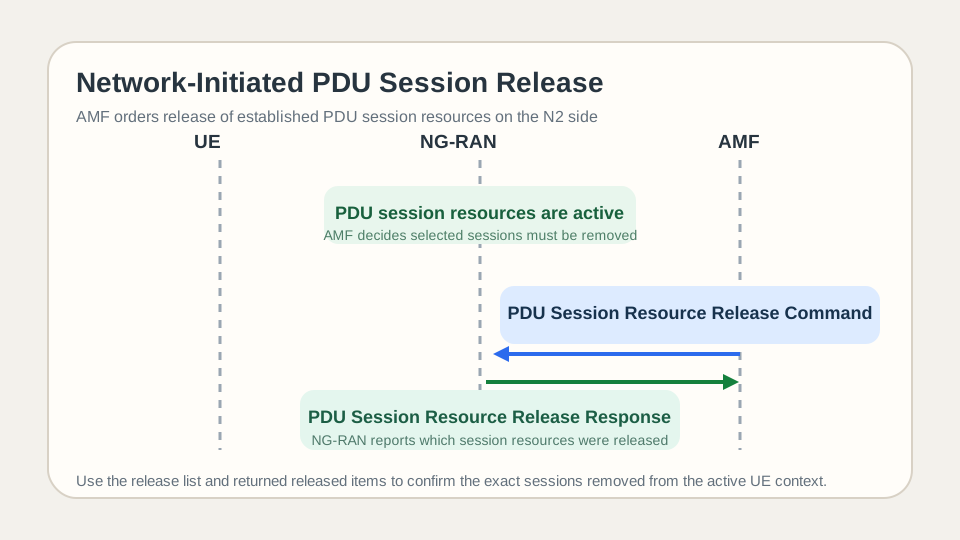
Network-initiated PDU session release
Common release branch: AMF orders NG-RAN to remove selected established PDU session resources for the identified UE.
Call flow position: AMF sends the command after deciding that established PDU session resources must be removed from the NG-RAN side for the identified UE.
Typical state: The UE-associated NGAP context is still valid, but one or more session resources are no longer meant to stay active.
Preconditions:
AMF UE NGAP ID and RAN UE NGAP ID mapping is valid for the target UE context.
At least one PDU session resource to release is identified in the release list.
The release command transfer is available for each listed PDU session resource item.
Next likely message: PDU Session Resource Release Response
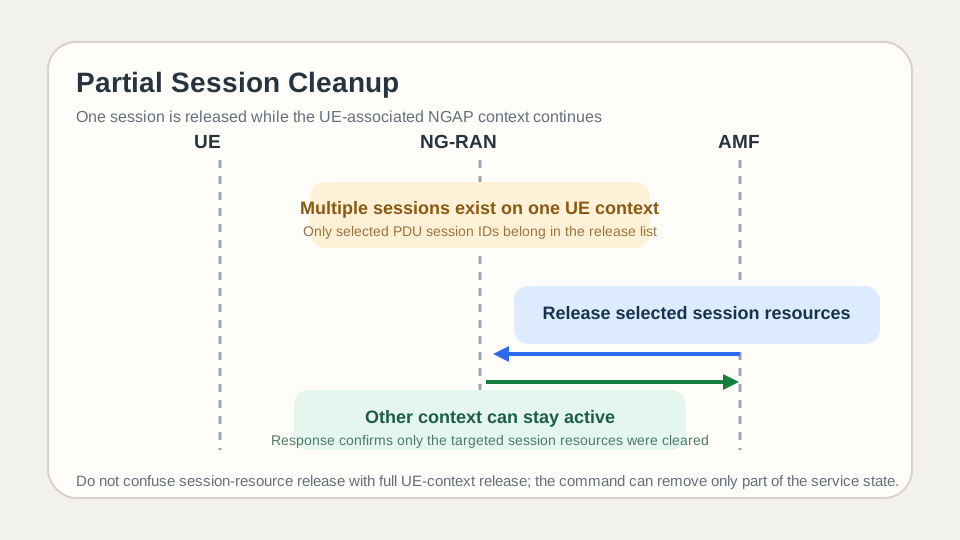
Partial session cleanup on a live UE context
Partial cleanup branch: one session is removed while the UE-associated NGAP context and other service state can remain active.
Call flow position: AMF removes selected PDU session resources while the broader UE-associated NGAP context and possibly other sessions remain active.
Typical state: The UE can still have an active signaling context or additional sessions even though listed session resources are being removed.
Preconditions:
The UE context stays addressable through both UE NGAP identifiers.
The release list contains only the session resources that must be removed.
Next likely message: PDU Session Resource Release Response or later follow-on signaling for remaining sessions
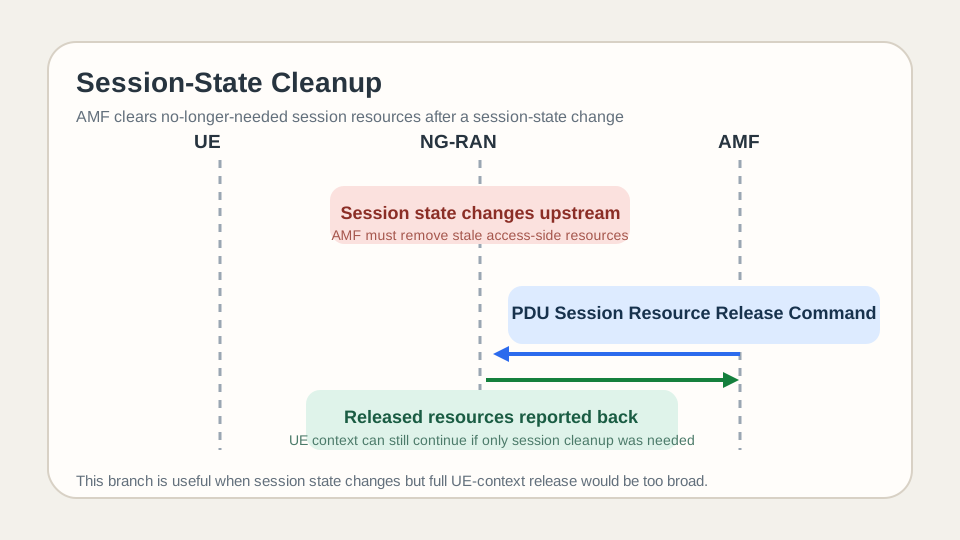
Resource cleanup after session-state change
Cleanup branch: AMF clears no-longer-needed session resources without necessarily releasing the full UE context.
Call flow position: AMF uses the command to clear access-side session resources after a core-side session-state decision made continuation of those resources unnecessary.
Typical state: Session-level cleanup is required even though the overall UE association may continue for other control or data activity.
Preconditions:
AMF has determined that the affected PDU session resources are already established and must now be removed.
The NG-RAN still holds session resources corresponding to the listed PDU session IDs.
Next likely message: PDU Session Resource Release Response
Transport / encapsulation: NGAP over SCTP/IP between AMF and NG-RAN
Security context: The message operates on an existing UE-associated NGAP context. It does not build a new security baseline; it removes already established access-side session resources for the identified UE.
Message Structure Overview
PDU Session Resource Release Command is the AMF-to-NG-RAN initiating message for the PDU Session Resource Release procedure.
AMF UE NGAP ID and RAN UE NGAP ID are the mandatory correlation anchors for the targeted UE-associated context.
The release list is the operational center of the message because each listed PDU session resource item points to a specific session resource removal action.
The per-session transfer payload is defined separately in TS 38.413 section 9.3.4.12 and is where the session-specific release reason is carried.
ASN.1 for 5G NGAP - PDU Session Resource Release Command
PDUSessionResourceReleaseCommand ::= SEQUENCE {
  protocolIEs ProtocolIE-Container { {PDUSessionResourceReleaseCommand-IEs} },
  ...
}

PDUSessionResourceReleaseCommand-IEs NGAP-PROTOCOL-IES ::= {
  { ID id-AMF-UE-NGAP-ID                        CRITICALITY reject TYPE AMF-UE-NGAP-ID                        PRESENCE mandatory } |
  { ID id-RAN-UE-NGAP-ID                        CRITICALITY reject TYPE RAN-UE-NGAP-ID                        PRESENCE mandatory } |
  { ID id-RANPagingPriority                     CRITICALITY ignore TYPE RANPagingPriority                     PRESENCE optional  } |
  { ID id-NAS-PDU                               CRITICALITY reject TYPE NAS-PDU                               PRESENCE optional  } |
  { ID id-PDUSessionResourceToReleaseListRelCmd CRITICALITY reject TYPE PDUSessionResourceToReleaseListRelCmd PRESENCE mandatory },
  ...
}
How to read this ASN.1
Read the UE identifier pair first, then enumerate the PDU Session Resource To Release List Rel Cmd item by item. For each listed session, the command transfer defined in section 9.3.4.12 carries the release-specific session payload and associated cause information.
The list may contain one or multiple PDU session resource items, so always decode it as a per-session release set rather than a single generic action.
Section 9.3.4.12 defines the PDU Session Resource Release Command Transfer; the extracted Release 18 section text explicitly shows Cause inside that transfer.
If NAS-PDU is present, correlate it with the release branch instead of assuming the NGAP message alone explains the entire user-visible service change.
Important Information Elements
IE
Presence
Description
AMF UE NGAP ID
Mandatory
Mandatory AMF-side UE identifier used to bind the command to the correct UE-associated NGAP context.
RAN UE NGAP ID
Mandatory
Mandatory NG-RAN-side UE identifier used to select the correct radio-side UE context for session resource release.
RAN Paging Priority
Optional
Optional paging-priority-related context that may accompany the command when release handling is tied to priority-aware access behavior.
NAS-PDU
Optional
Optional embedded NAS payload that can accompany the release command when the wider procedure also needs NAS signaling toward the UE.
PDU Session Resource To Release List Rel Cmd
Mandatory
Mandatory list of PDU session resource items to be released. Each item identifies the target PDU session and carries the PDU Session Resource Release Command Transfer defined in TS 38.413 section 9.3.4.12.
Detailed field explanation
AMF UE NGAP ID
Mandatory AMF-side UE identifier used to bind the command to the correct UE-associated NGAP context.
Presence: Mandatory
In practice: In practice, compare this field with the original request and with any later release-dependent optional fields so you can see whether the network accepted the same service model the UE asked for.
RAN UE NGAP ID
Mandatory NG-RAN-side UE identifier used to select the correct radio-side UE context for session resource release.
Presence: Mandatory
In practice: In practice, compare this field with the original request and with any later release-dependent optional fields so you can see whether the network accepted the same service model the UE asked for.
RAN Paging Priority
Optional paging-priority-related context that may accompany the command when release handling is tied to priority-aware access behavior.
Presence: Optional
In practice: In practice, compare this field with the original request and with any later release-dependent optional fields so you can see whether the network accepted the same service model the UE asked for.
NAS-PDU
Optional embedded NAS payload that can accompany the release command when the wider procedure also needs NAS signaling toward the UE.
Presence: Optional
In practice: In practice, compare this field with the original request and with any later release-dependent optional fields so you can see whether the network accepted the same service model the UE asked for.
PDU Session Resource To Release List Rel Cmd
Mandatory list of PDU session resource items to be released. Each item identifies the target PDU session and carries the PDU Session Resource Release Command Transfer defined in TS 38.413 section 9.3.4.12.
Presence: Mandatory
In practice: In practice, compare this field with the original request and with any later release-dependent optional fields so you can see whether the network accepted the same service model the UE asked for.
What to check in logs and traces
Verify AMF UE NGAP ID and RAN UE NGAP ID match the live UE-associated NGAP context you intend to inspect.
List every PDU session ID inside PDU Session Resource To Release List Rel Cmd before checking the response.
Inspect the per-session command transfer for the release-specific cause carried in section 9.3.4.12.
Check whether NAS-PDU is present and whether it explains the wider service-release branch.
Compare the commanded release list with the later PDU Session Resource Release Response list to confirm that the intended sessions were actually removed.
Common Issues and Troubleshooting
AMF sends PDU Session Resource Release Command but the wrong session appears to be removed.
Likely cause: The release list may contain a different PDU Session ID set than expected, or trace correlation may be mixing sessions inside the same UE context.
What to inspect: Read the release list item by item and correlate each PDU Session ID with the earlier setup history for the same AMF UE NGAP ID and RAN UE NGAP ID.
Next step: Fix session-ID correlation first before treating the problem as a transport or NGAP encoding failure.
The command is present, but access-side resources do not appear to clear cleanly.
Likely cause: NG-RAN may not have completed the expected per-session release action, or later response items may show a narrower released set than the command requested.
What to inspect: Compare the command list with PDU Session Resource Release Response and inspect each session transfer branch rather than assuming one top-level outcome.
Next step: Debug release item by item and verify whether stale user-plane or radio resources remained after the response.
Release signaling is seen together with NAS teardown, but the trace looks inconsistent.
Likely cause: The optional NAS-PDU may carry the service-level narrative while the NGAP command only removes access-side session resources.
What to inspect: Decode the NAS branch and the NGAP release list together, then confirm both refer to the same UE context and PDU session IDs.
Next step: Treat the issue as a multi-layer correlation problem instead of reading NGAP or NAS in isolation.
LTE / 5G / Variant Comparison
Compared with PDU Session Resource Setup Request
Setup Request asks NG-RAN to create session resources. PDU Session Resource Release Command asks NG-RAN to remove already established session resources for identified PDU sessions.
Compared with PDU Session Resource Release Response
Command carries the AMF release order. Response reports which PDU session resources the NG-RAN says it has released for that UE context.
FAQ
What is PDU Session Resource Release Command in 5G NGAP?
It is the AMF-to-NG-RAN message used to request release of already established PDU session resources for a given UE.
What are the key mandatory fields in this message?
AMF UE NGAP ID, RAN UE NGAP ID, and PDU Session Resource To Release List Rel Cmd are the mandatory operational core.
Does this command always release the whole UE context?
No. It targets listed PDU session resources. The broader UE-associated NGAP context can continue if other signaling or sessions remain active.
What should I inspect first when this command looks wrong in a trace?
First verify the UE NGAP identifiers, then inspect the list of PDU Session IDs to release, and finally compare that list with the later release response.
Decode this message with the 3GPP Decoder, inspect the related message database, or open the matching call flow to see where this signaling step fits in the full procedure.