The AMF has a NAS message for a specific UE and needs the NG-RAN to forward it over the air interface.
Main purpose
Lets the AMF deliver NAS payloads such as Authentication Request, Security Mode Command, or Registration Accept to a UE through the gNB without requiring the NG-RAN to interpret the NAS message itself.
5G Initial Registration, 5G Authentication Procedure, 5G Security Mode Control, 5G Service Request, 5G Mobility and policy continuation
What is Downlink NAS Transport in simple terms?
Downlink NAS Transport is the NGAP message the AMF uses to carry a downlink NAS message toward the UE through the NG-RAN over the N2 interface.
Lets the AMF deliver NAS payloads such as Authentication Request, Security Mode Command, or Registration Accept to a UE through the gNB without requiring the NG-RAN to interpret the NAS message itself.
Why this message matters
Downlink NAS Transport is the AMF using NGAP as an envelope to send a NAS message to the UE through the gNB.
Where this message appears in the call flow
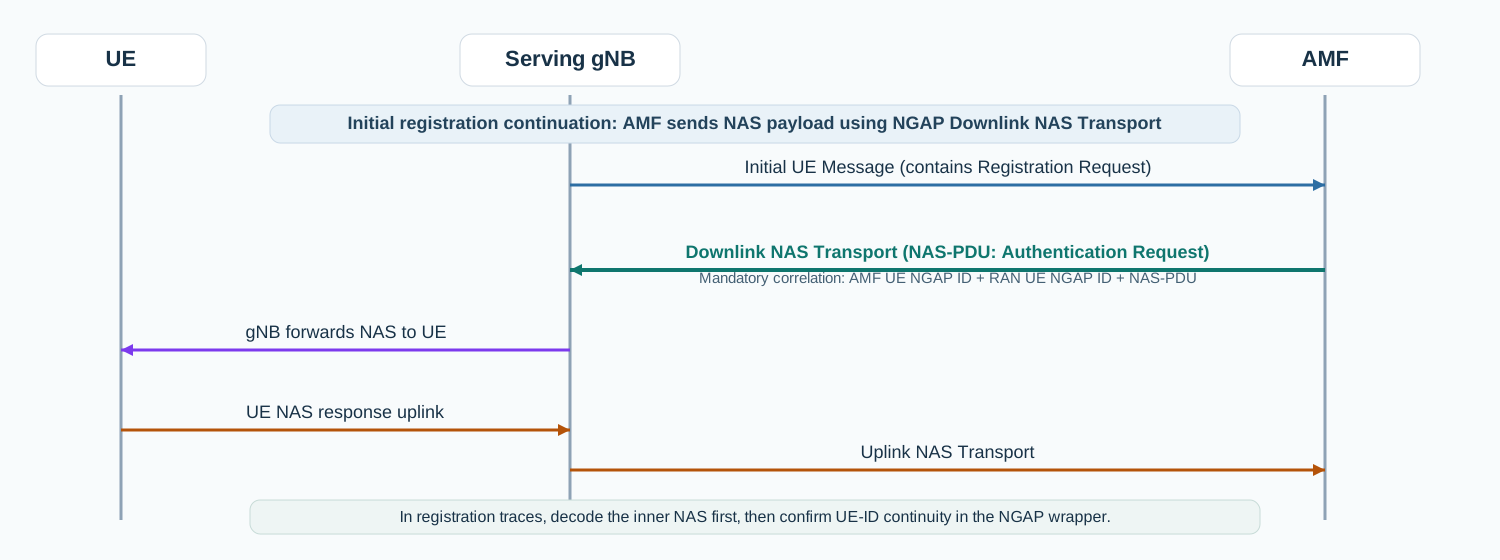
5G Initial Registration
Initial registration context: the AMF wraps Authentication Request or later NAS content in Downlink NAS Transport and the UE response returns through Uplink NAS Transport.
Call flow position: Early downlink N2 transfer used by the AMF to send Authentication Request, Security Mode Command, or Registration Accept toward the UE.
Typical state: The AMF has already interpreted the UE's uplink NAS message and now needs the NG-RAN to relay the next NAS step transparently.
Preconditions:
A UE-associated NGAP context exists between NG-RAN and AMF.
The AMF has a valid NAS payload for the UE.
AMF UE NGAP ID and RAN UE NGAP ID are known on both sides.
Next likely message: Uplink NAS Transport
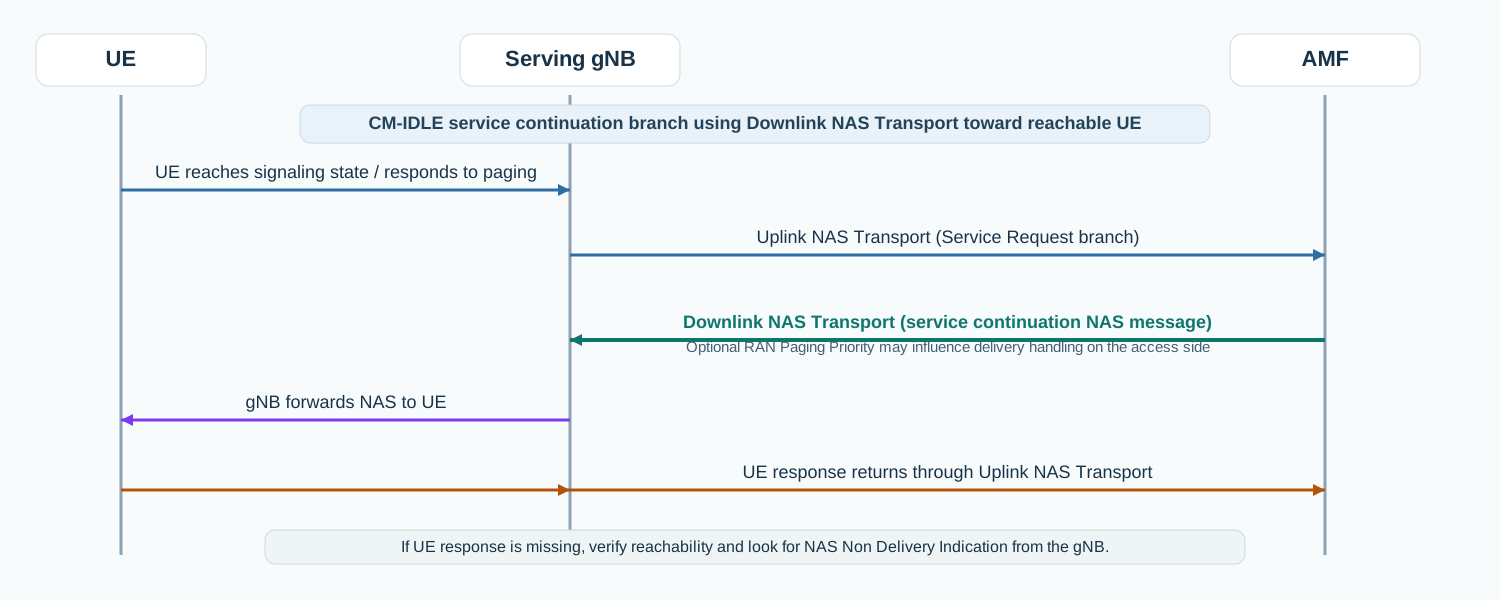
CM-IDLE Service Request Continuation
CM-IDLE continuation context: Downlink NAS Transport carries the AMF downlink NAS step once the UE is reachable again via NG-RAN signaling.
Call flow position: AMF to NG-RAN delivery step after the core has resumed UE-specific handling and needs to push NAS content back to the UE.
Typical state: The service restoration branch is active and the AMF is continuing the procedure with a downlink NAS payload.
Preconditions:
The UE has become reachable through NG-RAN signaling context.
The AMF selected a NAS response that must reach the UE.
Next likely message: Uplink NAS Transport or procedure-specific continuation
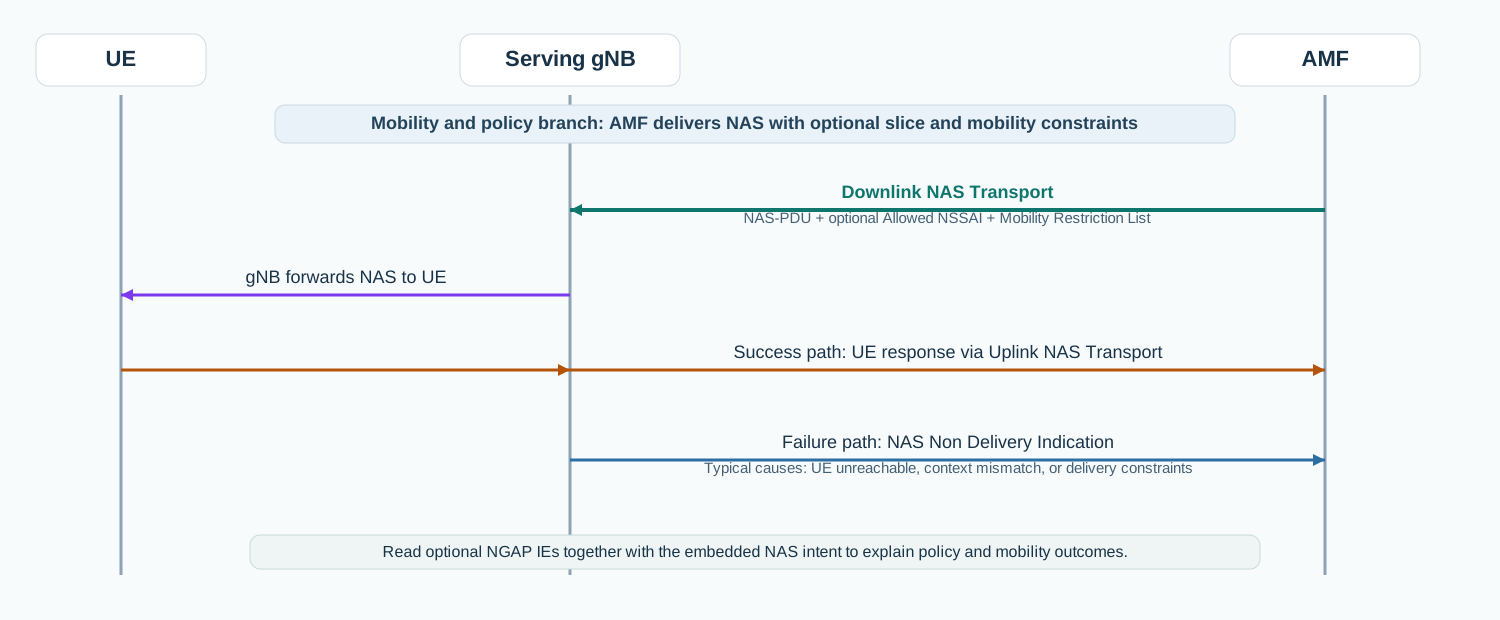
Mobility or policy update handling
Mobility and policy context: optional slice or mobility IEs in Downlink NAS Transport can affect the outcome and may lead to either UE response or NAS Non Delivery Indication.
Call flow position: AMF initiated downlink transport step used when NAS content needs to reach the UE during a mobility or policy-sensitive branch.
Typical state: The embedded NAS message carries the real operational meaning, while NGAP provides the N2 envelope and UE correlation.
Preconditions:
UE context remains valid on both AMF and NG-RAN sides.
Any required optional restriction, slice, or capability-related IEs are available.
Next likely message: Uplink NAS Transport or NAS Non Delivery Indication
Transport / encapsulation: NGAP over SCTP/IP between AMF and NG-RAN
Security context: Protected by the N2 transport association, while the embedded NAS-PDU may itself be plain or security-protected NAS depending on the wider 5GMM procedure stage.
Message Structure Overview
Downlink NAS Transport is an NGAP initiating message that wraps one mandatory NAS-PDU inside a UE-associated N2 context.
Three IEs form the operational core: AMF UE NGAP ID, RAN UE NGAP ID, and NAS-PDU.
Optional paging, mobility, slice, and capability-related IEs refine how the message should be handled in specific access scenarios.
ASN.1 for 5G NGAP - Downlink NAS Transport
DownlinkNASTransport ::= SEQUENCE {
  protocolIEs ProtocolIE-Container { {DownlinkNASTransport-IEs} },
  ...
}

DownlinkNASTransport-IEs NGAP-PROTOCOL-IES ::= {
  { ID id-AMF-UE-NGAP-ID              CRITICALITY reject TYPE AMF-UE-NGAP-ID             PRESENCE mandatory } |
  { ID id-RAN-UE-NGAP-ID              CRITICALITY reject TYPE RAN-UE-NGAP-ID             PRESENCE mandatory } |
  { ID id-NAS-PDU                     CRITICALITY reject TYPE NAS-PDU                    PRESENCE mandatory } |
  { ID id-RANPagingPriority           CRITICALITY ignore TYPE RANPagingPriority          PRESENCE optional } |
  { ID id-MobilityRestrictionList     CRITICALITY ignore TYPE MobilityRestrictionList    PRESENCE optional } |
  { ID id-AllowedNSSAI                CRITICALITY reject TYPE AllowedNSSAI               PRESENCE optional } |
  { ID id-UERadioCapabilityID         CRITICALITY ignore TYPE UERadioCapabilityID        PRESENCE optional } |
  { ID id-UECapabilityInfoRequest     CRITICALITY ignore TYPE UECapabilityInfoRequest    PRESENCE optional },
  ...
}
How to read this ASN.1
Read Downlink NAS Transport as an NGAP envelope around an already meaningful NAS procedure. In live traces, the mandatory UE identifiers tell you which UE context is targeted, while the NAS-PDU tells you what the AMF is actually trying to make the UE do next.
The first question is which NAS procedure is inside NAS-PDU, because that defines the true purpose of this NGAP message.
AMF UE NGAP ID and RAN UE NGAP ID must align with the same UE context or the message may be dropped or misapplied.
Optional IEs become important when the branch involves paging priority, slice authorization, or mobility restrictions.
Important Information Elements
IE
Presence
Description
AMF UE NGAP ID
Mandatory
AMF-side UE identity used to correlate the message with the correct UE context in the core network.
RAN UE NGAP ID
Mandatory
NG-RAN-side UE identity used by the gNB to map the message to the right radio context.
NAS-PDU
Mandatory
Carries the actual NAS message that the AMF wants the NG-RAN to forward to the UE without decoding it at NGAP level.
RAN Paging Priority
Optional
Influences radio-side delivery priority when the downlink NAS branch interacts with idle-state reachability or paging behavior.
Mobility Restriction List
Optional
Carries mobility constraints that may affect how the UE is allowed to move or camp after receiving the NAS content.
Allowed NSSAI
Optional
Provides slice authorization context that may be needed together with the transported NAS procedure.
UE Radio Capability ID
Optional
Can be used in scenarios where the AMF wants the access side to correlate with UE capability handling rather than always sending full capability content.
UE Capability Info Request
Optional
Requests capability-related follow-up from the UE when the wider procedure depends on capability reporting.
Detailed field explanation
AMF UE NGAP ID
AMF-side UE identity used to correlate the message with the correct UE context in the core network.
Presence: Mandatory
In practice: In practice, compare this field with the original request and with any later release-dependent optional fields so you can see whether the network accepted the same service model the UE asked for.
RAN UE NGAP ID
NG-RAN-side UE identity used by the gNB to map the message to the right radio context.
Presence: Mandatory
In practice: In practice, compare this field with the original request and with any later release-dependent optional fields so you can see whether the network accepted the same service model the UE asked for.
NAS-PDU
Carries the actual NAS message that the AMF wants the NG-RAN to forward to the UE without decoding it at NGAP level.
Presence: Mandatory
In practice: In practice, compare this field with the original request and with any later release-dependent optional fields so you can see whether the network accepted the same service model the UE asked for.
RAN Paging Priority
Influences radio-side delivery priority when the downlink NAS branch interacts with idle-state reachability or paging behavior.
Presence: Optional
In practice: In practice, compare this field with the original request and with any later release-dependent optional fields so you can see whether the network accepted the same service model the UE asked for.
Mobility Restriction List
Carries mobility constraints that may affect how the UE is allowed to move or camp after receiving the NAS content.
Presence: Optional
In practice: In practice, compare this field with the original request and with any later release-dependent optional fields so you can see whether the network accepted the same service model the UE asked for.
Allowed NSSAI
Provides slice authorization context that may be needed together with the transported NAS procedure.
Presence: Optional
In practice: In practice, compare this field with the original request and with any later release-dependent optional fields so you can see whether the network accepted the same service model the UE asked for.
UE Radio Capability ID
Can be used in scenarios where the AMF wants the access side to correlate with UE capability handling rather than always sending full capability content.
Presence: Optional
In practice: In practice, compare this field with the original request and with any later release-dependent optional fields so you can see whether the network accepted the same service model the UE asked for.
UE Capability Info Request
Requests capability-related follow-up from the UE when the wider procedure depends on capability reporting.
Presence: Optional
In practice: In practice, compare this field with the original request and with any later release-dependent optional fields so you can see whether the network accepted the same service model the UE asked for.
What to check in logs and traces
Confirm the message is Downlink NAS Transport and not Initial Context Setup Request or a pure NAS access-side transfer.
Check that AMF UE NGAP ID and RAN UE NGAP ID match the same UE across surrounding NGAP messages.
Decode NAS-PDU fully and verify that it fits the current 5GMM or 5GSM procedure stage.
If the UE does not answer, look for NAS Non Delivery Indication or radio-side reachability failure next.
Common Issues and Troubleshooting
The AMF sends Downlink NAS Transport but the UE never responds.
Likely cause: The NG-RAN may not have delivered the NAS payload to the UE, the UE may be unreachable, or the UE context mapping may be wrong.
What to inspect: Check RAN UE NGAP ID continuity, RRC state, paging behavior, and whether NAS Non Delivery Indication follows.
Next step: Decide first whether the failure is N2 correlation, radio reachability, or the embedded NAS procedure itself.
Registration or authentication appears stuck after a correct Initial UE Message.
Likely cause: The AMF may have sent the correct Downlink NAS Transport wrapper, but the NAS-PDU may be missing, malformed, or not delivered to the UE.
What to inspect: Decode the NAS-PDU, verify the identity pair, and compare the trace against a known-good registration exchange.
Next step: Troubleshoot both the inner NAS message and the N2 delivery path rather than assuming only one layer failed.
UE behavior suggests wrong slice or policy handling after a downlink NAS step.
Likely cause: Optional fields such as Allowed NSSAI or Mobility Restriction List may be inconsistent with subscriber policy or expected procedure context.
What to inspect: Review optional IEs together with subscription data and the subsequent UE response or rejection.
Next step: Validate that slice and mobility parameters sent over NGAP match the intended core policy outcome.
LTE / 5G / Variant Comparison
Compared with Initial UE Message
Initial UE Message carries the first uplink NAS message from NG-RAN to AMF. Downlink NAS Transport carries AMF-originated NAS content back toward the UE after the AMF has processed the uplink request.
Compared with Uplink NAS Transport
Downlink NAS Transport is AMF to NG-RAN. Uplink NAS Transport is the reverse path from NG-RAN to AMF once the UE responds or sends a later NAS message.
Compared with DL NAS Transport on N1
5G NAS DL NAS Transport is a NAS-layer wrapper between AMF and UE. NGAP Downlink NAS Transport is the N2 transport envelope that gets the NAS payload across the AMF to gNB boundary.
FAQ
What is Downlink NAS Transport in 5G NGAP?
It is the NGAP message the AMF sends to the NG-RAN when the core needs to deliver a NAS message to the UE over N2.
Does the gNB decode the NAS message inside Downlink NAS Transport?
No. The NG-RAN forwards the NAS-PDU transparently toward the UE and does not interpret the NAS payload as part of NGAP processing.
Which fields are mandatory in Downlink NAS Transport?
The core mandatory IEs are AMF UE NGAP ID, RAN UE NGAP ID, and NAS-PDU.
What normally comes after Downlink NAS Transport?
The next message is often Uplink NAS Transport carrying the UE response, but a delivery problem may instead lead to NAS Non Delivery Indication.
Decode this message with the 3GPP Decoder, inspect the related message database, or open the matching call flow to see where this signaling step fits in the full procedure.