PDU Session Resource Release Response is the NGAP message the NG-RAN sends to the AMF as a response to the request to release already established PDU session resources for a given UE.
NG-RAN completed processing of PDU Session Resource Release Command and needs to report back which PDU session resources were released for the identified UE.
Main purpose
Reports back to the AMF which already established PDU session resources the NG-RAN has released for the identified UE context after processing PDU Session Resource Release Command.
What is PDU Session Resource Release Response in simple terms?
PDU Session Resource Release Response is the NGAP message the NG-RAN sends to the AMF as a response to the request to release already established PDU session resources for a given UE.
Reports back to the AMF which already established PDU session resources the NG-RAN has released for the identified UE context after processing PDU Session Resource Release Command.
Why this message matters
PDU Session Resource Release Response tells the AMF which PDU session resources the gNB says it has released for the identified UE context.
Where this message appears in the call flow
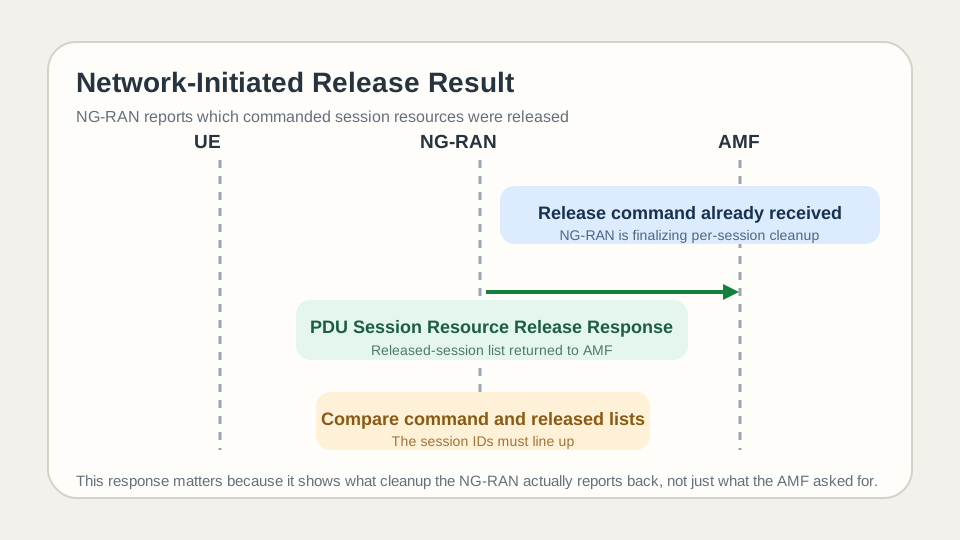
Network-initiated PDU session release result
Release result branch: NG-RAN reports the released PDU session resources back to the AMF.
Call flow position: NG-RAN returns the result after AMF requested release of already established PDU session resources for the UE.
Typical state: The UE-associated NGAP context still exists, and AMF is learning which commanded session resources the NG-RAN says it has actually released.
Preconditions:
PDU Session Resource Release Command was received and processed.
AMF UE NGAP ID and RAN UE NGAP ID still identify the correct UE-associated context.
At least one released PDU session resource item is available for reporting.
Next likely message: Service continuation on remaining state, additional release work, or wider cleanup if needed
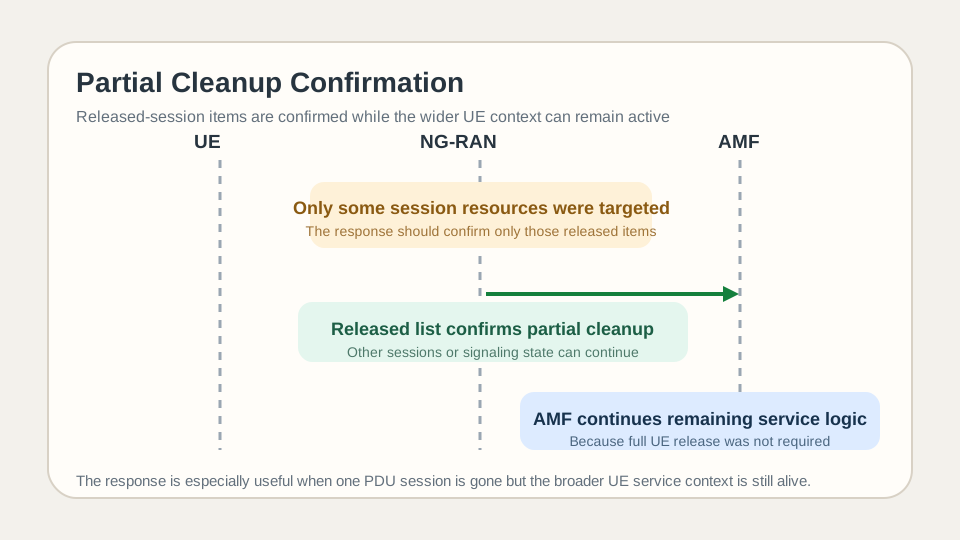
Partial session cleanup confirmation
Partial cleanup result branch: released-session items are reported while other UE context state can remain active.
Call flow position: Response branch where only selected session resources were removed while the UE-associated NGAP context may remain active for other service.
Typical state: The UE can still have a live signaling context or remaining sessions even though listed session resources were released.
Preconditions:
The release command targeted a subset of the UE's established PDU session resources.
NG-RAN completed the release action for the reported session items.
Next likely message: Continuation of remaining sessions or additional signaling tied to service-state changes
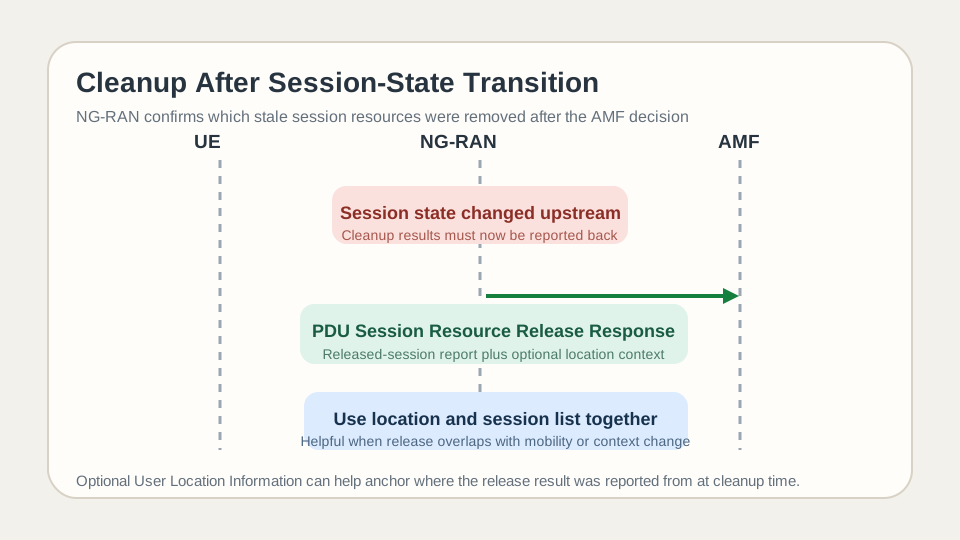
Resource cleanup after session-state transition
Cleanup result branch: the response confirms which session resources were actually removed after the AMF decision.
Call flow position: NG-RAN reports completed cleanup after a core-side session-state change made some access-side resources unnecessary.
Typical state: The released list confirms what access-side session state was actually removed after the AMF decision.
Preconditions:
The targeted session resources had been established before the release command arrived.
NG-RAN could map the command to the correct UE context and session IDs.
Next likely message: Either steady-state continuation or broader context cleanup depending on the rest of the procedure
Transport / encapsulation: NGAP over SCTP/IP between NG-RAN and AMF
Security context: The response reports release results on an existing UE-associated NGAP context. It does not establish new security context; it confirms removal of already established session resources.
Message Structure Overview
PDU Session Resource Release Response is the NG-RAN-to-AMF successfulOutcome message for the PDU Session Resource Release procedure.
AMF UE NGAP ID and RAN UE NGAP ID are the mandatory correlation anchors for the UE-associated NGAP context.
PDU Session Resource Released List is the operational core because it tells the AMF which session resources the NG-RAN reports as released.
Each released item carries PDU Session Resource Release Response Transfer from section 9.3.4.21, so the response must be read per session rather than as a generic success flag.
ASN.1 for 5G NGAP - PDU Session Resource Release Response
Start with the UE identifier pair, then enumerate the PDU Session Resource Released List item by item. The response transfer defined in section 9.3.4.21 carries the per-session release result details, so the message should be decoded as a structured released-session report rather than a flat acknowledgment.
NGAP-PDU
  successfulOutcome
    procedureCode: id-PDUSessionResourceRelease
    criticality: reject
    value: PDUSessionResourceReleaseResponse
      protocolIEs:
        - id: id-AMF-UE-NGAP-ID
          value: 0x10A1
        - id: id-RAN-UE-NGAP-ID
          value: 0x0041
        - id: PDU Session Resource Released List
          value:
            - pduSessionID: 10
              pduSessionResourceReleaseResponseTransfer: <opaque transfer>
            - pduSessionID: 11
              pduSessionResourceReleaseResponseTransfer: <opaque transfer>
        - id: User Location Information
          value: nr-cgi + tai
How to read this dump
The response is a successfulOutcome at NGAP message level, but the engineering value is inside the released list and its per-session items.
The extracted Release 18 response section explicitly shows PDU Session Resource Released List as mandatory and User Location Information plus Criticality Diagnostics as optional.
Do not treat the response as a bare acknowledgment; verify that the released list matches the exact session IDs commanded in the request.
Important Information Elements
IE
Presence
Description
AMF UE NGAP ID
Mandatory
Mandatory AMF-side UE identifier used to correlate the response with the original release command and the correct UE context.
RAN UE NGAP ID
Mandatory
Mandatory NG-RAN-side UE identifier used to bind the reported release outcome to the correct radio-side UE context.
PDU Session Resource Released List
Mandatory
Mandatory list of released PDU session resource items. Each item carries the PDU Session Resource Release Response Transfer defined in TS 38.413 section 9.3.4.21.
User Location Information
Optional
Optional user-location context that may help AMF understand where the release result was reported from in the access network.
Criticality Diagnostics
Optional
Optional diagnostics that can provide additional protocol-level context if unusual handling or decoding conditions occurred.
Detailed field explanation
AMF UE NGAP ID
Mandatory AMF-side UE identifier used to correlate the response with the original release command and the correct UE context.
Presence: Mandatory
In practice: In practice, compare this field with the original request and with any later release-dependent optional fields so you can see whether the network accepted the same service model the UE asked for.
RAN UE NGAP ID
Mandatory NG-RAN-side UE identifier used to bind the reported release outcome to the correct radio-side UE context.
Presence: Mandatory
In practice: In practice, compare this field with the original request and with any later release-dependent optional fields so you can see whether the network accepted the same service model the UE asked for.
PDU Session Resource Released List
Mandatory list of released PDU session resource items. Each item carries the PDU Session Resource Release Response Transfer defined in TS 38.413 section 9.3.4.21.
Presence: Mandatory
In practice: In practice, compare this field with the original request and with any later release-dependent optional fields so you can see whether the network accepted the same service model the UE asked for.
User Location Information
Optional user-location context that may help AMF understand where the release result was reported from in the access network.
Presence: Optional
In practice: In practice, compare this field with the original request and with any later release-dependent optional fields so you can see whether the network accepted the same service model the UE asked for.
Criticality Diagnostics
Optional diagnostics that can provide additional protocol-level context if unusual handling or decoding conditions occurred.
Presence: Optional
In practice: In practice, compare this field with the original request and with any later release-dependent optional fields so you can see whether the network accepted the same service model the UE asked for.
What to check in logs and traces
Match AMF UE NGAP ID and RAN UE NGAP ID with the original PDU Session Resource Release Command.
Compare the released-session list with the command's release list item by item.
Inspect each PDU Session Resource Release Response Transfer under section 9.3.4.21 for per-session details.
If User Location Information is present, confirm it is consistent with the serving access context seen elsewhere in the trace.
Use Criticality Diagnostics only as supporting context; the released list is the main operational answer.
Common Issues and Troubleshooting
PDU Session Resource Release Response is present, but stale session behavior continues afterward.
Likely cause: The released list may be narrower than the original command, or downstream user-plane or service correlation may still be following the wrong session IDs.
What to inspect: Compare the command list and the released list item by item, then check whether the supposedly released sessions are the same ones still showing traffic or policy state.
Next step: Resolve the mismatch at session-ID level before assuming the whole release procedure failed.
The response looks successful, but AMF behavior afterward still appears inconsistent.
Likely cause: SuccessfulOutcome only shows the message exchange completed; the real operational content is in which session items appear in the released list and how AMF interprets them.
What to inspect: Verify the released list contents, optional location information, and any follow-on control logic on the AMF side.
Next step: Treat the message as a structured result set, not as a generic yes-or-no response.
Release response arrives, but engineers cannot tell where the cleanup happened.
Likely cause: The optional User Location Information may have been ignored even though it can help anchor the serving context at release time.
What to inspect: Check whether User Location Information is present and correlate it with the serving cell or access state around the release.
Next step: Use location context together with the released list when troubleshooting mobility-adjacent or multi-cell cleanup behavior.
LTE / 5G / Variant Comparison
Compared with PDU Session Resource Release Command
Command carries the AMF request to remove established session resources. Response reports the released session-resource items back from the NG-RAN.
Compared with PDU Session Resource Setup Response
Setup Response reports which session resources were created. Release Response reports which already established resources were removed.
What is PDU Session Resource Release Response in 5G NGAP?
It is the NG-RAN-to-AMF message sent as a response to the request to release already established PDU session resources for a given UE.
What are the key fields in this response?
AMF UE NGAP ID, RAN UE NGAP ID, and PDU Session Resource Released List are the operational core. User Location Information and Criticality Diagnostics are optional.
Does this response mean the whole UE context was released?
No. It confirms the released PDU session resources reported in the released list. The broader UE-associated NGAP context can still remain active.
What should I compare first when checking this response in a trace?
Compare the released-session list directly against the original PDU Session Resource Release Command list and confirm the same PDU Session IDs appear.
Decode this message with the 3GPP Decoder, inspect the related message database, or open the matching call flow to see where this signaling step fits in the full procedure.