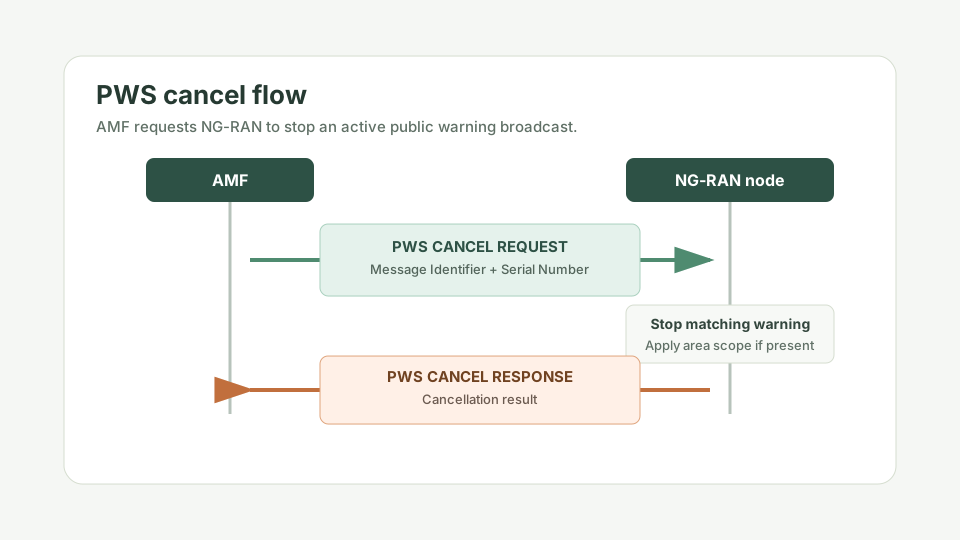
PWS Cancel Request is the NGAP warning message sent by the AMF to the NG-RAN node to cancel an active public warning broadcast identified by Message Identifier and Serial Number.
Message Fact Sheet
Protocol
ngap
Network
5g
Spec
3GPP TS 38.413
Spec Section
Warning Message Transmission Messages and PWS Cancel Request
AMF decides that an active PWS, ETWS, or CMAS warning broadcast should be cancelled.
Main purpose
Requests NG-RAN to stop an active public warning broadcast, identifies the warning to cancel, can scope cancellation by warning area, and lets NG-RAN report completed or failed cancellation handling in PWS Cancel Response.
PWS Cancel Request is the NGAP warning message sent by the AMF to the NG-RAN node to cancel an active public warning broadcast identified by Message Identifier and Serial Number.
Requests NG-RAN to stop an active public warning broadcast, identifies the warning to cancel, can scope cancellation by warning area, and lets NG-RAN report completed or failed cancellation handling in PWS Cancel Response.
Why this message matters
PWS Cancel Request is the AMF telling the gNB to stop an active public warning. The warning is selected by Message Identifier and Serial Number.
Where this message appears in the call flow
PWS Cancel
AMF requests cancellation of an active warning, and NG-RAN reports the cancellation result.
Call flow position: AMF sends this initiatingMessage to request cancellation of an active warning broadcast.
Typical state: NG-RAN matches the warning by Message Identifier and Serial Number, applies any area scope, and responds with PWS Cancel Response.
Preconditions:
A matching warning broadcast is active or known to NG-RAN.
Message Identifier and Serial Number identify the warning instance to cancel.
Warning Area List is present when cancellation should be limited to a specific scope.
Next likely message: PWS Cancel Response
Warning broadcast lifecycle
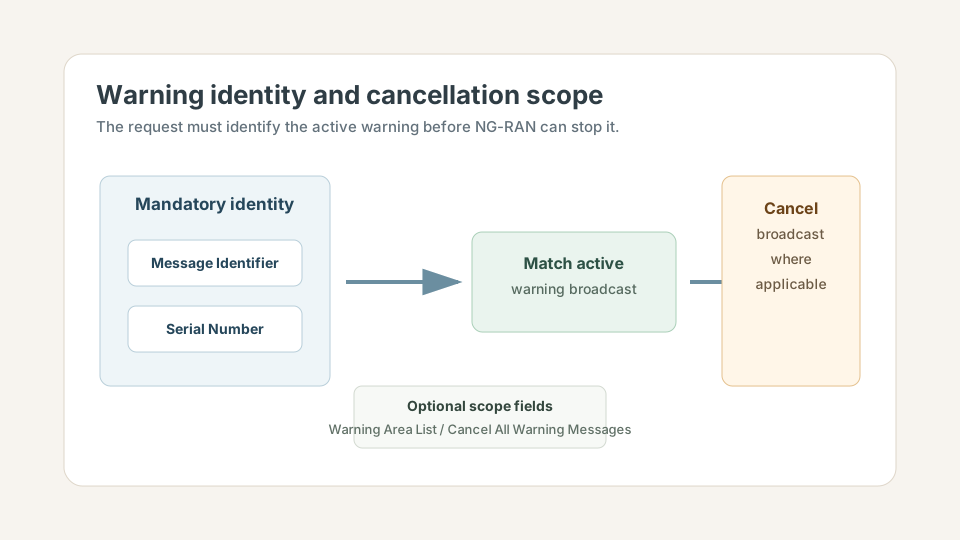
Message Identifier and Serial Number select the warning; area fields can restrict where cancellation applies.
Call flow position: PWS Cancel Request is used after a warning has been started or replaced.
Typical state: The cancellation path stops warning broadcast instead of replacing warning content.
Preconditions:
Warning content was previously activated through Write Replace Warning Request or equivalent warning handling.
AMF has determined that cancellation is required.
Next likely message: Stopped warning broadcast
Scoped warning cancellation
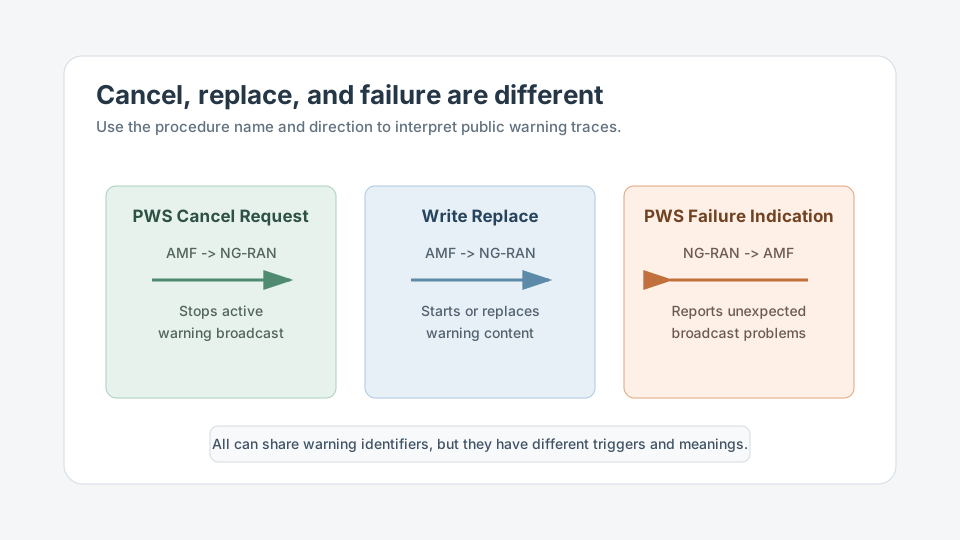
Cancel stops an active warning; Write Replace starts or updates it; Failure Indication reports unexpected broadcast problems.
Call flow position: Warning Area List can restrict where the cancellation applies.
Typical state: NG-RAN cancels the matching warning in the indicated area when supported.
Preconditions:
The area identifiers are valid and decodable.
The target area is consistent with the active warning scope.
Next likely message: Area-specific cancellation result
Transport / encapsulation: NGAP over SCTP/IP between AMF and NG-RAN
Security context: The message controls public warning cancellation and should be correlated with active warning identifiers and any warning-area scope.
Message Structure Overview
PWS Cancel Request is an AMF-to-NG-RAN initiatingMessage for public warning cancellation.
Message Identifier and Serial Number identify the active warning instance.
Warning Area List can scope cancellation to a target area.
Cancel All Warning Messages can indicate broader warning cancellation behavior when present.
PWS Cancel Response reports the cancellation result.
ASN.1 for 5G NGAP - PWS Cancel Request
PWSCancelRequest ::= SEQUENCE {
  protocolIEs ProtocolIE-Container { {PWSCancelRequest-IEs} },
  ...
}

PWSCancelRequest-IEs NGAP-PROTOCOL-IES ::= {
  { ID id-MessageIdentifier          CRITICALITY reject TYPE MessageIdentifier          PRESENCE mandatory } |
  { ID id-SerialNumber               CRITICALITY reject TYPE SerialNumber               PRESENCE mandatory } |
  { ID id-WarningAreaList            CRITICALITY ignore TYPE WarningAreaList            PRESENCE optional } |
  { ID id-CancelAllWarningMessages   CRITICALITY ignore TYPE CancelAllWarningMessages   PRESENCE optional } |
  { ID id-GlobalRANNodeID            CRITICALITY ignore TYPE GlobalRANNodeID            PRESENCE optional },
  ...
}
How to read this ASN.1
Decode Message Identifier and Serial Number first because they select the warning instance. Then inspect Warning Area List or Cancel All Warning Messages to understand the cancellation scope.
Treat this as a teaching example based on the expected message structure, not as a captured network trace.
Message Identifier and Serial Number must match the warning broadcast being cancelled.
Warning Area List changes the practical cancellation scope when present.
Important Information Elements
IE
Presence
Description
Message Type
Mandatory
Identifies the NGAP PDU as PWS CANCEL REQUEST.
Message Identifier
Mandatory
Mandatory warning message category or type identifier used to select the active warning.
Serial Number
Mandatory
Mandatory warning instance identifier used to select the warning broadcast to cancel.
Warning Area List
Optional
Optional area where cancellation applies.
Cancel All Warning Messages
Optional
Optional indicator for broader cancellation behavior.
Global RAN Node ID
Optional
Optional RAN node identity context.
Detailed field explanation
Message Type
Identifies the NGAP PDU as PWS CANCEL REQUEST.
Presence: Mandatory
In practice: In practice, compare this field with the original request and with any later release-dependent optional fields so you can see whether the network accepted the same service model the UE asked for.
Message Identifier
Mandatory warning message category or type identifier used to select the active warning.
Presence: Mandatory
In practice: In practice, compare this field with the original request and with any later release-dependent optional fields so you can see whether the network accepted the same service model the UE asked for.
Serial Number
Mandatory warning instance identifier used to select the warning broadcast to cancel.
Presence: Mandatory
In practice: In practice, compare this field with the original request and with any later release-dependent optional fields so you can see whether the network accepted the same service model the UE asked for.
Warning Area List
Optional area where cancellation applies.
Presence: Optional
In practice: In practice, compare this field with the original request and with any later release-dependent optional fields so you can see whether the network accepted the same service model the UE asked for.
Cancel All Warning Messages
Optional indicator for broader cancellation behavior.
Presence: Optional
In practice: In practice, compare this field with the original request and with any later release-dependent optional fields so you can see whether the network accepted the same service model the UE asked for.
Global RAN Node ID
Optional RAN node identity context.
Presence: Optional
In practice: In practice, compare this field with the original request and with any later release-dependent optional fields so you can see whether the network accepted the same service model the UE asked for.
What to check in logs and traces
Confirm direction is AMF to NG-RAN node.
Decode Message Identifier and Serial Number.
Compare identifiers with the active Write Replace Warning Request or warning state.
Check Warning Area List when cancellation should be area-scoped.
Check Cancel All Warning Messages when broader cancellation is expected.
Find the matching PWS Cancel Response.
Decode failed cancellation areas in the response.
Common Issues and Troubleshooting
Warning remains active after cancellation.
Likely cause: Message Identifier or Serial Number may not match the active warning instance.
What to inspect: Compare identifiers with the original Write Replace Warning Request and active warning state.
Next step: Send cancellation with the correct warning identifiers or verify whether the warning has already expired.
Cancellation applies to the wrong area.
Likely cause: Warning Area List may be missing, incorrect, or inconsistent with the original warning area.
What to inspect: Decode the requested cancellation scope and compare it with the broadcast area.
Next step: Correct the Warning Area List or use broader cancellation if intended.
No PWS Cancel Response is seen.
Likely cause: Response may be missing, filtered, or NG-RAN may have failed to process the request.
What to inspect: Search for PWS Cancel Response, Error Indication, or PWS Failure Indication around the request time.
Next step: Correlate by Message Identifier, Serial Number, and target NG-RAN node.
Cancellation fails in only some cells.
Likely cause: Cell-specific warning state or area mapping may differ across NG-RAN.
What to inspect: Decode failed areas or failed cells in PWS Cancel Response.
Next step: Investigate the affected cells and compare their active warning state.
Trace analysis confuses cancel with replace.
Likely cause: Write Replace Warning Request and PWS Cancel Request both use warning identifiers.
What to inspect: Check procedure code and message name, not just Message Identifier and Serial Number.
Next step: Use Write Replace for start or replacement, and PWS Cancel for stopping active warning broadcast.
LTE / 5G / Variant Comparison
Compared with PWS Cancel Response
Request asks NG-RAN to cancel an active warning. Response reports the cancellation result.
Compared with Write Replace Warning Request
Write Replace starts or replaces warning content. PWS Cancel stops an active warning broadcast.
Compared with PWS Failure Indication
Cancel Request is AMF-initiated control. PWS Failure Indication is NG-RAN-initiated failure reporting.
FAQ
What is PWS Cancel Request in NGAP?
It is the AMF-to-NG-RAN warning message used to cancel an active public warning broadcast.
Who sends PWS Cancel Request?
The AMF sends PWS Cancel Request to the NG-RAN node.
What warning does it cancel?
It cancels the active warning identified by Message Identifier and Serial Number, optionally within a specific warning area.
What is the response to PWS Cancel Request?
NG-RAN responds with PWS Cancel Response.
What do Message Identifier and Serial Number mean?
Message Identifier identifies the warning category or type, while Serial Number identifies the specific warning instance.
Can cancellation be limited to an area?
Yes. Warning Area List can limit cancellation to the specified area when present and supported.
How is PWS Cancel different from Write Replace Warning?
PWS Cancel stops an active warning broadcast. Write Replace Warning starts a new warning or replaces existing warning content.
How do you troubleshoot failed PWS cancellation?
Check Message Identifier, Serial Number, warning area scope, matching active warning state, and the PWS Cancel Response for failed cancellation details.
Decode this message with the 3GPP Decoder, inspect the related message database, or open the matching call flow to see where this signaling step fits in the full procedure.