PWS Restart Indication is the NGAP warning message sent by the NG-RAN node to the AMF when public warning system handling is affected by a restart or recovery event.
Message Fact Sheet
Protocol
ngap
Network
5g
Spec
3GPP TS 38.413
Spec Section
Warning Message Transmission Messages and PWS Restart Indication
NG-RAN node or warning broadcast handling restarts or recovers and public warning state may need AMF-side resynchronization.
Main purpose
Informs AMF that PWS handling restarted or recovered, identifies affected warning areas or cells, supports recovery of public warning broadcast state, prevents stale warning-state assumptions after RAN restart, and helps AMF decide whether to reissue warning broadcast commands.
PWS Restart Indication is the NGAP warning message sent by the NG-RAN node to the AMF when public warning system handling is affected by a restart or recovery event.
Informs AMF that PWS handling restarted or recovered, identifies affected warning areas or cells, supports recovery of public warning broadcast state, prevents stale warning-state assumptions after RAN restart, and helps AMF decide whether to reissue warning broadcast commands.
Why this message matters
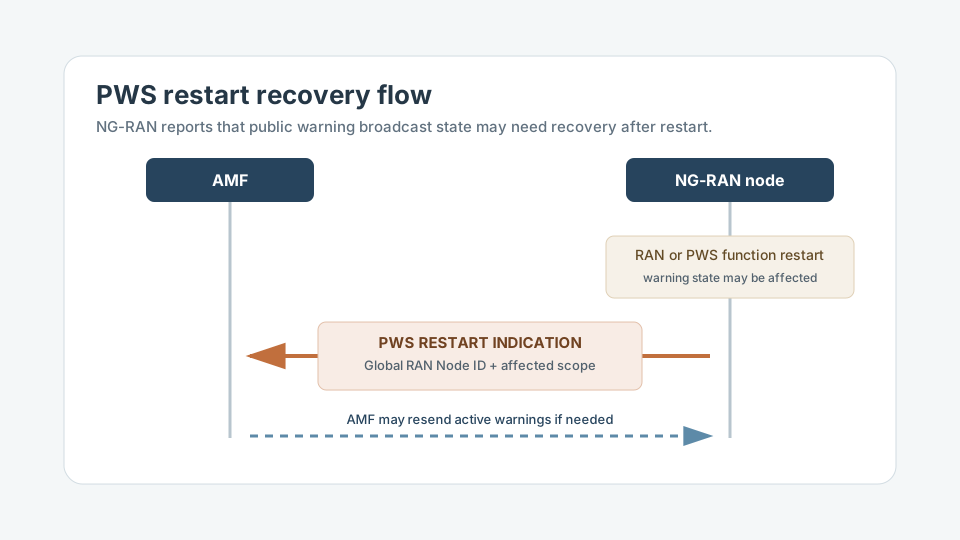
PWS Restart Indication is the gNB telling the AMF that public warning handling restarted or recovered. AMF may need to resend active warnings, but must avoid restoring cancelled or expired ones.
Where this message appears in the call flow
PWS Restart Indication
PWS Restart Indication tells AMF that warning broadcast state may need recovery after RAN restart.
Call flow position: NG-RAN sends this non-UE-associated initiatingMessage after restart or recovery affects public warning handling.
Typical state: AMF learns which warning areas, cells, or nodes may need warning-state restoration.
Preconditions:
NG-RAN or PWS handling has restarted or recovered.
Global RAN Node ID identifies the reporting node.
Affected cell or area scope is decoded when present.
Next likely message: AMF warning-state restoration or no action
Warning state restoration
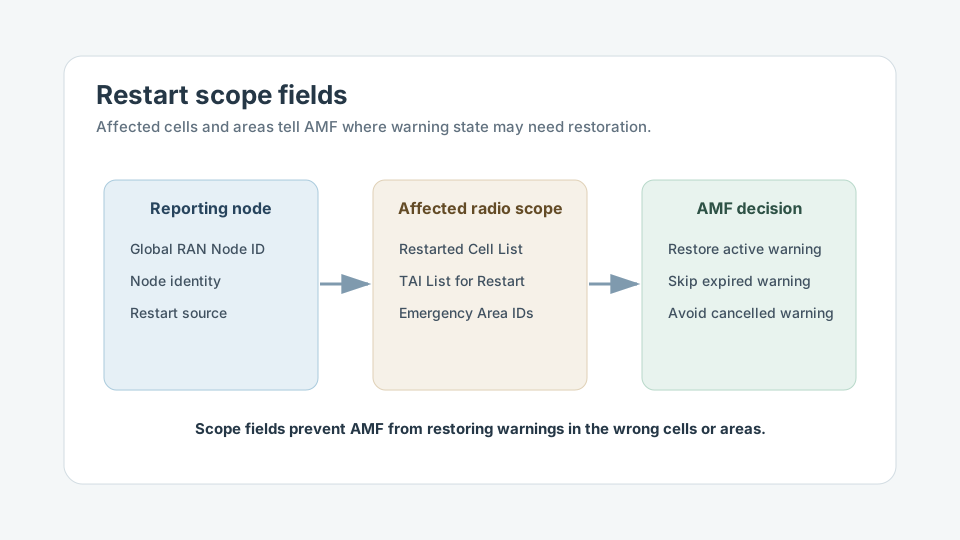
Affected cells and areas determine where AMF may need to restore active warnings.
Call flow position: AMF may resend active warning messages after restart.
Typical state: Only still-active warnings should be restored in the affected scope.
Preconditions:
AMF has current warning state.
Cancelled or expired warnings are excluded.
Affected cells or areas are understood.
Next likely message: Write Replace Warning Request if restoration is required
Restart versus failure analysis
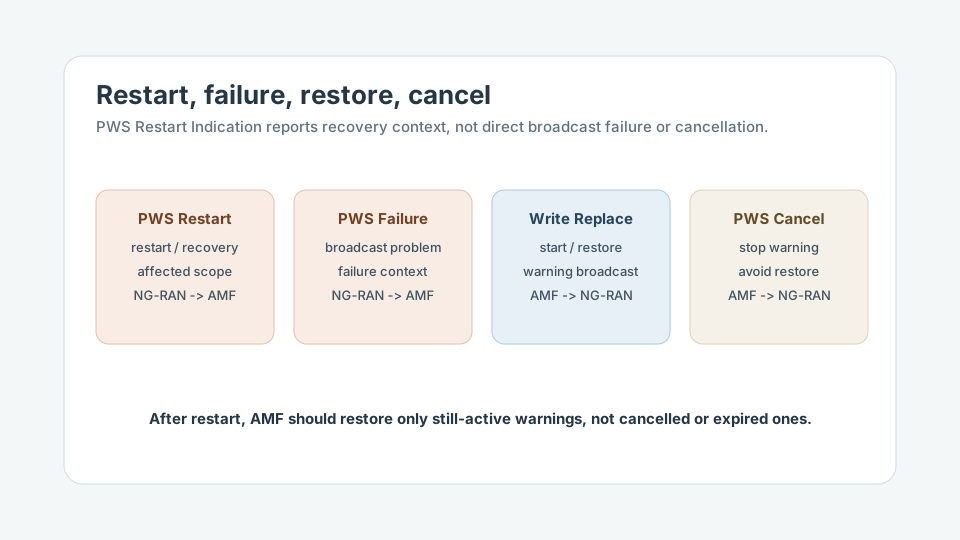
Restart recovery, broadcast failure, warning restoration, and cancellation are different warning-procedure states.
Transport / encapsulation: NGAP over SCTP/IP between NG-RAN and AMF
Security context: The message reports public warning restart scope and may cause AMF to restore active warning broadcasts. Operators should correlate restart handling with active, expired, and cancelled public warning state.
Message Structure Overview
PWS Restart Indication is an NG-RAN-to-AMF non-UE-associated initiatingMessage.
Global RAN Node ID identifies the reporting node.
Restarted Cell List, TAI List, and Emergency Area ID List can describe affected warning scope.
AMF may restore active warnings with Write Replace Warning Request.
Cancelled or expired warnings should not be accidentally restored.
ASN.1 for 5G NGAP - PWS Restart Indication
PWSRestartIndication ::= SEQUENCE {
  protocolIEs ProtocolIE-Container { {PWSRestartIndication-IEs} },
  ...
}

PWSRestartIndication-IEs NGAP-PROTOCOL-IES ::= {
  { ID id-GlobalRANNodeID                    CRITICALITY reject TYPE GlobalRANNodeID                    PRESENCE mandatory } |
  { ID id-RestartedCellList                  CRITICALITY ignore TYPE RestartedCellList                  PRESENCE optional } |
  { ID id-TAIListForRestart                  CRITICALITY ignore TYPE TAIListForRestart                  PRESENCE optional } |
  { ID id-EmergencyAreaIDListForRestart      CRITICALITY ignore TYPE EmergencyAreaIDListForRestart      PRESENCE optional } |
  { ID id-GlobalRANNodeIDListForRestart      CRITICALITY ignore TYPE GlobalRANNodeIDListForRestart      PRESENCE optional },
  ...
}
How to read this ASN.1
Decode Global RAN Node ID first, then inspect the affected cells, tracking areas, emergency areas, or node list. The scope determines which warning broadcasts may need restoration.
Identifies the NGAP PDU as PWS RESTART INDICATION.
Global RAN Node ID
Mandatory
Mandatory identity of the NG-RAN node reporting the PWS restart condition.
Restarted Cell List
Optional
Optional cells where PWS state may have been reset or affected.
TAI List for Restart
Optional
Optional tracking areas affected by restart.
Emergency Area ID List for Restart
Optional
Optional emergency warning areas affected by restart.
Global RAN Node ID List for Restart
Optional
Optional broader RAN node scope affected by restart.
Detailed field explanation
Message Type
Identifies the NGAP PDU as PWS RESTART INDICATION.
Presence: Mandatory
In practice: In practice, compare this field with the original request and with any later release-dependent optional fields so you can see whether the network accepted the same service model the UE asked for.
Global RAN Node ID
Mandatory identity of the NG-RAN node reporting the PWS restart condition.
Presence: Mandatory
In practice: In practice, compare this field with the original request and with any later release-dependent optional fields so you can see whether the network accepted the same service model the UE asked for.
Restarted Cell List
Optional cells where PWS state may have been reset or affected.
Presence: Optional
In practice: In practice, compare this field with the original request and with any later release-dependent optional fields so you can see whether the network accepted the same service model the UE asked for.
TAI List for Restart
Optional tracking areas affected by restart.
Presence: Optional
In practice: In practice, compare this field with the original request and with any later release-dependent optional fields so you can see whether the network accepted the same service model the UE asked for.
Emergency Area ID List for Restart
Optional emergency warning areas affected by restart.
Presence: Optional
In practice: In practice, compare this field with the original request and with any later release-dependent optional fields so you can see whether the network accepted the same service model the UE asked for.
Global RAN Node ID List for Restart
Optional broader RAN node scope affected by restart.
Presence: Optional
In practice: In practice, compare this field with the original request and with any later release-dependent optional fields so you can see whether the network accepted the same service model the UE asked for.
What to check in logs and traces
Confirm PWS Restart Indication is sent after a RAN restart or warning recovery event.
Verify Global RAN Node ID matches the expected node.
Decode restarted cells, TAI list, and emergency area list when present.
Check whether AMF resends active warnings if required.
Confirm cancelled or expired warnings are not restored.
Check PWS Failure Indication if broadcast does not resume.
Compare affected scope with the original warning area.
Common Issues and Troubleshooting
Warning broadcast is not restored after RAN restart.
Likely cause: AMF may not have resent active warnings, or affected scope may not match the active warning area.
What to inspect: Check PWS Restart Indication scope and subsequent Write Replace Warning Request.
Next step: Validate AMF warning state and restoration policy.
Old or cancelled warning restarts after recovery.
Likely cause: AMF may have restored a warning that was expired or cancelled before restart.
What to inspect: Correlate PWS Cancel Request/Response, warning expiry, Message Identifier, and Serial Number.
Next step: Correct warning-state synchronization before restoring broadcasts.
Restart scope is unclear.
Likely cause: Restarted Cell List or area lists may be missing or not decoded.
What to inspect: Decode all restart-scope IEs and verify Global RAN Node ID.
Next step: Use RAN restart logs or node topology to determine affected scope.
PWS Restart is confused with PWS Failure.
Likely cause: Both are NG-RAN-originated warning reports, but their triggers differ.
What to inspect: Check message type and whether the trigger was restart/recovery or broadcast delivery failure.
Next step: Use PWS Restart for state restoration analysis and PWS Failure for delivery failure analysis.
Warnings resume in the wrong cells.
Likely cause: AMF may have applied restoration beyond the affected or intended warning area.
What to inspect: Compare Restarted Cell List, TAI, emergency area, and original Warning Area List.
Next step: Limit restoration to the correct area and verify cell mapping.
Can cancelled warnings restart after this message?
They should not. AMF should avoid restoring cancelled or expired warnings after restart.
How do you troubleshoot PWS restart problems?
Check Global RAN Node ID, restarted cells and areas, active warning state, subsequent Write Replace Warning Request, prior PWS Cancel messages, and any PWS Failure Indication.
Decode this message with the 3GPP Decoder, inspect the related message database, or open the matching call flow to see where this signaling step fits in the full procedure.