Transport / encapsulation: E1AP over SCTP/IP between gNB-CU-CP and gNB-CU-UP
Security context: Bearer Context Modification Response does not create NAS security. It reports the outcome of requested bearer-state changes at the CU-UP.
Message Structure Overview
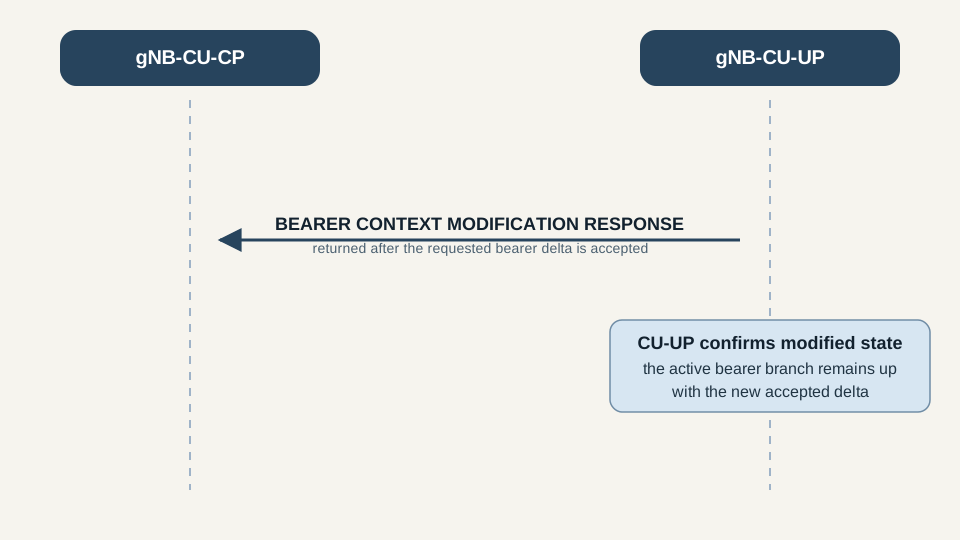
Bearer Context Modification Response is the successful outcome of the bearer modification procedure.
The response confirms that the modification path succeeded at procedure level and reports the resulting bearer state.
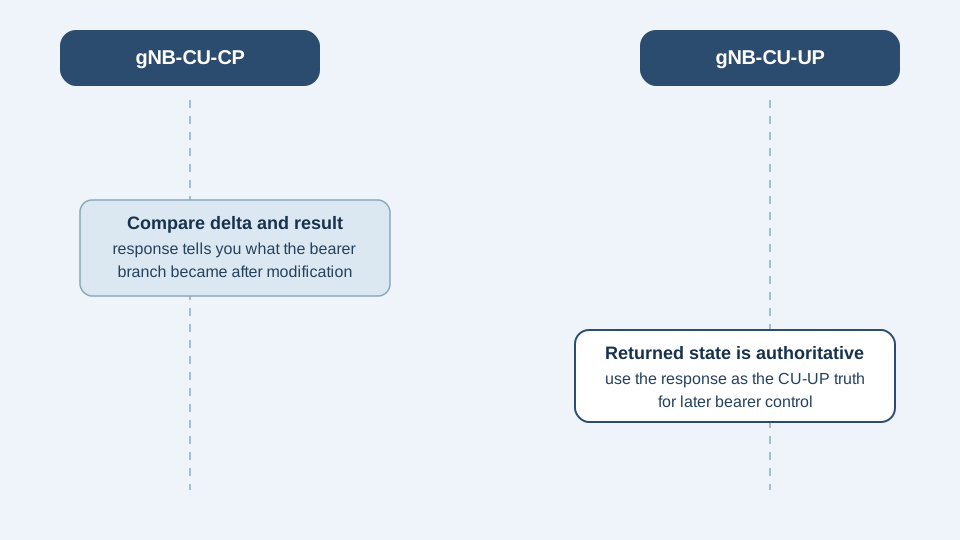
The main engineering task is to compare the returned modified state against the earlier request delta.
ASN.1 for 5G E1AP - Bearer Context Modification Response
Start by matching both UE identifiers to the original modification request.
The returned bearer-context payload is the authoritative CU-UP result, not just a mirror of the request.
For troubleshooting, compare old state, requested delta, and returned modified state together.
Important Information Elements
IE
Presence
Description
gNB-CU-CP UE E1AP ID
Mandatory
Mandatory CU-CP side UE identifier used to correlate the response with the original modification request.
gNB-CU-UP UE E1AP ID
Mandatory
Mandatory CU-UP side UE identifier for the modified bearer context.
System Bearer Context Modification Response
Mandatory
Mandatory bearer result payload reporting the resulting modified bearer state.
Criticality Diagnostics
Optional
Optional diagnostics if the CU-UP needs to report additional protocol handling detail.
Detailed field explanation
gNB-CU-CP UE E1AP ID
Mandatory CU-CP side UE identifier used to correlate the response with the original modification request.
Presence: Mandatory
In practice: In practice, compare this field with the original request and with any later release-dependent optional fields so you can see whether the network accepted the same service model the UE asked for.
gNB-CU-UP UE E1AP ID
Mandatory CU-UP side UE identifier for the modified bearer context.
Presence: Mandatory
In practice: In practice, compare this field with the original request and with any later release-dependent optional fields so you can see whether the network accepted the same service model the UE asked for.
System Bearer Context Modification Response
Mandatory bearer result payload reporting the resulting modified bearer state.
Presence: Mandatory
In practice: In practice, compare this field with the original request and with any later release-dependent optional fields so you can see whether the network accepted the same service model the UE asked for.
Criticality Diagnostics
Optional diagnostics if the CU-UP needs to report additional protocol handling detail.
Presence: Optional
In practice: In practice, compare this field with the original request and with any later release-dependent optional fields so you can see whether the network accepted the same service model the UE asked for.
What to check in logs and traces
Confirm the response maps to the intended modification request.
Record the returned modified bearer state for later control-plane decisions.
Check whether the returned result reflects the requested delta cleanly.
Common Issues and Troubleshooting
The modification procedure succeeded, but the bearer behaves as if the change never happened.
Likely cause: The returned modified state may not match the requested delta or later logic may still be assuming the old state.
What to inspect: Compare the response payload with both the old bearer state and the requested delta.
Next step: Use the response as the CU-UP truth for what the bearer became after modification.
LTE / 5G / Variant Comparison
Compared with Bearer Context Modification Request
The request asks for a bearer-state delta. The response reports the delta outcome the CU-UP actually applied.
FAQ
What is Bearer Context Modification Response in 5G E1AP?
It is the E1AP successful outcome the CU-UP sends after bearer-context modification succeeds.
What are the key fields in Bearer Context Modification Response?
The key fields are the two UE E1AP identifiers and the returned system bearer context modification result.
Decode this message with the 3GPP Decoder, inspect the related message database, or open the matching call flow to see where this signaling step fits in the full procedure.