Cell Traffic Trace is the NGAP trace message sent by the NG-RAN node to the AMF to report cell-level traffic trace information.
Message Fact Sheet
Protocol
ngap
Network
5g
Spec
3GPP TS 38.413
Spec Section
Trace procedures and Cell Traffic Trace message
Direction
NG-RAN -> AMF
Message Type
Trace Message
Full message name
5G NGAP - Cell Traffic Trace
Protocol
NGAP
Technology
5G
Direction
NG-RAN -> AMF
Interface
N2 / NG-C
Signaling bearer / channel
Trace or reporting NGAP signaling / SCTP carried NGAP initiatingMessage
Typical trigger
NG-RAN has collected cell-level traffic trace information for an active trace or monitoring context.
Main purpose
Reports cell traffic trace information, helps analyze RAN traffic behavior, supports troubleshooting of cell-level or UE-related issues, provides trace data toward AMF or operator collection systems, and complements Trace Start and Deactivate Trace.
Main specification
3GPP TS 38.413, Trace procedures and Cell Traffic Trace message
Cell Traffic Trace is the NGAP trace message sent by the NG-RAN node to the AMF to report cell-level traffic trace information.
Reports cell traffic trace information, helps analyze RAN traffic behavior, supports troubleshooting of cell-level or UE-related issues, provides trace data toward AMF or operator collection systems, and complements Trace Start and Deactivate Trace.
Why this message matters
Cell Traffic Trace is NG-RAN sending collected trace data toward AMF. Trace ID tells which trace session the data belongs to, and Traffic Trace Information contains the data to decode.
Where this message appears in the call flow
Cell Traffic Trace
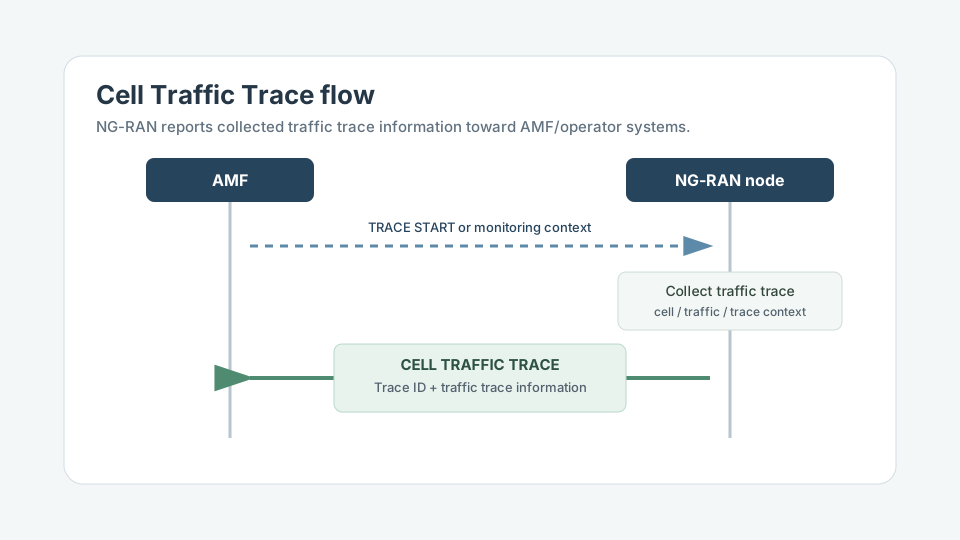
Cell Traffic Trace carries collected trace information from NG-RAN toward AMF/operator systems.
Call flow position: NG-RAN sends this initiatingMessage to report collected traffic trace information.
Typical state: AMF or operator systems receive trace output for analysis.
Preconditions:
Trace or monitoring context exists.
Trace ID identifies the trace session or context.
Traffic Trace Information is present and decodable.
Next likely message: Trace data processing or Deactivate Trace
Trace output correlation
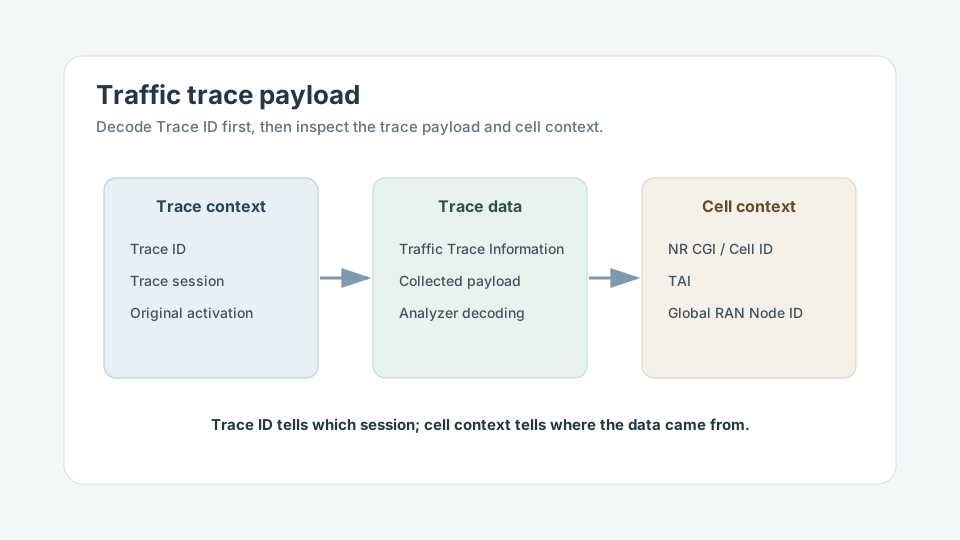
Decode Trace ID, then inspect the traffic trace payload and optional cell context.
Call flow position: Trace ID ties Cell Traffic Trace to the active trace context.
Typical state: Trace analysis verifies that the reported data belongs to the expected trace session and cell context.
Preconditions:
Trace ID is decoded correctly.
Cell identity or RAN node identity is decoded when present.
Next likely message: Trace analysis
Trace lifecycle validation
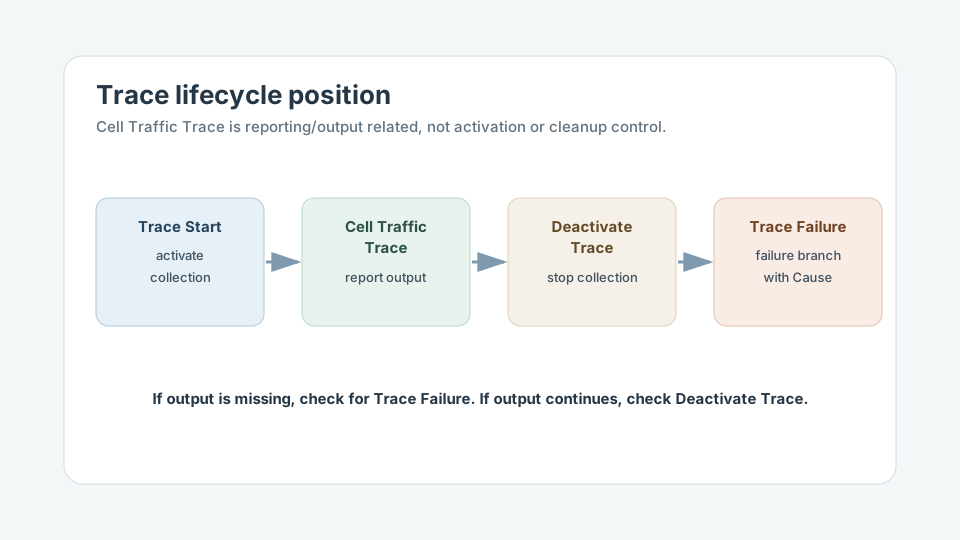
Cell Traffic Trace is reporting/output related within the trace lifecycle.
Call flow position: Cell Traffic Trace should appear during the active trace window, not after successful deactivation.
Typical state: Unexpected missing or continued reports are investigated against Trace Failure Indication and Deactivate Trace.
Preconditions:
Trace Start, failure, and deactivation events are visible or known.
Transport / encapsulation: NGAP over SCTP/IP between NG-RAN and AMF
Security context: Cell Traffic Trace may carry operational trace information collected from the RAN. It should be handled according to operator trace policy, privacy controls, and trace authorization.
Message Structure Overview
Cell Traffic Trace is an NG-RAN-to-AMF initiatingMessage for trace reporting.
Trace ID identifies the trace session or context.
Traffic Trace Information is the main trace payload.
Optional cell, tracking area, and RAN node identities help localize the trace report.
The message should be correlated with Trace Start, Trace Failure Indication, and Deactivate Trace.
ASN.1 for 5G NGAP - Cell Traffic Trace
CellTrafficTrace ::= SEQUENCE {
  protocolIEs ProtocolIE-Container { {CellTrafficTrace-IEs} },
  ...
}

CellTrafficTrace-IEs NGAP-PROTOCOL-IES ::= {
  { ID id-TraceID                  CRITICALITY ignore TYPE TraceID                  PRESENCE mandatory } |
  { ID id-TrafficTraceInformation  CRITICALITY ignore TYPE TrafficTraceInformation  PRESENCE mandatory },
  ...
}
How to read this ASN.1
Decode Trace ID first to identify the trace context, then inspect Traffic Trace Information. Optional cell and RAN identity context may appear depending on release and implementation.
Treat this as a teaching example based on the expected message structure, not as a captured network trace.
Traffic Trace Information is the operational payload.
Correlate the report by Trace ID and, when present, cell or RAN node identity.
Important Information Elements
IE
Presence
Description
Message Type
Mandatory
Identifies the NGAP PDU as CELL TRAFFIC TRACE.
Trace ID
Mandatory
Mandatory trace session or trace context identifier.
Traffic Trace Information
Mandatory
Mandatory payload containing the collected traffic trace information.
Cell Identity / NR CGI
Optional
Optional cell identity associated with the trace report.
TAI
Optional
Optional tracking area context for the reported cell or trace.
Global RAN Node ID
Optional
Optional identity of the NG-RAN node sending the trace report.
Detailed field explanation
Message Type
Identifies the NGAP PDU as CELL TRAFFIC TRACE.
Presence: Mandatory
In practice: In practice, compare this field with the original request and with any later release-dependent optional fields so you can see whether the network accepted the same service model the UE asked for.
Trace ID
Mandatory trace session or trace context identifier.
Presence: Mandatory
In practice: In practice, compare this field with the original request and with any later release-dependent optional fields so you can see whether the network accepted the same service model the UE asked for.
Traffic Trace Information
Mandatory payload containing the collected traffic trace information.
Presence: Mandatory
In practice: In practice, compare this field with the original request and with any later release-dependent optional fields so you can see whether the network accepted the same service model the UE asked for.
Cell Identity / NR CGI
Optional cell identity associated with the trace report.
Presence: Optional
In practice: In practice, compare this field with the original request and with any later release-dependent optional fields so you can see whether the network accepted the same service model the UE asked for.
TAI
Optional tracking area context for the reported cell or trace.
Presence: Optional
In practice: In practice, compare this field with the original request and with any later release-dependent optional fields so you can see whether the network accepted the same service model the UE asked for.
Global RAN Node ID
Optional identity of the NG-RAN node sending the trace report.
Presence: Optional
In practice: In practice, compare this field with the original request and with any later release-dependent optional fields so you can see whether the network accepted the same service model the UE asked for.
What to check in logs and traces
Confirm Cell Traffic Trace follows an active trace or monitoring context.
Verify Trace ID matches the expected trace session.
Decode Traffic Trace Information correctly.
Check cell identity or RAN node identity in multi-cell troubleshooting.
Confirm no Deactivate Trace was already processed for the same Trace ID.
Check whether Trace Failure Indication occurred before trace data was expected.
Confirm analyzer support for the traffic trace payload.
Common Issues and Troubleshooting
Cell Traffic Trace is missing after Trace Start.
Likely cause: Trace activation may have failed, reporting scope may not include cell traffic trace, or the collection path may differ.
What to inspect: Check Trace Start, Trace Activation scope, Trace Failure Indication, and trace collection configuration.
Next step: Resolve any failure cause or adjust trace scope before expecting traffic trace output.
Cell Traffic Trace appears after Deactivate Trace.
Likely cause: Trace ID correlation may be wrong, deactivation may not have reached the serving NG-RAN node, or buffered reports may still arrive.
What to inspect: Compare Trace ID, timing, UE or cell context, and Deactivate Trace handling.
Next step: Verify whether reports are delayed buffers or active collection that did not stop.
Trace data is tied to the wrong cell.
Likely cause: Cell identity, TAI, or Global RAN Node ID may be missing or mis-correlated.
What to inspect: Decode optional cell and RAN node identity context and compare with topology.
Next step: Correct cell mapping before using the trace for optimization decisions.
Analyzer cannot decode Traffic Trace Information.
Likely cause: The trace payload may use vendor-specific or release-specific encoding not supported by the decoder.
What to inspect: Check analyzer version, release support, and raw payload.
Next step: Use a decoder that supports the payload format or inspect vendor documentation.
Trace ID does not match any visible Trace Start.
Likely cause: Trace activation context may be outside the captured window or initiated through management systems.
What to inspect: Search wider trace windows and management trace configuration.
Next step: Document missing activation context and correlate by Trace ID and RAN node.
Trace ID identifies the trace session or trace context associated with the reported traffic trace information.
What does Traffic Trace Information contain?
Traffic Trace Information contains the collected trace payload that engineers decode for troubleshooting, optimization, or reporting.
Can Cell Traffic Trace appear after Deactivate Trace?
It should normally stop after Deactivate Trace for the same Trace ID, though delayed buffered reports or wrong Trace ID correlation should be checked.
How is Cell Traffic Trace different from Trace Failure Indication?
Cell Traffic Trace reports trace output. Trace Failure Indication reports that trace activation or handling failed.
How do you troubleshoot missing Cell Traffic Trace reports?
Check Trace Start, Trace Activation scope, Trace ID correlation, Trace Failure Indication, Deactivate Trace timing, collection path, and analyzer support for the payload.
Decode this message with the 3GPP Decoder, inspect the related message database, or open the matching call flow to see where this signaling step fits in the full procedure.