AMF or a management system decides that trace collection is needed for a UE.
Main purpose
Activates trace for a UE, tells NG-RAN what to collect, identifies the trace session, provides collection or reporting destination information, and supports troubleshooting of radio, signalling, mobility, and session issues.
Main specification
3GPP TS 38.413, Trace procedures and Trace Start message
Release added
Release 15
Procedures where used
Trace Start, UE trace activation, Network troubleshooting, Radio and signalling diagnostics, Management trace
What is Trace Start in simple terms?
Trace Start is the NGAP trace message sent by the AMF to the NG-RAN node to start trace collection for a specific UE using Trace Activation details.
Activates trace for a UE, tells NG-RAN what to collect, identifies the trace session, provides collection or reporting destination information, and supports troubleshooting of radio, signalling, mobility, and session issues.
Why this message matters
Trace Start is the AMF telling the gNB to begin collecting trace data for a specific UE. The Trace Activation IE says what to collect and where the results should go.
Where this message appears in the call flow
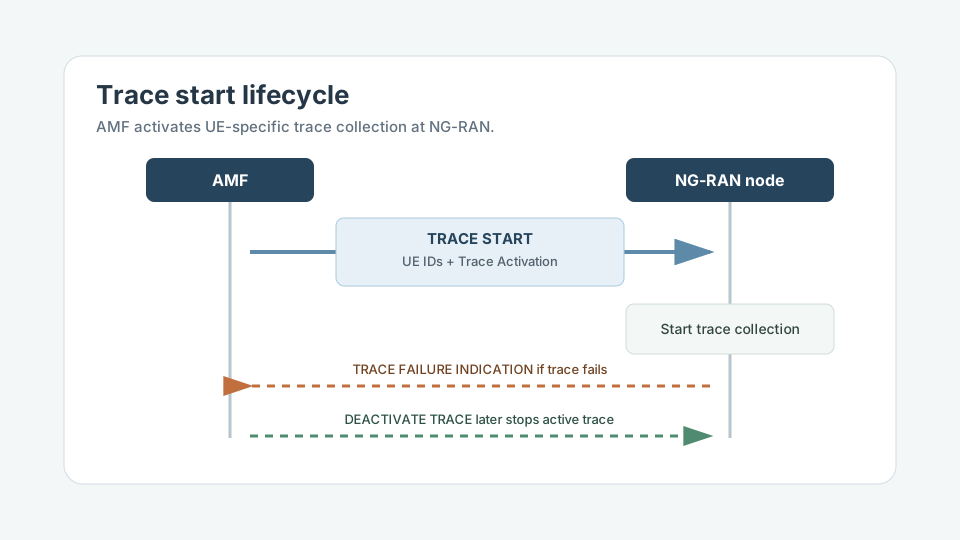
Trace Start
Trace Start begins UE-specific trace collection; failure and deactivation messages complete the lifecycle.
Call flow position: AMF sends this UE-associated initiatingMessage to activate trace collection at NG-RAN for a specific UE.
Typical state: NG-RAN decodes Trace Activation and starts the configured trace collection if supported.
Preconditions:
UE-associated NGAP context exists.
AMF UE NGAP ID and RAN UE NGAP ID identify the correct UE context.
Trace Activation is present and decodable.
Next likely message: Trace collection or Trace Failure Indication
Trace activation configuration
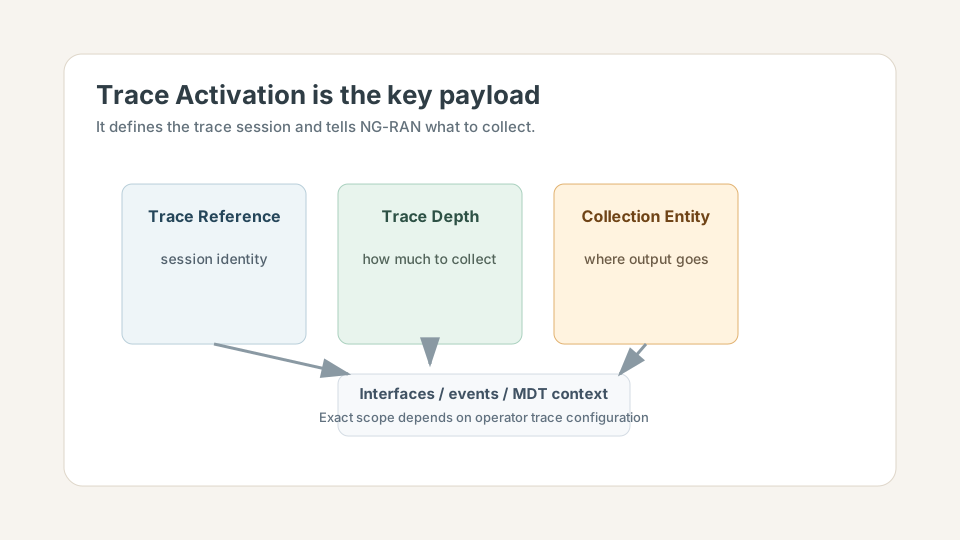
Trace Activation is the key payload that defines what NG-RAN should collect and where results should go.
Call flow position: Trace Activation carries the trace reference, trace depth, collection entity, and scope.
Typical state: NG-RAN uses the trace activation details to decide what to collect and where to report it.
Preconditions:
Trace reference is valid and expected.
Collection entity address is reachable or configured.
Requested trace depth and interface or event scope are supported.
Transport / encapsulation: NGAP over SCTP/IP between AMF and NG-RAN
Security context: Trace Start can trigger collection of signalling, radio, and traffic-related data for a specific UE. Trace activation must be handled according to operator policy, privacy controls, and trace authorization.
Message Structure Overview
Trace Start is an AMF-to-NG-RAN UE-associated initiatingMessage.
AMF UE NGAP ID and RAN UE NGAP ID bind the trace activation to the correct UE context.
Trace Activation is the key payload and defines the trace session configuration.
Trace Failure Indication reports failure to activate or handle trace.
Deactivate Trace stops an active trace session.
ASN.1 for 5G NGAP - Trace Start
TraceStart ::= SEQUENCE {
  protocolIEs ProtocolIE-Container { {TraceStart-IEs} },
  ...
}

TraceStart-IEs NGAP-PROTOCOL-IES ::= {
  { ID id-AMF-UE-NGAP-ID    CRITICALITY reject TYPE AMF-UE-NGAP-ID    PRESENCE mandatory } |
  { ID id-RAN-UE-NGAP-ID    CRITICALITY reject TYPE RAN-UE-NGAP-ID    PRESENCE mandatory } |
  { ID id-TraceActivation   CRITICALITY ignore TYPE TraceActivation   PRESENCE mandatory },
  ...
}
How to read this ASN.1
Decode the UE identity pair first, then inspect Trace Activation. Trace Activation contains the practical trace configuration, including trace reference and collection information.
Treat this as a teaching example based on the expected message structure, not as a captured network trace.
Trace Activation is the operational payload.
Correlate the trace lifecycle by UE identity pair and trace reference.
Important Information Elements
IE
Presence
Description
Message Type
Mandatory
Identifies the NGAP PDU as TRACE START.
AMF UE NGAP ID
Mandatory
Mandatory UE identity at the AMF.
RAN UE NGAP ID
Mandatory
Mandatory UE identity at the NG-RAN node.
Trace Activation
Mandatory
Mandatory trace configuration container with trace reference, depth, collection destination, and trace scope information.
Detailed field explanation
Message Type
Identifies the NGAP PDU as TRACE START.
Presence: Mandatory
In practice: In practice, compare this field with the original request and with any later release-dependent optional fields so you can see whether the network accepted the same service model the UE asked for.
AMF UE NGAP ID
Mandatory UE identity at the AMF.
Presence: Mandatory
In practice: In practice, compare this field with the original request and with any later release-dependent optional fields so you can see whether the network accepted the same service model the UE asked for.
RAN UE NGAP ID
Mandatory UE identity at the NG-RAN node.
Presence: Mandatory
In practice: In practice, compare this field with the original request and with any later release-dependent optional fields so you can see whether the network accepted the same service model the UE asked for.
Trace Activation
Mandatory trace configuration container with trace reference, depth, collection destination, and trace scope information.
Presence: Mandatory
In practice: In practice, compare this field with the original request and with any later release-dependent optional fields so you can see whether the network accepted the same service model the UE asked for.
What to check in logs and traces
Confirm TRACE START is sent after UE context exists.
Confirm direction is AMF to NG-RAN.
Match AMF UE NGAP ID and RAN UE NGAP ID to the UE context.
Verify Trace Activation IE is present and decodable.
Check trace reference uniqueness and expected value.
Check trace depth, interface or event scope, and collection entity address.
Look for Trace Failure Indication if trace does not start.
Look for Deactivate Trace when trace should stop.
Common Issues and Troubleshooting
Trace does not start after Trace Start.
Likely cause: Trace Activation may be missing, malformed, unsupported, or rejected by NG-RAN.
What to inspect: Decode Trace Activation and check trace depth, scope, trace reference, and collection destination.
Next step: Correct trace configuration or check for Trace Failure Indication.
Trace appears attached to the wrong UE.
Likely cause: AMF UE NGAP ID or RAN UE NGAP ID may be mismatched or stale.
What to inspect: Compare the UE identity pair with earlier Initial Context Setup, UE Context Modification, or mobility messages.
Next step: Rebuild UE context correlation before using collected trace data.
Trace starts but no data is collected.
Likely cause: Collection entity address may be unreachable, trace scope may not include the expected events, or NG-RAN may not support the requested depth.
What to inspect: Check Trace Activation details and collection path reachability.
Next step: Fix destination or scope and restart trace if needed.
Trace remains active longer than intended.
Likely cause: Deactivate Trace may be missing, delayed, or not correlated to the active trace reference.
What to inspect: Search for Deactivate Trace and compare trace reference/context.
Next step: Send or validate trace deactivation and cleanup policy.
Cell Traffic Trace is expected but absent.
Likely cause: Trace Start may have activated a different trace scope, or reporting may use a different collection mechanism.
What to inspect: Compare Trace Activation scope with expected Cell Traffic Trace behavior.
Next step: Adjust trace configuration or check reporting path.
LTE / 5G / Variant Comparison
Compared with Trace Failure Indication
Trace Start requests trace activation. Trace Failure Indication reports that trace activation or trace handling failed.
Compared with Deactivate Trace
Trace Start activates a trace session. Deactivate Trace stops an active trace session.
Compared with Cell Traffic Trace
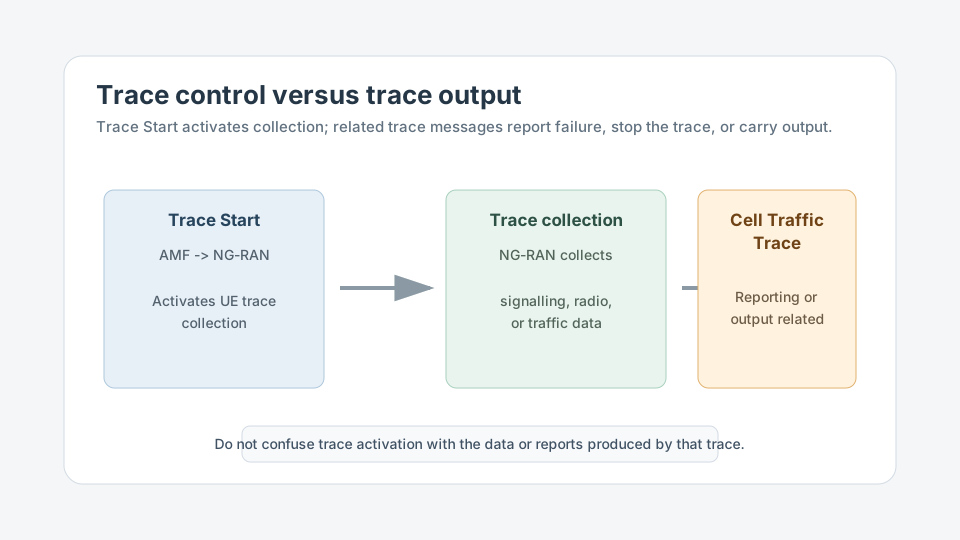
Trace Start is the control message that begins trace collection. Cell Traffic Trace is reporting or output related.
FAQ
What is Trace Start in NGAP?
Trace Start is the AMF-to-NG-RAN message used to start trace collection for a specific UE.
Who sends Trace Start?
The AMF sends Trace Start to the NG-RAN node.
Is Trace Start UE-associated?
Yes. Trace Start is UE-associated and carries AMF UE NGAP ID and RAN UE NGAP ID.
What does Trace Activation contain?
Trace Activation carries trace configuration such as trace reference, trace depth, trace collection entity address, and the interfaces or events to trace.
What is Trace Failure Indication?
Trace Failure Indication is the NG-RAN-to-AMF message used to report that trace activation or trace handling failed.
How is Trace Start stopped?
An active trace session is stopped using Deactivate Trace.
What is the difference between Trace Start and Cell Traffic Trace?
Trace Start activates trace collection. Cell Traffic Trace is related to reporting collected cell traffic trace information.
How do you troubleshoot Trace Start problems?
Check UE ID correlation, Trace Activation decoding, trace reference, trace depth, collection entity address, Trace Failure Indication, and later Deactivate Trace.
Decode this message with the 3GPP Decoder, inspect the related message database, or open the matching call flow to see where this signaling step fits in the full procedure.