Connection Establishment Indication is the NGAP message sent by the NG-RAN node to the AMF to indicate that a UE-associated connection has been established.
Message Fact Sheet
Protocol
ngap
Network
5g
Spec
3GPP TS 38.413
Spec Section
Clause 8.3.6 and UE Context Management procedures (Release 18 baseline)
NG-RAN establishes the relevant UE-associated connection and needs to notify AMF so AMF can update its UE connection-state view.
Main purpose
Notifies AMF that a UE connection has been established, supports AMF-side UE connection tracking, synchronizes NG-RAN and AMF context state, and avoids confusing connection-state reporting with setup, release, suspend, or resume messages.
Connection Establishment Indication, UE Context Management, UE connection-state tracking, AMF and NG-RAN state synchronization
What is Connection Establishment Indication in simple terms?
Connection Establishment Indication is the NGAP message sent by the NG-RAN node to the AMF to indicate that a UE-associated connection has been established.
Notifies AMF that a UE connection has been established, supports AMF-side UE connection tracking, synchronizes NG-RAN and AMF context state, and avoids confusing connection-state reporting with setup, release, suspend, or resume messages.
Why this message matters
Connection Establishment Indication is the gNB telling AMF that a UE-associated connection has been established. It is a state update, not the first NAS message and not a resume request.
Where this message appears in the call flow
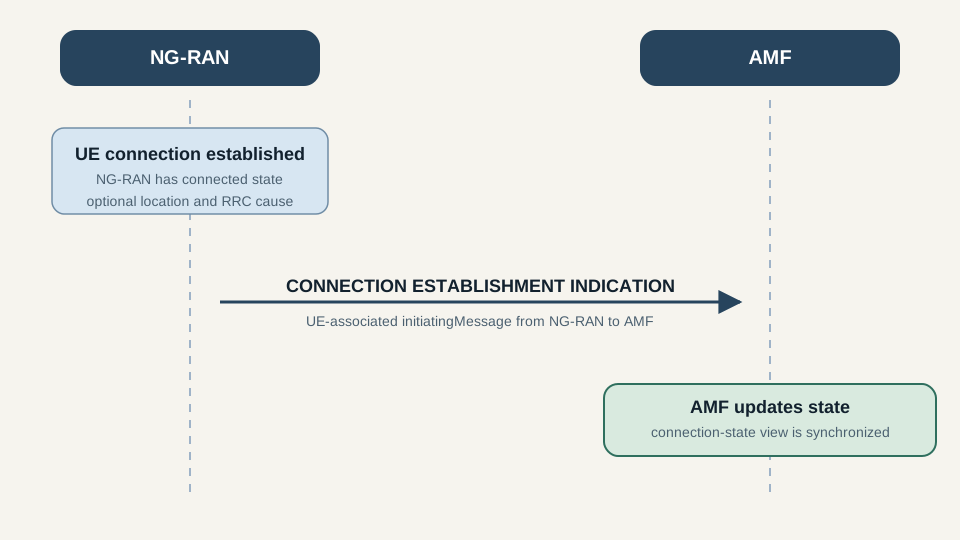
Connection Establishment Indication
State-sync branch: NG-RAN notifies AMF that a UE-associated connection has been established.
Call flow position: NG-RAN sends this initiatingMessage to notify AMF that a UE-associated connection has been established.
Typical state: AMF can update its UE connection-state view and continue later UE-associated procedures.
Preconditions:
AMF UE NGAP ID and RAN UE NGAP ID identify the UE-associated NGAP context.
NG-RAN has established the relevant UE-associated connection.
Next likely message: AMF-side state update and subsequent UE-associated signaling
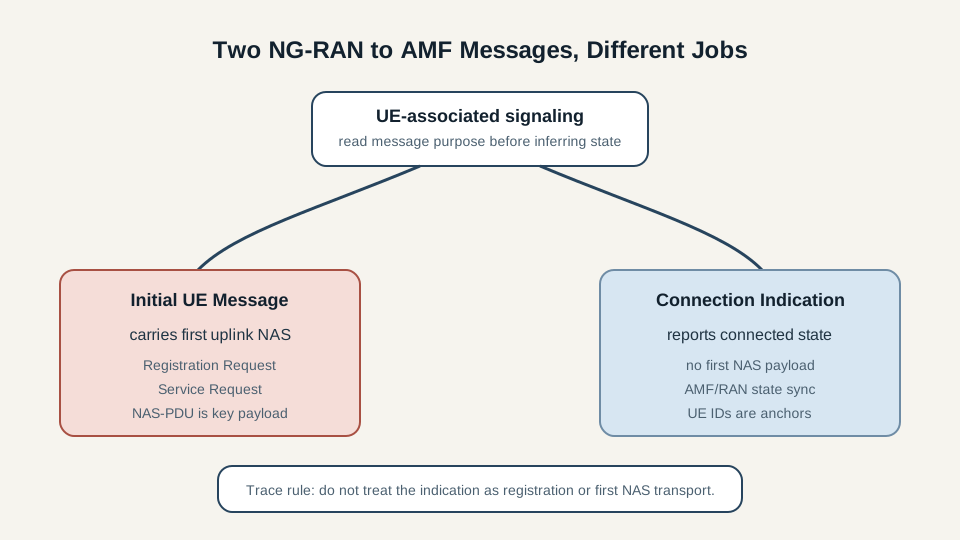
Connection-state synchronization
Message distinction: Initial UE Message carries first NAS, while Connection Establishment Indication reports connection state.
Call flow position: The indication keeps AMF aligned with NG-RAN connection state without carrying the first NAS payload.
Typical state: The message is state feedback, not initial NAS transfer.
Preconditions:
UE-associated connection establishment has occurred on the NG-RAN side.
Optional location or RRC cause context may be available.
Next likely message: Normal UE context or NAS handling
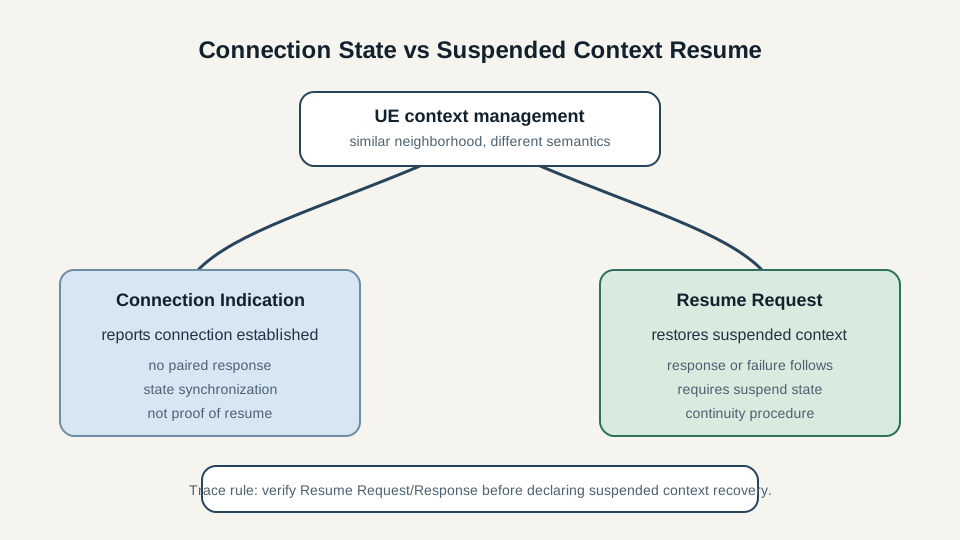
Resume distinction
Procedure distinction: connection establishment is state reporting; resume restores a suspended UE context.
Call flow position: The indication may occur near connection restoration scenarios, but it is not the UE Context Resume Request procedure.
Typical state: AMF learns that a connection exists; separate resume messages are needed when restoring a suspended UE context.
Preconditions:
Trace analysis distinguishes connection establishment indication from suspend/resume signaling.
Next likely message: Resume, NAS transport, or other UE-associated procedures depending on context
Transport / encapsulation: NGAP over SCTP/IP between NG-RAN and AMF
Security context: The message reports that a UE-associated connection is established. It does not create a new UE context by itself and does not replace Initial UE Message, UE Context Resume, or UE context setup procedures.
Message Structure Overview
Connection Establishment Indication is an NG-RAN-to-AMF initiatingMessage in UE Context Management.
It reports that a UE-associated connection has been established.
AMF UE NGAP ID and RAN UE NGAP ID bind the indication to the UE-associated context.
User Location Information, RRC Establishment Cause, and Criticality Diagnostics are optional.
The message is not Initial UE Message, UE Context Resume Request, context setup, release, or suspend.
ASN.1 for 5G NGAP - Connection Establishment Indication
ConnectionEstablishmentIndication ::= SEQUENCE {
  protocolIEs ProtocolIE-Container { {ConnectionEstablishmentIndication-IEs} },
  ...
}

ConnectionEstablishmentIndication-IEs NGAP-PROTOCOL-IES ::= {
  { ID id-AMF-UE-NGAP-ID              CRITICALITY reject TYPE AMF-UE-NGAP-ID              PRESENCE mandatory } |
  { ID id-RAN-UE-NGAP-ID              CRITICALITY reject TYPE RAN-UE-NGAP-ID              PRESENCE mandatory } |
  { ID id-UserLocationInformation     CRITICALITY ignore TYPE UserLocationInformation     PRESENCE optional  } |
  { ID id-RRCEstablishmentCause       CRITICALITY ignore TYPE RRCEstablishmentCause       PRESENCE optional  } |
  { ID id-CriticalityDiagnostics      CRITICALITY ignore TYPE CriticalityDiagnostics      PRESENCE optional  },
  ...
}
How to read this ASN.1
Decode the UE identity pair first. Optional location and RRC establishment cause explain where and why the connection was established, but the message itself is a state indication rather than a NAS transport or resume request.
5G NGAP - Connection Establishment Indication - Example Dump
Treat this as a teaching example based on the expected message structure, not as a captured network trace.
The indication reports connection establishment; it does not carry the first uplink NAS message.
Use both UE NGAP IDs to correlate the indication with the correct UE-associated context.
Important Information Elements
IE
Presence
Description
Message Type
Mandatory
Identifies the NGAP PDU as CONNECTION ESTABLISHMENT INDICATION.
AMF UE NGAP ID
Mandatory
Mandatory AMF-side UE identifier used to bind the indication to the correct UE-associated NGAP context.
RAN UE NGAP ID
Mandatory
Mandatory NG-RAN-side UE identifier used to identify the radio-side UE context whose connection was established.
User Location Information
Optional
Optional location context for where the UE connection was established.
RRC Establishment Cause
Optional
Optional RRC-layer establishment reason or context, such as signaling, mobile-originated data, emergency, or other access cause depending on radio context.
Criticality Diagnostics
Optional
Optional protocol diagnostics related to IE handling or criticality behavior.
Detailed field explanation
Message Type
Identifies the NGAP PDU as CONNECTION ESTABLISHMENT INDICATION.
Presence: Mandatory
In practice: In practice, compare this field with the original request and with any later release-dependent optional fields so you can see whether the network accepted the same service model the UE asked for.
AMF UE NGAP ID
Mandatory AMF-side UE identifier used to bind the indication to the correct UE-associated NGAP context.
Presence: Mandatory
In practice: In practice, compare this field with the original request and with any later release-dependent optional fields so you can see whether the network accepted the same service model the UE asked for.
RAN UE NGAP ID
Mandatory NG-RAN-side UE identifier used to identify the radio-side UE context whose connection was established.
Presence: Mandatory
In practice: In practice, compare this field with the original request and with any later release-dependent optional fields so you can see whether the network accepted the same service model the UE asked for.
User Location Information
Optional location context for where the UE connection was established.
Presence: Optional
In practice: In practice, compare this field with the original request and with any later release-dependent optional fields so you can see whether the network accepted the same service model the UE asked for.
RRC Establishment Cause
Optional RRC-layer establishment reason or context, such as signaling, mobile-originated data, emergency, or other access cause depending on radio context.
Presence: Optional
In practice: In practice, compare this field with the original request and with any later release-dependent optional fields so you can see whether the network accepted the same service model the UE asked for.
Criticality Diagnostics
Optional protocol diagnostics related to IE handling or criticality behavior.
Presence: Optional
In practice: In practice, compare this field with the original request and with any later release-dependent optional fields so you can see whether the network accepted the same service model the UE asked for.
What to check in logs and traces
Confirm message direction is NG-RAN node to AMF.
Match AMF UE NGAP ID and RAN UE NGAP ID to the intended UE context.
Check User Location Information when present.
Decode RRC Establishment Cause when present.
Confirm the message is not Initial UE Message or UE Context Resume Request.
Verify later AMF behavior matches the reported connected state.
Common Issues and Troubleshooting
The indication is interpreted as a new UE registration.
Likely cause: Connection-state reporting is being confused with Initial UE Message and NAS registration handling.
What to inspect: Check whether a NAS-PDU is present. Connection Establishment Indication is not the first NAS transport.
Next step: Analyze this as UE connection-state synchronization, then inspect separate NAS transport messages if registration behavior matters.
A suspended context is assumed to have resumed because this indication appears.
Likely cause: Connection establishment reporting is being mixed with UE Context Resume.
What to inspect: Look for UE Context Resume Request and UE Context Resume Response or Failure with matching UE IDs.
Next step: Do not declare resume without the resume procedure messages.
Wrong UE is associated with the indication.
Likely cause: AMF UE NGAP ID and RAN UE NGAP ID correlation may be stale across connection, resume, or release events.
What to inspect: Rebuild the UE ID timeline around the connection establishment and later AMF behavior.
Next step: Fix identity correlation before interpreting RRC cause or location.
AMF behavior after the indication does not match the apparent connection state.
Likely cause: AMF-side state may not align with NG-RAN state, or the indication may be missing optional context.
What to inspect: Check later NGAP/NAS behavior plus optional User Location Information and RRC Establishment Cause.
Next step: Compare the indication with subsequent UE context, NAS transport, or release/resume messages.
Location-sensitive decisions look wrong after connection establishment.
Likely cause: User Location Information may be absent, stale, or ignored.
What to inspect: Decode User Location Information if present and compare with later mobility or paging behavior.
Next step: Use the latest valid location evidence when judging AMF decisions.
LTE / 5G / Variant Comparison
Compared with Initial UE Message
Initial UE Message carries the first uplink NAS message. Connection Establishment Indication reports that a UE-associated connection has been established.
Compared with UE Context Resume Request
Resume Request asks AMF to restore a suspended context. Connection Establishment Indication reports connection establishment state.
Compared with RRC Inactive Transition Report
RRC Inactive Transition Report reports an RRC state transition result. Connection Establishment Indication reports that a UE-associated connection exists.
FAQ
What is Connection Establishment Indication in NGAP?
It is the NG-RAN-to-AMF indication used to report that a UE-associated connection has been established.
Who sends Connection Establishment Indication?
The NG-RAN node sends Connection Establishment Indication to the AMF.
When is this message used?
It is used when NG-RAN has established the relevant UE-associated connection and AMF needs to update its UE connection-state view.
Is Connection Establishment Indication the same as Initial UE Message?
No. Initial UE Message carries the first uplink NAS message. Connection Establishment Indication reports connection establishment state.
Does this message create a new UE context?
No. It reports connection state for a UE-associated context; it does not create a new context by itself.
Does this message resume a suspended UE context?
No. UE Context Resume Request and Response handle suspended-context restoration.
What UE identifiers are carried in this message?
AMF UE NGAP ID and RAN UE NGAP ID are mandatory.
How do you troubleshoot Connection Establishment Indication?
Match both UE NGAP IDs, decode optional location and RRC Establishment Cause, confirm it is not Initial UE Message or Resume Request, and check later AMF behavior.
Decode this message with the 3GPP Decoder, inspect the related message database, or open the matching call flow to see where this signaling step fits in the full procedure.