RRC Inactive Transition Report is the NGAP message sent by the NG-RAN node to the AMF to report the result of an RRC Inactive transition for a UE-associated context.
Message Fact Sheet
Protocol
ngap
Network
5g
Spec
3GPP TS 38.413
Spec Section
Clause 8.3.5 and UE Context Management procedures (Release 18 baseline)
AMF previously requested RRC Inactive transition reporting and NG-RAN has performed, attempted, or evaluated the RRC state transition.
Main purpose
Reports the RRC Inactive transition outcome, informs AMF whether the UE entered RRC Inactive state, supports AMF-side UE state tracking, helps coordinate later paging or resume behavior, and closes the reporting loop after AMF requested transition reporting.
RRC Inactive Transition Report, UE Context Management, RRC state tracking, Paging and resume coordination, AMF-requested reporting
What is RRC Inactive Transition Report in simple terms?
RRC Inactive Transition Report is the NGAP message sent by the NG-RAN node to the AMF to report the result of an RRC Inactive transition for a UE-associated context.
Reports the RRC Inactive transition outcome, informs AMF whether the UE entered RRC Inactive state, supports AMF-side UE state tracking, helps coordinate later paging or resume behavior, and closes the reporting loop after AMF requested transition reporting.
Why this message matters
RRC Inactive Transition Report is the gNB telling AMF what happened to the UE's RRC state after AMF asked to be informed. It is a state report, not a release message.
Where this message appears in the call flow
RRC Inactive Transition Report
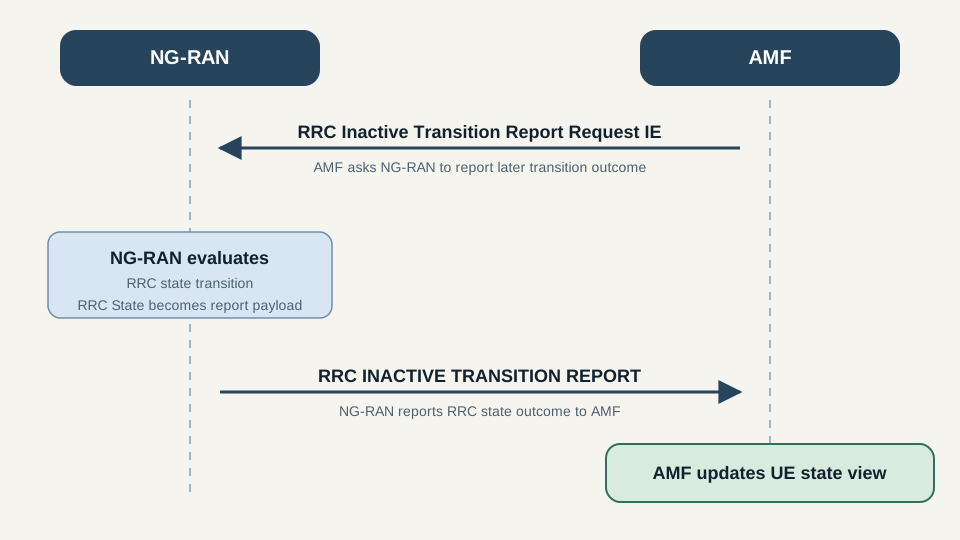
Reporting loop: AMF asks for transition reporting, then NG-RAN reports the RRC state outcome.
Call flow position: NG-RAN sends this initiatingMessage after AMF requested reporting of an RRC Inactive transition outcome.
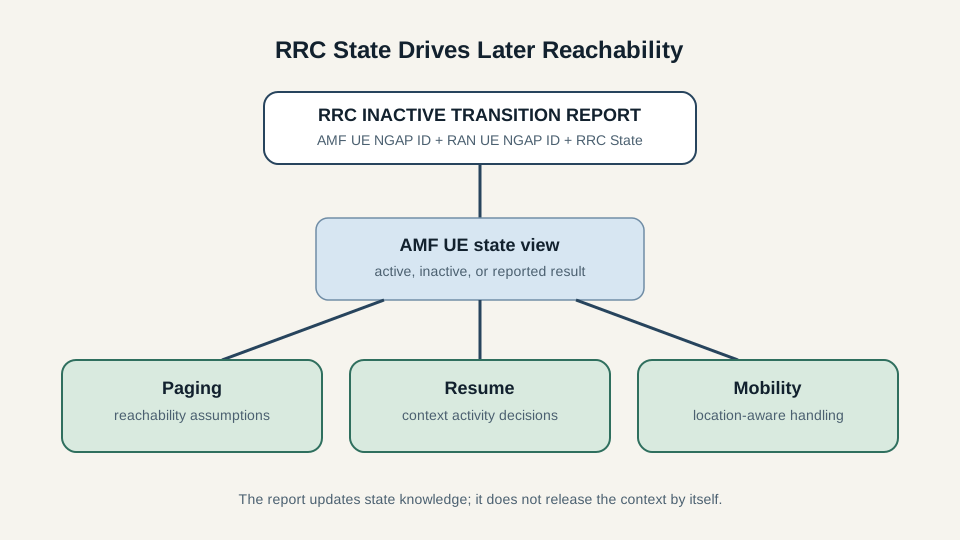
Typical state: AMF receives the RRC state result and can update UE reachability, paging, and resume handling.
Preconditions:
AMF UE NGAP ID and RAN UE NGAP ID identify the UE-associated NGAP context.
Transport / encapsulation: NGAP over SCTP/IP between NG-RAN and AMF
Security context: The message reports UE RRC state outcome for an existing UE-associated NGAP context. It does not release the UE context and does not by itself suspend or resume the UE context.
Message Structure Overview
RRC Inactive Transition Report is an NG-RAN-to-AMF initiatingMessage in UE Context Management.
It reports an RRC state transition outcome after AMF requested transition reporting.
AMF UE NGAP ID and RAN UE NGAP ID identify the UE-associated context.
RRC State is mandatory and tells AMF the reported RRC state outcome.
User Location Information and Criticality Diagnostics are optional.
The report is not a UE context release, PDU session release, or UE Context Suspend message.
ASN.1 for 5G NGAP - RRC Inactive Transition Report
RRCInactiveTransitionReport ::= SEQUENCE {
  protocolIEs ProtocolIE-Container { {RRCInactiveTransitionReport-IEs} },
  ...
}

RRCInactiveTransitionReport-IEs NGAP-PROTOCOL-IES ::= {
  { ID id-AMF-UE-NGAP-ID              CRITICALITY reject TYPE AMF-UE-NGAP-ID              PRESENCE mandatory } |
  { ID id-RAN-UE-NGAP-ID              CRITICALITY reject TYPE RAN-UE-NGAP-ID              PRESENCE mandatory } |
  { ID id-RRCState                    CRITICALITY ignore TYPE RRCState                    PRESENCE mandatory } |
  { ID id-UserLocationInformation     CRITICALITY ignore TYPE UserLocationInformation     PRESENCE optional  } |
  { ID id-CriticalityDiagnostics      CRITICALITY ignore TYPE CriticalityDiagnostics      PRESENCE optional  },
  ...
}
How to read this ASN.1
Decode both UE identifiers first, then RRC State. The report is most useful when correlated with the earlier AMF request for transition reporting and with later paging or resume behavior.
5G NGAP - RRC Inactive Transition Report - Example Dump
Treat this as a teaching example based on the expected message structure, not as a captured network trace.
RRC State is the primary report payload.
Do not treat this message as UE Context Release or UE Context Suspend.
Look backward for the AMF-side request or control that asked NG-RAN to report RRC Inactive transition results.
Important Information Elements
IE
Presence
Description
Message Type
Mandatory
Identifies the NGAP PDU as RRC INACTIVE TRANSITION REPORT.
AMF UE NGAP ID
Mandatory
Mandatory AMF-side UE identifier used to bind the report to the correct UE-associated NGAP context.
RAN UE NGAP ID
Mandatory
Mandatory NG-RAN-side UE identifier used to identify the radio-side UE context that is reporting RRC state.
RRC State
Mandatory
Mandatory reported RRC state or transition result. This is the key operational field.
User Location Information
Optional
Optional UE location at reporting time, useful when paging, resume, or mobility handling depends on serving location.
Criticality Diagnostics
Optional
Optional protocol diagnostics related to IE handling or criticality behavior.
Detailed field explanation
Message Type
Identifies the NGAP PDU as RRC INACTIVE TRANSITION REPORT.
Presence: Mandatory
In practice: In practice, compare this field with the original request and with any later release-dependent optional fields so you can see whether the network accepted the same service model the UE asked for.
AMF UE NGAP ID
Mandatory AMF-side UE identifier used to bind the report to the correct UE-associated NGAP context.
Presence: Mandatory
In practice: In practice, compare this field with the original request and with any later release-dependent optional fields so you can see whether the network accepted the same service model the UE asked for.
RAN UE NGAP ID
Mandatory NG-RAN-side UE identifier used to identify the radio-side UE context that is reporting RRC state.
Presence: Mandatory
In practice: In practice, compare this field with the original request and with any later release-dependent optional fields so you can see whether the network accepted the same service model the UE asked for.
RRC State
Mandatory reported RRC state or transition result. This is the key operational field.
Presence: Mandatory
In practice: In practice, compare this field with the original request and with any later release-dependent optional fields so you can see whether the network accepted the same service model the UE asked for.
User Location Information
Optional UE location at reporting time, useful when paging, resume, or mobility handling depends on serving location.
Presence: Optional
In practice: In practice, compare this field with the original request and with any later release-dependent optional fields so you can see whether the network accepted the same service model the UE asked for.
Criticality Diagnostics
Optional protocol diagnostics related to IE handling or criticality behavior.
Presence: Optional
In practice: In practice, compare this field with the original request and with any later release-dependent optional fields so you can see whether the network accepted the same service model the UE asked for.
Decode this message with the 3GPP Decoder, inspect the related message database, or open the matching call flow to see where this signaling step fits in the full procedure.