Uplink NAS Transport is the NGAP message the NG-RAN uses to carry a subsequent uplink NAS message from the UE toward the AMF over the N2 interface after the initial access is already established.
The UE sends an uplink NAS message to the gNB after the Initial UE Message step, and the gNB needs to relay it to the AMF over N2.
Main purpose
Lets the NG-RAN forward uplink NAS payloads such as Authentication Response, Security Mode Complete, Registration Complete, or PDU Session Establishment Request to the AMF after the UE has already established the initial NGAP context.
Uplink NAS Transport is the NGAP message the NG-RAN uses to carry a subsequent uplink NAS message from the UE toward the AMF over the N2 interface after the initial access is already established.
Lets the NG-RAN forward uplink NAS payloads such as Authentication Response, Security Mode Complete, Registration Complete, or PDU Session Establishment Request to the AMF after the UE has already established the initial NGAP context.
Why this message matters
Uplink NAS Transport is the gNB forwarding an uplink NAS message from the UE to the AMF after the initial connection is already established.
Where this message appears in the call flow
5G Initial Registration continuation
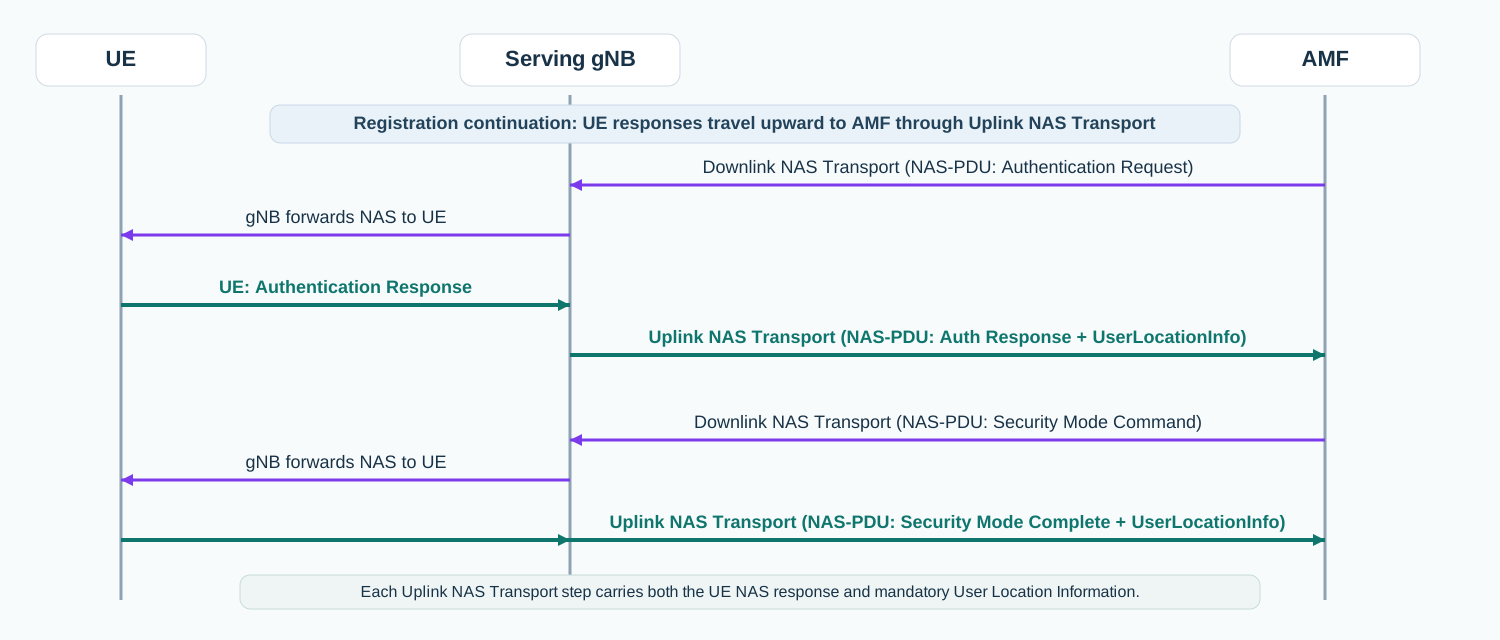
Registration continuation: after Authentication Request reaches the UE, the UE response returns as NAS-PDU inside Uplink NAS Transport, and the cycle continues through Security Mode Command and Registration Accept.
Call flow position: Subsequent uplink N2 transfer used by the NG-RAN to carry UE NAS responses such as Authentication Response, Security Mode Complete, or Registration Complete after the AMF has already been reached through Initial UE Message.
Typical state: The UE and AMF have an active NGAP context. The UE is responding to a prior AMF challenge or completing the registration procedure.
Preconditions:
Initial UE Message has already established the UE-associated NGAP context.
AMF UE NGAP ID and RAN UE NGAP ID are known on both sides.
The UE has uplink NAS content to send in response to a prior downlink NAS step.
Next likely message: Downlink NAS Transport or Initial Context Setup Request
PDU Session Establishment
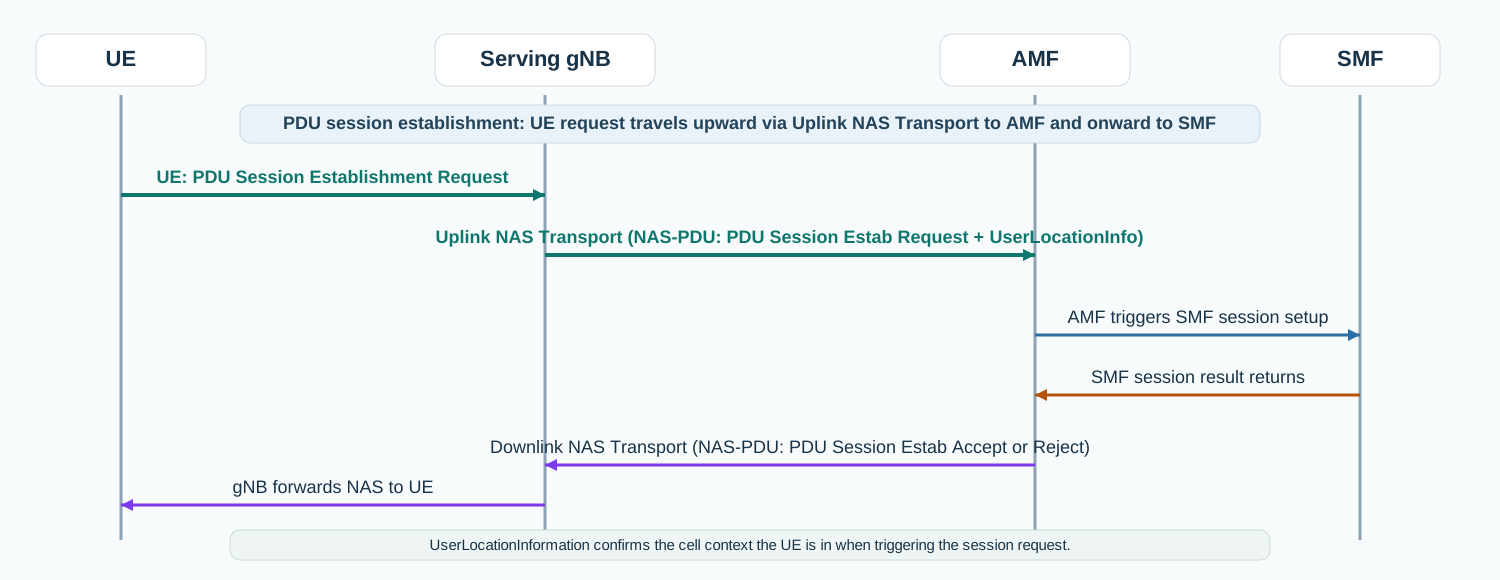
PDU session context: the UE PDU Session Establishment Request travels upward through Uplink NAS Transport, and the AMF continues the procedure by involving the SMF before returning a session accept or reject.
Call flow position: Uplink N2 transfer used by the NG-RAN to carry the UE PDU Session Establishment Request toward the AMF so the session setup procedure can begin at the SMF.
Typical state: The UE is connected and needs to establish a PDU session. The gNB encapsulates the 5GSM request in this NGAP message.
Preconditions:
The UE has completed registration and has a valid NGAP context.
The UE initiated a PDU session establishment request on the NAS layer.
Next likely message: Downlink NAS Transport carrying PDU Session Establishment Accept or Reject
UE-triggered Service Request
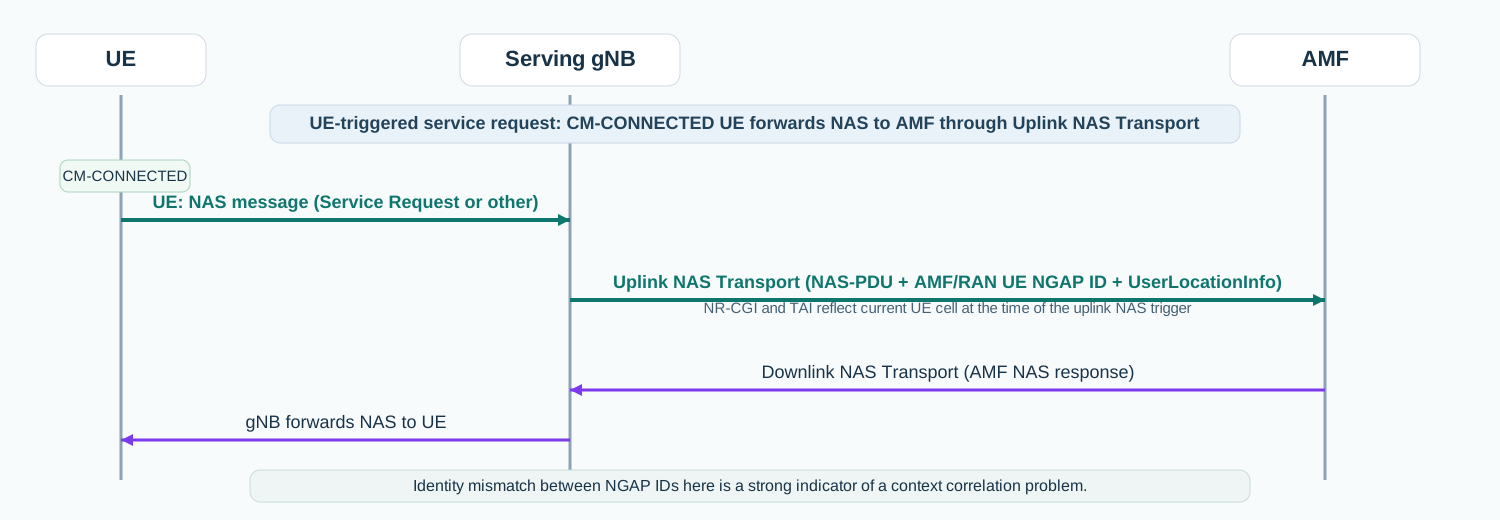
Service request context: a CM-CONNECTED UE sends a NAS message that travels upward through Uplink NAS Transport, triggering AMF-side service or data path management.
Call flow position: Uplink N2 transfer carrying the NAS Service Request from a UE in CM-CONNECTED state that needs to trigger a service or mobility procedure.
Typical state: The UE is already registered and CM-CONNECTED and is sending an uplink NAS message to trigger a core-side action such as data path setup or mobility signaling.
Preconditions:
The UE has an active NGAP context and is in CM-CONNECTED state.
The UE has a NAS-layer trigger to communicate to the AMF.
Next likely message: Downlink NAS Transport
Registration Update after mobility
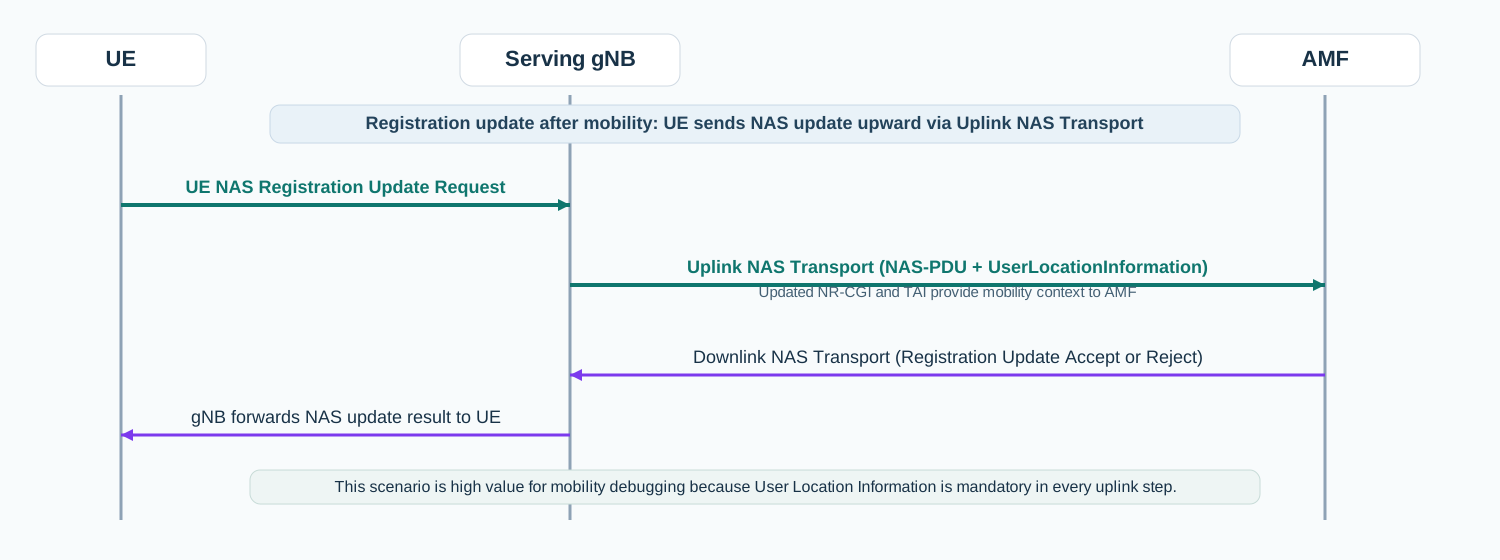
Mobility update context: when UE location changes, Uplink NAS Transport carries the registration update NAS message and mandatory User Location Information to AMF.
Call flow position: Uplink N2 transfer used when the UE sends a NAS registration update after moving across cells or tracking areas while maintaining a valid UE context.
Typical state: The UE remains reachable and registered, but mobility changes require an update toward AMF with current location context.
Preconditions:
A UE-associated NGAP context is active.
The UE has a mobility-driven NAS registration update to send.
Next likely message: Downlink NAS Transport carrying Registration Update Accept or Reject
Non-3GPP access continuation
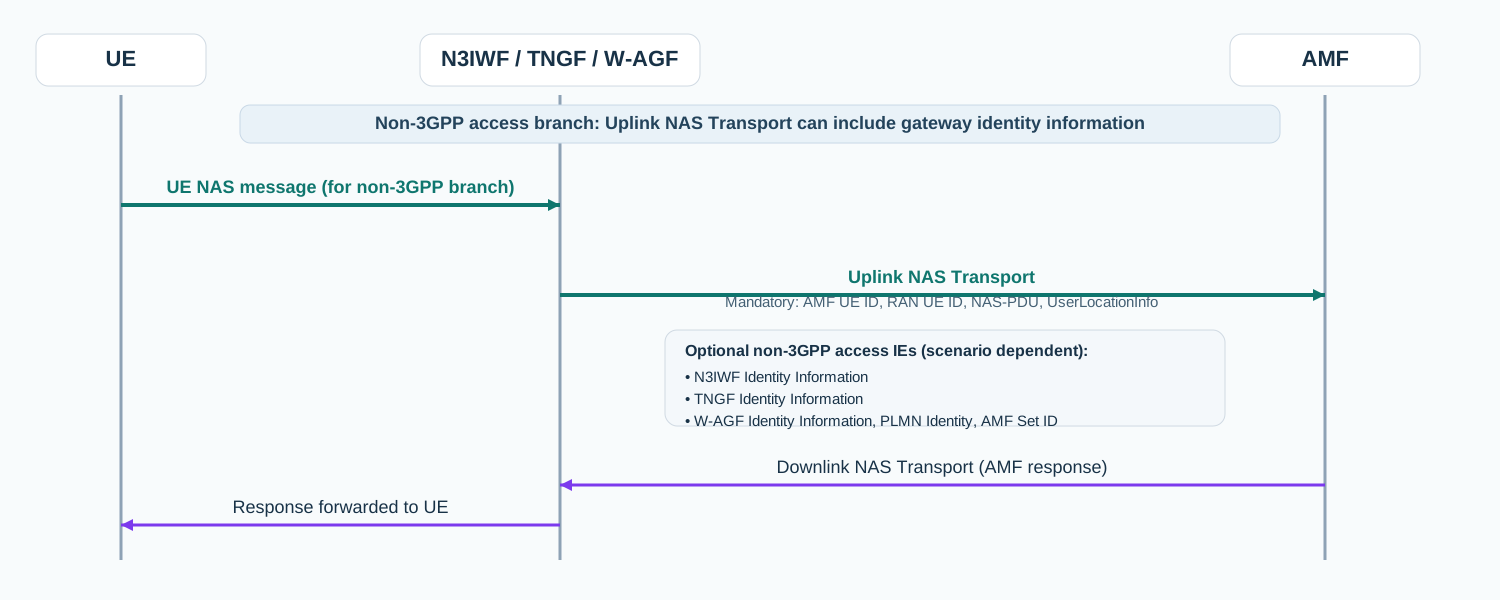
Non-3GPP context: Uplink NAS Transport may include optional gateway identity IEs while still carrying the standard mandatory NAS relay fields.
Call flow position: Uplink N2 transfer used for NAS messages arriving through N3IWF, TNGF, or W-AGF branches where additional identity information may be included.
Typical state: The UE NAS message is relayed through non-3GPP interworking and carried to AMF with scenario-specific optional identity IEs.
Preconditions:
The UE is connected via a supported non-3GPP access branch.
AMF UE NGAP ID and RAN UE NGAP ID correlation remains valid.
Transport / encapsulation: NGAP over SCTP/IP between NG-RAN and AMF
Security context: Protected by the N2 transport association. The embedded NAS-PDU is usually security-protected NAS once the NAS security mode has been activated, though plain NAS is possible early in the registration stage.
Message Structure Overview
Uplink NAS Transport is an NGAP initiating message with four mandatory IEs: AMF UE NGAP ID, RAN UE NGAP ID, NAS-PDU, and User Location Information.
The User Location Information IE distinguishes it from Downlink NAS Transport and from Initial UE Message, which are structurally similar otherwise.
Optional IEs cover non-3GPP access paths and PLMN disambiguation. In standard 3GPP NR deployments they are usually absent.
ASN.1 for 5G NGAP - Uplink NAS Transport
UplinkNASTransport ::= SEQUENCE {
  protocolIEs ProtocolIE-Container { {UplinkNASTransport-IEs} },
  ...
}

UplinkNASTransport-IEs NGAP-PROTOCOL-IES ::= {
  { ID id-AMF-UE-NGAP-ID              CRITICALITY reject  TYPE AMF-UE-NGAP-ID              PRESENCE mandatory } |
  { ID id-RAN-UE-NGAP-ID              CRITICALITY reject  TYPE RAN-UE-NGAP-ID              PRESENCE mandatory } |
  { ID id-NAS-PDU                     CRITICALITY reject  TYPE NAS-PDU                     PRESENCE mandatory } |
  { ID id-UserLocationInformation     CRITICALITY reject  TYPE UserLocationInformation     PRESENCE mandatory } |
  { ID id-W-AGFIdentityInformation    CRITICALITY reject  TYPE W-AGFIdentityInformation    PRESENCE optional  } |
  { ID id-TNGFIdentityInformation     CRITICALITY reject  TYPE TNGFIdentityInformation     PRESENCE optional  } |
  { ID id-PLMNIdentity                CRITICALITY ignore  TYPE PLMNIdentity                PRESENCE optional  } |
  { ID id-N3IWFIdentityInformation    CRITICALITY reject  TYPE N3IWFIdentityInformation    PRESENCE optional  } |
  { ID id-AMFSetID                    CRITICALITY ignore  TYPE AMFSetID                    PRESENCE optional  },
  ...
}
How to read this ASN.1
Uplink NAS Transport has four mandatory IEs versus Downlink NAS Transport's three. The extra mandatory IE is User Location Information, which the gNB must always report so the AMF has accurate location context for the ongoing procedure. In NR deployments the optional non-3GPP identity fields will almost never appear.
The NAS-PDU is the primary payload. Decode it first to understand what UE action triggered this NGAP message.
User Location Information is mandatory and always present. In traces, it confirms the cell and tracking area the UE is in when sending the NAS response.
AMF UE NGAP ID and RAN UE NGAP ID must match the pair established in the earlier Initial UE Message or they indicate a correlation error.
Important Information Elements
IE
Presence
Description
AMF UE NGAP ID
Mandatory
AMF-side UE identity used to correlate the message with the correct UE context already established in the core network.
RAN UE NGAP ID
Mandatory
NG-RAN-side UE identity used by the gNB to identify the radio context associated with this UE.
NAS-PDU
Mandatory
Carries the actual uplink NAS message from the UE. The gNB does not decode the NAS payload at NGAP level and forwards it as an opaque container.
User Location Information
Mandatory
Reports the current UE location to the AMF. Present in all Uplink NAS Transport messages. The location format depends on access type such as NR-CGI or E-UTRA-CGI for 3GPP access.
W-AGF Identity Information
Optional
Present only in wireline access scenarios where the UE reaches the 5GC through a Wireline Access Gateway Function.
TNGF Identity Information
Optional
Present when the UE accesses the 5GC through a Trusted Non-3GPP Gateway Function.
N3IWF Identity Information
Optional
Present when the UE accesses the 5GC through a Non-3GPP Interworking Function over untrusted non-3GPP access.
PLMN Identity
Optional
Indicates the PLMN associated with the access when additional disambiguation is needed beyond the UE location report.
AMF Set ID
Optional
Used in scenarios where the serving AMF wants the source AMF set context to be visible for routing or load-balancing purposes.
Detailed field explanation
AMF UE NGAP ID
AMF-side UE identity used to correlate the message with the correct UE context already established in the core network.
Presence: Mandatory
In practice: In practice, compare this field with the original request and with any later release-dependent optional fields so you can see whether the network accepted the same service model the UE asked for.
RAN UE NGAP ID
NG-RAN-side UE identity used by the gNB to identify the radio context associated with this UE.
Presence: Mandatory
In practice: In practice, compare this field with the original request and with any later release-dependent optional fields so you can see whether the network accepted the same service model the UE asked for.
NAS-PDU
Carries the actual uplink NAS message from the UE. The gNB does not decode the NAS payload at NGAP level and forwards it as an opaque container.
Presence: Mandatory
In practice: In practice, compare this field with the original request and with any later release-dependent optional fields so you can see whether the network accepted the same service model the UE asked for.
User Location Information
Reports the current UE location to the AMF. Present in all Uplink NAS Transport messages. The location format depends on access type such as NR-CGI or E-UTRA-CGI for 3GPP access.
Presence: Mandatory
In practice: In practice, compare this field with the original request and with any later release-dependent optional fields so you can see whether the network accepted the same service model the UE asked for.
W-AGF Identity Information
Present only in wireline access scenarios where the UE reaches the 5GC through a Wireline Access Gateway Function.
Presence: Optional
In practice: In practice, compare this field with the original request and with any later release-dependent optional fields so you can see whether the network accepted the same service model the UE asked for.
TNGF Identity Information
Present when the UE accesses the 5GC through a Trusted Non-3GPP Gateway Function.
Presence: Optional
In practice: In practice, compare this field with the original request and with any later release-dependent optional fields so you can see whether the network accepted the same service model the UE asked for.
N3IWF Identity Information
Present when the UE accesses the 5GC through a Non-3GPP Interworking Function over untrusted non-3GPP access.
Presence: Optional
In practice: In practice, compare this field with the original request and with any later release-dependent optional fields so you can see whether the network accepted the same service model the UE asked for.
PLMN Identity
Indicates the PLMN associated with the access when additional disambiguation is needed beyond the UE location report.
Presence: Optional
In practice: In practice, compare this field with the original request and with any later release-dependent optional fields so you can see whether the network accepted the same service model the UE asked for.
AMF Set ID
Used in scenarios where the serving AMF wants the source AMF set context to be visible for routing or load-balancing purposes.
Presence: Optional
In practice: In practice, compare this field with the original request and with any later release-dependent optional fields so you can see whether the network accepted the same service model the UE asked for.
What to check in logs and traces
Confirm the message is Uplink NAS Transport and not Initial UE Message, which also carries uplink NAS but is used only for the first contact.
Check that AMF UE NGAP ID and RAN UE NGAP ID match the same UE seen in the preceding Downlink NAS Transport or Initial Context Setup.
Decode the NAS-PDU and verify the message type fits the expected response stage.
Inspect User Location Information to confirm the cell context is consistent with expected UE location.
If the UE should have responded but this message never appears, check RRC state, paging, and Downlink NAS Transport delivery.
Common Issues and Troubleshooting
Uplink NAS Transport never arrives after a correct Downlink NAS Transport step.
Likely cause: The NG-RAN may not have delivered the downlink NAS payload to the UE, the UE may have failed to process it, or the UE context may have been lost on the radio side.
What to inspect: Check RRC state, whether the preceding Downlink NAS Transport was correctly forwarded, and whether a NAS Non Delivery Indication was sent instead.
Next step: Verify the downlink delivery chain first before assuming the UE NAS logic is the failure point.
AMF UE NGAP ID or RAN UE NGAP ID in the message does not match the context established in Initial UE Message.
Likely cause: A gNB UE context reset, NGAP reset, or handover may have changed the identity mapping without a complete procedure restart.
What to inspect: Trace the full NGAP sequence from Initial UE Message forward and find where the identity pair changed.
Next step: Treat it as a context correlation problem and look for NG Reset, UE Context Release, or a handover step that may have created the mismatch.
Registration or authentication stalls even though Uplink NAS Transport appears correctly.
Likely cause: The NAS-PDU content may be malformed, NAS security protection may be incorrect for the current procedure stage, or the AMF may have rejected the inner NAS message.
What to inspect: Decode the NAS-PDU fully and compare the security header type and message authentication code with the expected procedure state.
Next step: Inspect the next AMF response, which will usually be either a Downlink NAS Transport carrying a rejection or an error-specific NAS response.
LTE / 5G / Variant Comparison
Compared with Initial UE Message
Initial UE Message carries the first uplink NAS contact from the UE and establishes the NGAP UE context. Uplink NAS Transport is used for all subsequent uplink NAS messages once that context already exists.
Compared with Downlink NAS Transport
Uplink NAS Transport is NG-RAN to AMF. Downlink NAS Transport is the reverse path from AMF to NG-RAN. They are the two worker messages that keep the NAS relay running after initial access.
Compared with UL NAS Transport on N1
The 5G NAS layer defines its own UL NAS Transport message for the UE to AMF path. The NGAP Uplink NAS Transport is the N2-level wrapper that carries the UE NAS messages across the gNB to AMF boundary on the N2 interface.
FAQ
What is Uplink NAS Transport in 5G NGAP?
It is the NGAP message the gNB sends to the AMF when the UE has an uplink NAS message to deliver after the initial NGAP context is already established.
What is the difference between Initial UE Message and Uplink NAS Transport?
Initial UE Message is used for the very first NAS contact from a UE and creates the NGAP UE context. Uplink NAS Transport is used for all subsequent uplink NAS steps once that context exists.
Does the gNB decode the NAS-PDU in Uplink NAS Transport?
No. The gNB treats the NAS-PDU as an opaque container and forwards it to the AMF unchanged. NAS decoding happens only at the AMF.
Which fields are mandatory in Uplink NAS Transport?
The four mandatory IEs are AMF UE NGAP ID, RAN UE NGAP ID, NAS-PDU, and User Location Information.
Why does Uplink NAS Transport include User Location Information?
The AMF needs current location context for mobility, policy, and routing decisions. The gNB reports it with every uplink NAS step so the AMF has up-to-date information without requiring a separate location report.
What normally comes after Uplink NAS Transport?
Usually Downlink NAS Transport carrying the AMF response, or Initial Context Setup Request when the AMF is ready to complete registration and activate the UE context.
Decode this message with the 3GPP Decoder, inspect the related message database, or open the matching call flow to see where this signaling step fits in the full procedure.