The gNB receives a Downlink NAS Transport from the AMF but cannot deliver the NAS-PDU to the UE because of radio unreachability, context loss, or procedure interruption.
Main purpose
Reports N2 downlink NAS delivery failure so the AMF can stop waiting for UE response and move to recovery actions such as retry, paging, context release, or procedure abort.
What is NAS Non Delivery Indication in simple terms?
NAS Non Delivery Indication is the NGAP message the NG-RAN sends to the AMF when a downlink NAS message cannot be delivered to the UE.
Reports N2 downlink NAS delivery failure so the AMF can stop waiting for UE response and move to recovery actions such as retry, paging, context release, or procedure abort.
Why this message matters
NAS Non Delivery Indication means the gNB could not deliver an AMF downlink NAS message to the UE and is informing the AMF of that failure.
Where this message appears in the call flow
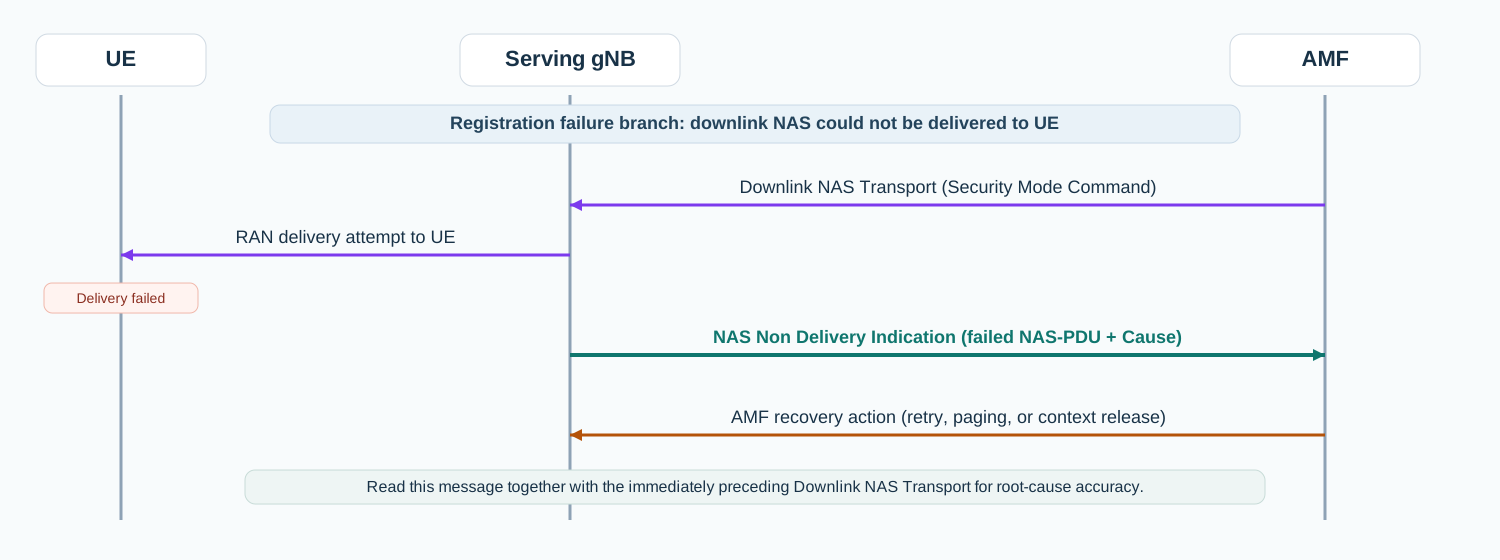
5G Initial Registration failure branch
Registration failure branch: gNB reports delivery failure to AMF instead of receiving expected UE NAS response.
Call flow position: Failure indication from NG-RAN to AMF after an AMF downlink NAS step such as Authentication Request or Security Mode Command could not be delivered to the UE.
Typical state: AMF expects a UE NAS response, but the gNB detects that downlink delivery failed before the UE could process the NAS message.
Preconditions:
Downlink NAS Transport for the UE was already received from AMF.
AMF UE NGAP ID and RAN UE NGAP ID correlation is valid at detection time.
gNB determined NAS delivery failure on access side.
Next likely message: AMF recovery action such as retry, paging, or UE context release
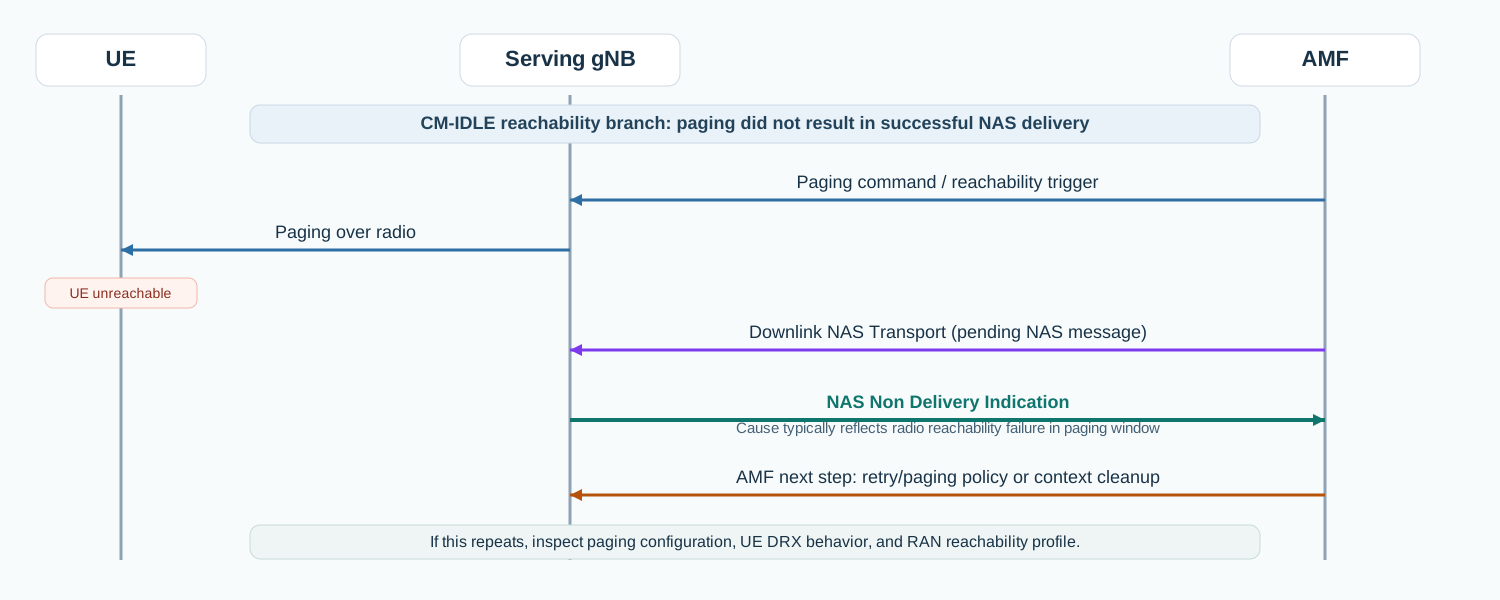
CM-IDLE paging and reachability failure
Paging/reachability failure branch: pending downlink NAS cannot be delivered after reachability attempt, so gNB notifies AMF.
Call flow position: Failure indication when AMF downlink NAS cannot be delivered after paging attempts or reachability restoration steps.
Typical state: The UE is unavailable on the radio side within the expected delivery window, so gNB reports failed NAS delivery upward.
Preconditions:
A downlink NAS payload was pending delivery to a UE with weak or absent reachability.
gNB delivery attempt failed in the current paging or restoration branch.
Next likely message: AMF paging retry, timer expiry handling, or context cleanup
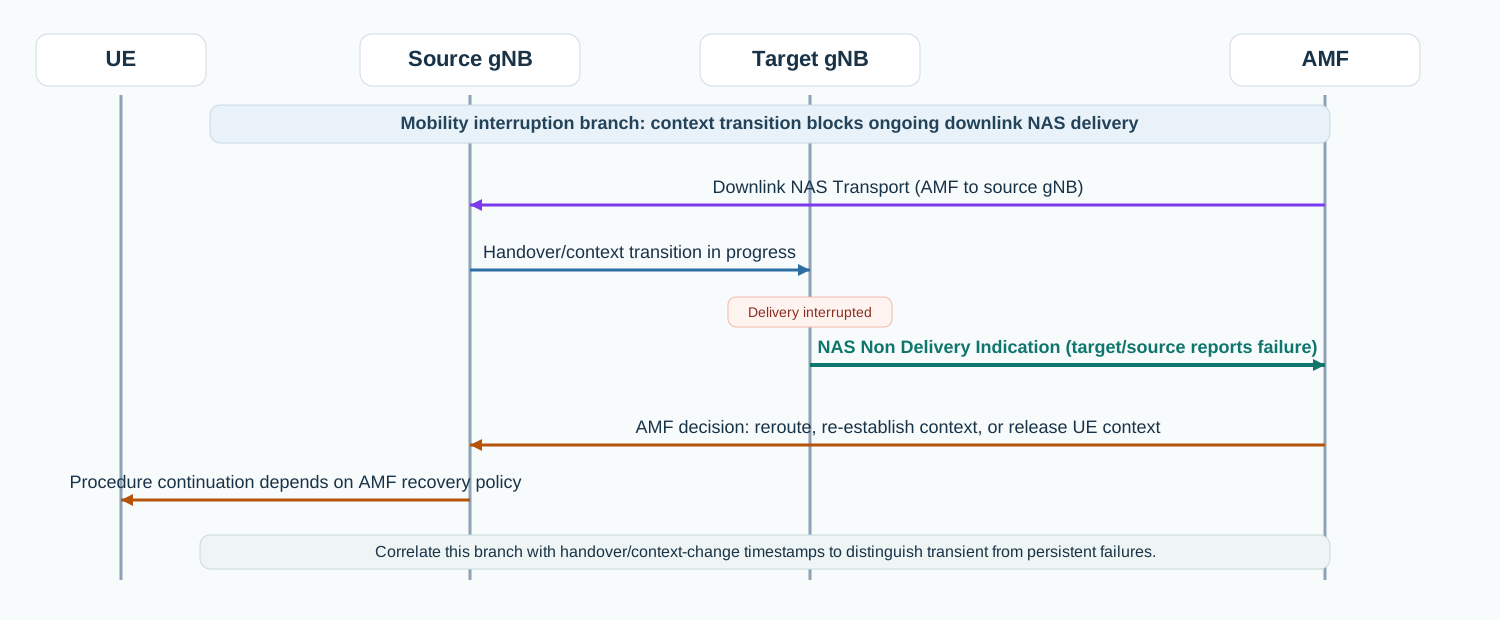
Mobility or handover interruption
Mobility interruption branch: context transitions can block NAS delivery and trigger NAS Non Delivery Indication with cause details.
Call flow position: Failure indication when downlink NAS delivery is interrupted during mobility transitions, handover preparation, or context relocation windows.
Typical state: UE context may have changed cell, been released, or become temporarily inconsistent while AMF NAS delivery was in flight.
Preconditions:
Downlink NAS Transport arrived during a mobility-sensitive procedure window.
RAN could not deliver payload with active context conditions.
Next likely message: AMF decision to re-establish context, re-route, or release
Transport / encapsulation: NGAP over SCTP/IP between NG-RAN and AMF
Security context: Protected by the N2 transport association. The embedded NAS-PDU is the failed downlink NAS payload that could not reach the UE.
Message Structure Overview
NAS Non Delivery Indication is an NGAP initiating message sent by NG-RAN to AMF for a UE-associated failure branch.
Four IEs form the full mandatory set: AMF UE NGAP ID, RAN UE NGAP ID, NAS-PDU, and Cause.
Operational value comes from correlating the failed NAS-PDU and Cause with the preceding Downlink NAS Transport step.
ASN.1 for 5G NGAP - NAS Non Delivery Indication
NASNonDeliveryIndication ::= SEQUENCE {
  protocolIEs ProtocolIE-Container { {NASNonDeliveryIndication-IEs} },
  ...
}

NASNonDeliveryIndication-IEs NGAP-PROTOCOL-IES ::= {
  { ID id-AMF-UE-NGAP-ID              CRITICALITY reject TYPE AMF-UE-NGAP-ID PRESENCE mandatory } |
  { ID id-RAN-UE-NGAP-ID              CRITICALITY reject TYPE RAN-UE-NGAP-ID PRESENCE mandatory } |
  { ID id-NAS-PDU                     CRITICALITY reject TYPE NAS-PDU        PRESENCE mandatory } |
  { ID id-Cause                       CRITICALITY ignore TYPE Cause          PRESENCE mandatory },
  ...
}
How to read this ASN.1
Use this message as the negative outcome partner of Downlink NAS Transport. The NAS-PDU IE tells you exactly which downlink NAS message failed, and Cause tells you why the RAN could not deliver it.
5G NGAP - NAS Non Delivery Indication - Example Dump
Start by decoding NAS-PDU to identify the exact AMF downlink NAS step that failed.
Then read Cause to understand whether failure is reachability, context, or transport related.
Finally correlate with preceding Downlink NAS Transport and expected UE response path that never occurred.
Important Information Elements
IE
Presence
Description
AMF UE NGAP ID
Mandatory
AMF-side UE identifier used to correlate the failure indication to the exact UE context in the AMF.
RAN UE NGAP ID
Mandatory
NG-RAN-side UE identifier used to identify the affected RAN UE context where NAS delivery failed.
NAS-PDU
Mandatory
Carries the specific downlink NAS payload that failed to be delivered, allowing AMF to identify exactly which NAS message was impacted.
Cause
Mandatory
Explains why delivery failed using NGAP cause categories and values, typically radio network or transport related for this procedure.
Detailed field explanation
AMF UE NGAP ID
AMF-side UE identifier used to correlate the failure indication to the exact UE context in the AMF.
Presence: Mandatory
In practice: In practice, compare this field with the original request and with any later release-dependent optional fields so you can see whether the network accepted the same service model the UE asked for.
RAN UE NGAP ID
NG-RAN-side UE identifier used to identify the affected RAN UE context where NAS delivery failed.
Presence: Mandatory
In practice: In practice, compare this field with the original request and with any later release-dependent optional fields so you can see whether the network accepted the same service model the UE asked for.
NAS-PDU
Carries the specific downlink NAS payload that failed to be delivered, allowing AMF to identify exactly which NAS message was impacted.
Presence: Mandatory
In practice: In practice, compare this field with the original request and with any later release-dependent optional fields so you can see whether the network accepted the same service model the UE asked for.
Cause
Explains why delivery failed using NGAP cause categories and values, typically radio network or transport related for this procedure.
Presence: Mandatory
In practice: In practice, compare this field with the original request and with any later release-dependent optional fields so you can see whether the network accepted the same service model the UE asked for.
What to check in logs and traces
Find the immediately preceding Downlink NAS Transport and verify it targets the same AMF/RAN UE NGAP ID pair.
Decode the failed NAS-PDU to understand which procedure branch was interrupted.
Inspect Cause and map it to radio reachability, UE context, or signaling transport conditions.
Check whether UE was in expected RRC state and whether paging or resume steps were ongoing.
Confirm AMF recovery behavior after indication: retry, paging, release, or procedure abort.
Common Issues and Troubleshooting
AMF keeps waiting for UE response after Downlink NAS Transport but receives NAS Non Delivery Indication instead.
Likely cause: The UE did not receive the downlink NAS payload because of RRC unreachability, context loss, or interruption in access-side delivery path.
What to inspect: Review the failed NAS-PDU, NGAP Cause, and UE RRC/paging state around the same timestamp.
Next step: Treat this as a delivery-path failure first, then decide whether AMF should retry delivery or release context.
Repeated NAS Non Delivery Indications for the same UE.
Likely cause: Persistent reachability failure, stale UE context mapping, or unresolved mobility transition may prevent successful NAS delivery retries.
What to inspect: Compare AMF/RAN UE NGAP ID continuity, mobility events, and repeated Cause values across attempts.
Next step: Escalate to context repair path: re-page, re-establish context, or perform explicit UE context release and fresh access.
Registration or security procedure aborts unexpectedly after NAS delivery failure indication.
Likely cause: The failed NAS message was critical to continuing registration/security handshake, so AMF terminated the branch after non-delivery report.
What to inspect: Identify procedure stage from failed NAS-PDU and verify AMF decision logic immediately after indication.
Next step: Align AMF recovery policy with observed Cause profile to avoid repeated abort loops for transient radio failures.
LTE / 5G / Variant Comparison
Compared with Downlink NAS Transport
Downlink NAS Transport carries the AMF NAS message toward UE. NAS Non Delivery Indication reports that the exact payload could not be delivered by NG-RAN.
Compared with Uplink NAS Transport
Uplink NAS Transport carries successful UE NAS responses upward. NAS Non Delivery Indication appears instead when the UE never receives or never returns a response due to delivery failure.
Compared with Error Indication
NAS Non Delivery Indication is a procedure-specific delivery failure report that includes failed NAS-PDU. Error Indication is a broader NGAP protocol error signaling mechanism.
FAQ
What is NAS Non Delivery Indication in 5G NGAP?
It is the NGAP message sent by NG-RAN to AMF when a downlink NAS message cannot be delivered to the UE.
Which fields are mandatory in NAS Non Delivery Indication?
AMF UE NGAP ID, RAN UE NGAP ID, NAS-PDU, and Cause are mandatory.
Why does this message include NAS-PDU?
So AMF can identify exactly which downlink NAS message failed and choose procedure-specific recovery instead of generic retry.
What should I check first when this appears in trace?
Start with the immediately preceding Downlink NAS Transport, then decode Cause and verify UE reachability/RRC state.
Is NAS Non Delivery Indication the same as Error Indication?
No. NAS Non Delivery Indication is a dedicated downlink NAS delivery-failure report with failed NAS payload context.
Decode this message with the 3GPP Decoder, inspect the related message database, or open the matching call flow to see where this signaling step fits in the full procedure.