Handover Preparation Failure is the AMF-to-source-NG-RAN unsuccessful-outcome message used to indicate that target-side handover preparation failed and the handover cannot proceed.
Message Fact Sheet
Protocol
ngap
Network
5g
Spec
3GPP TS 38.413
Spec Section
Clause 8.4.1.3 and clause 9.2.3.3 (Release 18 baseline)
The AMF cannot complete target-side handover preparation after receiving Handover Required from the source NG-RAN.
Main purpose
Informs the source NG-RAN that the Handover Preparation procedure failed, provides the Cause for that failure, and stops the move from progressing into execution.
What is Handover Preparation Failure in simple terms?
Handover Preparation Failure is the AMF-to-source-NG-RAN unsuccessful-outcome message used to indicate that target-side handover preparation failed and the handover cannot proceed.
Informs the source NG-RAN that the Handover Preparation procedure failed, provides the Cause for that failure, and stops the move from progressing into execution.
Why this message matters
Handover Preparation Failure is the AMF telling the source NG-RAN that the target could not be prepared, so the handover stops before the UE is told to move.
Where this message appears in the call flow
Unsuccessful outcome of Handover Preparation
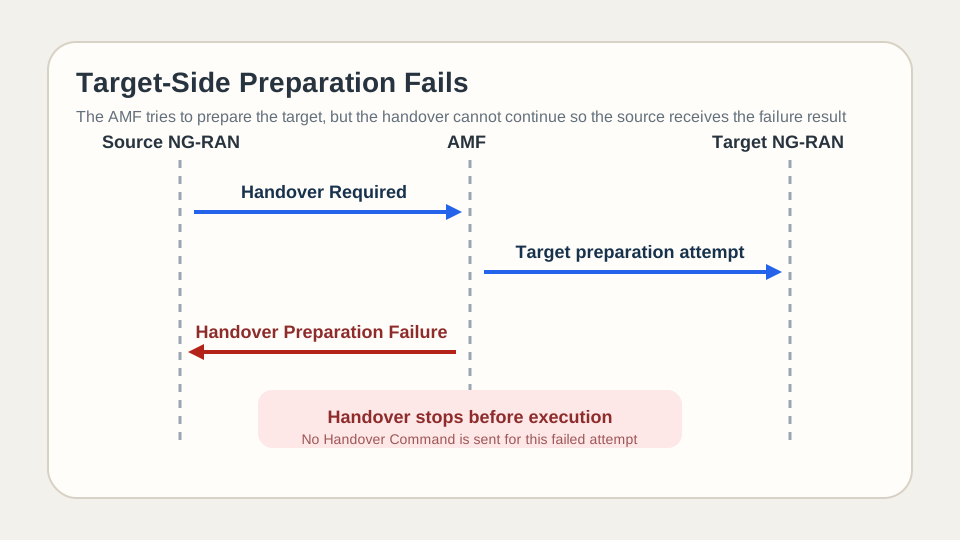
Failure branch: after the source requests handover preparation, the AMF cannot complete target-side preparation and returns Handover Preparation Failure.
Call flow position: The source NG-RAN already sent Handover Required, the AMF attempted target-side preparation, and now the AMF returns the unsuccessful result to the source side.
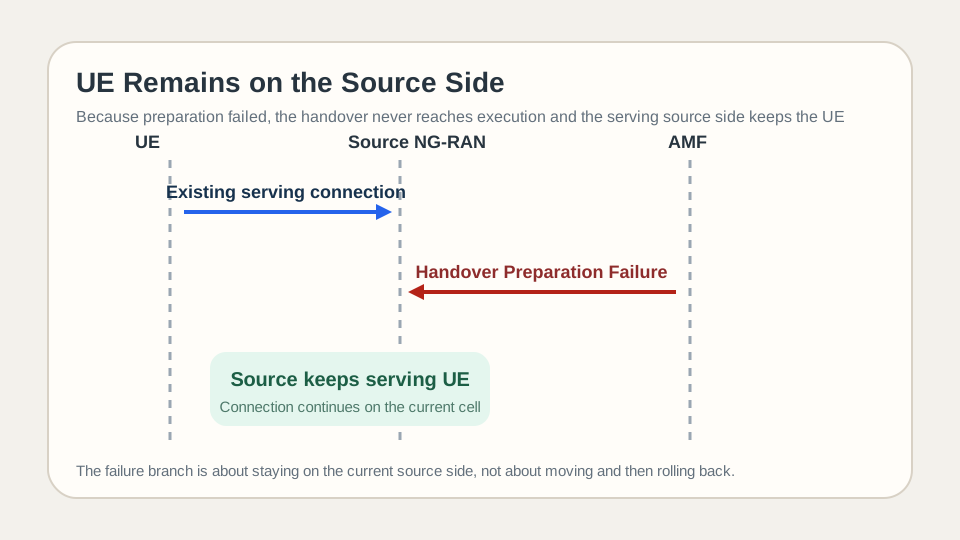
Typical state: The handover attempt is aborted before execution begins, so the UE remains on the source side.
Preconditions:
The source NG-RAN initiated Handover Preparation with Handover Required.
The AMF could not complete target-side preparation.
The procedure remains on the source UE-associated signaling connection.
Next likely message: A later fresh mobility decision or continued service on the current source connection
Target-side preparation fails
Failure branch: after the source requests handover preparation, the AMF cannot complete target-side preparation and returns Handover Preparation Failure.
UE remains on the source side
Source-retain branch: the UE stays on the current serving side because the handover did not reach execution.
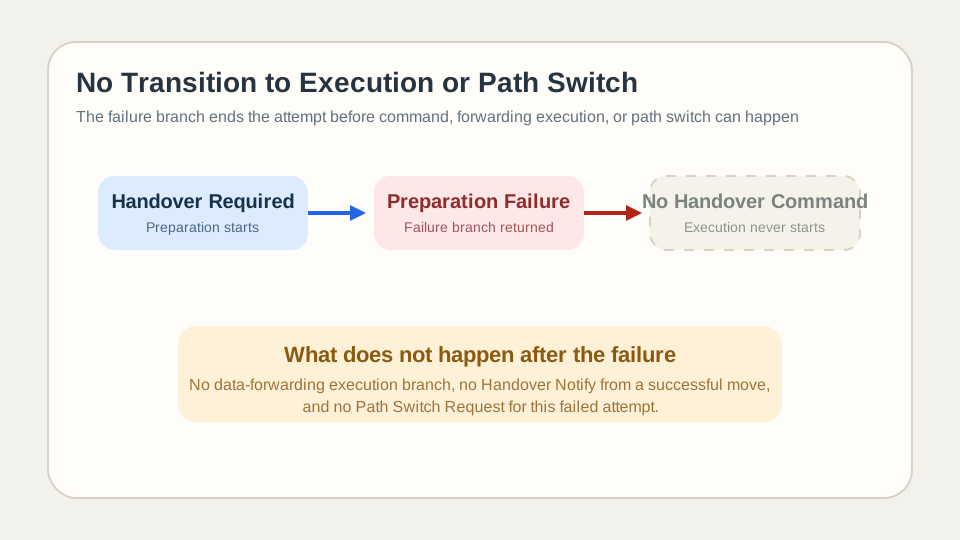
No transition to execution or path switch
Stop branch: the failure prevents transition to Handover Command, data forwarding execution, and path switch.
Transport / encapsulation: NGAP over SCTP/IP between AMF and source NG-RAN
Security context: The failure message runs on the existing UE-associated NGAP context. It does not transfer the UE to a target and does not create new target-side execution state.
Message Structure Overview
Handover Preparation Failure is the AMF-to-source unsuccessfulOutcome of the Handover Preparation procedure.
AMF UE NGAP ID and RAN UE NGAP ID anchor the failure to the correct UE-associated source-side context.
Cause is mandatory and is the main explanation of why target-side preparation did not complete.
Criticality Diagnostics is optional and mainly helps when the failure has a protocol or IE-processing dimension.
Because the preparation branch failed, there is no transition to Handover Command, no handover execution, and no path switch.
This unsuccessfulOutcome is intentionally compact. Decode it in two steps: first match the UE IDs to the earlier Handover Required, then read Cause before anything else. Criticality Diagnostics is only supporting information.
5G NGAP - Handover Preparation Failure - Example Dump
Treat this as a teaching example based on the spec structure, not as a captured trace.
The failure message is small on purpose because its operational meaning comes mainly from Cause.
No execution-stage payloads or target-to-source transfer information appear here because the handover did not reach the command branch.
Important Information Elements
IE
Presence
Description
Message Type
Mandatory
Identifies the NGAP PDU as Handover Preparation Failure.
AMF UE NGAP ID
Mandatory
Mandatory AMF-side UE identifier used to match the unsuccessful outcome to the correct UE-associated handover branch.
RAN UE NGAP ID
Mandatory
Mandatory source-side UE identifier that ties the failure to the correct source NG-RAN context.
Cause
Mandatory
Mandatory failure reason. This is the primary field engineers should inspect when target-side preparation fails.
Criticality Diagnostics
Optional
Optional diagnostics that can provide protocol-level detail when the failure is related to IE handling or incompatibility.
Detailed field explanation
Message Type
Identifies the NGAP PDU as Handover Preparation Failure.
Presence: Mandatory
In practice: In practice, compare this field with the original request and with any later release-dependent optional fields so you can see whether the network accepted the same service model the UE asked for.
AMF UE NGAP ID
Mandatory AMF-side UE identifier used to match the unsuccessful outcome to the correct UE-associated handover branch.
Presence: Mandatory
In practice: In practice, compare this field with the original request and with any later release-dependent optional fields so you can see whether the network accepted the same service model the UE asked for.
RAN UE NGAP ID
Mandatory source-side UE identifier that ties the failure to the correct source NG-RAN context.
Presence: Mandatory
In practice: In practice, compare this field with the original request and with any later release-dependent optional fields so you can see whether the network accepted the same service model the UE asked for.
Cause
Mandatory failure reason. This is the primary field engineers should inspect when target-side preparation fails.
Presence: Mandatory
In practice: In practice, compare this field with the original request and with any later release-dependent optional fields so you can see whether the network accepted the same service model the UE asked for.
Criticality Diagnostics
Optional diagnostics that can provide protocol-level detail when the failure is related to IE handling or incompatibility.
Presence: Optional
In practice: In practice, compare this field with the original request and with any later release-dependent optional fields so you can see whether the network accepted the same service model the UE asked for.
What to check in logs and traces
Confirm Handover Preparation Failure follows Handover Required for the same AMF UE NGAP ID and RAN UE NGAP ID.
Decode Cause first because it is the key explanation of why target preparation failed.
Verify that Handover Command does not appear for the same failed attempt.
Check that the UE remains served by the source NG-RAN and that no handover execution starts.
Verify no path switch or target-side execution signaling follows from the failed attempt.
If Criticality Diagnostics is present, read it together with Cause and the earlier Handover Required content.
Common Issues and Troubleshooting
Reviewers assume the handover partly succeeded because preparation messages exist toward the target.
Likely cause: The presence of target-side preparation attempts may be misread as success even though the AMF ultimately returned Handover Preparation Failure.
What to inspect: Confirm whether Handover Command appears after the failure. If it does not, the move never entered execution.
Next step: Treat the attempt as fully failed at preparation stage and keep the analysis on the source-side continuity branch.
The network retries handover without resolving the original problem.
Likely cause: Engineers may be reacting to the failure without decoding Cause first.
What to inspect: Read Cause before choosing a next action such as another target, another procedure, or keeping the UE on the current cell.
Next step: Fix the root issue indicated by Cause before starting a fresh handover attempt.
UE context mapping looks inconsistent after a failed preparation attempt.
Likely cause: The source-side UE identifiers may have been matched to the wrong failed attempt or to a later new handover attempt.
What to inspect: Correlate AMF UE NGAP ID and RAN UE NGAP ID carefully with the original Handover Required and any later fresh attempts.
Next step: Keep failed and retried attempts separate when reading logs and KPIs.
LTE / 5G / Variant Comparison
Compared with Handover Command
Handover Command is the successful outcome and starts execution. Handover Preparation Failure is the unsuccessful outcome and stops the move before execution begins.
Why Cause is the real payload
The message itself is structurally small. Its practical value comes from the Cause IE, which tells the source side why the handover could not continue.
What failure does not mean
This failure does not mean the UE was already moved and then returned. It means the move never left the preparation stage.
FAQ
What is Handover Preparation Failure in NGAP?
It is the AMF-to-source-NG-RAN unsuccessful-outcome message used to indicate that target-side handover preparation failed and the handover cannot continue.
Who sends this message?
The AMF sends Handover Preparation Failure to the source NG-RAN node.
When does handover preparation fail?
It fails when the AMF cannot complete target-side preparation after receiving Handover Required from the source NG-RAN.
What does the Cause IE indicate?
Cause is the primary reason the handover preparation failed and is the first field engineers should inspect in traces.
What happens after failure?
The handover attempt stops, the UE remains served by the source NG-RAN, and any later move requires a fresh procedure attempt.
Can handover be retried?
Yes, but not within the same failed branch. A new attempt requires a fresh Handover Required.
Does UE context change?
The source-side UE context remains in place because the handover did not proceed into execution.
What is the difference from Handover Command?
Handover Command is the successful branch that starts execution, while Handover Preparation Failure is the unsuccessful branch that stops the move.
Decode this message with the 3GPP Decoder, inspect the related message database, or open the matching call flow to see where this signaling step fits in the full procedure.