UE-associated NGAP signaling / SCTP carried NGAP initiatingMessage from source NG-RAN to AMF in the Handover Cancellation procedure
Typical trigger
The source NG-RAN decides that an already ongoing handover should not continue and asks the AMF to cancel it.
Main purpose
Tells the AMF that an already ongoing handover should be cancelled, identifies the UE context involved, and provides the mandatory Cause that explains why the source side aborted the handover.
Handover Cancellation, Source-side cancellation of ongoing handover, UE mobility management, Controlled termination of handover path
What is Handover Cancel in simple terms?
Handover Cancel is the source-NG-RAN-to-AMF message used in the Handover Cancellation procedure to stop an ongoing handover before completion.
Tells the AMF that an already ongoing handover should be cancelled, identifies the UE context involved, and provides the mandatory Cause that explains why the source side aborted the handover.
Why this message matters
Handover Cancel is the source NG-RAN telling the AMF that an already ongoing handover should be stopped.
Where this message appears in the call flow
Source-side cancellation of an ongoing handover
Cancellation branch: the source side tells the AMF that the ongoing handover should no longer continue.
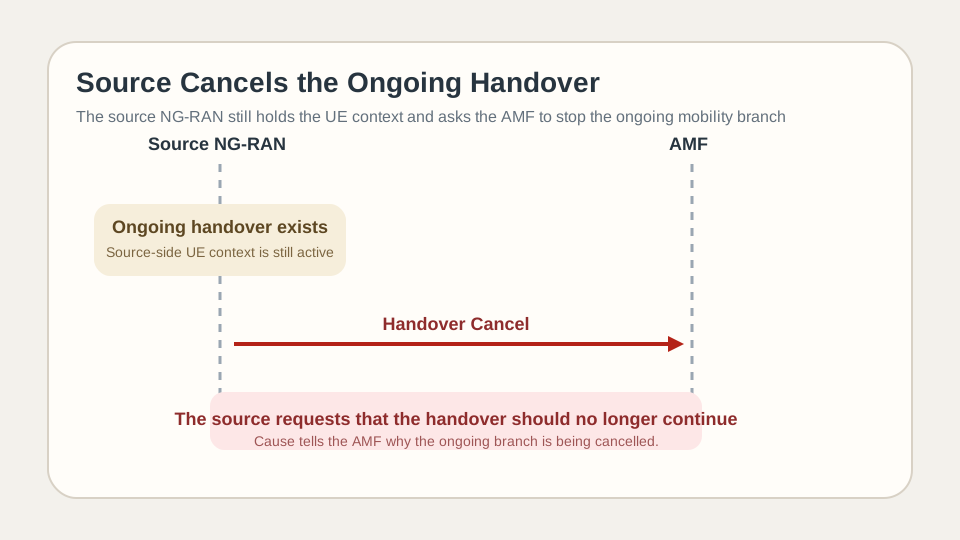
Call flow position: A handover has already started, but before successful completion the source NG-RAN asks the AMF to stop the ongoing mobility branch.
Typical state: The source still has the UE context and the handover is active, but the normal success path should no longer continue.
Preconditions:
An ongoing handover exists for the UE.
The source NG-RAN still has the source-side UE context.
The source side has decided the handover must be cancelled before completion.
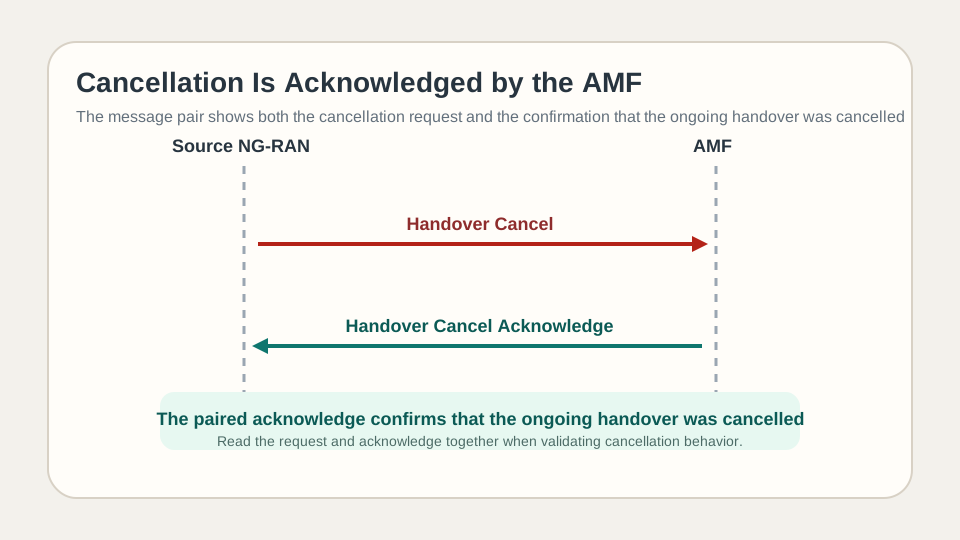
Next likely message: Handover Cancel Acknowledge from the AMF confirming that the ongoing handover was cancelled
Source cancels the ongoing handover
Cancellation branch: the source side tells the AMF that the ongoing handover should no longer continue.
Cancellation is acknowledged by the AMF
Paired branch: the AMF confirms the cancellation with Handover Cancel Acknowledge.
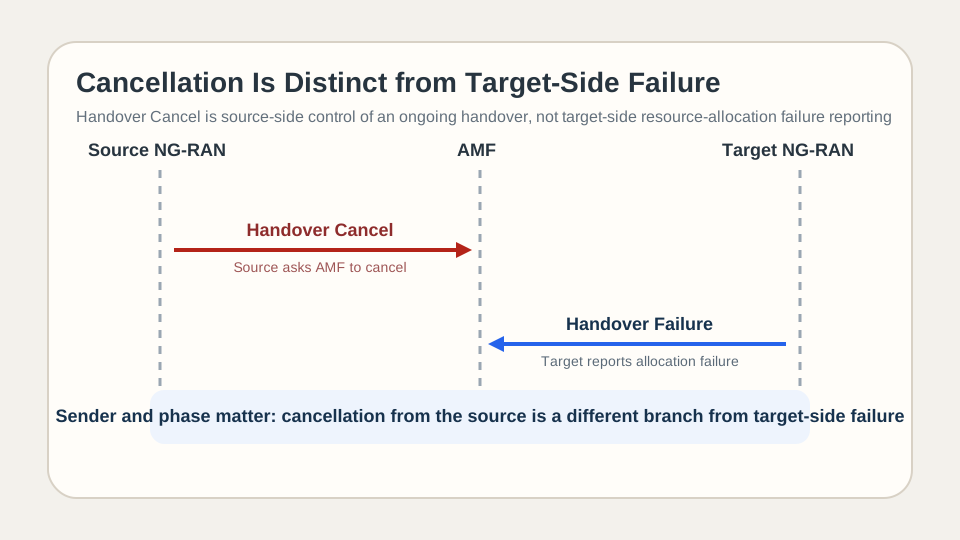
Cancellation is distinct from target-side failure
Direction branch: Handover Cancel is source-side cancellation of an ongoing handover, not target-side failure reporting.
Call flow position
Previous message(s): Ongoing handover in progress, Source-side UE context still active, Source-side decision to stop continuation
Next message(s): AMF confirms the request, Handover branch ends for this attempt, The ongoing handover is no longer treated as active
Message direction and transport
Sender and receiver: Source NG-RAN node -> AMF
Interface: N2 / NG-C
Domain: UE mobility management and source-side handover cancellation
Signaling bearer: UE-associated NGAP signaling
Logical channel: SCTP carried NGAP initiatingMessage from source NG-RAN to AMF in the Handover Cancellation procedure
Transport / encapsulation: NGAP over SCTP/IP between source NG-RAN and AMF
Security context: The message runs on an existing UE-associated handover context while the handover is still ongoing. Its role is controlled source-side cancellation rather than target-side failure reporting or successful completion.
Message Structure Overview
Handover Cancel is the source-NG-RAN-to-AMF request to cancel an ongoing handover.
Its payload is minimal but important: the UE identity pair plus a mandatory Cause.
The message does not report target-side rejection and does not signal successful completion.
Operationally, it is the controlled source-side stop signal for an already active handover branch.
The expected paired response is Handover Cancel Acknowledge from the AMF.
Decode Handover Cancel in a straightforward order: first match the AMF UE NGAP ID and RAN UE NGAP ID to the active source-side handover context, then read Cause to understand why the source side aborted the ongoing move.
Treat this as a teaching example based on the spec structure, not as a captured trace.
The message is intentionally compact because it only needs to identify the handover attempt and explain why the source side is cancelling it.
Read it together with the later Handover Cancel Acknowledge to confirm that the ongoing handover was actually cancelled.
Important Information Elements
IE
Presence
Description
Message Type
Mandatory
Identifies the NGAP PDU as Handover Cancel.
AMF UE NGAP ID
Mandatory
Mandatory AMF-side UE identifier used by the AMF to map the cancellation to the correct UE context.
RAN UE NGAP ID
Mandatory
Mandatory source-side UE identifier used to tie the cancellation to the correct source NG-RAN UE context.
Cause
Mandatory
Mandatory reason the ongoing handover is being cancelled. This is the first field engineers should inspect in traces.
Detailed field explanation
Message Type
Identifies the NGAP PDU as Handover Cancel.
Presence: Mandatory
In practice: In practice, compare this field with the original request and with any later release-dependent optional fields so you can see whether the network accepted the same service model the UE asked for.
AMF UE NGAP ID
Mandatory AMF-side UE identifier used by the AMF to map the cancellation to the correct UE context.
Presence: Mandatory
In practice: In practice, compare this field with the original request and with any later release-dependent optional fields so you can see whether the network accepted the same service model the UE asked for.
RAN UE NGAP ID
Mandatory source-side UE identifier used to tie the cancellation to the correct source NG-RAN UE context.
Presence: Mandatory
In practice: In practice, compare this field with the original request and with any later release-dependent optional fields so you can see whether the network accepted the same service model the UE asked for.
Cause
Mandatory reason the ongoing handover is being cancelled. This is the first field engineers should inspect in traces.
Presence: Mandatory
In practice: In practice, compare this field with the original request and with any later release-dependent optional fields so you can see whether the network accepted the same service model the UE asked for.
What to check in logs and traces
Confirm Handover Cancel is sent by the source NG-RAN to the AMF, not by the target side.
Match AMF UE NGAP ID and RAN UE NGAP ID to the expected ongoing handover context.
Decode Cause first because it explains why the source side aborted the handover.
Verify Handover Cancel Acknowledge follows from the AMF.
Keep this cancellation path distinct from Handover Failure and Handover Preparation Failure.
Common Issues and Troubleshooting
Engineers confuse source-side cancellation with target-side handover failure.
Likely cause: Several handover messages describe unsuccessful outcomes, but they belong to different senders and phases.
What to inspect: Check direction first. Handover Cancel is source NG-RAN to AMF, while Handover Failure is target NG-RAN to AMF and Handover Preparation Failure is AMF to source NG-RAN.
Next step: Map the event to the correct sender and branch before interpreting Cause or later behavior.
The trace looks like a completed handover, but a cancellation message appears.
Likely cause: Reviewers may read Handover Cancel as a late status report instead of a request to stop an ongoing handover.
What to inspect: Verify whether the source-side context was still active and whether Handover Cancel Acknowledge followed.
Next step: Treat the branch as controlled cancellation rather than successful completion.
The wrong UE seems to have been cancelled in multi-attempt mobility traces.
Likely cause: The identity pair may be mixed up with another handover attempt for the same UE.
What to inspect: Correlate both AMF UE NGAP ID and RAN UE NGAP ID together, not one identifier alone.
Next step: Rebuild the exact handover timeline around the specific identity pair before drawing conclusions.
LTE / 5G / Variant Comparison
Compared with Handover Cancel Acknowledge
Handover Cancel is the source-side request to cancel the ongoing handover. Handover Cancel Acknowledge is the AMF confirmation that the cancellation took effect.
Compared with Handover Failure
Handover Failure is a target-side resource-allocation failure report. Handover Cancel is a source-side request to stop an already ongoing handover.
Compared with Handover Preparation Failure
Handover Preparation Failure is the AMF-to-source unsuccessful outcome of preparation. Handover Cancel is initiated by the source after the handover is already ongoing.
FAQ
What is Handover Cancel in 5G NGAP?
It is the source-NG-RAN-to-AMF message used to cancel an ongoing handover before completion.
Who sends Handover Cancel?
The source NG-RAN node sends Handover Cancel to the AMF.
When is Handover Cancel used?
It is used when the source side decides that an already ongoing handover should no longer continue.
What does the Cause IE mean in Handover Cancel?
Cause is the mandatory explanation of why the source side cancelled the ongoing handover.
What is the difference between Handover Cancel and Handover Failure?
Handover Cancel is a source-side cancellation request for an ongoing handover, while Handover Failure is a target-side failure report during resource allocation.
What is the response to Handover Cancel?
The AMF responds with Handover Cancel Acknowledge to confirm that the ongoing handover was cancelled.
Is Handover Cancel sent by the source or target NG-RAN?
It is sent by the source NG-RAN node.
What UE identifiers are mandatory in Handover Cancel?
AMF UE NGAP ID and RAN UE NGAP ID are both mandatory.
Decode this message with the 3GPP Decoder, inspect the related message database, or open the matching call flow to see where this signaling step fits in the full procedure.