Initial Context Setup Response is the NGAP message the NG-RAN sends to AMF to report successful or partial completion of the Initial Context Setup Request, including per-session setup outcomes.
NG-RAN completed processing of Initial Context Setup Request and needs to report context setup result and per-session admission outcomes to AMF.
Main purpose
Confirms which UE context and PDU session resources were successfully established at NG-RAN and reports failed items so AMF can continue, retry, or adapt the procedure.
What is Initial Context Setup Response in simple terms?
Initial Context Setup Response is the NGAP message the NG-RAN sends to AMF to report successful or partial completion of the Initial Context Setup Request, including per-session setup outcomes.
Confirms which UE context and PDU session resources were successfully established at NG-RAN and reports failed items so AMF can continue, retry, or adapt the procedure.
Why this message matters
Initial Context Setup Response tells AMF what NG-RAN actually established after setup request, including both successful and failed session items.
Where this message appears in the call flow
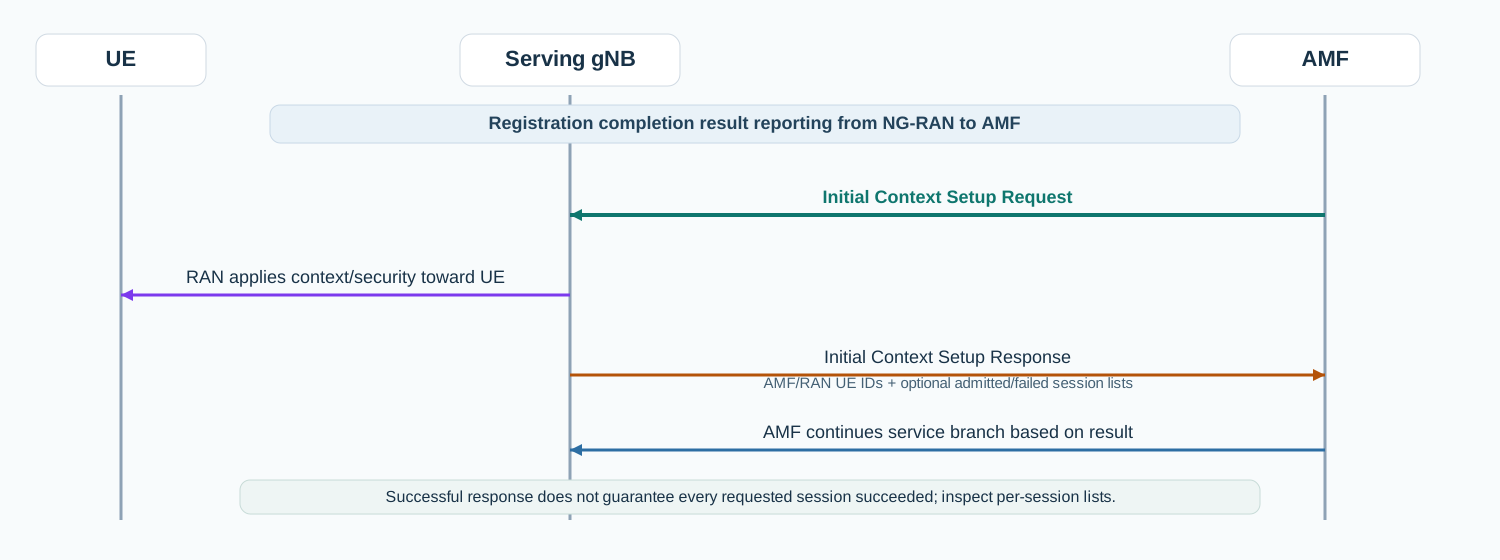
5G Initial Registration completion
Registration completion branch: NG-RAN confirms initial UE context setup results back to AMF.
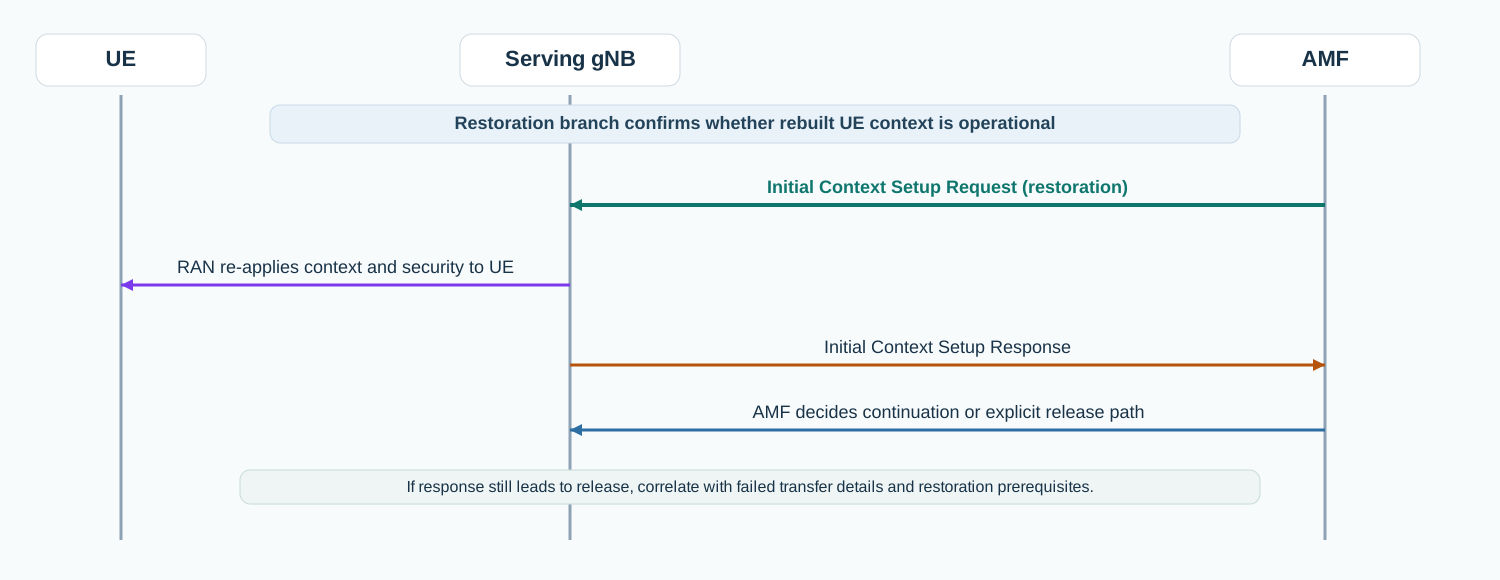
Call flow position: NG-RAN result message after AMF requested initial UE context setup during registration completion branch.
Typical state: UE context is established or partially established at NG-RAN, and AMF is waiting for setup outcome before continuing service activation.
Preconditions:
Initial Context Setup Request was received and processed by NG-RAN.
AMF UE NGAP ID and RAN UE NGAP ID mapping remains valid.
Next likely message: Downlink NAS Transport or service continuation branch
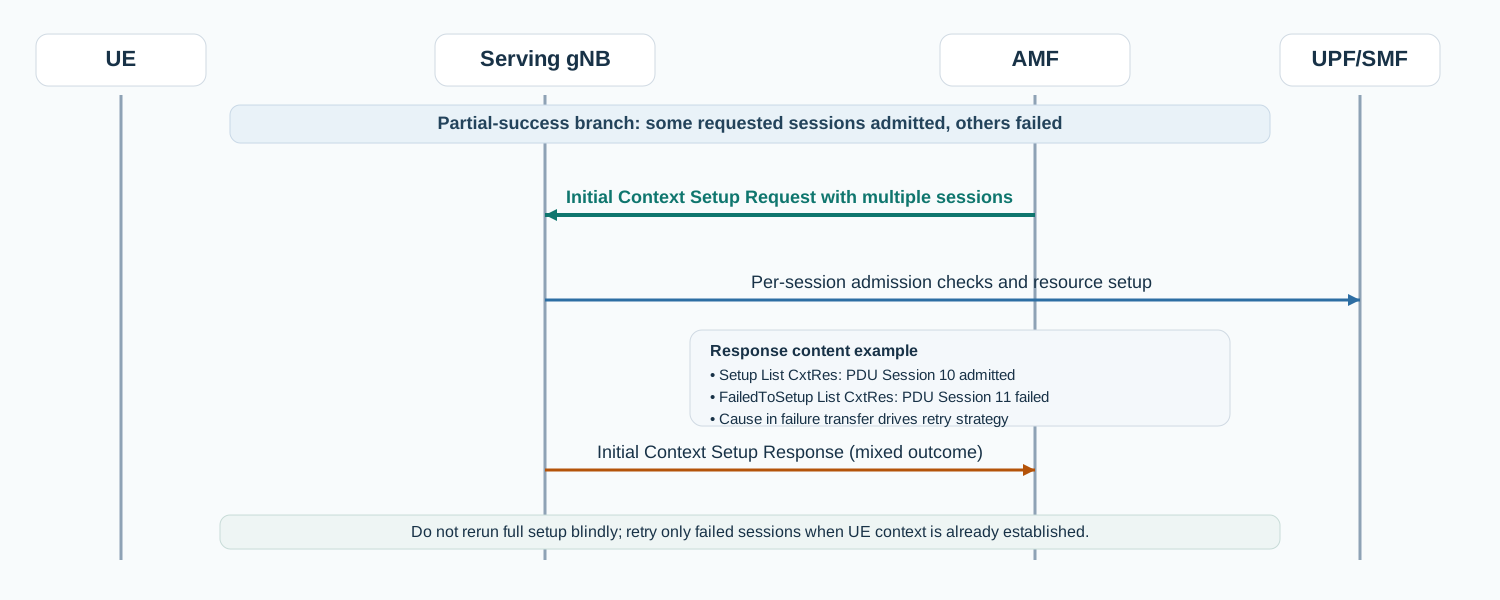
PDU Session bootstrap outcome reporting
Mixed-outcome branch: response can include both successful and failed PDU session setup items.
Call flow position: NG-RAN returns admitted and failed PDU session setup items following request-side bootstrap list.
Typical state: UE context may be successful while session setup is mixed (partial success).
Transport / encapsulation: NGAP over SCTP/IP between NG-RAN and AMF
Security context: Reflects outcome of access-side context and security activation initiated by AMF request; response itself carries result information rather than new security instructions.
Message Structure Overview
Initial Context Setup Response is the NGAP successfulOutcome for Initial Context Setup procedure.
AMF UE NGAP ID and RAN UE NGAP ID are mandatory correlation anchors.
Session-level success and failure lists make this message essential for partial-success troubleshooting.
ASN.1 for 5G NGAP - Initial Context Setup Response
InitialContextSetupResponse ::= SEQUENCE {
  protocolIEs ProtocolIE-Container { {InitialContextSetupResponse-IEs} },
  ...
}

InitialContextSetupResponse-IEs NGAP-PROTOCOL-IES ::= {
  { ID id-AMF-UE-NGAP-ID                           CRITICALITY reject TYPE AMF-UE-NGAP-ID                          PRESENCE mandatory } |
  { ID id-RAN-UE-NGAP-ID                           CRITICALITY reject TYPE RAN-UE-NGAP-ID                          PRESENCE mandatory } |
  { ID id-PDUSessionResourceSetupListCxtRes        CRITICALITY reject TYPE PDUSessionResourceSetupListCxtRes       PRESENCE optional  } |
  { ID id-PDUSessionResourceFailedToSetupListCxtRes CRITICALITY ignore TYPE PDUSessionResourceFailedToSetupListCxtRes PRESENCE optional } |
  { ID id-CriticalityDiagnostics                   CRITICALITY ignore TYPE CriticalityDiagnostics                  PRESENCE optional  },
  ...
}
How to read this ASN.1
Read this as outcome reporting, not setup intent. First verify UE identity correlation, then inspect successful vs failed PDU session lists for actionable next steps.
5G NGAP - Initial Context Setup Response - Example Dump
A response can be fully successful or partially successful; do not assume all requested sessions were admitted.
Use setup and failed lists together to decide what AMF should retry or defer.
If both lists are absent or unexpected, validate request/response correlation and decode paths.
Important Information Elements
IE
Presence
Description
AMF UE NGAP ID
Mandatory
AMF-side UE identity used to correlate response with the original setup request.
RAN UE NGAP ID
Mandatory
NG-RAN-side UE identity used to bind result to the correct UE radio context.
PDU Session Resource Setup List CxtRes
Optional
Lists PDU sessions successfully established during initial context setup processing.
PDU Session Resource Failed to Setup List CxtRes
Optional
Lists requested PDU sessions that failed setup along with failure transfer data.
Criticality Diagnostics
Optional
Provides additional diagnostics when optional decoding/processing context is useful for troubleshooting.
Detailed field explanation
AMF UE NGAP ID
AMF-side UE identity used to correlate response with the original setup request.
Presence: Mandatory
In practice: In practice, compare this field with the original request and with any later release-dependent optional fields so you can see whether the network accepted the same service model the UE asked for.
RAN UE NGAP ID
NG-RAN-side UE identity used to bind result to the correct UE radio context.
Presence: Mandatory
In practice: In practice, compare this field with the original request and with any later release-dependent optional fields so you can see whether the network accepted the same service model the UE asked for.
PDU Session Resource Setup List CxtRes
Lists PDU sessions successfully established during initial context setup processing.
Presence: Optional
In practice: In practice, compare this field with the original request and with any later release-dependent optional fields so you can see whether the network accepted the same service model the UE asked for.
PDU Session Resource Failed to Setup List CxtRes
Lists requested PDU sessions that failed setup along with failure transfer data.
Presence: Optional
In practice: In practice, compare this field with the original request and with any later release-dependent optional fields so you can see whether the network accepted the same service model the UE asked for.
Criticality Diagnostics
Provides additional diagnostics when optional decoding/processing context is useful for troubleshooting.
Presence: Optional
In practice: In practice, compare this field with the original request and with any later release-dependent optional fields so you can see whether the network accepted the same service model the UE asked for.
What to check in logs and traces
Match AMF UE NGAP ID and RAN UE NGAP ID with the originating Initial Context Setup Request.
Compare requested session list from request against admitted and failed lists in response.
Inspect failure transfer payloads for cause-domain details before retrying sessions.
Confirm AMF next action aligns with mixed outcome (continue admitted, retry failed).
If setup seems successful but traffic fails, verify transfer payload and data path activation downstream.
Common Issues and Troubleshooting
Initial Context Setup Response present but UE has no data service.
Likely cause: UE context may be established while requested PDU sessions were partially or fully failed at setup stage.
What to inspect: Check PDUSessionResourceSetupListCxtRes and PDUSessionResourceFailedToSetupListCxtRes item-by-item.
Next step: Retry failed sessions with adjusted policy/resource parameters rather than repeating full context setup blindly.
AMF treats response as success but user-plane path fails immediately.
Likely cause: Session response transfer details may be incomplete or inconsistent despite top-level response success.
What to inspect: Validate setup response transfer content and downstream tunnel/resource realization.
Next step: Correlate with transport/session-layer traces and re-establish affected session resources.
Frequent switch between response and failure branches across retries.
Likely cause: Borderline radio/admission constraints or unstable context conditions can alternate between partial response and explicit setup failure.
What to inspect: Compare cause patterns, resource state, and timing between response and failure attempts.
Next step: Stabilize admission/security inputs before repeating setup to avoid oscillating outcomes.
LTE / 5G / Variant Comparison
Compared with Initial Context Setup Request
Request defines AMF intent and setup asks. Response reports realized UE context and session setup outcomes from NG-RAN.
Compared with Initial Context Setup Failure
Failure indicates setup branch could not continue. Response can still carry mixed outcomes where some resources were established.
Decode this message with the 3GPP Decoder, inspect the related message database, or open the matching call flow to see where this signaling step fits in the full procedure.