NG Reset is the NGAP interface-management message that either the AMF or the NG-RAN can send to reset the whole NG interface or a selected set of UE-associated logical NG-connections after loss of transaction reference state or other failure conditions on N2.
Message Fact Sheet
Protocol
ngap
Network
5g
Spec
3GPP TS 38.413
Spec Section
Section 8.7.4, section 9.2.6.11, and section 9.2.6.12 (Release 18 baseline)
Direction
Bidirectional: AMF <-> NG-RAN
Message Type
Interface reset control
Full message name
5G NGAP - NG Reset
Protocol
NGAP
Technology
5G
Direction
Bidirectional: AMF <-> NG-RAN
Interface
N2 / NG-C
Signaling bearer / channel
Non-UE-associated or UE-associated NGAP context depending on reset scope / SCTP carried NGAP initiatingMessage followed by successfulOutcome
Typical trigger
The AMF or NG-RAN detects failure on N2 state handling, loses some or all transaction reference information, or needs to force cleanup of the whole interface or a targeted set of UE associations.
Main purpose
Recovers N2 control-plane consistency by instructing the peer to reset the entire NG interface or only the affected UE-associated logical NG-connections, release the corresponding NG resources and NGAP identifiers, and confirm completion with NG Reset Acknowledge.
NG Reset is the NGAP interface-management message that either the AMF or the NG-RAN can send to reset the whole NG interface or a selected set of UE-associated logical NG-connections after loss of transaction reference state or other failure conditions on N2.
Recovers N2 control-plane consistency by instructing the peer to reset the entire NG interface or only the affected UE-associated logical NG-connections, release the corresponding NG resources and NGAP identifiers, and confirm completion with NG Reset Acknowledge.
Why this message matters
NG Reset is the N2 recovery message used when the AMF or gNB needs the other side to clear all or part of the NG interface state so signaling can continue cleanly.
Where this message appears in the call flow
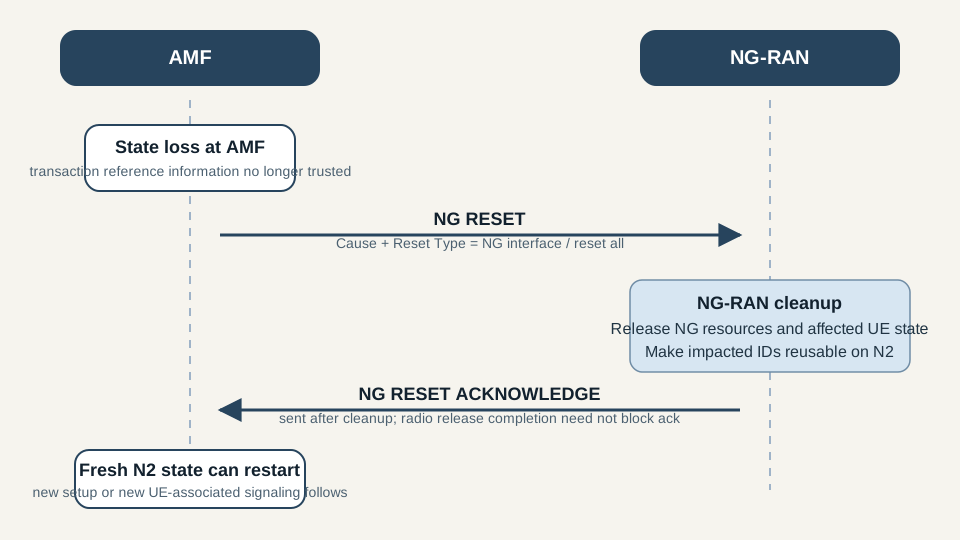
AMF-initiated full NG interface reset
Full-reset branch: the AMF asks the NG-RAN to clear the whole NG interface after AMF-side state loss, and the NG-RAN acknowledges after N2 cleanup.
Call flow position: After the AMF detects loss of some or all transaction reference information and needs the NG-RAN to clear all affected NG interface state.
Typical state: The AMF cannot trust the current N2 correlation state and asks the NG-RAN to reset the whole NG interface.
Preconditions:
The AMF has identified an interface recovery condition on N2.
The reset scope is the whole NG interface rather than a selected UE list.
The NG-RAN can release the related NG resources and make the affected IDs reusable.
Next likely message: NG Reset Acknowledge followed by new setup or fresh UE-associated signaling
AMF-initiated partial reset
Radio-side recovery branch: the NG-RAN resets only selected UE associations when local correlation state is lost.
Call flow position: The AMF sends NG Reset with Reset Type set to part of NG interface when only selected UE-associated logical NG-connections must be cleared.
Typical state: The AMF still has usable N2 state for most UEs, but specific associations can no longer be trusted.
Preconditions:
The AMF can identify the affected UE associations by AMF UE NGAP ID and or RAN UE NGAP ID.
The reset scope is limited to a UE-associated Logical NG-connection List.
Next likely message: NG Reset Acknowledge echoing the UE-associated logical NG-connection items in the same order
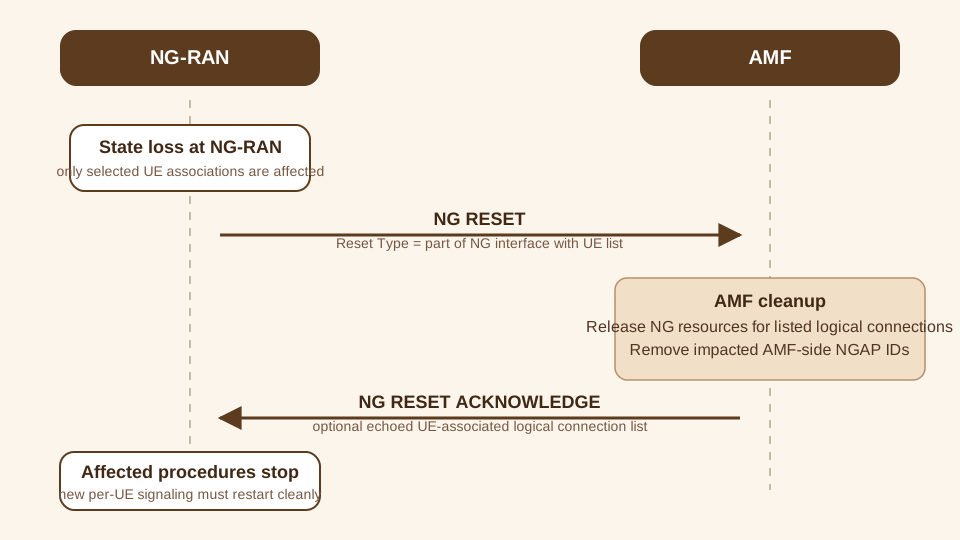
NG-RAN-initiated reset after radio-side state loss
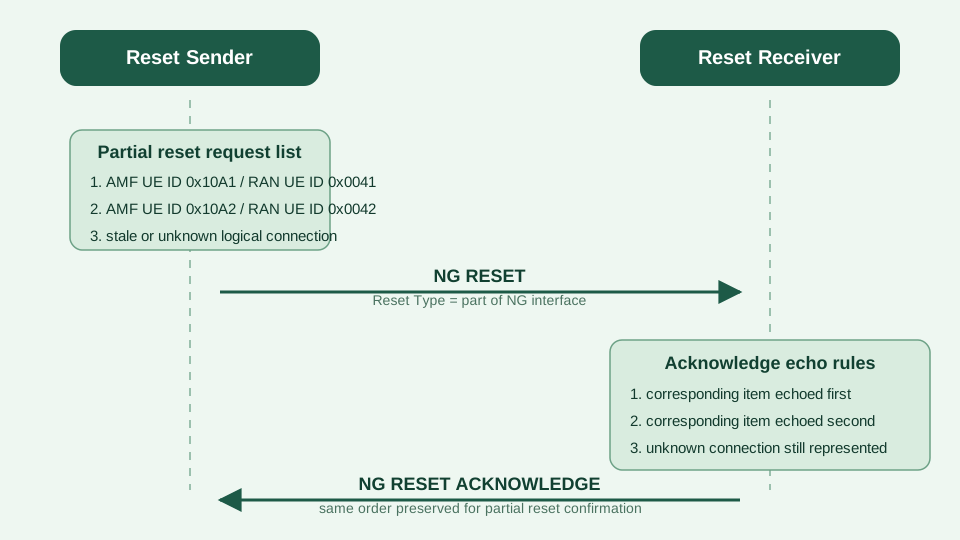
Partial-reset detail: the acknowledge echoes the requested UE-associated logical NG-connection items in the same order, including unknown connections.
Call flow position: The NG-RAN sends NG Reset when the radio side has lost some or all transaction reference information and needs the AMF to clear matching NG resources and IDs.
Typical state: The NG-RAN cannot safely continue one or more UE-associated procedures with the AMF using the existing correlation state.
Preconditions:
The NG-RAN detected a local failure or state-loss condition.
The NG-RAN can scope the reset to the whole interface or to selected UE-associated logical NG-connections.
Next likely message: NG Reset Acknowledge from the AMF after the affected NG resources and identifiers are released
Call flow position
Previous message(s): Failure detection on N2, State loss during interface recovery, Ongoing UE-associated procedures that can no longer be correlated
Sender and receiver: Bidirectional: AMF <-> NG-RAN
Interface: N2 / NG-C
Domain: Interface management and failure recovery on N2
Signaling bearer: Non-UE-associated or UE-associated NGAP context depending on reset scope
Logical channel: SCTP carried NGAP initiatingMessage followed by successfulOutcome
Transport / encapsulation: NGAP over SCTP/IP between NG-RAN and AMF
Security context: NG Reset does not establish a new UE security context. It is a control-plane recovery message used when one side has lost some or all transaction reference information and needs the peer to clean up the affected NGAP state before continued operation.
Message Structure Overview
NG Reset is a bidirectional initiatingMessage in the interface-management family.
The message body is intentionally small: mandatory Cause plus mandatory Reset Type.
Reset Type is the real operational pivot because it decides whether the peer must clear the whole NG interface or only a selected UE-associated Logical NG-connection List.
NG Reset Acknowledge is a successfulOutcome that can optionally return the UE-associated logical NG-connection list for partial reset confirmation and can optionally add Criticality Diagnostics.
During successful operation, the receiver releases the affected NG resources, removes the impacted NGAP identifiers, and only then makes them reusable before sending the acknowledge.
The request is deliberately compact. The full operational meaning is carried by Reset Type: reset all or reset only the listed UE-associated logical NG-connections. The acknowledge stays compact as well and is mainly used to confirm the reset scope, especially for partial reset where item order matters.
If Reset Type is reset all, there is no UE list to decode. The operational focus shifts to confirming that the whole interface is being cleared.
For partial reset, compare the request list and acknowledge list item by item and preserve order while reading the trace.
The acknowledge can include unknown logical connections from the request list, so do not treat echoed unknown IDs as an automatic decode error.
Important Information Elements
IE
Presence
Description
Cause
Mandatory
Mandatory reason for the reset request. It explains why the sender is asking the peer to clear interface state and start recovery handling.
Reset Type
Mandatory
Mandatory scope selector for the reset. It either requests reset of the whole NG interface or reset of part of the NG interface identified by a UE-associated Logical NG-connection List.
UE-associated Logical NG-connection List
Optional
Present inside Reset Type when the reset scope is partial. Each item identifies a UE association using AMF UE NGAP ID and or RAN UE NGAP ID.
UE-associated Logical NG-connection List in NG Reset Acknowledge
Optional
Optional list in the acknowledge used for partial reset confirmation. The receiver of NG Reset echoes the corresponding items in the same order, including unknown logical connections, with empty items omitted when applicable.
Criticality Diagnostics
Optional
Optional diagnostics in NG Reset Acknowledge that help explain unusual protocol handling or IE-related issues during reset processing.
Detailed field explanation
Cause
Mandatory reason for the reset request. It explains why the sender is asking the peer to clear interface state and start recovery handling.
Presence: Mandatory
In practice: In practice, compare this field with the original request and with any later release-dependent optional fields so you can see whether the network accepted the same service model the UE asked for.
Reset Type
Mandatory scope selector for the reset. It either requests reset of the whole NG interface or reset of part of the NG interface identified by a UE-associated Logical NG-connection List.
Presence: Mandatory
In practice: In practice, compare this field with the original request and with any later release-dependent optional fields so you can see whether the network accepted the same service model the UE asked for.
UE-associated Logical NG-connection List
Present inside Reset Type when the reset scope is partial. Each item identifies a UE association using AMF UE NGAP ID and or RAN UE NGAP ID.
Presence: Optional
In practice: In practice, compare this field with the original request and with any later release-dependent optional fields so you can see whether the network accepted the same service model the UE asked for.
UE-associated Logical NG-connection List in NG Reset Acknowledge
Optional list in the acknowledge used for partial reset confirmation. The receiver of NG Reset echoes the corresponding items in the same order, including unknown logical connections, with empty items omitted when applicable.
Presence: Optional
In practice: In practice, compare this field with the original request and with any later release-dependent optional fields so you can see whether the network accepted the same service model the UE asked for.
Criticality Diagnostics
Optional diagnostics in NG Reset Acknowledge that help explain unusual protocol handling or IE-related issues during reset processing.
Presence: Optional
In practice: In practice, compare this field with the original request and with any later release-dependent optional fields so you can see whether the network accepted the same service model the UE asked for.
What to check in logs and traces
Identify who initiated the reset first: AMF or NG-RAN. That determines which side is recovering from state loss.
Read Reset Type before anything else. Full reset and partial reset have very different operational blast radius.
For partial reset, map each UE-associated logical NG-connection item by AMF UE NGAP ID and or RAN UE NGAP ID.
Check whether ongoing procedures for the affected UE associations were aborted and whether later traces restarted cleanly.
Verify that NG Reset Acknowledge appears only after the receiver has released the affected NG resources and made the related IDs reusable.
Common Issues and Troubleshooting
UE-associated procedures suddenly stop and fresh signaling begins with new identifiers.
Likely cause: A partial or full NG Reset may have aborted the ongoing procedures for the affected UE associations.
What to inspect: Search backward for NG Reset and NG Reset Acknowledge, then compare the impacted AMF UE NGAP ID and RAN UE NGAP ID values with the interrupted procedure.
Next step: Treat the post-reset signaling as a new recovery branch instead of assuming the interrupted procedure should still complete.
The peer acknowledges only after a noticeable gap during failure recovery.
Likely cause: The receiver may still be releasing the affected NG resources and NGAP identifiers before sending NG Reset Acknowledge.
What to inspect: Correlate the reset scope with the number of affected UE associations and any local cleanup actions on the receiver side.
Next step: Validate cleanup completion before treating the delayed acknowledge as a transport failure.
A partial reset looks inconsistent because some requested UE IDs appear unknown at the receiver.
Likely cause: The specification allows the acknowledge to include corresponding logical connection items in the same order, including unknown ones from the request.
What to inspect: Compare request and acknowledge ordering carefully instead of filtering out items that do not match a locally known UE context.
Next step: Use the ordered echo behavior to verify reset handling rather than assuming every item must resolve to an active context.
LTE / 5G / Variant Comparison
Full reset versus partial reset
Full reset clears the whole NG interface. Partial reset targets only the listed UE-associated logical NG-connections and is the more trace-sensitive case because item identity and order matter.
AMF-initiated versus NG-RAN-initiated reset
Both use the same NG Reset message. The difference is which side lost state and which side must perform the cleanup before returning NG Reset Acknowledge.
Compared with UE Context Release Command
UE Context Release Command is a normal UE-context management message for a known UE association. NG Reset is an interface recovery mechanism used when transaction state can no longer be trusted and broader cleanup is required.
FAQ
What is NG Reset in 5G NGAP?
NG Reset is the bidirectional NGAP interface-management message used by the AMF or NG-RAN to reset the whole NG interface or a selected set of UE-associated logical NG-connections during N2 failure recovery.
What are the mandatory fields in NG Reset?
The request has two mandatory IEs: Cause and Reset Type. Reset Type then decides whether the reset is full interface scope or partial scope using a UE-associated Logical NG-connection List.
What does NG Reset Acknowledge contain?
It can optionally include the UE-associated Logical NG-connection List for partial reset confirmation and can optionally include Criticality Diagnostics.
Does NG Reset abort other procedures?
Yes for the affected UE associations. The specification states that ongoing procedures on the same NG interface for those affected associations are aborted except another NG Reset procedure.
Decode this message with the 3GPP Decoder, inspect the related message database, or open the matching call flow to see where this signaling step fits in the full procedure.