NG Setup Request is the NGAP interface-management message the NG-RAN sends to the AMF to establish or re-establish NG-C application-layer connectivity and advertise the RAN node identity, supported tracking areas, PLMNs, slice support, and paging defaults.
Message Fact Sheet
Protocol
ngap
Network
5g
Spec
3GPP TS 38.413
Spec Section
Section 8.7.1 and section 9.2.6.1 (Release 18 baseline)
Direction
NG-RAN -> AMF
Message Type
Interface Management Message
Full message name
5G NGAP - NG Setup Request
Protocol
NGAP
Technology
5G
Direction
NG-RAN -> AMF
Interface
N2 / NG-C
Signaling bearer / channel
Non-UE-associated NGAP signaling / SCTP carried NGAP initiatingMessage followed by successfulOutcome or unsuccessfulOutcome
Typical trigger
The NG-RAN node brings up or re-establishes N2 connectivity toward an AMF and must advertise its node identity, supported TAs, PLMNs, slices, and paging-related defaults.
Main purpose
Starts the NG Setup procedure by letting the NG-RAN identify itself to the AMF, advertise supported tracking areas and PLMN or slice support, and provide paging-related defaults needed for successful NG-C application-layer setup.
N2 interface bootstrap, NG-C application-layer setup, AMF and NG-RAN interworking establishment, TA and PLMN or SNPN advertisement, Paging capability advertisement
What is NG Setup Request in simple terms?
NG Setup Request is the NGAP interface-management message the NG-RAN sends to the AMF to establish or re-establish NG-C application-layer connectivity and advertise the RAN node identity, supported tracking areas, PLMNs, slice support, and paging defaults.
Starts the NG Setup procedure by letting the NG-RAN identify itself to the AMF, advertise supported tracking areas and PLMN or slice support, and provide paging-related defaults needed for successful NG-C application-layer setup.
Why this message matters
NG Setup Request is the gNB-to-AMF bootstrap message that says who the NG-RAN node is, which tracking areas and PLMNs it supports, and what paging defaults it wants the AMF to use.
Where this message appears in the call flow
Initial NG-C setup toward an AMF
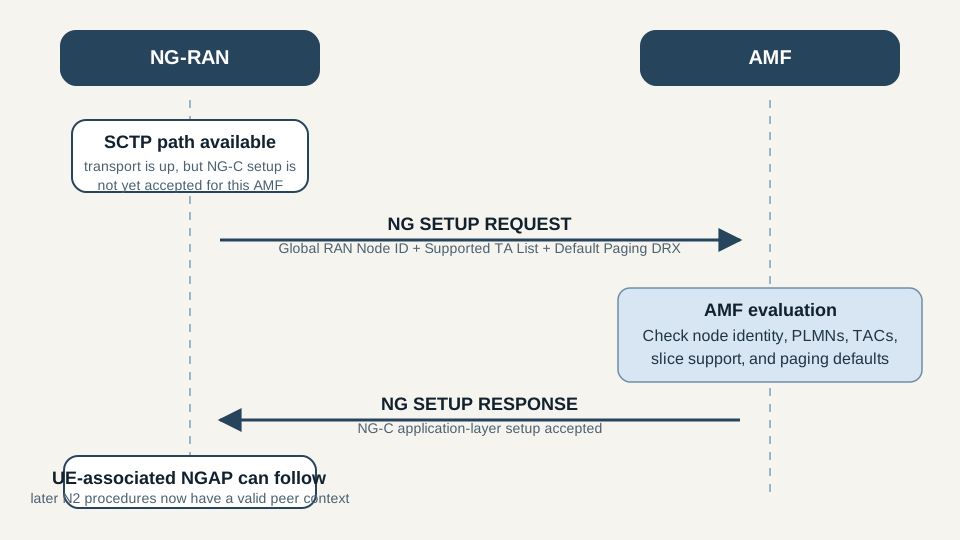
Bootstrap branch: the NG-RAN advertises Global RAN Node ID, Supported TA List, and paging defaults, and the AMF accepts the NG-C application-layer setup with NG Setup Response.
Call flow position: The NG-RAN has SCTP-level reachability or a recovered transport path and must now establish NG-C application-layer interworking with the AMF.
Typical state: Transport exists, but NG Setup has not yet been accepted for that AMF association.
Preconditions:
The NG-RAN can send non-UE-associated NGAP signaling toward the AMF.
The node has a valid Global RAN Node ID and Supported TA List prepared.
The AMF is reachable over the selected SCTP association.
Next likely message: NG Setup Response
NG-C re-establishment after interruption
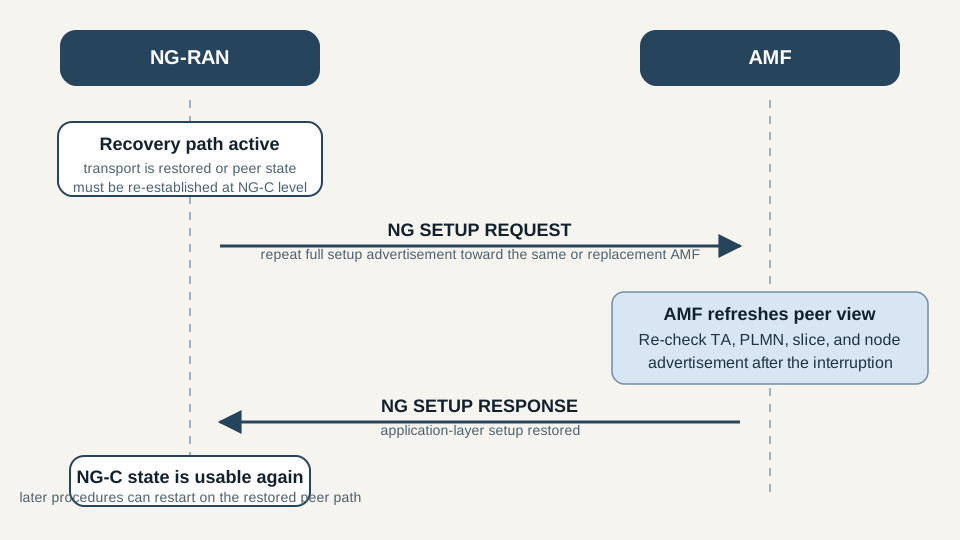
Recovery branch: after transport or peer interruption, the NG-RAN re-advertises its setup payload so the AMF can restore a valid NG-C peer view.
Call flow position: The NG-RAN repeats setup after transport or peer recovery and re-advertises node and TA support toward the AMF.
Typical state: The prior application-layer setup is no longer trusted or no longer active.
Preconditions:
The N2 transport path is back or replaced.
The NG-RAN is ready to re-send the complete setup information set.
Next likely message: NG Setup Response or NG Setup Failure
AMF rejects setup request
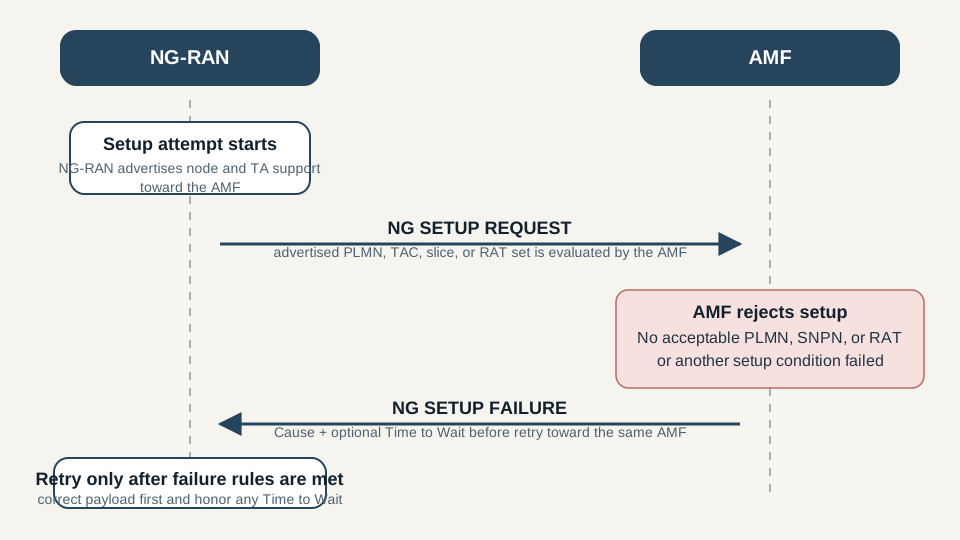
Failure branch: the AMF rejects the advertised setup payload and can include Time to Wait to control how soon the NG-RAN may retry toward the same AMF.
Call flow position: The AMF cannot accept the advertised setup information and returns an unsuccessful outcome.
Typical state: NG-C application-layer setup remains unavailable for that NG-RAN to AMF path.
Preconditions:
The AMF rejected the PLMN, SNPN, RAT, or another setup parameter set.
The AMF can provide a Cause and may provide Time to Wait.
Next likely message: NG Setup Failure
Call flow position
Previous message(s): SCTP association establishment, N2 recovery after transport restoration, AMF selection toward target peer
Logical channel: SCTP carried NGAP initiatingMessage followed by successfulOutcome or unsuccessfulOutcome
Transport / encapsulation: NGAP over SCTP/IP between NG-RAN and AMF
Security context: NG Setup Request does not create UE-specific security context. It establishes or restores NG-C application-layer interoperability between the NG-RAN node and the AMF before later UE-associated NGAP procedures begin.
Message Structure Overview
NG Setup Request is a non-UE-associated initiatingMessage in the Interface Management family.
The message is small at top level but heavy in operational meaning because Supported TA List carries the advertised topology, PLMN, slice, SNPN, NSAG, and RAT support.
Global RAN Node ID, Supported TA List, and Default Paging DRX are the mandatory anchors for successful setup.
The successful branch returns NG Setup Response, while rejection returns NG Setup Failure with Cause and optional Time to Wait.
Extended RAN Node Name overrides RAN Node Name when both are present.
ASN.1 for 5G NGAP - NG Setup Request
NGSetupRequest ::= SEQUENCE {
  protocolIEs ProtocolIE-Container { {NGSetupRequest-IEs} },
  ...
}

NGSetupRequest-IEs NGAP-PROTOCOL-IES ::= {
  { ID id-GlobalRANNodeID         CRITICALITY reject TYPE GlobalRANNodeID         PRESENCE mandatory } |
  { ID id-RANNodeName             CRITICALITY ignore TYPE RANNodeName             PRESENCE optional  } |
  { ID id-SupportedTAList         CRITICALITY reject TYPE SupportedTAList         PRESENCE mandatory } |
  { ID id-DefaultPagingDRX        CRITICALITY ignore TYPE PagingDRX               PRESENCE mandatory } |
  { ID id-UERetentionInformation  CRITICALITY ignore TYPE UERetentionInformation  PRESENCE optional  } |
  { ID id-NB-IoT-DefaultPagingDRX CRITICALITY ignore TYPE PagingeDRXInformation   PRESENCE optional  } |
  { ID id-ExtendedRANNodeName     CRITICALITY ignore TYPE ExtendedRANNodeName     PRESENCE optional  },
  ...
}

SupportedTAList ::= SEQUENCE (SIZE (1..maxnoofTACs)) OF SupportedTAItem

SupportedTAItem ::= SEQUENCE {
  tAC                     TAC,
  broadcastPLMNList       BroadcastPLMNList,
  configuredTACIndication ConfiguredTACIndication OPTIONAL,
  ...
}

BroadcastPLMNList ::= SEQUENCE (SIZE (1..maxnoofBPLMNs)) OF BroadcastPLMNItem
How to read this ASN.1
The top-level request is compact, but Supported TA List is the real operational payload. Read it as the NG-RAN advertisement of where it can serve, under which PLMNs or SNPNs, and with which slice and optional RAT or NSAG context.
Treat this as a logical teaching example based on the spec structure, not as a captured live decode.
Read Supported TA List as the operational heart of the message. The top-level message often looks simple until you expand TAC, PLMN, slice, and optional support details.
In troubleshooting, compare the request payload directly with the response or failure branch rather than interpreting the request in isolation.
Important Information Elements
IE
Presence
Description
Message Type
Mandatory
Identifies the NGAP PDU as NG Setup Request within the initiatingMessage branch.
Global RAN Node ID
Mandatory
Mandatory node identity presented by the NG-RAN to the AMF during setup.
RAN Node Name
Optional
Optional human-readable node name that the AMF may use unless an Extended RAN Node Name is also present.
Supported TA List
Mandatory
Mandatory list of supported tracking areas plus per-PLMN, slice, SNPN, NSAG, and RAT context advertised by the NG-RAN.
Default Paging DRX
Mandatory
Mandatory paging-related default the NG-RAN advertises to the AMF for the setup context.
UE Retention Information
Optional
Optional proposal from the NG-RAN to retain UE-related contexts or signaling as part of setup handling.
NB-IoT Default Paging DRX
Optional
Optional paging value for NB-IoT-related handling when supported.
Extended RAN Node Name
Optional
Optional extended human-readable RAN node name. If present, the AMF uses it and ignores RAN Node Name for display purposes.
Cause
Mandatory
Mandatory failure reason in NG Setup Failure when the AMF cannot accept the advertised setup data.
Time to Wait
Optional
Optional retry backoff guidance in NG Setup Failure. If present, the NG-RAN waits at least that long before retrying toward the same AMF.
Detailed field explanation
Message Type
Identifies the NGAP PDU as NG Setup Request within the initiatingMessage branch.
Presence: Mandatory
In practice: In practice, compare this field with the original request and with any later release-dependent optional fields so you can see whether the network accepted the same service model the UE asked for.
Global RAN Node ID
Mandatory node identity presented by the NG-RAN to the AMF during setup.
Presence: Mandatory
In practice: In practice, compare this field with the original request and with any later release-dependent optional fields so you can see whether the network accepted the same service model the UE asked for.
RAN Node Name
Optional human-readable node name that the AMF may use unless an Extended RAN Node Name is also present.
Presence: Optional
In practice: In practice, compare this field with the original request and with any later release-dependent optional fields so you can see whether the network accepted the same service model the UE asked for.
Supported TA List
Mandatory list of supported tracking areas plus per-PLMN, slice, SNPN, NSAG, and RAT context advertised by the NG-RAN.
Presence: Mandatory
In practice: In practice, compare this field with the original request and with any later release-dependent optional fields so you can see whether the network accepted the same service model the UE asked for.
Default Paging DRX
Mandatory paging-related default the NG-RAN advertises to the AMF for the setup context.
Presence: Mandatory
In practice: In practice, compare this field with the original request and with any later release-dependent optional fields so you can see whether the network accepted the same service model the UE asked for.
UE Retention Information
Optional proposal from the NG-RAN to retain UE-related contexts or signaling as part of setup handling.
Presence: Optional
In practice: In practice, compare this field with the original request and with any later release-dependent optional fields so you can see whether the network accepted the same service model the UE asked for.
NB-IoT Default Paging DRX
Optional paging value for NB-IoT-related handling when supported.
Presence: Optional
In practice: In practice, compare this field with the original request and with any later release-dependent optional fields so you can see whether the network accepted the same service model the UE asked for.
Extended RAN Node Name
Optional extended human-readable RAN node name. If present, the AMF uses it and ignores RAN Node Name for display purposes.
Presence: Optional
In practice: In practice, compare this field with the original request and with any later release-dependent optional fields so you can see whether the network accepted the same service model the UE asked for.
Cause
Mandatory failure reason in NG Setup Failure when the AMF cannot accept the advertised setup data.
Presence: Mandatory
In practice: In practice, compare this field with the original request and with any later release-dependent optional fields so you can see whether the network accepted the same service model the UE asked for.
Time to Wait
Optional retry backoff guidance in NG Setup Failure. If present, the NG-RAN waits at least that long before retrying toward the same AMF.
Presence: Optional
In practice: In practice, compare this field with the original request and with any later release-dependent optional fields so you can see whether the network accepted the same service model the UE asked for.
What to check in logs and traces
Confirm the exchange is non-UE-associated and belongs to NG Setup, not to later RAN or AMF configuration update procedures.
Verify Global RAN Node ID matches the deployed gNB or NG-RAN identity.
Expand Supported TA List and confirm expected TACs, broadcast PLMNs, and slice support are present.
Check Default Paging DRX and optional NB-IoT Default Paging DRX for sensible values.
If setup failed, inspect Cause first and then respect any Time to Wait before expecting a retry.
Common Issues and Troubleshooting
NG Setup Request is sent repeatedly but never completes successfully.
Likely cause: The AMF may be rejecting the advertised setup data, or the NG-RAN may be retrying before a previous Time to Wait interval has expired.
What to inspect: Compare the request with any returned NG Setup Failure and check whether Time to Wait was present.
Next step: Validate PLMN, SNPN, RAT, and Supported TA List contents before retrying toward the same AMF.
The AMF rejects setup even though transport connectivity is up.
Likely cause: Transport can be healthy while the application-layer setup payload is unacceptable, such as unsupported PLMNs, unsupported RATs, or malformed or incomplete Supported TA List content.
What to inspect: Check Global RAN Node ID, Supported TA List structure, PLMN or slice support, and any optional RAT Information or NPN Support fields.
Next step: Correct the advertised node and TA data rather than treating the issue as a pure SCTP problem.
The node appears connected, but paging or service footprint behaves differently than expected.
Likely cause: Default Paging DRX, Broadcast PLMN List, or TAI Slice Support details in NG Setup Request may not match the intended deployment footprint.
What to inspect: Compare the request content against the expected TAC, PLMN, slice, and paging defaults for the site.
Next step: Treat NG Setup Request as the baseline advertisement of node capability and service footprint, then reconcile later procedures against that baseline.
LTE / 5G / Variant Comparison
Compared with NG Setup Response
NG Setup Request advertises NG-RAN-side identity, TA, PLMN, and paging defaults. NG Setup Response returns AMF-side acceptance data such as Served GUAMI List, PLMN support, and relative AMF capacity.
Compared with NG Setup Failure
NG Setup Failure is the rejection branch. It explains why setup was not accepted and can include Time to Wait to control retry timing.
Compared with RAN Configuration Update
NG Setup Request is for initial or repeated NG-C application-layer setup toward an AMF. RAN Configuration Update is used later to refresh already-established NG interface information.
FAQ
What is NG Setup Request in 5G NGAP?
It is the NG-RAN to AMF interface-management message used to establish or re-establish NG-C application-layer connectivity and advertise node identity, tracking areas, PLMNs, slices, and paging defaults.
Who sends NG Setup Request?
The NG-RAN node sends NG Setup Request to the AMF.
What is the response to NG Setup Request?
The AMF responds with either NG Setup Response if setup is accepted or NG Setup Failure if setup is rejected.
What are the mandatory IEs in NG Setup Request?
The main mandatory IEs are Global RAN Node ID, Supported TA List, and Default Paging DRX.
What is Supported TA List in NG Setup Request?
It is the NG-RAN advertisement of supported TACs, broadcast PLMNs, slice support, and related optional information such as NPN, NSAG, or RAT context for the advertised tracking areas.
What happens if NG Setup Request is rejected?
The AMF returns NG Setup Failure with a Cause and may include Time to Wait. If Time to Wait is present, the NG-RAN waits at least that long before retrying toward the same AMF.
What is the difference between NG Setup Request and RAN Configuration Update?
NG Setup Request establishes or re-establishes NG-C application-layer setup, while RAN Configuration Update modifies already-established NG interface information later.
Why are PLMN, TAC, and slice support included in this message?
They tell the AMF what service footprint and support scope the NG-RAN is advertising during setup, which the AMF uses when deciding whether to accept the interface setup.
Decode this message with the 3GPP Decoder, inspect the related message database, or open the matching call flow to see where this signaling step fits in the full procedure.