Paging is the NGAP message the AMF sends to NG-RAN to trigger UE reachability attempts in one or more tracking areas when the UE is not currently on an active UE-associated N2 signaling connection.
AMF has pending downlink activity for a UE that is not currently reachable on an active UE-associated NG connection and must trigger radio-side paging in the relevant tracking areas.
Main purpose
Requests the NG-RAN to page a UE across one or more tracking areas so the UE can be reached for pending NAS delivery, mobile-terminated service, emergency handling, or other core-initiated actions.
CM-IDLE reachability, Mobile-terminated service, NAS continuation after release or inactivity, Emergency and priority reachability handling
What is Paging in simple terms?
Paging is the NGAP message the AMF sends to NG-RAN to trigger UE reachability attempts in one or more tracking areas when the UE is not currently on an active UE-associated N2 signaling connection.
Requests the NG-RAN to page a UE across one or more tracking areas so the UE can be reached for pending NAS delivery, mobile-terminated service, emergency handling, or other core-initiated actions.
Why this message matters
Paging is the AMF telling one or more gNB areas to wake up and reach a UE that is not currently on an active N2 signaling connection.
Where this message appears in the call flow
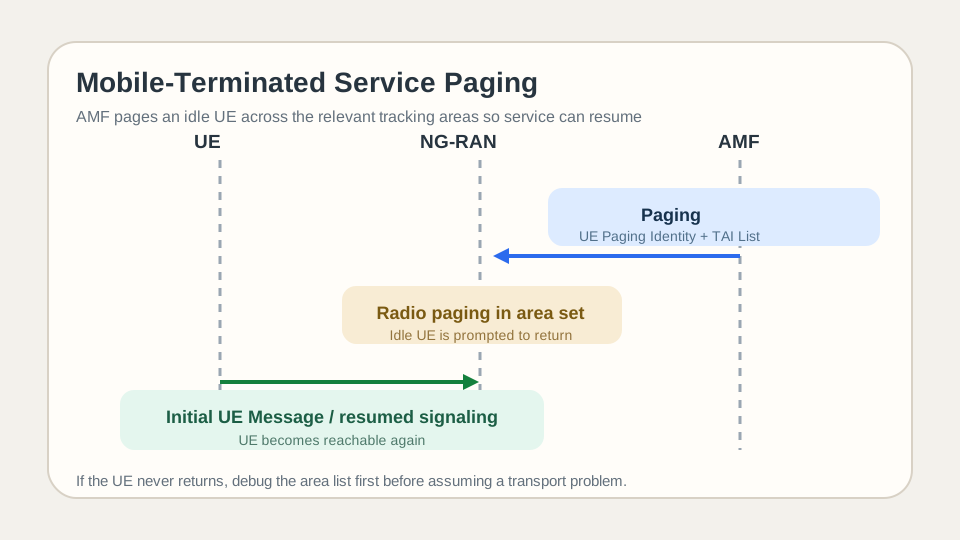
CM-IDLE mobile-terminated service
Mobile-terminated service branch: AMF pages an idle UE across the relevant tracking areas so signaling or data delivery can resume.
Call flow position: AMF triggers paging when downlink service or signaling is waiting for a UE that is not currently on an active UE-associated NG connection.
Typical state: The UE is reachable only through tracking-area based paging, so NG-RAN must broadcast or schedule paging in the right area set.
Preconditions:
AMF has a valid UE paging identity.
Relevant tracking areas are known for the UE.
No active UE-associated NG signaling path is available.
Next likely message: Initial UE Message or other resumed UE signaling
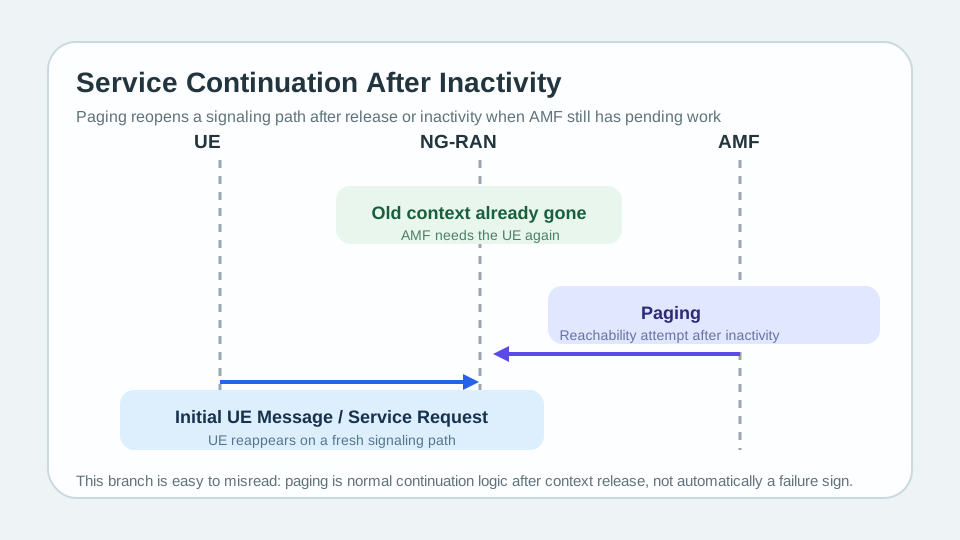
5GMM or 5GSM continuation after release
Service continuation branch: paging is used after inactivity or release when AMF needs the UE to return to signaling.
Call flow position: AMF pages a UE after release or inactivity when it needs the UE to resume signaling for pending NAS work or service restoration.
Typical state: Core-side logic has pending work, but the UE must first be made reachable again through paging.
Preconditions:
AMF still has sufficient UE reachability context to page.
The UE is expected to respond from one of the target tracking areas.
Next likely message: Initial UE Message, Service Request branch, or NAS Non Delivery recovery path
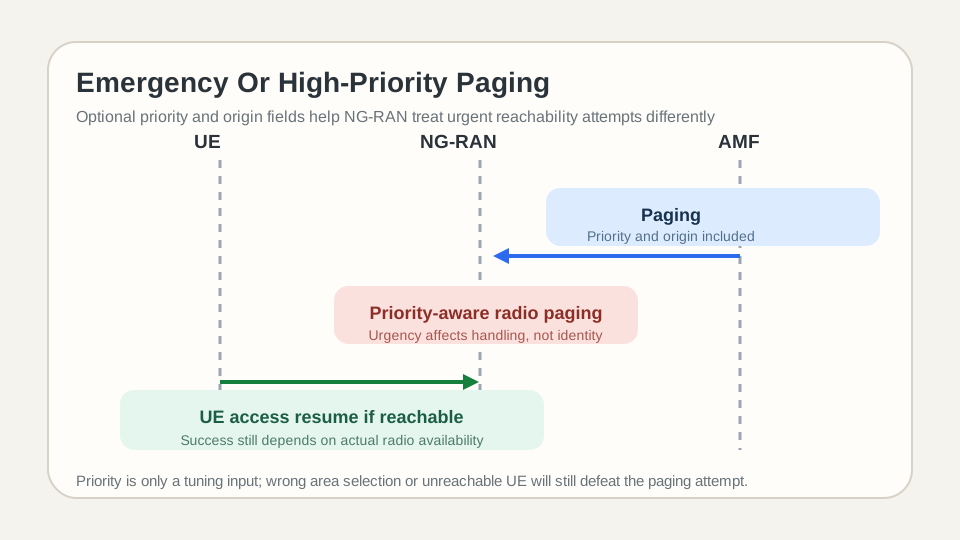
Emergency or high-priority reachability
Priority branch: optional paging priority and origin fields help NG-RAN treat urgent reachability attempts appropriately.
Call flow position: AMF triggers urgent paging using priority-related context when the UE should be reached with elevated importance.
Typical state: The UE is idle or inactive, but AMF needs NG-RAN to prioritize the reachability attempt appropriately.
Preconditions:
Paging priority or origin context is available and relevant.
NG-RAN can schedule paging across the requested area list.
Next likely message: UE access resumption or paging expiry handling
Transport / encapsulation: NGAP over SCTP/IP between AMF and NG-RAN
Security context: Paging does not itself establish new security context; it is a reachability trigger used when AMF needs the UE to resume or re-establish signaling so protected NAS or service procedures can continue.
Message Structure Overview
Paging is an AMF-to-NG-RAN initiating message used in a non-UE-associated signaling context.
UE Paging Identity and TAI List For Paging form the practical mandatory core.
Optional priority, DRX, origin, capability, and assistance fields tune how NG-RAN performs the reachability attempt.
ASN.1 for 5G NGAP - Paging
Paging ::= SEQUENCE {
  protocolIEs ProtocolIE-Container { {Paging-IEs} },
  ...
}

Paging-IEs NGAP-PROTOCOL-IES ::= {
  { ID id-UEPagingIdentity         CRITICALITY reject TYPE UEPagingIdentity         PRESENCE mandatory } |
  { ID id-TAIListForPaging         CRITICALITY reject TYPE TAIListForPaging         PRESENCE mandatory } |
  { ID id-PagingDRX                CRITICALITY ignore TYPE PagingDRX                PRESENCE optional  } |
  { ID id-PagingPriority           CRITICALITY ignore TYPE PagingPriority           PRESENCE optional  } |
  { ID id-UERadioCapabilityForPaging CRITICALITY ignore TYPE UERadioCapabilityForPaging PRESENCE optional } |
  { ID id-PagingOrigin             CRITICALITY ignore TYPE PagingOrigin             PRESENCE optional  } |
  { ID id-AssistanceDataForPaging  CRITICALITY ignore TYPE AssistanceDataForPaging  PRESENCE optional  },
  ...
}
How to read this ASN.1
Start by decoding UE Paging Identity and the tracking area list, because those define who is being paged and where. Then inspect optional priority or origin fields to understand how urgent or specialized the page is.
Paging is non-UE-associated signaling, so do not expect AMF UE NGAP ID or RAN UE NGAP ID here.
TAI list size and composition tell you how broadly the reachability attempt is being spread.
If the UE never reappears, correlate this message with later Initial UE Message absence, timer expiry, or NAS Non Delivery recovery logic.
Important Information Elements
IE
Presence
Description
UE Paging Identity
Mandatory
Mandatory identity used by NG-RAN to determine which UE should be paged in the target area set.
TAI List For Paging
Mandatory
Mandatory list of tracking areas where NG-RAN should attempt paging for the target UE.
Paging DRX
Optional
Optional DRX-related information that helps NG-RAN align paging behavior with UE monitoring expectations.
Paging Priority
Optional
Optional priority indicator that can influence how urgently the paging attempt is handled.
UE Radio Capability For Paging
Optional
Optional radio capability hint that may help NG-RAN optimize paging handling for the target UE.
Paging Origin
Optional
Optional origin information that can help explain why the page is being triggered, such as emergency or non-emergency context.
Assistance Data For Paging
Optional
Optional assistance data that can refine how paging should be performed in the relevant access context.
Detailed field explanation
UE Paging Identity
Mandatory identity used by NG-RAN to determine which UE should be paged in the target area set.
Presence: Mandatory
In practice: In practice, compare this field with the original request and with any later release-dependent optional fields so you can see whether the network accepted the same service model the UE asked for.
TAI List For Paging
Mandatory list of tracking areas where NG-RAN should attempt paging for the target UE.
Presence: Mandatory
In practice: In practice, compare this field with the original request and with any later release-dependent optional fields so you can see whether the network accepted the same service model the UE asked for.
Paging DRX
Optional DRX-related information that helps NG-RAN align paging behavior with UE monitoring expectations.
Presence: Optional
In practice: In practice, compare this field with the original request and with any later release-dependent optional fields so you can see whether the network accepted the same service model the UE asked for.
Paging Priority
Optional priority indicator that can influence how urgently the paging attempt is handled.
Presence: Optional
In practice: In practice, compare this field with the original request and with any later release-dependent optional fields so you can see whether the network accepted the same service model the UE asked for.
UE Radio Capability For Paging
Optional radio capability hint that may help NG-RAN optimize paging handling for the target UE.
Presence: Optional
In practice: In practice, compare this field with the original request and with any later release-dependent optional fields so you can see whether the network accepted the same service model the UE asked for.
Paging Origin
Optional origin information that can help explain why the page is being triggered, such as emergency or non-emergency context.
Presence: Optional
In practice: In practice, compare this field with the original request and with any later release-dependent optional fields so you can see whether the network accepted the same service model the UE asked for.
Assistance Data For Paging
Optional assistance data that can refine how paging should be performed in the relevant access context.
Presence: Optional
In practice: In practice, compare this field with the original request and with any later release-dependent optional fields so you can see whether the network accepted the same service model the UE asked for.
What to check in logs and traces
Verify the UE Paging Identity matches the intended idle or inactive UE.
Check that the TAI List For Paging aligns with the UE's last known registration or location context.
Inspect optional Paging Priority and Paging Origin if the urgency or reason for paging matters.
Confirm whether a follow-up Initial UE Message, Service Request branch, or resumed NAS exchange actually occurred.
If paging fails repeatedly, compare the area list with later reachability or release-complete guidance and radio-side availability.
Common Issues and Troubleshooting
Paging is sent but the UE never resumes signaling.
Likely cause: The UE may be outside the effective paging area, unavailable on radio side, or not monitoring in the expected way for the attempted reachability branch.
What to inspect: Check UE Paging Identity, TAI List For Paging, any DRX-related hints, and whether later Initial UE Message is absent across all target cells.
Next step: Validate tracking area accuracy first, then correlate with radio reachability and later NAS Non Delivery or timeout handling.
Paging works in some areas but fails after release or mobility changes.
Likely cause: AMF may be paging based on stale reachability context, especially if the last known location or recommended cells no longer match the UE's real serving area.
What to inspect: Compare Paging TAI list with the latest release-complete location hints, mobility events, and registration history.
Next step: Refresh the reachability context or force a cleaner re-entry path instead of repeating stale-area pages.
High-priority paging still appears slow or ineffective.
Likely cause: Priority was present, but the real bottleneck may be area selection, radio conditions, or UE availability rather than the paging priority field itself.
What to inspect: Check Paging Priority and Origin, then compare actual radio-side paging execution and UE response timing.
Next step: Treat priority as a tuning input, not a guarantee of reachability, and debug the underlying access conditions.
LTE / 5G / Variant Comparison
Compared with Downlink NAS Transport
Paging tries to make an idle or inactive UE reachable. Downlink NAS Transport carries UE-specific NAS once a usable UE-associated path exists or is being leveraged.
Compared with NAS Non Delivery Indication
Paging is the proactive reachability attempt from AMF. NAS Non Delivery Indication is a failure report from NG-RAN when a specific NAS delivery step could not reach the UE.
Compared with UE Context Release Complete
Release Complete confirms the old active context is gone. Paging is a later mechanism AMF may use when it needs to reach the UE again without an active UE-associated N2 connection.
FAQ
What is Paging in 5G NGAP?
It is the AMF-to-NG-RAN message used to page a UE in one or more tracking areas when the UE is not currently on an active UE-associated N2 signaling connection.
What are the mandatory IEs in Paging?
UE Paging Identity and TAI List For Paging are the mandatory core fields.
Does Paging use AMF UE NGAP ID and RAN UE NGAP ID?
No. Paging is non-UE-associated NGAP signaling and instead uses paging identity plus tracking area scope.
What should I inspect first when paging seems to fail?
Start with the UE Paging Identity and TAI List For Paging, then correlate with the UE's last known reachability and whether any later Initial UE Message appears.
Decode this message with the 3GPP Decoder, inspect the related message database, or open the matching call flow to see where this signaling step fits in the full procedure.