UE Context Release Complete is the NGAP message the NG-RAN sends to AMF to confirm that the targeted UE-associated logical NG connection has been released.
NG-RAN has completed the UE context release ordered by AMF and needs to confirm that the targeted UE-associated NG connection has been removed.
Main purpose
Confirms that NG-RAN completed release of the requested UE-associated logical NG connection and, when available, returns final location or paging-related context useful to AMF.
What is UE Context Release Complete in simple terms?
UE Context Release Complete is the NGAP message the NG-RAN sends to AMF to confirm that the targeted UE-associated logical NG connection has been released.
Confirms that NG-RAN completed release of the requested UE-associated logical NG connection and, when available, returns final location or paging-related context useful to AMF.
Why this message matters
UE Context Release Complete is the gNB telling the AMF that the requested UE context release is finished and the old N2 connection is gone.
Where this message appears in the call flow
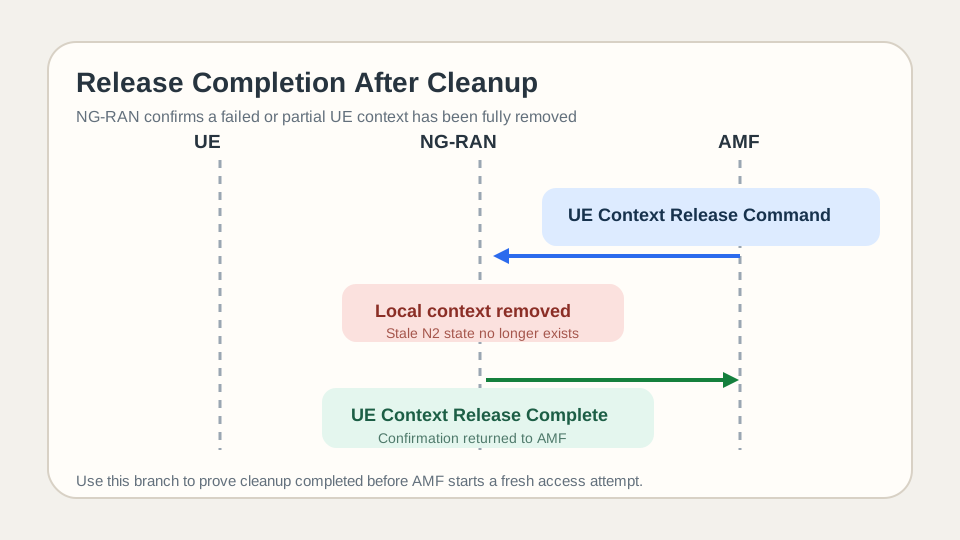
Cleanup after failed context setup
Failure cleanup branch: NG-RAN confirms unusable UE context has been removed.
Call flow position: NG-RAN confirmation that unusable or partial UE context from a failed continuation branch has been removed.
Typical state: AMF already decided cleanup; NG-RAN now reports the release is complete and the old context is gone.
Preconditions:
UE Context Release Command was received for the affected UE context.
NG-RAN completed local context cleanup actions.
Next likely message: Fresh UE access attempt or AMF-side procedure restart
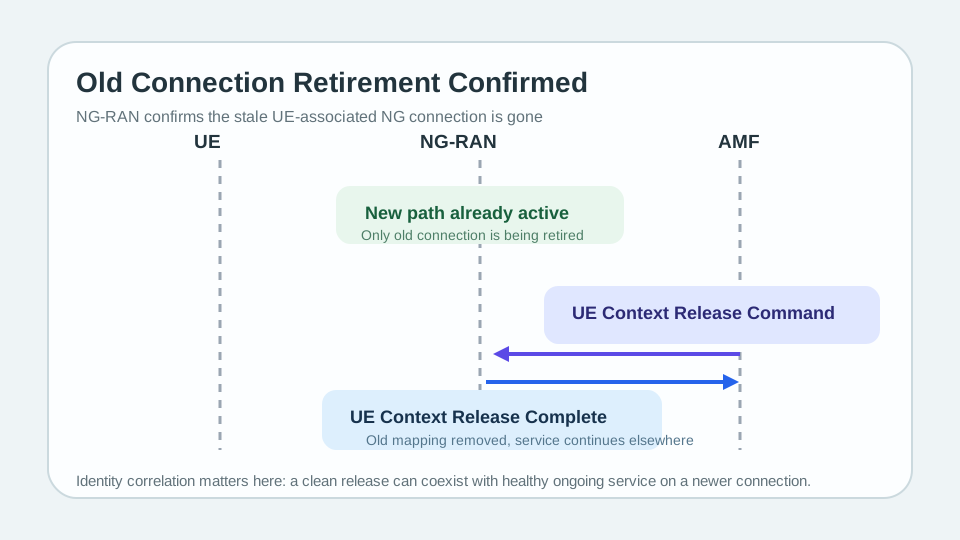
Old connection replacement after re-establishment
Replacement branch: old context is confirmed gone while service can continue on the newer path.
Call flow position: Completion of stale connection cleanup when a new UE-associated NG connection already exists or is about to continue service.
Typical state: The superseded connection is gone, reducing duplicate-state risk between AMF and NG-RAN.
Preconditions:
AMF previously targeted an obsolete UE-associated NG connection.
NG-RAN identified and removed the stale mapping.
Next likely message: Service continues on the newer connection
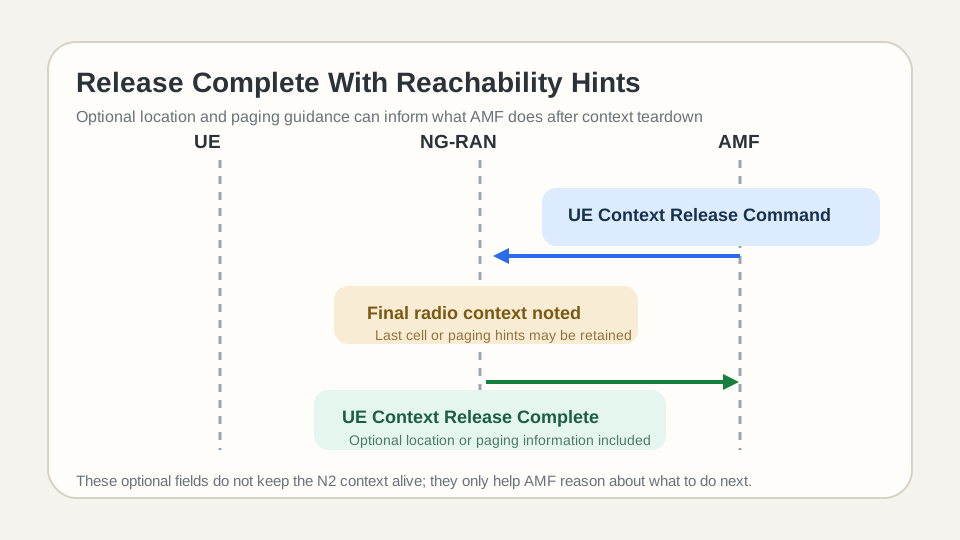
Release with paging or location hints
Reachability branch: release completion can also return the last useful context for later paging decisions.
Call flow position: NG-RAN confirms release and optionally returns the last useful radio-side context that AMF can use for reachability decisions.
Typical state: UE-specific N2 context is gone, but AMF may retain enough information to guide subsequent paging or reachability handling.
Preconditions:
NG-RAN had relevant location, recommended cell, or released session information at release time.
AMF may benefit from those hints for the next reachability branch.
Next likely message: Paging or later re-access from the UE
Transport / encapsulation: NGAP over SCTP/IP between NG-RAN and AMF
Security context: The message closes out a previously existing UE-associated access context; it confirms release rather than carrying new security instructions.
Message Structure Overview
UE Context Release Complete is the NG-RAN-to-AMF confirmation message in the UE Context Release procedure.
AMF UE NGAP ID and RAN UE NGAP ID form the mandatory release confirmation anchor.
Optional location, recommended paging cells, and released session context can make this message operationally valuable beyond simple acknowledgment.
ASN.1 for 5G NGAP - UE Context Release Complete
UEContextReleaseComplete ::= SEQUENCE {
  protocolIEs ProtocolIE-Container { {UEContextReleaseComplete-IEs} },
  ...
}

UEContextReleaseComplete-IEs NGAP-PROTOCOL-IES ::= {
  { ID id-AMF-UE-NGAP-ID                              CRITICALITY reject TYPE AMF-UE-NGAP-ID                              PRESENCE mandatory } |
  { ID id-RAN-UE-NGAP-ID                              CRITICALITY reject TYPE RAN-UE-NGAP-ID                              PRESENCE mandatory } |
  { ID id-UserLocationInformation                     CRITICALITY ignore TYPE UserLocationInformation                     PRESENCE optional  } |
  { ID id-InfoOnRecommendedCellsAndRANNodesForPaging CRITICALITY ignore TYPE InfoOnRecommendedCellsAndRANNodesForPaging PRESENCE optional  } |
  { ID id-PDUSessionResourceListCxtRelCpl            CRITICALITY ignore TYPE PDUSessionResourceListCxtRelCpl            PRESENCE optional  } |
  { ID id-CriticalityDiagnostics                      CRITICALITY ignore TYPE CriticalityDiagnostics                      PRESENCE optional  },
  ...
}
How to read this ASN.1
Decode the mandatory UE identifiers first to ensure you are looking at the exact released context. Then inspect optional location or paging-related IEs if AMF needs post-release reachability context.
5G NGAP - UE Context Release Complete - Example Dump
Start with AMF UE NGAP ID and RAN UE NGAP ID to make sure the completion matches the command you are tracking.
Optional User Location Information can be valuable when analyzing where the UE was last known before the connection was removed.
Recommended paging information matters only if AMF is likely to re-establish reachability after release.
Important Information Elements
IE
Presence
Description
AMF UE NGAP ID
Mandatory
Mandatory AMF-side UE identifier that lets AMF correlate the release confirmation with the original command and prior UE context.
RAN UE NGAP ID
Mandatory
Mandatory NG-RAN-side UE identifier that identifies which released radio-side UE context is being confirmed.
User Location Information
Optional
Optional last known access-side location context that can help AMF reason about the UE's final serving area at release time.
Info On Recommended Cells And RAN Nodes For Paging
Optional
Optional paging guidance that can help AMF narrow later reachability attempts after the UE-associated NG connection is gone.
PDU Session Resource List CxtRelCpl
Optional
Optional list that can carry released PDU session resource context associated with the completed UE context release.
Criticality Diagnostics
Optional
Optional diagnostics that can help explain unusual decode or processing conditions in the completion branch.
Detailed field explanation
AMF UE NGAP ID
Mandatory AMF-side UE identifier that lets AMF correlate the release confirmation with the original command and prior UE context.
Presence: Mandatory
In practice: In practice, compare this field with the original request and with any later release-dependent optional fields so you can see whether the network accepted the same service model the UE asked for.
RAN UE NGAP ID
Mandatory NG-RAN-side UE identifier that identifies which released radio-side UE context is being confirmed.
Presence: Mandatory
In practice: In practice, compare this field with the original request and with any later release-dependent optional fields so you can see whether the network accepted the same service model the UE asked for.
User Location Information
Optional last known access-side location context that can help AMF reason about the UE's final serving area at release time.
Presence: Optional
In practice: In practice, compare this field with the original request and with any later release-dependent optional fields so you can see whether the network accepted the same service model the UE asked for.
Info On Recommended Cells And RAN Nodes For Paging
Optional paging guidance that can help AMF narrow later reachability attempts after the UE-associated NG connection is gone.
Presence: Optional
In practice: In practice, compare this field with the original request and with any later release-dependent optional fields so you can see whether the network accepted the same service model the UE asked for.
PDU Session Resource List CxtRelCpl
Optional list that can carry released PDU session resource context associated with the completed UE context release.
Presence: Optional
In practice: In practice, compare this field with the original request and with any later release-dependent optional fields so you can see whether the network accepted the same service model the UE asked for.
Criticality Diagnostics
Optional diagnostics that can help explain unusual decode or processing conditions in the completion branch.
Presence: Optional
In practice: In practice, compare this field with the original request and with any later release-dependent optional fields so you can see whether the network accepted the same service model the UE asked for.
What to check in logs and traces
Match AMF UE NGAP ID and RAN UE NGAP ID to the preceding UE Context Release Command.
Confirm the completion belongs to the intended stale or targeted UE context, especially in duplicate-connection cases.
Inspect optional location and paging guidance if AMF later needs to page or correlate the UE after release.
Check whether any released PDU session resource list is present when session cleanup context matters.
If completion is missing, determine whether NG-RAN failed to process the command or whether trace capture missed the response.
Common Issues and Troubleshooting
UE Context Release Command is visible but UE Context Release Complete is missing.
Likely cause: NG-RAN may not have processed the release cleanly, or the trace point may not include the completion leg back to AMF.
What to inspect: Check SCTP continuity, command-to-complete correlation, and whether the UE context already disappeared before confirmation could be logged.
Next step: Verify whether AMF retried cleanup or moved on assuming release based on other recovery logic.
UE Context Release Complete arrives, but the wrong UE seems to lose service.
Likely cause: The release may have targeted a stale duplicate context while service continues on a newer path, and the trace is being interpreted at the wrong identity level.
What to inspect: Compare AMF UE NGAP ID and RAN UE NGAP ID against the active and old connection branches.
Next step: Rebuild the UE identity timeline before treating the release as unexpected service interruption.
Paging later fails even though release completed cleanly.
Likely cause: AMF may have limited or stale post-release reachability context, or optional paging guidance was absent or insufficient.
What to inspect: Check User Location Information and Info On Recommended Cells And RAN Nodes For Paging if present.
Next step: Correlate later paging attempts with the last known location and any recommended paging cells returned here.
LTE / 5G / Variant Comparison
Compared with UE Context Release Command
Command is the AMF instruction to release. Complete is the NG-RAN confirmation that the target UE-associated logical NG connection has actually been removed.
Compared with Initial UE Message
UE Context Release Complete closes an old or failed context. Initial UE Message starts a fresh access-side signaling branch.
Compared with Paging
UE Context Release Complete confirms context teardown. Paging is a later reachability action that AMF may choose after release when it needs the UE again.
FAQ
What is UE Context Release Complete in 5G NGAP?
It is the NG-RAN-to-AMF message confirming that the requested UE-associated logical NG connection has been released.
What are the mandatory IEs in UE Context Release Complete?
AMF UE NGAP ID and RAN UE NGAP ID are the mandatory identifiers used to confirm which released UE context is being reported.
Can UE Context Release Complete carry extra useful information?
Yes. It can optionally include user location, recommended paging information, released session resource context, and diagnostics.
What usually comes before UE Context Release Complete?
It normally follows UE Context Release Command as the confirmation step in the UE Context Release procedure.
Decode this message with the 3GPP Decoder, inspect the related message database, or open the matching call flow to see where this signaling step fits in the full procedure.