UE Context Release Command is the UE-associated F1AP message the gNB-CU sends to the gNB-DU to order release of the UE-associated logical F1 connection and its related signaling and user-plane resources, or to cancel prepared conditional mobility, CPAC, or LTM-related cells for that UE, optionally carrying an RRC release payload, duplication execution, CG-SDT keep indication, positioning-context reservation, or paging-assistance requests before the DU answers with UE Context Release Complete.
Message Fact Sheet
Protocol
f1ap
Network
5g
Spec
3GPP TS 38.473
Spec Section
Section 8.3.3 and sections 9.2.2.5 to 9.2.2.6 (Release 18 baseline)
Direction
gNB-CU -> gNB-DU initiatingMessage
Message Type
UE-associated context release or conditional-resource cancellation command
Full message name
5G F1AP - UE Context Release Command
Protocol
F1AP
Technology
5G
Direction
gNB-CU -> gNB-DU initiatingMessage
Interface
F1-C between gNB-CU and gNB-DU
Signaling bearer / channel
UE-associated F1AP signaling / SCTP carried F1AP initiatingMessage followed by UE Context Release Complete
Typical trigger
The gNB-CU decides that the DU-side UE context should be fully released because of normal mobility, rejection, pre-emption, or higher-layer failure handling, or needs the DU to cancel prepared candidate cells, CPAC state, or LTM cells without keeping the full prepared branch alive.
Main purpose
Orders the gNB-DU to release a UE-associated F1 context or cancel only the specified conditional or LTM-related prepared cells, while telling the DU why the release is happening and whether special handling such as RRC delivery, CG-SDT retention, or positioning-context reservation applies.
Main specification
3GPP TS 38.473, Section 8.3.3 and sections 9.2.2.5 to 9.2.2.6 (Release 18 baseline)
Release added
Release 15
Procedures where used
Normal UE release over F1, CU-side access rejection cleanup, Mobility-driven DU resource release, Conditional handover or CPAC cancellation, LTM cell cleanup, CG-SDT-aware transition to RRC_INACTIVE
What is UE Context Release Command in simple terms?
UE Context Release Command is the UE-associated F1AP message the gNB-CU sends to the gNB-DU to order release of the UE-associated logical F1 connection and its related signaling and user-plane resources, or to cancel prepared conditional mobility, CPAC, or LTM-related cells for that UE, optionally carrying an RRC release payload, duplication execution, CG-SDT keep indication, positioning-context reservation, or paging-assistance requests before the DU answers with UE Context Release Complete.
Orders the gNB-DU to release a UE-associated F1 context or cancel only the specified conditional or LTM-related prepared cells, while telling the DU why the release is happening and whether special handling such as RRC delivery, CG-SDT retention, or positioning-context reservation applies.
Why this message matters
UE Context Release Command is the CU instruction that tells the DU to tear down the UE-related F1 context, or to cancel only the specified prepared mobility or LTM branches, and then wait for UE Context Release Complete.
Where this message appears in the call flow
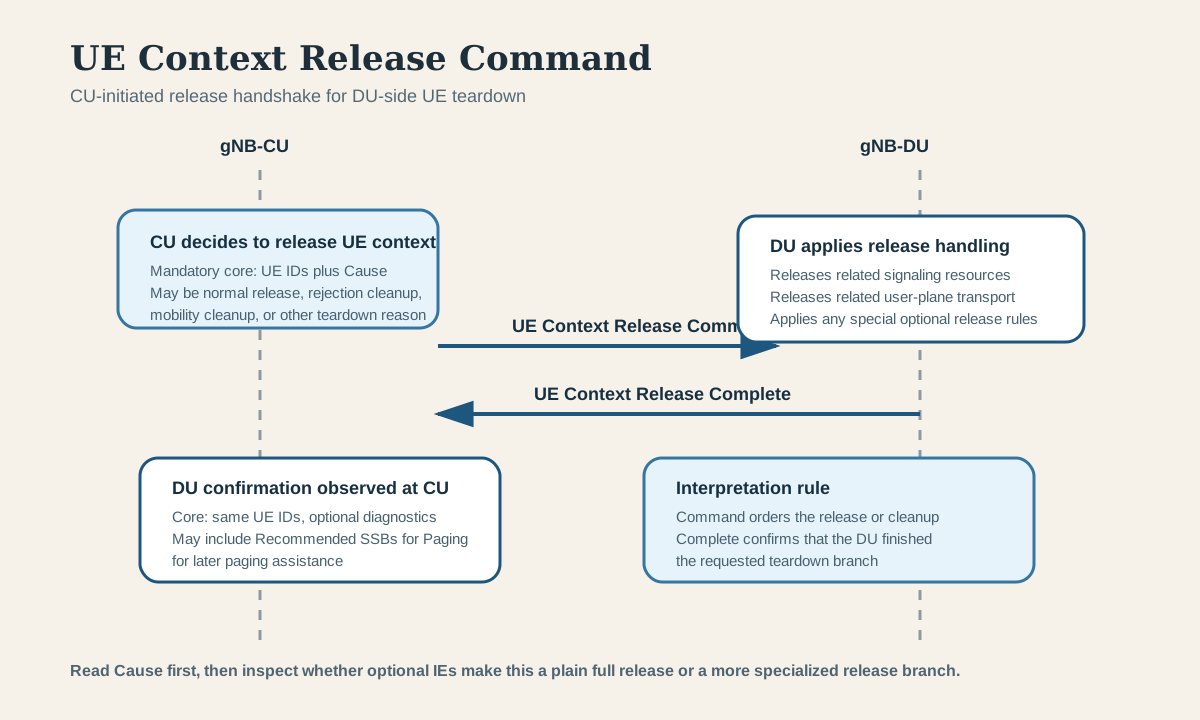
Full UE-context teardown
Basic release path: the CU orders teardown, the DU releases signaling and F1-U state, and then confirms with UE Context Release Complete.
Call flow position: The gNB-CU wants the gNB-DU to release the UE-associated logical F1 connection and all related signaling and user-plane transport resources.
Typical state: The DU tears down the active UE context and then confirms the release with UE Context Release Complete.
Preconditions:
The UE-associated context exists at the gNB-DU.
The gNB-CU has decided that the UE should no longer keep the current DU-side context.
Next likely message: UE Context Release Complete
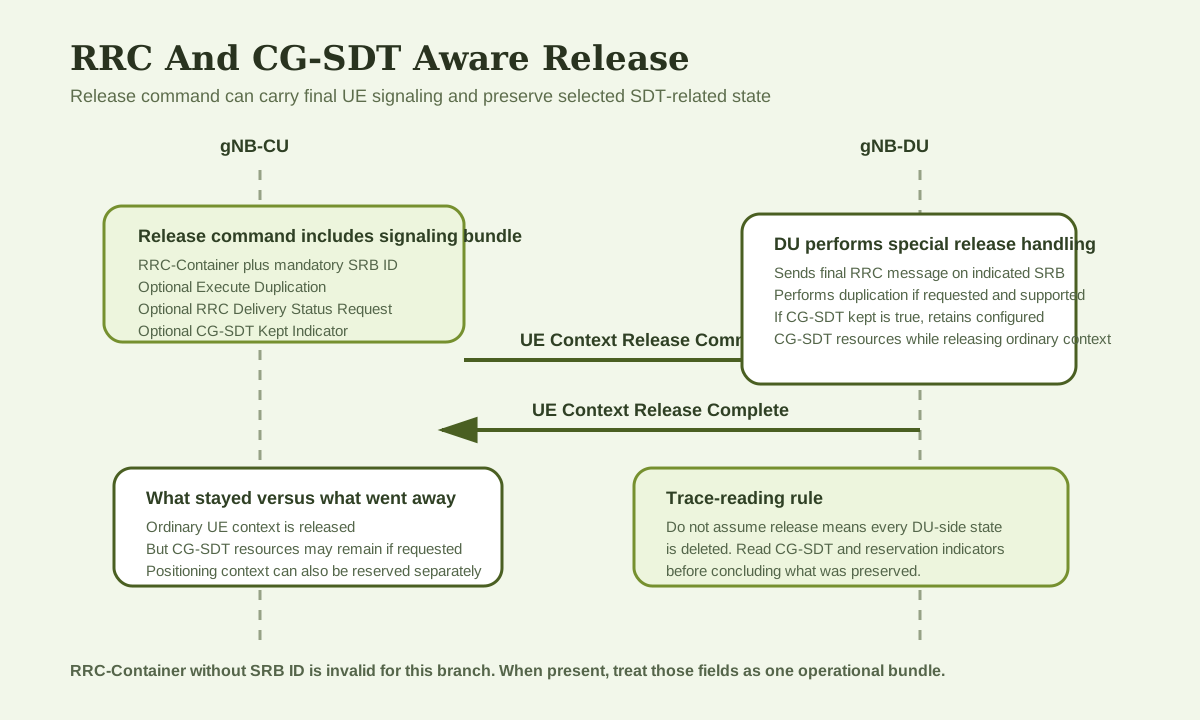
Release with UE-facing RRC delivery
Control-rich path: the command can carry the final UE-facing RRC message and special handling such as duplication execution or CG-SDT retention into RRC_INACTIVE.
Call flow position: The command includes an RRC container so the DU sends a final RRC message to the UE on the indicated SRB before finishing the release handling.
Typical state: The DU still releases the context, but the command also carries last-mile UE signaling instructions such as release messaging and optional duplication execution.
Preconditions:
The gNB-CU included RRC-Container.
SRB ID is present because the DU needs to know which SRB carries the RRC message.
Next likely message: UE Context Release Complete, optionally after RRC delivery reporting if requested
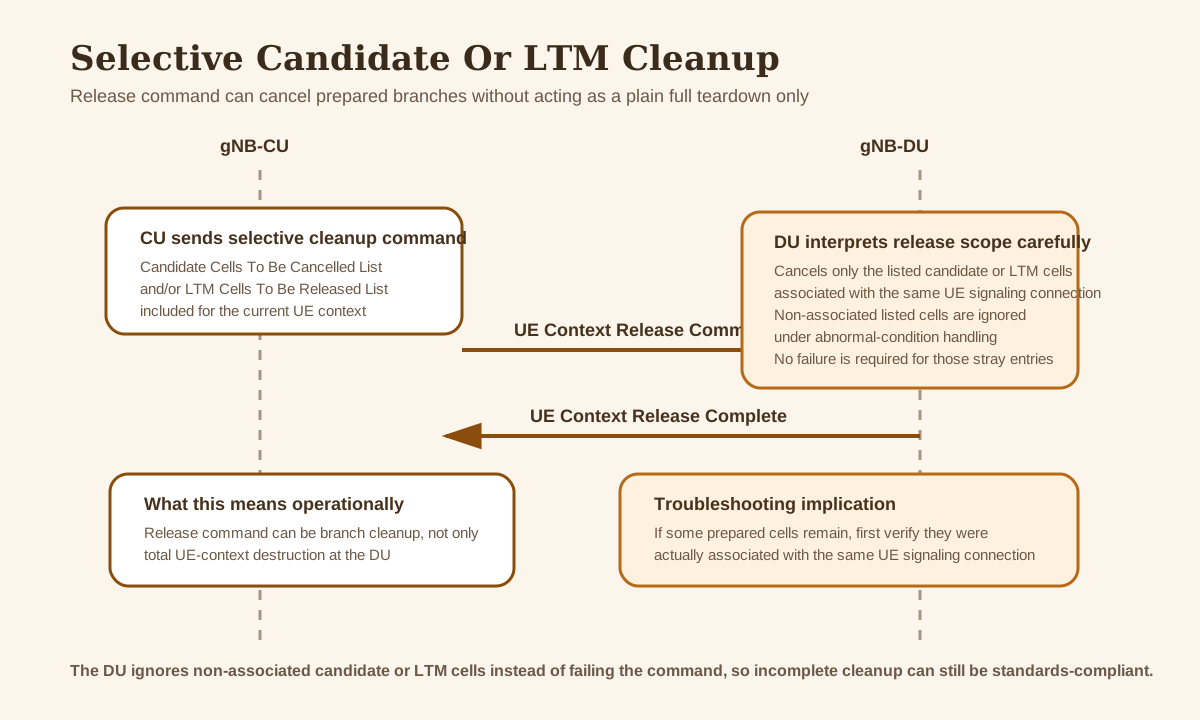
Selective conditional-resource cancellation
Selective-cleanup path: the same message can cancel prepared candidate or LTM cells, and the DU ignores non-associated entries rather than failing the whole command.
Call flow position: The gNB-CU uses the release command to cancel only prepared candidate cells, conditional PSCell addition or change, subsequent CPAC, or LTM cells associated with the UE.
Typical state: The DU keeps only the specified prepared branches cancelled, ignoring any non-associated candidate or LTM cells listed by mistake.
Preconditions:
The command carries Candidate Cells To Be Cancelled List or LTM Cells To Be Released List.
The listed cells belong to the same UE-associated signaling connection if they are to be acted on.
Sender and receiver: gNB-CU -> gNB-DU initiatingMessage
Interface: F1-C between gNB-CU and gNB-DU
Domain: CU-DU UE context teardown and selective conditional-resource cancellation
Signaling bearer: UE-associated F1AP signaling
Logical channel: SCTP carried F1AP initiatingMessage followed by UE Context Release Complete
Transport / encapsulation: F1AP over SCTP/IP between gNB-CU and gNB-DU
Security context: UE Context Release Command does not create NAS security. It removes or selectively trims the DU-side UE context and may carry an RRC release message or keep specific CG-SDT or positioning-related state when the procedure requires it.
Message Structure Overview
UE Context Release Command is the CU-initiated release side of the F1AP UE Context Release procedure and is answered by UE Context Release Complete from the DU.
The mandatory core is both UE F1AP IDs plus Cause. That core alone is enough to order a plain release of the UE-associated F1 context.
The command can optionally carry an RRC message to be sent to the UE, which is why RRC-Container and SRB ID appear together in many traces.
This is not only a full teardown message. The same command can selectively cancel prepared conditional handover, conditional PSCell addition or change, subsequent CPAC, or LTM cells for the UE.
CG-SDT Kept Indicator and Positioning Context Reservation Indication make the release semantics more nuanced by preserving specific DU-side state while the ordinary UE context is released.
UE Context Release Complete contains the DU confirmation and may optionally return Recommended SSBs for Paging List as assistance for later paging.
The release command is structurally smaller than setup or modification because it primarily tells the DU what to remove, why to remove it, and whether any special release-side handling applies. The companion complete message is smaller still and mainly confirms teardown completion.
5G F1AP - UE Context Release Command - Example Dump
Read Cause first because it explains whether the command is a normal teardown, an access rejection cleanup, a mobility cleanup, or another exceptional release trigger.
If RRC-Container is present, verify SRB ID alongside it because the DU needs both fields to deliver the final UE-facing RRC message.
If Candidate Cells To Be Cancelled List or LTM Cells To Be Released List is present, determine whether the command is selective cancellation rather than a plain full-context teardown.
UE Context Release Complete is the acknowledgement to inspect next. It may include Recommended SSBs for Paging List even though the command itself does not.
Important Information Elements
IE
Presence
Description
gNB-CU UE F1AP ID
Mandatory
Mandatory CU-side UE identifier used to correlate the command with the live UE-associated F1 signaling context.
gNB-DU UE F1AP ID
Mandatory
Mandatory DU-side UE identifier for the UE context or prepared conditional branch being released or cancelled.
Cause
Mandatory
Mandatory F1AP cause explaining why the release or cancellation is being ordered, commonly using radio-network, protocol, transport, or miscellaneous cause groups.
RRC-Container
Optional
Optional final UE-facing RRC message encapsulated in a PDCP PDU. When present, the DU sends it to the UE before or as part of the release handling.
SRB ID
Optional
Conditionally mandatory when RRC-Container is present. It tells the DU which SRB carries the final RRC message.
old gNB-DU UE F1AP ID
Optional
Optional old DU-side UE identifier to be additionally released, used for re-establishment or other contexts where an old DU identifier must be cleaned up as part of the command.
Execute Duplication
Optional
Optional indication asking the DU to perform configured CA-based duplication or multi-path relay duplication for the SRB carrying the included RRC container.
RRC Delivery Status Request
Optional
Optional request asking for RRC DELIVERY REPORT procedure handling for the carried RRC message.
Candidate Cells To Be Cancelled List
Optional
Optional list of candidate target cells whose conditional handover, conditional PSCell addition, conditional PSCell change, or subsequent CPAC preparation shall be cancelled for this UE.
Positioning Context Reservation Indication
Optional
Optional indicator telling the DU not to release the positioning context, including SRS configuration, even while the UE context release proceeds.
CG-SDT Kept Indicator
Optional
Optional indication that the UE is being sent to RRC_INACTIVE with CG-SDT configuration retained, so the DU keeps configured CG-SDT resources, relevant identifiers, related RLC configuration, and F1-U state for SDT bearers.
LTM Cells To Be Released List
Optional
Optional list telling the DU to cancel only the listed LTM cells associated with the current UE-related signaling connection.
DL LBT Failure Information Request
Optional
Optional request asking the DU to report DL LBT failure information for later MRO analysis when supported.
Detailed field explanation
gNB-CU UE F1AP ID
Mandatory CU-side UE identifier used to correlate the command with the live UE-associated F1 signaling context.
Presence: Mandatory
In practice: In practice, compare this field with the original request and with any later release-dependent optional fields so you can see whether the network accepted the same service model the UE asked for.
gNB-DU UE F1AP ID
Mandatory DU-side UE identifier for the UE context or prepared conditional branch being released or cancelled.
Presence: Mandatory
In practice: In practice, compare this field with the original request and with any later release-dependent optional fields so you can see whether the network accepted the same service model the UE asked for.
Cause
Mandatory F1AP cause explaining why the release or cancellation is being ordered, commonly using radio-network, protocol, transport, or miscellaneous cause groups.
Presence: Mandatory
In practice: In practice, compare this field with the original request and with any later release-dependent optional fields so you can see whether the network accepted the same service model the UE asked for.
RRC-Container
Optional final UE-facing RRC message encapsulated in a PDCP PDU. When present, the DU sends it to the UE before or as part of the release handling.
Presence: Optional
In practice: In practice, compare this field with the original request and with any later release-dependent optional fields so you can see whether the network accepted the same service model the UE asked for.
SRB ID
Conditionally mandatory when RRC-Container is present. It tells the DU which SRB carries the final RRC message.
Presence: Optional
In practice: In practice, compare this field with the original request and with any later release-dependent optional fields so you can see whether the network accepted the same service model the UE asked for.
old gNB-DU UE F1AP ID
Optional old DU-side UE identifier to be additionally released, used for re-establishment or other contexts where an old DU identifier must be cleaned up as part of the command.
Presence: Optional
In practice: In practice, compare this field with the original request and with any later release-dependent optional fields so you can see whether the network accepted the same service model the UE asked for.
Execute Duplication
Optional indication asking the DU to perform configured CA-based duplication or multi-path relay duplication for the SRB carrying the included RRC container.
Presence: Optional
In practice: In practice, compare this field with the original request and with any later release-dependent optional fields so you can see whether the network accepted the same service model the UE asked for.
RRC Delivery Status Request
Optional request asking for RRC DELIVERY REPORT procedure handling for the carried RRC message.
Presence: Optional
In practice: In practice, compare this field with the original request and with any later release-dependent optional fields so you can see whether the network accepted the same service model the UE asked for.
Candidate Cells To Be Cancelled List
Optional list of candidate target cells whose conditional handover, conditional PSCell addition, conditional PSCell change, or subsequent CPAC preparation shall be cancelled for this UE.
Presence: Optional
In practice: In practice, compare this field with the original request and with any later release-dependent optional fields so you can see whether the network accepted the same service model the UE asked for.
Positioning Context Reservation Indication
Optional indicator telling the DU not to release the positioning context, including SRS configuration, even while the UE context release proceeds.
Presence: Optional
In practice: In practice, compare this field with the original request and with any later release-dependent optional fields so you can see whether the network accepted the same service model the UE asked for.
CG-SDT Kept Indicator
Optional indication that the UE is being sent to RRC_INACTIVE with CG-SDT configuration retained, so the DU keeps configured CG-SDT resources, relevant identifiers, related RLC configuration, and F1-U state for SDT bearers.
Presence: Optional
In practice: In practice, compare this field with the original request and with any later release-dependent optional fields so you can see whether the network accepted the same service model the UE asked for.
LTM Cells To Be Released List
Optional list telling the DU to cancel only the listed LTM cells associated with the current UE-related signaling connection.
Presence: Optional
In practice: In practice, compare this field with the original request and with any later release-dependent optional fields so you can see whether the network accepted the same service model the UE asked for.
DL LBT Failure Information Request
Optional request asking the DU to report DL LBT failure information for later MRO analysis when supported.
Presence: Optional
In practice: In practice, compare this field with the original request and with any later release-dependent optional fields so you can see whether the network accepted the same service model the UE asked for.
What to check in logs and traces
Match both UE F1AP IDs with the exact live UE context before assuming the release affects the intended DU association.
Read Cause before the optional IEs so you understand why the CU decided to tear down or cancel this branch.
If RRC-Container is present, verify SRB ID, optional Execute Duplication, and optional RRC Delivery Status Request together as one release-signaling bundle.
If old gNB-DU UE F1AP ID is present, confirm that the old DU-side context is also cleaned up as part of the command.
If candidate-cell or LTM lists are present, confirm the cells belong to the same UE-associated signaling connection, because non-associated entries are ignored by the DU.
Common Issues and Troubleshooting
The CU sends release, but the DU seems to keep stale state.
Likely cause: The command may have been interpreted as selective candidate-cell or LTM cancellation rather than full UE-context teardown, or an old DU UE ID also needed explicit cleanup.
What to inspect: Check Cause, Candidate Cells To Be Cancelled List, LTM Cells To Be Released List, and old gNB-DU UE F1AP ID together before assuming the wrong branch was executed.
Next step: Clarify whether the intended action was full release or selective cancellation and resend a command that matches that scope.
The UE never receives the expected release-related RRC message.
Likely cause: RRC-Container may be missing, SRB ID may be absent or inconsistent, or the command may not have requested the RRC-side signaling path the trace reader expected.
What to inspect: Verify that RRC-Container is present, that SRB ID is included, and that any RRC Delivery Status Request or Execute Duplication flags match the intended release behavior.
Next step: Treat the command as a transport instruction for the final RRC payload and correct the message composition before retrying.
Conditional handover or LTM preparations remain partly visible after release.
Likely cause: Some listed cells may not belong to the same UE-associated signaling connection, so the DU ignored those non-associated entries under the abnormal-condition rules.
What to inspect: Compare the listed candidate or LTM cells with the actual preparation context bound to the current UE IDs.
Next step: Resend cleanup for the correct associated cells rather than assuming the DU failed to apply the command.
LTE / 5G / Variant Comparison
Compared with UE Context Release Complete
The command is the CU instruction that orders release or selective cancellation. Complete is the DU confirmation that the requested teardown or cancellation handling has finished.
Compared with UE Context Release Request
Release Request is the DU-initiated message asking the CU to release a context. Release Command is the CU-initiated order telling the DU to do it.
Compared with UE Context Modification Request
Modification Request changes an active context while keeping it alive. Release Command tears the context down or cancels prepared conditional branches instead of evolving them.
FAQ
What is UE Context Release Command in 5G F1AP?
It is the gNB-CU to gNB-DU UE-associated message used to release the UE-associated logical F1 connection and related resources, or to cancel prepared conditional-mobility or LTM cells for that UE.
What is mandatory in UE Context Release Command?
The mandatory IEs are Message Type, gNB-CU UE F1AP ID, gNB-DU UE F1AP ID, and Cause. Everything else depends on the exact release branch.
Can UE Context Release Command carry an RRC message?
Yes. If RRC-Container is present, SRB ID must also be present so the DU can send the final RRC message to the UE on the indicated SRB.
What does CG-SDT Kept Indicator do in release?
It tells the DU, when supported, to send the UE to RRC_INACTIVE with CG-SDT configuration retained and keep the configured CG-SDT resources and related SDT-bearer state while the ordinary UE context is released.
What does the DU return after UE Context Release Command?
The DU returns UE Context Release Complete, which confirms completion of the release handling and can optionally include Recommended SSBs for Paging List for later paging assistance.
Decode this message with the 3GPP Decoder, inspect the related message database, or open the matching call flow to see where this signaling step fits in the full procedure.