The gNB-DU receives UE Context Setup Request but cannot create the requested UE context or configure the requested radio, bearer, transport, or protocol state.
Main purpose
Rejects UE context setup, reports why the DU could not establish the requested UE resources, prevents the CU from assuming the UE context exists, provides standardized failure handling, and supports retry or cleanup decisions.
Initial UE admission failure, DU-side UE context setup rejection, DRB or SRB setup failure handling, Transport tunnel setup failure, F1AP Cause troubleshooting
What is UE Context Setup Failure in simple terms?
UE Context Setup Failure is the F1AP unsuccessful outcome sent by the gNB-DU to the gNB-CU when the DU cannot establish the requested UE context.
Rejects UE context setup, reports why the DU could not establish the requested UE resources, prevents the CU from assuming the UE context exists, provides standardized failure handling, and supports retry or cleanup decisions.
Why this message matters
UE Context Setup Failure means the DU did not establish the requested UE context. Match it to the setup request and read Cause first.
Where this message appears in the call flow
UE Context Setup
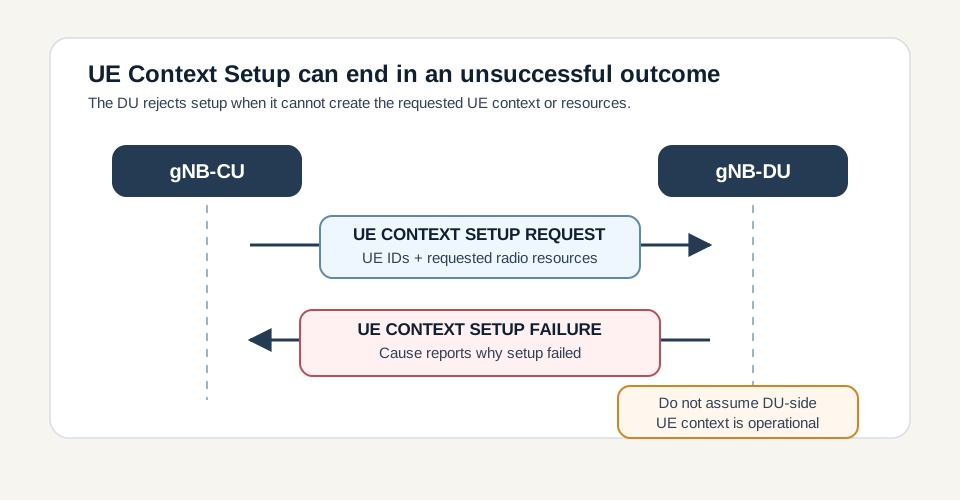
Setup branch: the CU requests DU-side UE context creation, but the DU returns unsuccessfulOutcome with Cause.
Call flow position: The gNB-DU returns UE Context Setup Failure after it receives UE Context Setup Request but cannot complete DU-side UE context creation.
Typical state: The requested UE context setup is unsuccessful and the CU must not assume that the DU-side UE context is operational.
Preconditions:
The gNB-CU sent UE Context Setup Request.
The DU attempted to create UE context and configure requested resources.
A radio, resource, transport, protocol, or state condition blocked setup completion.
Next likely message: Corrected retry, UE Context Release Command, or recovery handling
Failure cause troubleshooting
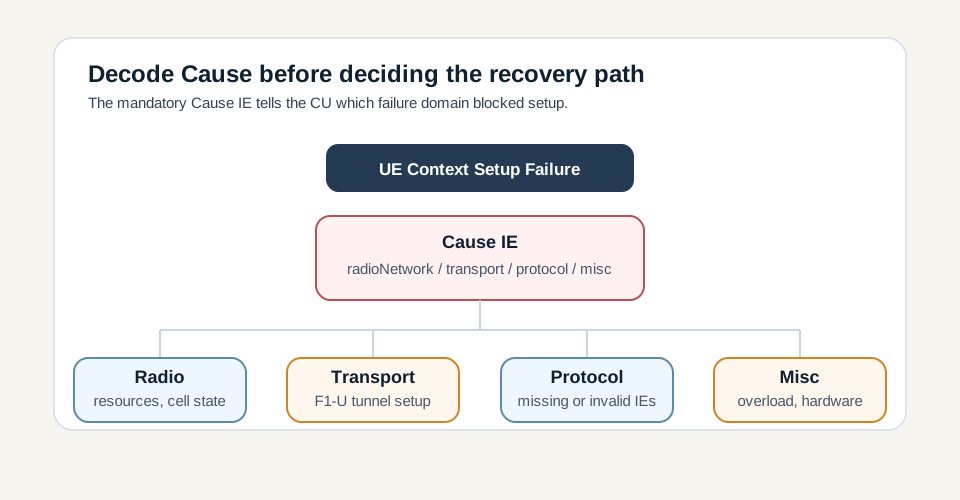
Troubleshooting branch: Cause is the first field to decode because it identifies the failure domain.
Call flow position: The Cause IE identifies why the DU rejected setup and drives the CU-side response.
Typical state: The CU has a standardized failure reason but may need to inspect the original request and DU state for root cause.
Preconditions:
The failure includes a mandatory Cause IE.
The original request contains the resource, bearer, RRC, or transport information being rejected.
Next likely message: Retry with modified configuration or cleanup
Setup versus successful response
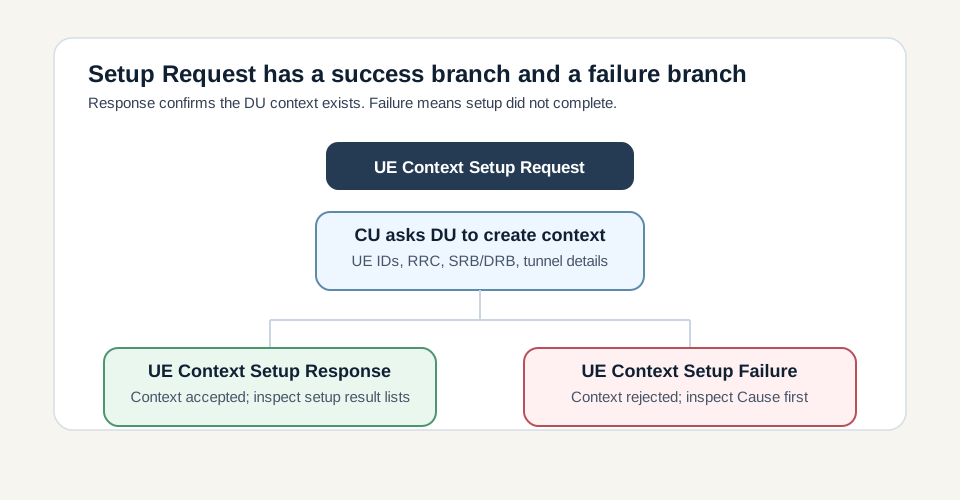
Outcome distinction: Response confirms setup; Failure rejects setup and prevents the CU from assuming a DU-side UE context exists.
Call flow position: Failure is the unsuccessful alternative to UE Context Setup Response.
Typical state: No successful DU-side setup result lists or DU-to-CU RRC information should be expected in this branch.
Preconditions:
The DU could not establish the UE context at procedure level.
Next likely message: Recovery, release, or a new setup attempt
Transport / encapsulation: F1AP over SCTP/IP between gNB-CU and gNB-DU
Security context: UE Context Setup Failure does not establish a UE security context. It reports that the DU-side UE context setup did not complete successfully.
Message Structure Overview
UE Context Setup Failure is the unsuccessfulOutcome for UE Context Setup and is sent by the gNB-DU to the gNB-CU.
It tells the CU that the DU could not establish the requested UE context at procedure level.
The mandatory troubleshooting core is gNB-CU UE F1AP ID plus Cause; gNB-DU UE F1AP ID is included only if it was already allocated.
Cause should be decoded first because it separates radio, resource, transport, protocol, and miscellaneous failure domains.
The successful alternative is UE Context Setup Response, which confirms setup and can return DU-side setup details.
The message is intentionally compact because the procedure failed at setup level. Decode Cause first, then use Criticality Diagnostics if present to identify malformed or missing request information.
Treat this as a teaching example based on the expected message structure, not as a captured network trace.
Read Cause before retrying the same setup request.
gNB-DU UE F1AP ID may be absent if the DU failed before allocating a DU-side UE identifier.
Important Information Elements
IE
Presence
Description
Message Type
Mandatory
Identifies the F1AP PDU as UE CONTEXT SETUP FAILURE.
gNB-CU UE F1AP ID
Mandatory
Mandatory UE identifier allocated by the gNB-CU and used to correlate the failure with the original UE Context Setup Request.
gNB-DU UE F1AP ID
Optional
Optional DU-side UE identifier included if the DU allocated one before the setup failure occurred.
Cause
Mandatory
Mandatory reason for setup failure. This is the most important troubleshooting field and should be decoded before retry or cleanup decisions.
Criticality Diagnostics
Optional
Optional protocol-level diagnostics for problematic IEs or procedure handling.
Detailed field explanation
Message Type
Identifies the F1AP PDU as UE CONTEXT SETUP FAILURE.
Presence: Mandatory
In practice: In practice, compare this field with the original request and with any later release-dependent optional fields so you can see whether the network accepted the same service model the UE asked for.
gNB-CU UE F1AP ID
Mandatory UE identifier allocated by the gNB-CU and used to correlate the failure with the original UE Context Setup Request.
Presence: Mandatory
In practice: In practice, compare this field with the original request and with any later release-dependent optional fields so you can see whether the network accepted the same service model the UE asked for.
gNB-DU UE F1AP ID
Optional DU-side UE identifier included if the DU allocated one before the setup failure occurred.
Presence: Optional
In practice: In practice, compare this field with the original request and with any later release-dependent optional fields so you can see whether the network accepted the same service model the UE asked for.
Cause
Mandatory reason for setup failure. This is the most important troubleshooting field and should be decoded before retry or cleanup decisions.
Presence: Mandatory
In practice: In practice, compare this field with the original request and with any later release-dependent optional fields so you can see whether the network accepted the same service model the UE asked for.
Criticality Diagnostics
Optional protocol-level diagnostics for problematic IEs or procedure handling.
Presence: Optional
In practice: In practice, compare this field with the original request and with any later release-dependent optional fields so you can see whether the network accepted the same service model the UE asked for.
What to check in logs and traces
Confirm the failure follows a matching UE Context Setup Request.
Verify gNB-CU UE F1AP ID matches the triggering request.
Check whether gNB-DU UE F1AP ID is present and whether any partial DU-side context cleanup follows.
Decode Cause first and classify it as radio network, transport, protocol, or miscellaneous.
Validate DRB and SRB configuration in the original request.
Check F1-U tunnel setup status and transport reachability.
Look for cleanup, release, or retry with modified parameters after the failure.
Common Issues and Troubleshooting
UE Context Setup Failure appears immediately after the request.
Likely cause: The DU rejected the procedure because required radio, bearer, transport, or protocol conditions were not acceptable.
What to inspect: Decode Cause first, then compare the original request with DU resource state, SpCell availability, SRB/DRB configuration, and transport tunnel setup.
Next step: Correct the blocking configuration before retrying; repeated identical requests usually fail again.
gNB-DU UE F1AP ID is missing.
Likely cause: The DU may have failed before allocating a DU-side UE identifier.
What to inspect: Check timing, DU allocation logs, Cause, and whether any partial setup artifacts were created.
Next step: Use gNB-CU UE F1AP ID for correlation and avoid assuming a DU-side UE context exists.
The CU enters a setup retry loop.
Likely cause: The retry may not be changing the parameter that caused the failure, such as invalid QoS, unavailable resources, or bad tunnel data.
What to inspect: Compare each retry request, Cause value, DRB/SRB details, transport addresses, and later release or cleanup behavior.
Next step: Stop blind retry and adjust the failed resource, bearer, or target cell parameters.
LTE / 5G / Variant Comparison
Compared with UE Context Setup Response
Response confirms successful setup. Failure rejects setup and carries Cause for the unsuccessful branch.
Compared with UE Context Modification Failure
Setup Failure occurs during initial UE context establishment. Modification Failure occurs after a UE context already exists.
Compared with UE Context Release
Release removes an existing UE context. Setup Failure means the requested context never became fully operational.
FAQ
What is UE Context Setup Failure in F1AP?
It is the unsuccessful outcome sent by the gNB-DU when it cannot establish the UE context requested by the gNB-CU.
Who sends UE Context Setup Failure?
The gNB-DU sends UE Context Setup Failure to the gNB-CU over the F1-C interface.
What causes UE Context Setup Failure?
Common causes include radio resource shortage, DU resource exhaustion, invalid bearer configuration, unsupported QoS, transport tunnel setup failure, missing mandatory information, or protocol semantic errors.
What does the Cause IE mean?
Cause is the mandatory field that explains why the DU could not complete setup, using radio network, transport, protocol, or miscellaneous cause families.
Is the UE context operational after setup failure?
No. The CU should not assume that the DU-side UE context is operational after UE Context Setup Failure.
How is this different from UE Context Setup Response?
UE Context Setup Response confirms successful DU-side setup. UE Context Setup Failure rejects setup and reports the failure reason.
How is this different from UE Context Modification Failure?
Setup Failure occurs during initial UE context establishment, while Modification Failure occurs after a UE context already exists and a modification request is rejected.
Can UE Context Release happen after setup failure?
Yes. Release or cleanup handling may follow if partial DU-side context allocation occurred before the failure.
How do you troubleshoot UE Context Setup Failure?
Match the failure to the setup request, verify the UE IDs, decode Cause first, inspect DRB and SRB configuration, check transport tunnel setup, and look for cleanup or corrected retry behavior.
Decode this message with the 3GPP Decoder, inspect the related message database, or open the matching call flow to see where this signaling step fits in the full procedure.