NG Setup Failure is the AMF-to-NG-RAN unsuccessful-outcome message used to reject NG Setup and return the failure Cause plus optional Time to Wait and optional Criticality Diagnostics.
The AMF cannot accept the NG Setup Request because the advertised setup information is unsupported, invalid, or otherwise unacceptable for successful NG-C application-layer setup.
Main purpose
Rejects the attempted NG-C application-layer setup, tells the NG-RAN why the AMF refused the setup, and can control retry timing or expose protocol diagnostics through optional Time to Wait and Criticality Diagnostics.
NG Setup unsuccessful operation, N2 interface bootstrap failure handling, PLMN or SNPN validation failure, RAT support validation failure, Retry backoff control
What is NG Setup Failure in simple terms?
NG Setup Failure is the AMF-to-NG-RAN unsuccessful-outcome message used to reject NG Setup and return the failure Cause plus optional Time to Wait and optional Criticality Diagnostics.
Rejects the attempted NG-C application-layer setup, tells the NG-RAN why the AMF refused the setup, and can control retry timing or expose protocol diagnostics through optional Time to Wait and Criticality Diagnostics.
Why this message matters
NG Setup Failure is the AMF saying the NG-C setup request was rejected, here is the failure reason, and here is when you may retry if a wait timer was included.
Where this message appears in the call flow
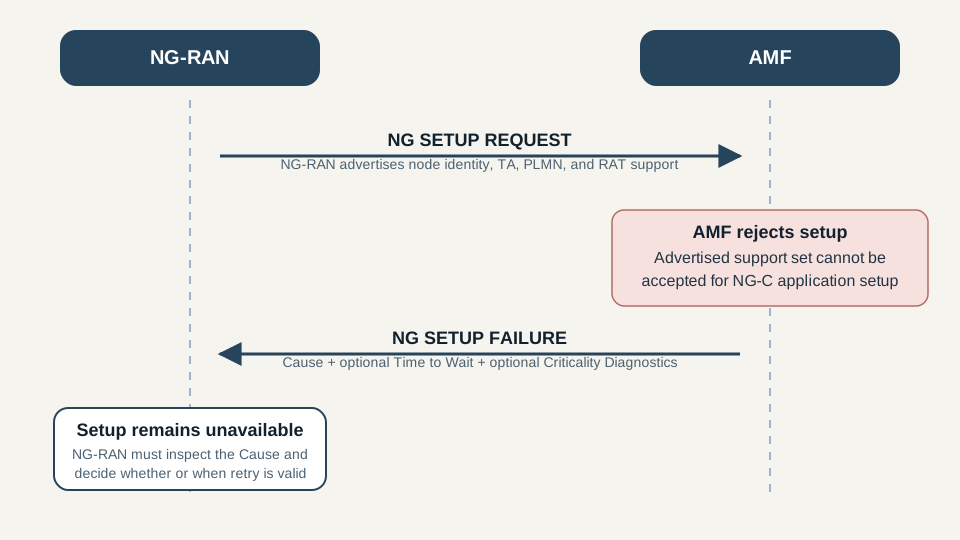
AMF rejects attempted NG Setup
Unsuccessful-operation branch: the AMF cannot accept the advertised setup information and returns NG Setup Failure instead of NG Setup Response.
Call flow position: The NG-RAN has already sent NG Setup Request and the AMF determines that the setup cannot be accepted.
Typical state: Transport exists, but application-layer setup remains under validation and has not been accepted.
Preconditions:
NG Setup Request reached the AMF.
The AMF found a reason to reject the advertised setup information.
The AMF can return an appropriate Cause and may add retry or diagnostic guidance.
Next likely message: Retried NG Setup Request only after the failure conditions are resolved
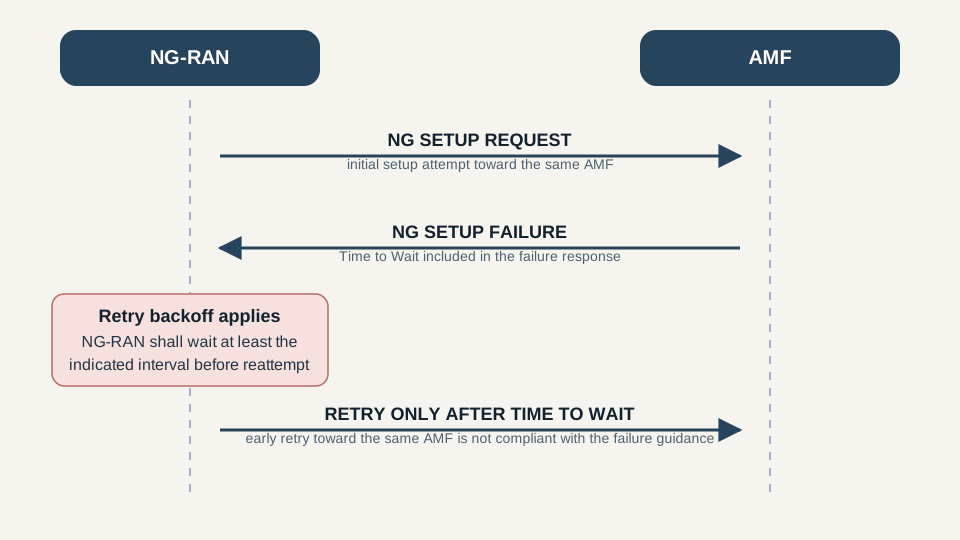
Time to Wait controlled retry
Retry-control branch: when Time to Wait is included, the NG-RAN shall wait at least that long before retrying toward the same AMF.
Call flow position: The AMF rejects setup and explicitly delays reattempt by including Time to Wait.
Typical state: The NG-RAN has a failure response but is not yet allowed to retry toward the same AMF.
Preconditions:
NG Setup Failure includes Time to Wait.
The retry target is the same AMF.
Next likely message: Retried NG Setup Request after the Time to Wait interval expires
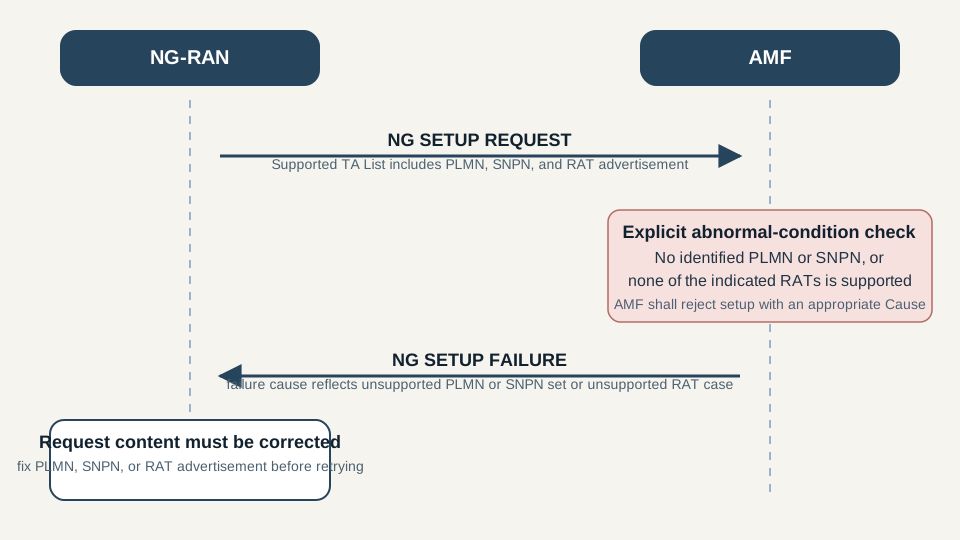
AMF abnormal-condition rejection
Abnormal-condition branch: the AMF rejects the procedure if it identifies none of the advertised PLMNs or SNPNs or if none of the indicated RATs is supported.
Call flow position: The AMF rejects the procedure because it identifies none of the requested PLMNs or SNPNs or because none of the indicated RATs is supported.
Typical state: The request content is unacceptable under the explicit abnormal-condition rules.
Preconditions:
The AMF did not identify any PLMN or SNPN in the request, or none of the advertised RATs is supported.
Next likely message: A corrected NG Setup Request, not a blind retry
Call flow position
Previous message(s):NG Setup Request, SCTP association establishment, AMF validation of setup payload
Transport / encapsulation: NGAP over SCTP/IP between AMF and NG-RAN
Security context: NG Setup Failure does not create or modify UE-specific security context. It is a node-level setup rejection that leaves NG-C application-layer setup unaccepted for that NG-RAN to AMF relationship.
Message Structure Overview
NG Setup Failure is a non-UE-associated unsuccessfulOutcome in the Interface Management family.
The message body is intentionally compact: mandatory Cause plus optional Time to Wait and optional Criticality Diagnostics.
Cause is the main operational anchor because it explains why the AMF rejected the setup.
Time to Wait changes retry behavior toward the same AMF and is one of the most important operational fields on the page.
Criticality Diagnostics is not always present but becomes highly valuable when interoperability or decoding issues are involved.
ASN.1 for 5G NGAP - NG Setup Failure
NGSetupFailure ::= SEQUENCE {
  protocolIEs ProtocolIE-Container { {NGSetupFailure-IEs} },
  ...
}

NGSetupFailure-IEs NGAP-PROTOCOL-IES ::= {
  { ID id-Cause                  CRITICALITY ignore TYPE Cause                  PRESENCE mandatory } |
  { ID id-TimeToWait             CRITICALITY ignore TYPE TimeToWait             PRESENCE optional  } |
  { ID id-CriticalityDiagnostics CRITICALITY ignore TYPE CriticalityDiagnostics PRESENCE optional  },
  ...
}
How to read this ASN.1
The message is intentionally short. The operational meaning comes from the Cause value first, then from whether Time to Wait delays reattempt and whether Criticality Diagnostics adds deeper protocol-handling context.
Treat this as a teaching example based on the spec structure, not as a captured live trace.
Start with Cause before reading anything else. Time to Wait and Criticality Diagnostics only make sense after the reason for rejection is understood.
If Time to Wait is present, treat it as real retry control rather than as informational text.
Important Information Elements
IE
Presence
Description
Message Type
Mandatory
Identifies the NGAP PDU as NG Setup Failure in the unsuccessfulOutcome branch.
Cause
Mandatory
Mandatory reason setup was rejected. This is the AMF's main failure-signaling vehicle.
Time to Wait
Optional
Optional minimum wait before the NG-RAN may retry NG Setup toward the same AMF.
Criticality Diagnostics
Optional
Optional diagnostics describing IE, procedure, or criticality-related handling details that contributed to the failure.
Detailed field explanation
Message Type
Identifies the NGAP PDU as NG Setup Failure in the unsuccessfulOutcome branch.
Presence: Mandatory
In practice: In practice, compare this field with the original request and with any later release-dependent optional fields so you can see whether the network accepted the same service model the UE asked for.
Cause
Mandatory reason setup was rejected. This is the AMF's main failure-signaling vehicle.
Presence: Mandatory
In practice: In practice, compare this field with the original request and with any later release-dependent optional fields so you can see whether the network accepted the same service model the UE asked for.
Time to Wait
Optional minimum wait before the NG-RAN may retry NG Setup toward the same AMF.
Presence: Optional
In practice: In practice, compare this field with the original request and with any later release-dependent optional fields so you can see whether the network accepted the same service model the UE asked for.
Criticality Diagnostics
Optional diagnostics describing IE, procedure, or criticality-related handling details that contributed to the failure.
Presence: Optional
In practice: In practice, compare this field with the original request and with any later release-dependent optional fields so you can see whether the network accepted the same service model the UE asked for.
What to check in logs and traces
Confirm NG Setup Request preceded the failure on the same non-UE-associated interface path.
Inspect the Cause IE first and map it to the request content that was rejected.
If Time to Wait is present, confirm that any later retry toward the same AMF happened only after the required delay.
If Criticality Diagnostics is present, decode it together with the failed request to find the implicated IE or handling branch.
Validate PLMN, SNPN, TAC, and RAT advertisement in the request against the deployment and AMF support profile.
Common Issues and Troubleshooting
NG Setup fails immediately even though SCTP connectivity is healthy.
Likely cause: The failure is at the application layer, not the transport layer. The AMF may reject the advertised PLMN, SNPN, RAT, or other request content.
What to inspect: Check Cause first, then compare Supported TA List, PLMN or SNPN content, and any RAT-related advertisement against what the AMF should support.
Next step: Correct the request content instead of treating the issue as a pure transport recovery problem.
The NG-RAN retries setup repeatedly and keeps getting rejected.
Likely cause: The node may be retrying before Time to Wait expires, or it may be repeating the same invalid setup content without correcting the rejection cause.
What to inspect: Look for Time to Wait in each failure and compare the retried NG Setup Request with the rejected one.
Next step: Honor the backoff and change the rejected setup payload before retrying toward the same AMF.
The failure seems related to parsing or protocol handling rather than deployment scope.
Likely cause: Criticality Diagnostics may point to an IE, procedure element, or criticality-handling issue.
What to inspect: Decode Criticality Diagnostics and line it up with the request encoding and the AMF-side interpretation.
Next step: Treat the problem as an interoperability or encoding issue rather than as a simple PLMN or RAT mismatch.
LTE / 5G / Variant Comparison
Compared with NG Setup Response
NG Setup Response confirms accepted setup and returns AMF-side support data. NG Setup Failure rejects the setup and returns Cause plus optional retry or diagnostic guidance.
Compared with Error Indication
NG Setup Failure is the procedure-specific unsuccessful outcome for NG Setup. Error Indication is a more general protocol-level signaling mechanism and is not the normal negative completion of this procedure.
Compared with RAN Configuration Update Failure
NG Setup Failure blocks initial or repeated NG-C application-layer setup itself, while RAN Configuration Update Failure would reject a later update after the interface is already established.
FAQ
What is NG Setup Failure in 5G NGAP?
It is the AMF-to-NG-RAN unsuccessful-outcome message used to reject NG Setup and return the failure Cause plus optional Time to Wait and optional Criticality Diagnostics.
Who sends NG Setup Failure?
The AMF sends NG Setup Failure to the NG-RAN node.
When is NG Setup Failure used?
It is used when the AMF cannot accept the NG Setup Request and therefore cannot establish NG-C application-layer setup successfully.
What does the Cause IE mean in NG Setup Failure?
Cause is the AMF's main failure-signaling IE. It explains why the setup was rejected and is the first field to inspect after a failure.
What is Time to Wait in NG Setup Failure?
It is an optional IE that tells the NG-RAN the minimum time it shall wait before retrying NG Setup toward the same AMF.
What happens if the NG-RAN retries too early?
If Time to Wait was present, the NG-RAN is expected to wait at least that long before reattempting toward the same AMF. Retrying early is not aligned with the procedure guidance.
Why would NG Setup fail because of PLMN or SNPN information?
The AMF shall reject the procedure if it does not identify any of the PLMNs or SNPNs indicated in the NG Setup Request.
Can unsupported RAT information cause NG Setup Failure?
Yes. The AMF shall reject the procedure if none of the RATs indicated by the NG-RAN in NG Setup Request is supported.
What is Criticality Diagnostics in NG Setup Failure?
It is optional additional diagnostic information that can explain IE-level, procedure-level, or criticality-handling issues that contributed to the rejection.
What is the difference between NG Setup Failure and NG Setup Response?
NG Setup Failure is the rejection branch of the procedure, while NG Setup Response is the successful branch.
Decode this message with the 3GPP Decoder, inspect the related message database, or open the matching call flow to see where this signaling step fits in the full procedure.