AMF Configuration Update is the NGAP interface-management procedure the AMF uses to refresh AMF-side identity, GUAMI, PLMN and slice support, and control-plane TNL association data at the NG-RAN without touching existing UE contexts.
Message Fact Sheet
Protocol
ngap
Network
5g
Spec
3GPP TS 38.413
Spec Section
Section 8.7.3 and sections 9.2.6.7 to 9.2.6.9 (Release 18 baseline)
Non-UE-associated NGAP signaling / SCTP carried NGAP initiatingMessage followed by successfulOutcome or unsuccessfulOutcome
Typical trigger
The AMF changes its advertised identity, GUAMI coverage, slice support, relative capacity, SNPN onboarding support, or control-plane TNL association set and must push the new data to the NG-RAN.
Main purpose
Synchronizes AMF-side application and control-plane transport configuration with the NG-RAN so AMF selection, slice selection, naming, and N2 transport associations stay aligned after topology, identity, or capacity changes.
Main specification
3GPP TS 38.413, Section 8.7.3 and sections 9.2.6.7 to 9.2.6.9 (Release 18 baseline)
Release added
Release 15
Procedures where used
N2 interface management, AMF rename or identity refresh, GUAMI and AMF selection updates, Slice advertisement changes, SNPN onboarding support refresh, Control-plane TNL reconfiguration
What is AMF Configuration Update in simple terms?
AMF Configuration Update is the NGAP interface-management procedure the AMF uses to refresh AMF-side identity, GUAMI, PLMN and slice support, and control-plane TNL association data at the NG-RAN without touching existing UE contexts.
Synchronizes AMF-side application and control-plane transport configuration with the NG-RAN so AMF selection, slice selection, naming, and N2 transport associations stay aligned after topology, identity, or capacity changes.
Why this message matters
AMF Configuration Update is the N2 message the AMF uses to refresh node-level identity, slice support, and transport endpoint information at the gNB without changing active UE contexts.
Where this message appears in the call flow
Application-level AMF identity refresh
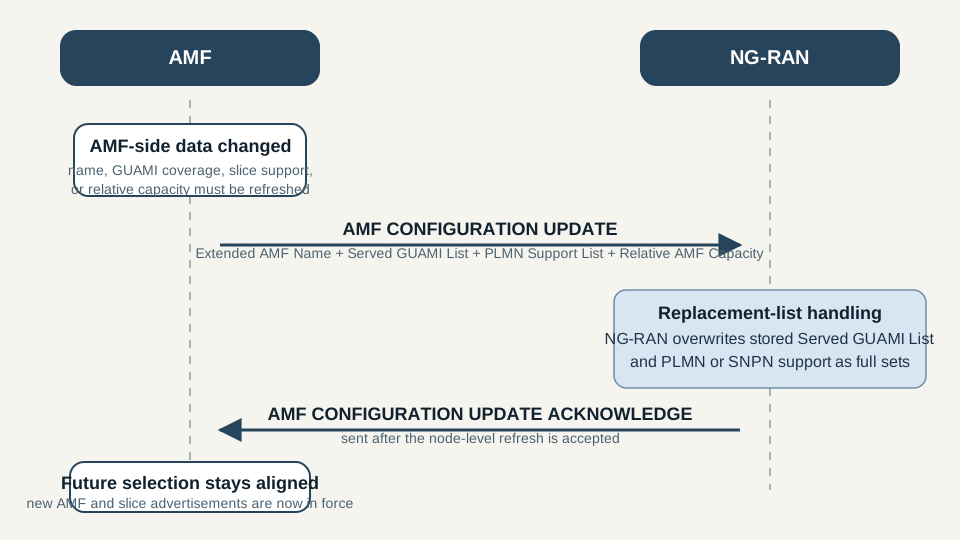
Configuration advertisement branch: the AMF refreshes naming, GUAMI coverage, and PLMN or SNPN slice support, and the NG-RAN applies the new replacement lists.
Call flow position: The AMF needs the NG-RAN to refresh stored AMF name, extended name, GUAMI coverage, PLMN or SNPN support, or relative capacity data for future selection decisions.
Typical state: The NG-C interface is already active and carrying traffic, but the AMF's advertised node-level information has changed.
Preconditions:
The NG interface is already established between the AMF and NG-RAN.
The update concerns AMF-side configuration data rather than a UE-specific procedure.
The AMF can send the complete replacement value for any list IE it wants the NG-RAN to overwrite.
Next likely message: AMF Configuration Update Acknowledge
TNL association synchronization
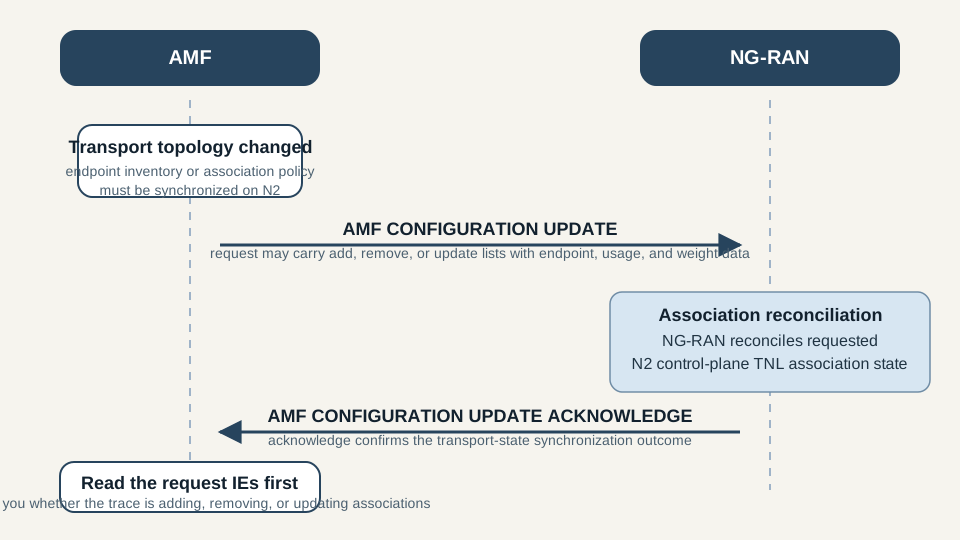
Transport branch: the AMF synchronizes N2 control-plane TNL association state at the NG-RAN. Inspect the request IEs to see whether the trace is adding, removing, or updating associations.
Call flow position: The AMF changes the control-plane transport endpoints or their usage and weight and instructs the NG-RAN to establish, remove, or modify N2 TNL associations.
Typical state: The NG-RAN must reconcile one or more CP transport endpoints while keeping the existing interface instance aligned with the AMF.
Preconditions:
The AMF includes one or more AMF TNL Association to Add, Remove, or Update list IEs.
The NG-RAN supports the requested TNL association handling.
The AMF provides enough endpoint information for the NG-RAN to identify the targeted association entries.
Next likely message: AMF Configuration Update Acknowledge
NG-RAN rejects the requested configuration change
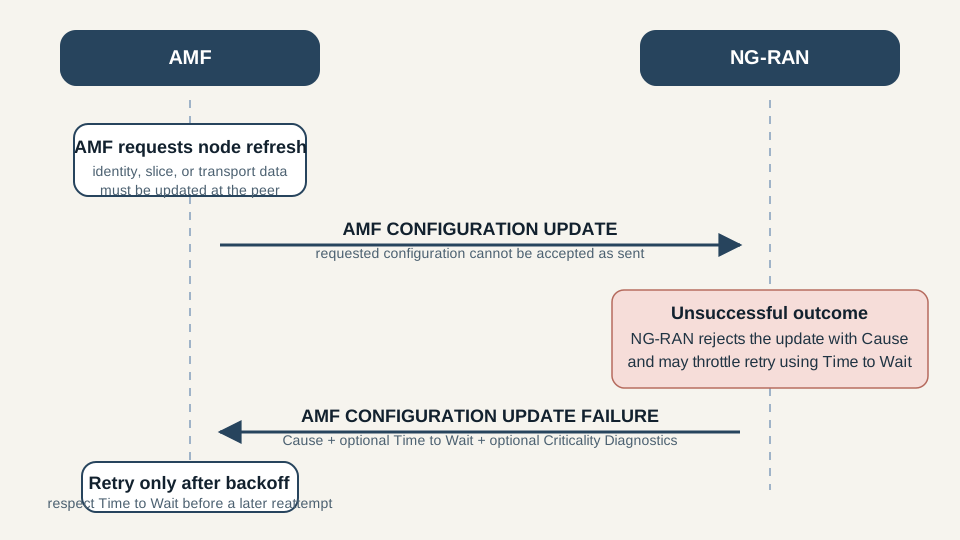
Rejection branch: the NG-RAN cannot accept the update, returns failure with cause and optional retry backoff, and the AMF waits before trying again.
Call flow position: The NG-RAN cannot accept the requested configuration update and returns an unsuccessful outcome.
Typical state: The interface stays up, but the requested configuration set was not accepted as sent.
Preconditions:
The NG-RAN determined that the update could not be applied.
A failure cause can be generated for the unsuccessful outcome.
Next likely message: AMF Configuration Update Failure with optional Time to Wait
Logical channel: SCTP carried NGAP initiatingMessage followed by successfulOutcome or unsuccessfulOutcome
Transport / encapsulation: NGAP over SCTP/IP between AMF and NG-RAN
Security context: AMF Configuration Update does not establish or modify UE security context and does not affect existing UE-related contexts. It updates node-level identity, slice advertisement, and TNL association data used for future NG-C interoperability.
Message Structure Overview
AMF Configuration Update is a non-UE-associated initiatingMessage in the interface-management family.
If an IE is absent from the AMF Configuration Update request, the NG-RAN keeps the existing corresponding configuration data unchanged unless the spec states otherwise.
Served GUAMI List and PLMN Support List are replacement lists, not delta lists. If present, each overwrites the whole previously stored list.
Extended AMF Name takes precedence over AMF Name for human-readable naming when both are included.
The acknowledge is mainly operational when TNL association add requests were present because it can report setup success and setup failure per association.
The failure outcome contains mandatory Cause and can throttle reattempts with Time to Wait.
The request contains only optional IEs, which means the semantics depend entirely on which full replacement lists or TNL control lists the AMF chooses to include. The response side splits into a successfulOutcome for acknowledgment and an unsuccessfulOutcome for rejection with Cause and optional retry delay guidance.
If the request carries PLMN Support List or Served GUAMI List, read them as full replacement payloads rather than partial modifications.
The acknowledge becomes most useful when TNL association add items were present because it returns which associations were established and which failed.
If there is no acknowledge or failure, check whether the AMF retried with byte-for-byte identical update content, because the abnormal-condition text only allows that form of reinitiation.
Important Information Elements
IE
Presence
Description
AMF Name
Optional
Printable AMF identifier that can uniquely identify the AMF and may also be used as a human-readable label by the NG-RAN.
Extended AMF Name
Optional
Extended human-readable AMF name using visible or UTF-8 string formats. If present, the NG-RAN uses it as the human-readable name and ignores AMF Name for that purpose.
Served GUAMI List
Optional
Complete replacement list of GUAMIs served by the AMF. When included, the NG-RAN overwrites the whole previously stored served GUAMI set.
Relative AMF Capacity
Optional
Optional relative AMF capacity indicator used by the NG-RAN for further AMF management and selection behavior.
PLMN Support List
Optional
Complete replacement list of supported PLMN or SNPN identities, slice support, and related associated information. When included, it replaces the whole stored list at the NG-RAN.
AMF TNL Association to Add List
Optional
Optional list of new AMF control-plane transport endpoints to establish. If the AMF endpoint omits a port number, the NG-RAN assumes SCTP port 38412.
AMF TNL Association to Remove List
Optional
Optional list of existing TNL associations to remove, identified by AMF endpoint and optionally by NG-RAN endpoint.
AMF TNL Association to Update List
Optional
Optional list used to change usage or weight information for already known AMF control-plane transport associations.
AMF TNL Association Setup List
Optional
Returned in the acknowledge to report which newly requested AMF TNL associations were established successfully.
AMF TNL Association Failed to Setup List
Optional
Returned in the acknowledge to report which requested TNL associations could not be established.
Cause
Mandatory
Mandatory failure reason in AMF Configuration Update Failure when the NG-RAN cannot accept the requested update.
Time to Wait
Optional
Optional retry backoff guidance in the failure message. When present, the AMF shall wait at least that long before retrying toward the same NG-RAN node.
Criticality Diagnostics
Optional
Optional diagnostics returned in acknowledge or failure when the receiver wants to expose IE-level protocol handling details.
Detailed field explanation
AMF Name
Printable AMF identifier that can uniquely identify the AMF and may also be used as a human-readable label by the NG-RAN.
Presence: Optional
In practice: In practice, compare this field with the original request and with any later release-dependent optional fields so you can see whether the network accepted the same service model the UE asked for.
Extended AMF Name
Extended human-readable AMF name using visible or UTF-8 string formats. If present, the NG-RAN uses it as the human-readable name and ignores AMF Name for that purpose.
Presence: Optional
In practice: In practice, compare this field with the original request and with any later release-dependent optional fields so you can see whether the network accepted the same service model the UE asked for.
Served GUAMI List
Complete replacement list of GUAMIs served by the AMF. When included, the NG-RAN overwrites the whole previously stored served GUAMI set.
Presence: Optional
In practice: In practice, compare this field with the original request and with any later release-dependent optional fields so you can see whether the network accepted the same service model the UE asked for.
Relative AMF Capacity
Optional relative AMF capacity indicator used by the NG-RAN for further AMF management and selection behavior.
Presence: Optional
In practice: In practice, compare this field with the original request and with any later release-dependent optional fields so you can see whether the network accepted the same service model the UE asked for.
PLMN Support List
Complete replacement list of supported PLMN or SNPN identities, slice support, and related associated information. When included, it replaces the whole stored list at the NG-RAN.
Presence: Optional
In practice: In practice, compare this field with the original request and with any later release-dependent optional fields so you can see whether the network accepted the same service model the UE asked for.
AMF TNL Association to Add List
Optional list of new AMF control-plane transport endpoints to establish. If the AMF endpoint omits a port number, the NG-RAN assumes SCTP port 38412.
Presence: Optional
In practice: In practice, compare this field with the original request and with any later release-dependent optional fields so you can see whether the network accepted the same service model the UE asked for.
AMF TNL Association to Remove List
Optional list of existing TNL associations to remove, identified by AMF endpoint and optionally by NG-RAN endpoint.
Presence: Optional
In practice: In practice, compare this field with the original request and with any later release-dependent optional fields so you can see whether the network accepted the same service model the UE asked for.
AMF TNL Association to Update List
Optional list used to change usage or weight information for already known AMF control-plane transport associations.
Presence: Optional
In practice: In practice, compare this field with the original request and with any later release-dependent optional fields so you can see whether the network accepted the same service model the UE asked for.
AMF TNL Association Setup List
Returned in the acknowledge to report which newly requested AMF TNL associations were established successfully.
Presence: Optional
In practice: In practice, compare this field with the original request and with any later release-dependent optional fields so you can see whether the network accepted the same service model the UE asked for.
AMF TNL Association Failed to Setup List
Returned in the acknowledge to report which requested TNL associations could not be established.
Presence: Optional
In practice: In practice, compare this field with the original request and with any later release-dependent optional fields so you can see whether the network accepted the same service model the UE asked for.
Cause
Mandatory failure reason in AMF Configuration Update Failure when the NG-RAN cannot accept the requested update.
Presence: Mandatory
In practice: In practice, compare this field with the original request and with any later release-dependent optional fields so you can see whether the network accepted the same service model the UE asked for.
Time to Wait
Optional retry backoff guidance in the failure message. When present, the AMF shall wait at least that long before retrying toward the same NG-RAN node.
Presence: Optional
In practice: In practice, compare this field with the original request and with any later release-dependent optional fields so you can see whether the network accepted the same service model the UE asked for.
Criticality Diagnostics
Optional diagnostics returned in acknowledge or failure when the receiver wants to expose IE-level protocol handling details.
Presence: Optional
In practice: In practice, compare this field with the original request and with any later release-dependent optional fields so you can see whether the network accepted the same service model the UE asked for.
What to check in logs and traces
Confirm the exchange is non-UE-associated and tied to N2 interface-management state rather than any specific UE.
Check which request IEs were actually present. Any absent IE means the corresponding configuration is unchanged.
For Served GUAMI List and PLMN Support List, compare old versus new values as full sets, not as incremental additions.
If AMF TNL Association to Add List is present, verify whether the NG-RAN returned AMF TNL Association Setup List and or Failed to Setup List in the acknowledge.
When troubleshooting rejection, inspect Cause first and then respect any Time to Wait before expecting a valid retry.
Common Issues and Troubleshooting
The NG-RAN suddenly starts selecting different AMF or slice branches after an otherwise quiet interface-management exchange.
Likely cause: AMF Configuration Update replaced the stored Served GUAMI List or PLMN Support List, changing future AMF and slice selection inputs.
What to inspect: Compare the full pre-update and post-update GUAMI and PLMN or SNPN support data rather than looking for a single changed entry.
Next step: Treat the request as a node-level advertisement refresh and verify that the replacement list is complete, not only partially populated.
New AMF control-plane endpoints were announced, but the trace shows only some of them becoming usable.
Likely cause: The NG-RAN may have accepted some AMF TNL Association to Add items and reported others in AMF TNL Association Failed to Setup List.
What to inspect: Read the acknowledge carefully and map each configured endpoint, including port handling and any reported failure cause.
Next step: Check whether the failed endpoint omitted required transport reachability or whether weight and usage values conflicted with local support.
The AMF retries the procedure and the peer still does not respond as expected.
Likely cause: The abnormal-condition rule only permits reinitiation toward the same NG-RAN when the new AMF Configuration Update content is identical to the previously unacknowledged message.
What to inspect: Compare the retransmitted payload with the earlier one and verify whether the first attempt ended with silence or with an explicit failure carrying Time to Wait.
Next step: If failure carried Time to Wait, honor it before retry. If the issue was silence, keep the retry content identical or move to broader interface recovery logic.
LTE / 5G / Variant Comparison
Compared with RAN Configuration Update
RAN Configuration Update pushes NG-RAN-side changes toward the AMF. AMF Configuration Update does the inverse and refreshes AMF identity, slice, and TNL data at the NG-RAN.
Name update versus selection update
AMF Name and Extended AMF Name mainly affect identification and operator readability, while Served GUAMI List, PLMN Support List, and Relative AMF Capacity influence future AMF and slice selection behavior.
Transport update versus outright interface reset
AMF Configuration Update adjusts configuration while keeping the NG interface alive. NG Reset is a recovery procedure used when the existing N2 state itself can no longer be trusted.
FAQ
What is AMF Configuration Update in 5G NGAP?
It is the non-UE-associated NGAP interface-management procedure the AMF uses to refresh node-level AMF configuration at the NG-RAN, including AMF name, served GUAMIs, PLMN or SNPN slice support, and control-plane TNL associations.
Does AMF Configuration Update affect active UE contexts?
No. The specification explicitly says the procedure does not affect existing UE-related contexts. It updates node-level interoperability data for the NG-C interface.
What happens if PLMN Support List or Served GUAMI List is included?
Each is treated as a full replacement list. When either IE is present, the NG-RAN overwrites the whole previously stored list with the received values.
What does the acknowledge report?
AMF Configuration Update Acknowledge can report which requested AMF TNL associations were established successfully, which failed to set up, and optionally provide Criticality Diagnostics.
When can the AMF retry after failure or no response?
If the NG-RAN returned AMF Configuration Update Failure with Time to Wait, the AMF must wait at least that long before retrying the same NG-RAN. If there was no acknowledge or failure at all, the AMF may reinitiate only with identical AMF Configuration Update content.
Decode this message with the 3GPP Decoder, inspect the related message database, or open the matching call flow to see where this signaling step fits in the full procedure.