Overload Stop is the AMF-to-NG-RAN interface-management message used to indicate that the AMF is no longer overloaded, so the NG-RAN shall assume the overload situation has ended and resume normal operation for the applicable traffic toward that AMF.
The AMF determines that its overload situation has ended and needs the NG-RAN to stop applying the previously active overload restrictions for that AMF.
Main purpose
Clears a previously active AMF overload condition at the NG-RAN, stops the overload-control behavior that had been triggered by Overload Start, and restores normal signaling handling for the applicable traffic toward that AMF.
AMF overload lifecycle completion, NG-C signaling normalization after overload, Interface management, Recovery from node-level overload control
What is Overload Stop in simple terms?
Overload Stop is the AMF-to-NG-RAN interface-management message used to indicate that the AMF is no longer overloaded, so the NG-RAN shall assume the overload situation has ended and resume normal operation for the applicable traffic toward that AMF.
Clears a previously active AMF overload condition at the NG-RAN, stops the overload-control behavior that had been triggered by Overload Start, and restores normal signaling handling for the applicable traffic toward that AMF.
Why this message matters
Overload Stop is the AMF telling the NG-RAN that the AMF is no longer overloaded, so the earlier overload-control behavior should end and normal operation should resume.
Where this message appears in the call flow
Clearing active AMF overload state
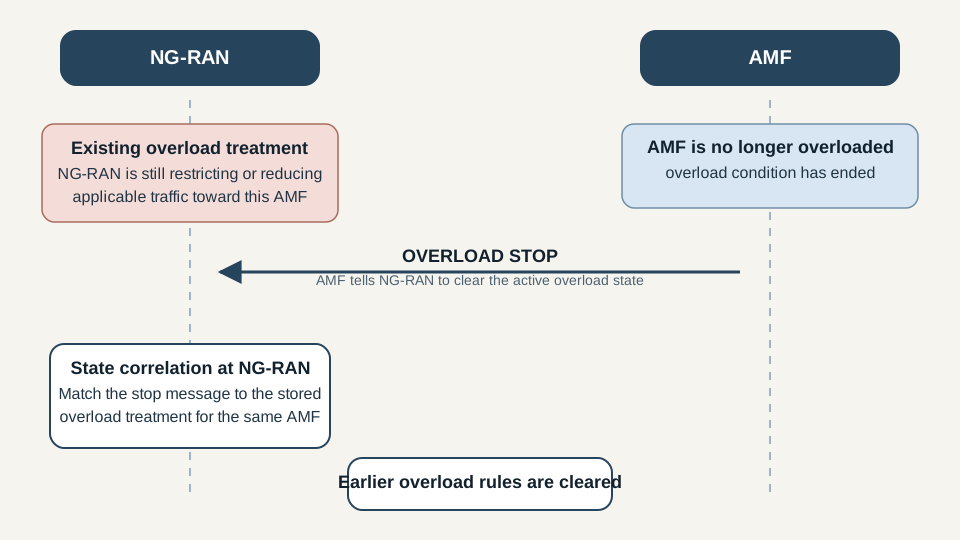
Clear-state branch: Overload Stop arrives while overload control is still active, and the NG-RAN uses it to clear the stored overload treatment for that AMF.
Call flow position: After overload control is already active for a given AMF and the NG-RAN is restricting or reducing applicable traffic toward that AMF.
Typical state: The AMF is reachable on N2, but the NG-RAN is still applying overload treatment learned from an earlier Overload Start.
Preconditions:
The AMF had previously entered overload state.
The NG-RAN has active overload-control behavior associated with that AMF.
The AMF now determines that the overload situation has ended.
Next likely message: NG-RAN resumes normal operation for the applicable traffic toward that AMF
Successful end of overload control
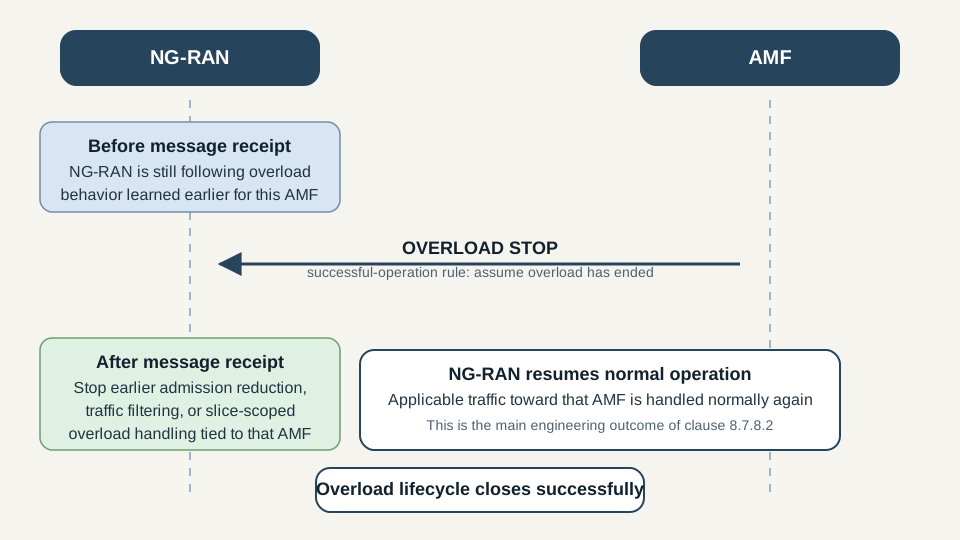
Successful-operation branch: after receiving Overload Stop, the NG-RAN assumes the overload situation has ended and resumes normal operation for the applicable traffic toward that AMF.
Call flow position: At the end of the overload-control lifecycle, where the AMF sends the stop indication and the NG-RAN clears the earlier overload behavior.
Typical state: The NG-RAN must transition from reduced or filtered signaling back to normal handling for the affected traffic.
Preconditions:
Overload Stop is received from the AMF whose overload condition is being cleared.
The NG-RAN correlates the stop indication with the AMF-specific overload state it was enforcing.
Next likely message: Further signaling toward that AMF proceeds without the earlier overload restriction
Call flow position
Previous message(s):Overload Start, AMF overload control active at the NG-RAN
Transport / encapsulation: NGAP over SCTP/IP between AMF and NG-RAN
Security context: Overload Stop does not create or modify any UE-specific security context. It is a node-level control message that clears previously active overload treatment toward one AMF.
Message Structure Overview
Overload Stop is a non-UE-associated initiatingMessage in the Interface Management family.
The sender is the AMF and the receiver is the NG-RAN node on the N2 or NG-C interface.
The message is intentionally minimal: it acts as the lifecycle-close signal for an earlier overload state rather than as a new overload-policy payload.
Unlike Overload Start, Overload Stop does not carry overload response, traffic-load reduction, or NSSAI-scoped overload-control information.
After receipt, the NG-RAN shall assume the overload situation has ended and resume normal operation for the applicable traffic toward that AMF.
The abnormal-conditions clause for the Overload Stop procedure is void, which keeps the procedure behavior simple.
Read this as an intentionally minimal stop signal. The operational meaning comes from the message identity and the successful-operation rule, not from additional overload-control payload IEs.
Treat this as a teaching example based on the spec structure, not as a captured live trace.
Overload Stop is minimal by design. The point is not to redefine overload policy, but to tell the NG-RAN that the earlier overload situation has ended.
In traces, read it together with the earlier Overload Start and the post-message return to normal operation.
Important Information Elements
IE
Presence
Description
Message Type
Mandatory
Identifies the NGAP PDU as Overload Stop in the initiatingMessage branch. The message is intentionally minimal and does not carry the overload-control payload IEs used by Overload Start.
Detailed field explanation
Message Type
Identifies the NGAP PDU as Overload Stop in the initiatingMessage branch. The message is intentionally minimal and does not carry the overload-control payload IEs used by Overload Start.
Presence: Mandatory
In practice: In practice, compare this field with the original request and with any later release-dependent optional fields so you can see whether the network accepted the same service model the UE asked for.
What to check in logs and traces
Confirm Overload Stop is received from the same AMF that previously signaled overload.
Verify the exchange is non-UE-associated and tied to node-level overload handling rather than any single UE procedure.
Check that the NG-RAN clears overload treatment only for the applicable traffic toward that AMF.
Confirm that normal operation resumes after message receipt and that no stale overload rules remain active.
If slice-scoped or percentage-based overload handling had been active earlier, verify that those earlier restrictions are no longer being enforced after Overload Stop.
Common Issues and Troubleshooting
The NG-RAN keeps limiting traffic even after Overload Stop was received.
Likely cause: The message may have been treated as informational only instead of as the signal that clears the active overload state.
What to inspect: Check whether the NG-RAN actually removed the overload behavior created by the earlier Overload Start for that AMF.
Next step: Clear the stored overload-control state for the affected AMF and verify that normal signaling handling resumes.
Overload restrictions disappear for the wrong AMF.
Likely cause: The implementation may be clearing overload state too broadly instead of correlating the message with the specific AMF that sent it.
What to inspect: Trace the SCTP association, AMF identity context, and the earlier Overload Start source before deciding which overload state to clear.
Next step: Scope the state transition to the correct AMF-specific overload context.
Slice-specific or percentage-based traffic reduction stays active after the stop message.
Likely cause: The earlier Overload Start controls may not have been fully removed when the lifecycle-close message arrived.
What to inspect: Review whether all previously active overload actions, reduction percentages, and slice-scoped controls tied to that AMF were withdrawn.
Next step: Remove the stale overload policies and confirm that affected traffic classes return to normal operation.
LTE / 5G / Variant Comparison
Compared with Overload Start
Overload Start tells the NG-RAN that the AMF is overloaded and may carry overload-control instructions such as AMF-wide response, percentage reduction, or slice-based controls. Overload Stop simply tells the NG-RAN that the overload condition has ended and that normal operation should resume.
Compared with AMF Status Indication
Overload Stop is specifically about ending previously active overload treatment toward an AMF. AMF Status Indication serves a different interface-management purpose and is not the direct lifecycle pair for overload control.
Operational meaning of resume normal operation
The specification directly requires resumption of normal operation for the applicable traffic. A practical engineering inference is that the NG-RAN must stop applying the earlier overload restrictions, including slice-specific or percentage-based controls that had been introduced by Overload Start.
FAQ
What is Overload Stop in 5G NGAP?
It is the AMF-to-NG-RAN interface-management message used to indicate that the AMF is no longer overloaded.
Who sends Overload Stop?
The AMF sends Overload Stop to the NG-RAN node.
What does Overload Stop mean for the NG-RAN?
It means the NG-RAN shall assume the overload situation has ended and resume normal operation for the applicable traffic toward that AMF.
What is the difference between Overload Start and Overload Stop?
Overload Start begins AMF overload-control behavior, while Overload Stop ends that overload state and restores normal handling for the applicable traffic.
Does Overload Stop contain any overload-control IE?
No overload-control payload IE is listed for this message. It is intentionally minimal and mainly signals that the earlier overload condition has ended.
Does Overload Stop use UE-associated signalling?
No. The procedure uses non-UE-associated signalling.
What happens after the NG-RAN receives Overload Stop?
The NG-RAN assumes the AMF overload situation has ended and resumes normal operation for the applicable traffic toward that AMF.
Are there any abnormal conditions for Overload Stop?
The abnormal-conditions clause for the Overload Stop procedure is void.
Decode this message with the 3GPP Decoder, inspect the related message database, or open the matching call flow to see where this signaling step fits in the full procedure.