Overload Start is the AMF-to-NG-RAN interface-management message used to indicate that the AMF is overloaded and that the NG-RAN shall reduce signalling load toward that AMF according to overload action, percentage reduction, and optional NSSAI-based overload controls.
The AMF detects that it has entered an overload condition and needs the NG-RAN to reduce signalling load toward that AMF using AMF-wide or slice-scoped overload behavior.
Main purpose
Tells the NG-RAN that the AMF has entered overload state and that the NG-RAN shall reduce or reject signalling toward that AMF according to the AMF-wide and optional slice-based overload controls carried in the message.
AMF overload control, NG-C signalling load reduction, Admission filtering at NG-RAN toward an overloaded AMF, Slice-based overload control, Overload lifecycle before Overload Stop
What is Overload Start in simple terms?
Overload Start is the AMF-to-NG-RAN interface-management message used to indicate that the AMF is overloaded and that the NG-RAN shall reduce signalling load toward that AMF according to overload action, percentage reduction, and optional NSSAI-based overload controls.
Tells the NG-RAN that the AMF has entered overload state and that the NG-RAN shall reduce or reject signalling toward that AMF according to the AMF-wide and optional slice-based overload controls carried in the message.
Why this message matters
Overload Start is the AMF telling the NG-RAN that the AMF is overloaded and that signalling toward that AMF must now be reduced or filtered according to the included overload controls.
Where this message appears in the call flow
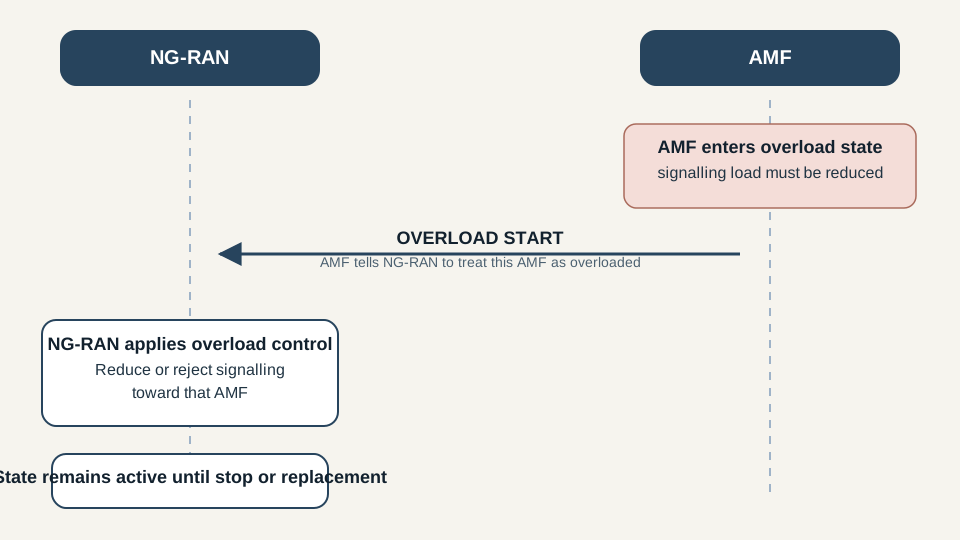
AMF enters overload state
Basic overload branch: once the AMF signals Overload Start, the NG-RAN treats that AMF as overloaded and changes signaling behavior accordingly.
Call flow position: NG-C connectivity already exists and the AMF now needs to reduce incoming signalling load.
Typical state: The AMF is operational but overloaded from the NG-RAN perspective.
Preconditions:
The AMF detected an overload condition.
The NG-RAN has an active N2 relationship toward that AMF.
The AMF has overload-control information ready to send.
Next likely message: NG-RAN applies overload control toward that AMF
Slice-based overload control
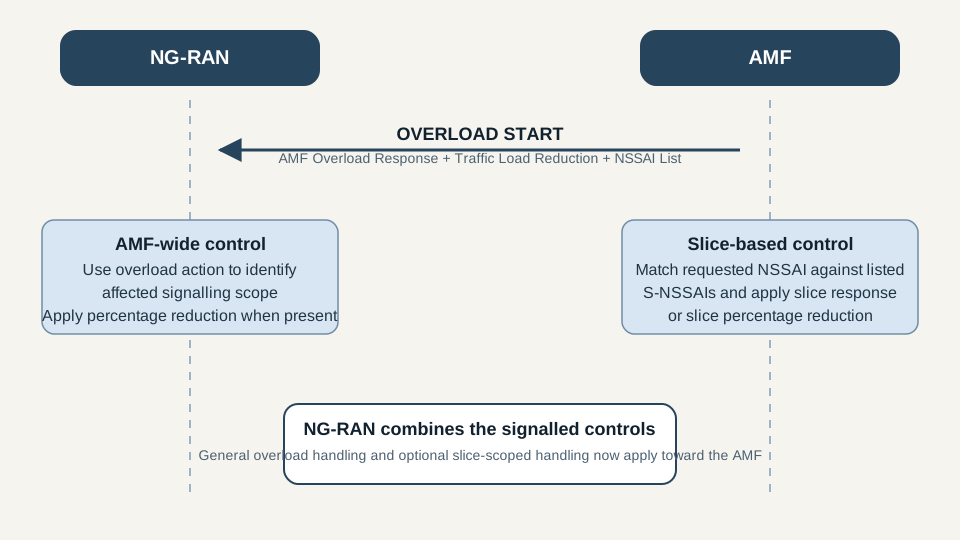
Control branch: the message can combine AMF-wide overload action, AMF-wide percentage reduction, and optional NSSAI-based slice-specific overload behavior.
Call flow position: The AMF uses Overload Start NSSAI List to scope overload behavior to UEs whose requested NSSAI matches listed S-NSSAIs.
Typical state: The AMF wants slice-specific rather than only AMF-wide overload treatment.
Preconditions:
The message includes Overload Start NSSAI List.
The NG-RAN can compare requested NSSAI against listed S-NSSAIs.
Next likely message: Slice-matched signalling is reduced or filtered according to the listed controls
Replacement of existing overload state
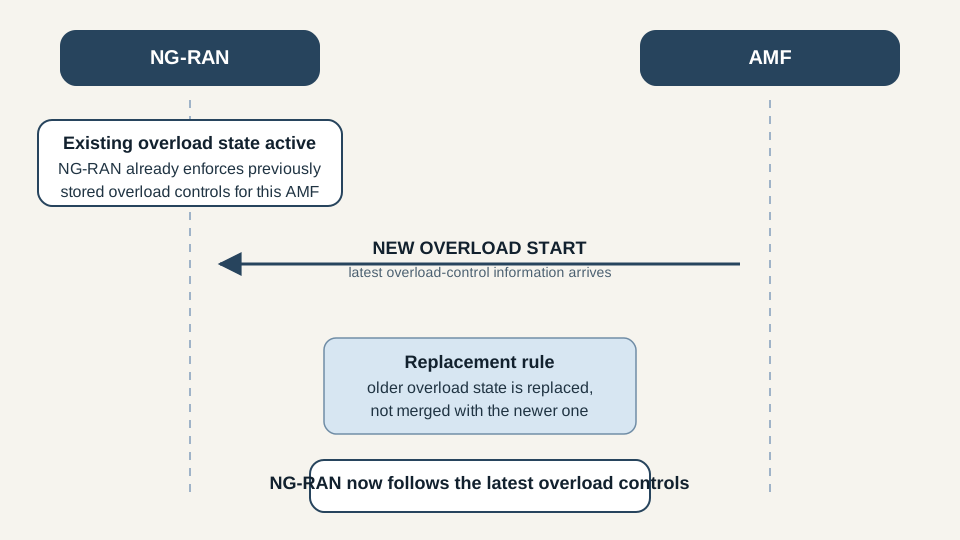
Replacement branch: if a later Overload Start arrives while overload control is already active, the NG-RAN replaces the earlier overload information with the newer one.
Call flow position: The NG-RAN already has overload-control information for the AMF and receives a new Overload Start.
Typical state: Overload control is ongoing and the control state must be refreshed.
Preconditions:
A previous Overload Start is still in force.
The AMF sends a newer Overload Start.
Next likely message: Previous overload-control state is replaced by the latest one
Call flow position
Previous message(s): Established NG-C connectivity toward the AMF, AMF overload detection
Transport / encapsulation: NGAP over SCTP/IP between AMF and NG-RAN
Security context: Overload Start does not create or change UE-specific security context. It is a node-level overload-control signal that changes how the NG-RAN routes or rejects signalling toward the overloaded AMF.
Message Structure Overview
Overload Start is a non-UE-associated initiatingMessage in the Interface Management family.
The message can carry AMF-wide overload action, AMF-wide percentage reduction, and optional NSSAI-based slice-scoped overload control.
AMF Overload Response determines which signalling traffic is affected, while AMF Traffic Load Reduction Indication controls percentage-based reduction when present.
Overload Start NSSAI List adds slice-specific overload behavior for UEs whose requested NSSAI matches the listed S-NSSAIs.
If a newer Overload Start arrives while overload control is ongoing, the NG-RAN replaces the previous overload-control information rather than merging it.
ASN.1 for 5G NGAP - Overload Start
OverloadStart ::= SEQUENCE {
  protocolIEs ProtocolIE-Container { {OverloadStartIEs} },
  ...
}

OverloadStartIEs NGAP-PROTOCOL-IES ::= {
  { ID id-AMFOverloadResponse                 CRITICALITY ignore TYPE OverloadResponse              PRESENCE optional } |
  { ID id-AMFTrafficLoadReductionIndication   CRITICALITY ignore TYPE TrafficLoadReductionIndication PRESENCE optional } |
  { ID id-OverloadStartNSSAIList              CRITICALITY ignore TYPE OverloadStartNSSAIList        PRESENCE optional },
  ...
}

OverloadStartNSSAIList ::= SEQUENCE (SIZE (1..maxnoofSliceItems)) OF OverloadStartNSSAIItem

OverloadStartNSSAIItem ::= SEQUENCE {
  sliceOverloadList                    SliceOverloadList,
  sliceOverloadResponse                OverloadResponse OPTIONAL,
  sliceTrafficLoadReductionIndication  TrafficLoadReductionIndication OPTIONAL,
  ...
}
How to read this ASN.1
Read the message as overload-control policy rather than as ordinary configuration. The AMF can scope control broadly at the AMF level, more narrowly at the slice level, or both.
Treat this as a teaching example based on the spec structure, not as a captured live trace.
The message may contain AMF-wide control, slice-scoped control, or both.
When a newer Overload Start arrives, interpret it as replacing the older overload-control state.
Important Information Elements
IE
Presence
Description
Message Type
Mandatory
Identifies the NGAP PDU as Overload Start in the initiatingMessage branch.
AMF Overload Response
Optional
Optional overall overload action used by the NG-RAN to identify which signalling traffic is affected.
AMF Traffic Load Reduction Indication
Optional
Optional percentage-based reduction for AMF-level signalling traffic affected by the overload control.
Overload Start NSSAI List
Optional
Optional slice-based overload-control list containing slice matching plus slice-specific overload response and traffic-reduction behavior.
Detailed field explanation
Message Type
Identifies the NGAP PDU as Overload Start in the initiatingMessage branch.
Presence: Mandatory
In practice: In practice, compare this field with the original request and with any later release-dependent optional fields so you can see whether the network accepted the same service model the UE asked for.
AMF Overload Response
Optional overall overload action used by the NG-RAN to identify which signalling traffic is affected.
Presence: Optional
In practice: In practice, compare this field with the original request and with any later release-dependent optional fields so you can see whether the network accepted the same service model the UE asked for.
AMF Traffic Load Reduction Indication
Optional percentage-based reduction for AMF-level signalling traffic affected by the overload control.
Presence: Optional
In practice: In practice, compare this field with the original request and with any later release-dependent optional fields so you can see whether the network accepted the same service model the UE asked for.
Overload Start NSSAI List
Optional slice-based overload-control list containing slice matching plus slice-specific overload response and traffic-reduction behavior.
Presence: Optional
In practice: In practice, compare this field with the original request and with any later release-dependent optional fields so you can see whether the network accepted the same service model the UE asked for.
What to check in logs and traces
Confirm the message came from the expected AMF whose overload state is being advertised.
Decode AMF Overload Response before interpreting any percentage reduction because it identifies the affected signalling scope.
If AMF Traffic Load Reduction Indication is present, verify that the affected signalling is reduced by the indicated percentage.
If Overload Start NSSAI List is present, validate NSSAI matching logic before applying slice-scoped controls.
Check whether a later Overload Start replaced earlier overload state or whether Overload Stop cleared it.
Common Issues and Troubleshooting
The NG-RAN keeps sending signalling as if overload were only advisory.
Likely cause: Overload Start may have been treated as informational instead of as active overload-control instruction.
What to inspect: Check whether AMF Overload Response and any traffic-reduction indication were decoded and enforced.
Next step: Apply the overload action and percentage or slice-based reduction logic to the signalling directed toward the overloaded AMF.
Wrong traffic class is being rejected during overload.
Likely cause: The Overload Action may have been mapped incorrectly to admission or establishment behavior.
What to inspect: Compare the implemented filtering behavior with the specific overload-action meaning signalled by the AMF.
Next step: Align RRC-establishment and signalling filtering with the exact overload-action category in the message.
Slice-based overload affects UEs outside the intended scope.
Likely cause: Requested NSSAI matching may be too broad, or slice overload rules may be applied to non-matching S-NSSAI sets.
What to inspect: Check the Overload Start NSSAI List, the UE requested NSSAI, and whether Slice Traffic Load Reduction Indication or Slice Overload Response was triggered correctly.
Next step: Restrict slice-based overload behavior to the UEs whose requested NSSAI matches the listed S-NSSAIs.
LTE / 5G / Variant Comparison
Compared with Overload Stop
Overload Start begins AMF overload-control behavior at the NG-RAN. Overload Stop ends that overload state and allows normal signaling behavior to resume for the applicable traffic.
Compared with AMF Status Indication
Overload Start actively changes signaling behavior during AMF overload. AMF Status Indication serves a different interface-management purpose and does not act as the overload lifecycle companion.
Compared with NG Setup Failure
NG Setup Failure rejects a setup procedure. Overload Start does not reject the interface itself; it tells the NG-RAN to reduce or filter signaling toward an already connected but overloaded AMF.
FAQ
What is Overload Start in 5G NGAP?
It is the AMF-to-NG-RAN interface-management message used to tell the NG-RAN that the AMF is overloaded and that signalling toward that AMF must be reduced or filtered.
Who sends Overload Start?
The AMF sends Overload Start to the NG-RAN node.
What does Overload Start do in the NG-RAN?
It makes the NG-RAN treat the AMF as overloaded and apply overload-control behavior according to the AMF-wide and optional slice-based controls carried in the message.
What is AMF Overload Response in Overload Start?
It is the IE that tells the NG-RAN which signalling traffic is affected by the overload-control behavior.
What is AMF Traffic Load Reduction Indication?
It is the optional IE that tells the NG-RAN to reduce the affected signalling traffic by the indicated percentage.
What is Overload Start NSSAI List?
It is the optional list that adds slice-scoped overload control for UEs whose requested NSSAI matches the listed S-NSSAIs.
How does slice-based overload control work in Overload Start?
The NG-RAN matches the UE requested NSSAI against the listed S-NSSAIs and then applies the listed slice overload response or percentage reduction for the matching scope.
What happens if a second Overload Start message arrives?
The NG-RAN replaces the previously stored overload-control information with the newer Overload Start information.
What is the difference between Overload Start and Overload Stop?
Overload Start begins overload-control behavior, while Overload Stop ends the overload state and allows normal operation to resume for the applicable traffic.
Does Overload Start use UE-associated signalling?
No. It is a non-UE-associated signalling procedure.
Decode this message with the 3GPP Decoder, inspect the related message database, or open the matching call flow to see where this signaling step fits in the full procedure.