AMF receives initial UE NAS signaling but determines the UE should be redirected to another AMF context based on AMF set, slicing, or routing constraints.
Main purpose
Instructs NG-RAN to reroute the UE NAS procedure toward another AMF selection context when the current AMF handling path is not suitable for the UE's registration, slice, or policy conditions.
5G Initial Registration, AMF selection and re-selection handling, Slice-aware AMF routing, Policy-driven NAS entry steering
What is Reroute NAS Request in simple terms?
Reroute NAS Request is the NGAP message the AMF sends to NG-RAN when the UE's NAS signaling should be rerouted toward a different AMF selection path.
Instructs NG-RAN to reroute the UE NAS procedure toward another AMF selection context when the current AMF handling path is not suitable for the UE's registration, slice, or policy conditions.
Why this message matters
Reroute NAS Request tells the gNB to redirect UE NAS entry handling to another AMF path when the current AMF should not continue processing.
Where this message appears in the call flow
Initial Registration AMF reroute
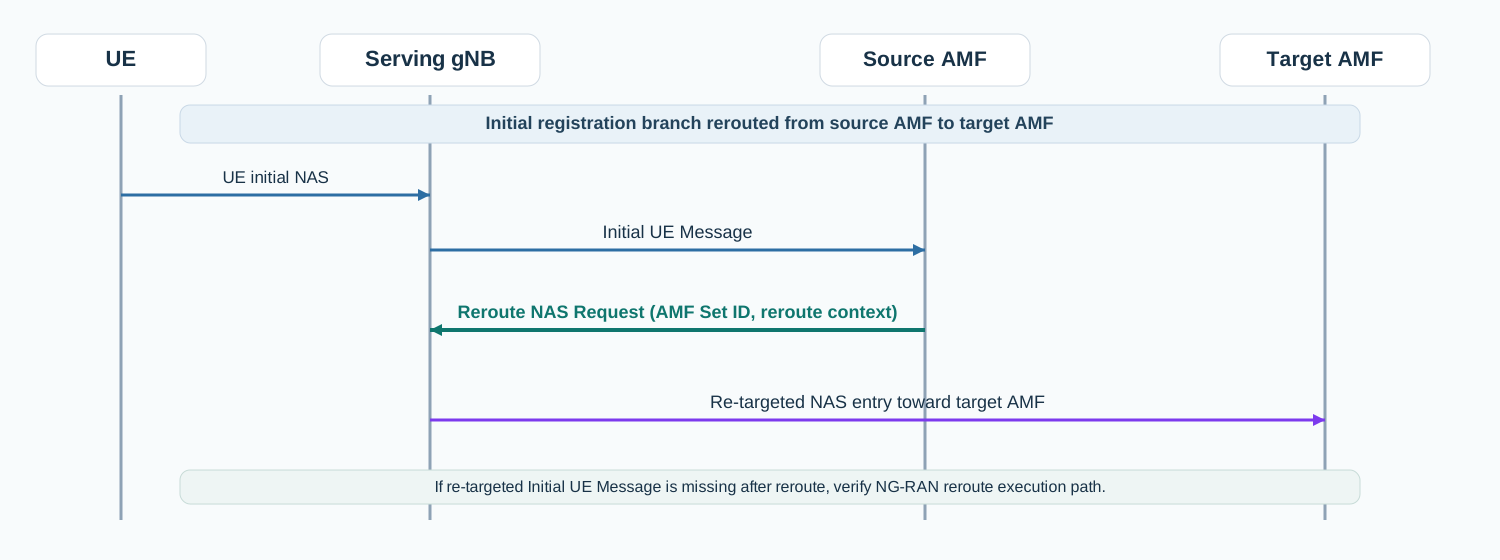
Initial registration reroute branch: AMF returns reroute instruction instead of continuing directly with Downlink NAS Transport.
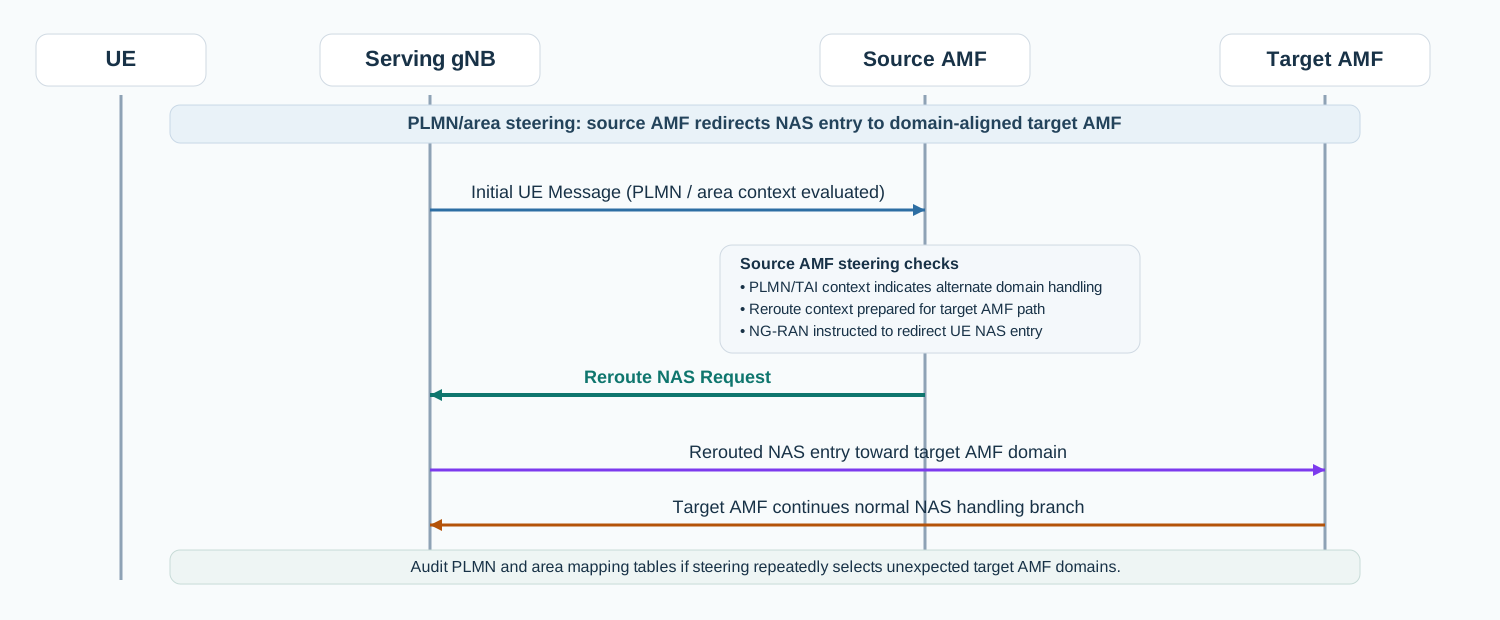
Call flow position: AMF response branch after receiving Initial UE Message when current AMF path should not continue and NG-RAN must reroute toward another AMF context.
Typical state: The UE NAS request reached AMF, but AMF selection logic identifies a different AMF target as the correct handling endpoint.
Preconditions:
Initial UE Message already received from NG-RAN.
AMF evaluated UE identity, location, and slice context.
Transport / encapsulation: NGAP over SCTP/IP between AMF and NG-RAN
Security context: Protected by the N2 transport association. Message drives routing behavior rather than carrying a full NAS payload itself.
Message Structure Overview
Reroute NAS Request is an AMF-driven NGAP control message tied to Initial UE Message handling outcomes.
It instructs NG-RAN to re-steer NAS entry signaling rather than directly delivering UE NAS procedure continuation.
Operationally, the critical fields are UE context correlation and target AMF-set reroute information.
ASN.1 for 5G NGAP - Reroute NAS Request
RerouteNASRequest ::= SEQUENCE {
  protocolIEs ProtocolIE-Container { {RerouteNASRequest-IEs} },
  ...
}

RerouteNASRequest-IEs NGAP-PROTOCOL-IES ::= {
  { ID id-RAN-UE-NGAP-ID                         CRITICALITY reject TYPE RAN-UE-NGAP-ID                        PRESENCE mandatory } |
  { ID id-AMFSetID                               CRITICALITY reject TYPE AMFSetID                              PRESENCE mandatory } |
  { ID id-AllowedNSSAI                           CRITICALITY reject TYPE AllowedNSSAI                          PRESENCE optional  } |
  { ID id-SourceToTarget-AMFInformationReroute   CRITICALITY reject TYPE SourceToTarget-AMFInformationReroute  PRESENCE optional  } |
  { ID id-AMFPointer                             CRITICALITY ignore TYPE AMFPointer                            PRESENCE optional  },
  ...
}
How to read this ASN.1
Read this message together with the preceding Initial UE Message and AMF selection outcome. The message does not continue NAS exchange directly; it redirects where NAS entry should be processed.
First confirm this appears as response branch for Initial UE Message handling.
RAN UE NGAP ID anchors which UE must be rerouted.
AMF Set ID and optional reroute context fields explain where signaling should be steered next.
Important Information Elements
IE
Presence
Description
RAN UE NGAP ID
Mandatory
Identifies the UE context in NG-RAN for which rerouting instruction applies.
AMF Set ID
Mandatory
Identifies the AMF set target context to which NG-RAN should reroute NAS signaling.
Allowed NSSAI
Optional
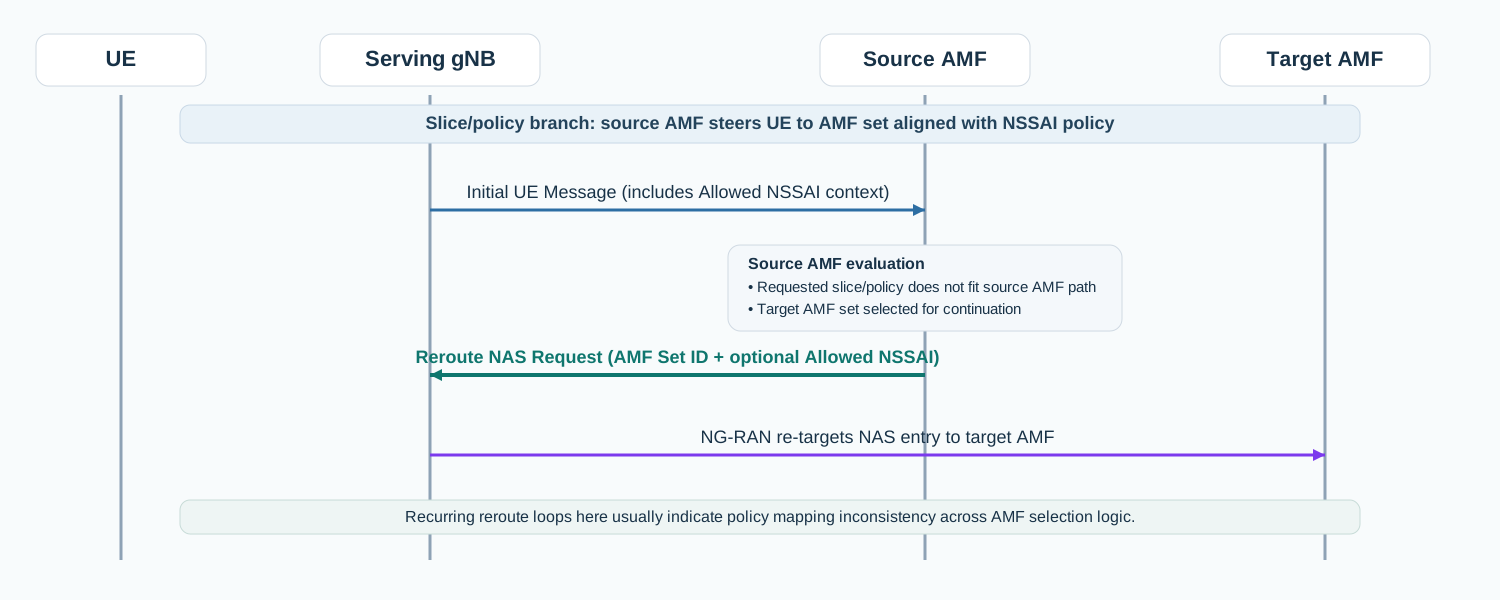
Provides slice context that can guide reroute behavior where slice constraints influenced AMF selection.
Source to Target AMF Information Reroute
Optional
Carries reroute context information from source AMF toward target AMF selection path.
AMF Pointer
Optional
Can refine AMF target selection details within the indicated AMF set in applicable deployments.
Detailed field explanation
RAN UE NGAP ID
Identifies the UE context in NG-RAN for which rerouting instruction applies.
Presence: Mandatory
In practice: In practice, compare this field with the original request and with any later release-dependent optional fields so you can see whether the network accepted the same service model the UE asked for.
AMF Set ID
Identifies the AMF set target context to which NG-RAN should reroute NAS signaling.
Presence: Mandatory
In practice: In practice, compare this field with the original request and with any later release-dependent optional fields so you can see whether the network accepted the same service model the UE asked for.
Allowed NSSAI
Provides slice context that can guide reroute behavior where slice constraints influenced AMF selection.
Presence: Optional
In practice: In practice, compare this field with the original request and with any later release-dependent optional fields so you can see whether the network accepted the same service model the UE asked for.
Source to Target AMF Information Reroute
Carries reroute context information from source AMF toward target AMF selection path.
Presence: Optional
In practice: In practice, compare this field with the original request and with any later release-dependent optional fields so you can see whether the network accepted the same service model the UE asked for.
AMF Pointer
Can refine AMF target selection details within the indicated AMF set in applicable deployments.
Presence: Optional
In practice: In practice, compare this field with the original request and with any later release-dependent optional fields so you can see whether the network accepted the same service model the UE asked for.
What to check in logs and traces
Locate the Initial UE Message that triggered this reroute response branch.
Verify RAN UE NGAP ID continuity between Initial UE Message and Reroute NAS Request.
Check AMF Set ID and optional reroute fields against expected AMF selection policy.
If reroute loops occur, inspect slice and policy inputs used by AMF selection logic.
Common Issues and Troubleshooting
UE registration loops between Initial UE Message and reroute without completing registration.
Likely cause: AMF selection inputs may be inconsistent across retries, causing repeated reroute decisions without stable target handling.
What to inspect: Compare AMF Set ID, Allowed NSSAI, and UE identity/location context across repeated attempts.
Next step: Stabilize AMF selection policy and ensure NG-RAN applies reroute target consistently.
Reroute NAS Request appears but no subsequent progress at target AMF.
Likely cause: NG-RAN may not have re-issued NAS entry signaling correctly, or target AMF routing path is unavailable.
What to inspect: Check post-reroute Initial UE Message transmission and SCTP/N2 connectivity toward target AMF endpoint.
Next step: Validate reroute execution path end-to-end from source AMF response to target AMF reception.
Unexpected AMF chosen for specific slice request.
Likely cause: Allowed NSSAI and policy mapping may drive AMF reroute to a set different from operator expectation.
What to inspect: Review slice-policy to AMF-set mapping and compare with values carried in reroute message.
Next step: Correct policy mapping or NSSAI handling if reroute target is systematically incorrect.
LTE / 5G / Variant Comparison
Compared with Downlink NAS Transport
Downlink NAS Transport carries NAS payload toward UE. Reroute NAS Request changes AMF routing path and does not itself continue UE NAS handshake.
Compared with Initial Context Setup Request
Initial Context Setup Request moves procedure forward on established AMF path. Reroute NAS Request changes the AMF path before normal continuation.
Compared with AMF Configuration Update
AMF Configuration Update handles AMF-to-RAN configuration synchronization at node level. Reroute NAS Request is UE-context specific and tied to a particular NAS entry branch.
FAQ
What is Reroute NAS Request in 5G NGAP?
It is an AMF-to-NG-RAN message that instructs rerouting of UE NAS entry signaling toward another AMF selection path.
When does Reroute NAS Request usually appear?
Most commonly as a branch after Initial UE Message when AMF selection logic determines another AMF context should handle the UE.
Is Reroute NAS Request a NAS payload transport message?
No. It is AMF routing-control signaling and does not directly carry the ongoing UE NAS handshake as Downlink NAS Transport does.
What should I inspect first in trace?
Correlate it with the triggering Initial UE Message and check RAN UE NGAP ID plus AMF Set ID values.
Decode this message with the 3GPP Decoder, inspect the related message database, or open the matching call flow to see where this signaling step fits in the full procedure.