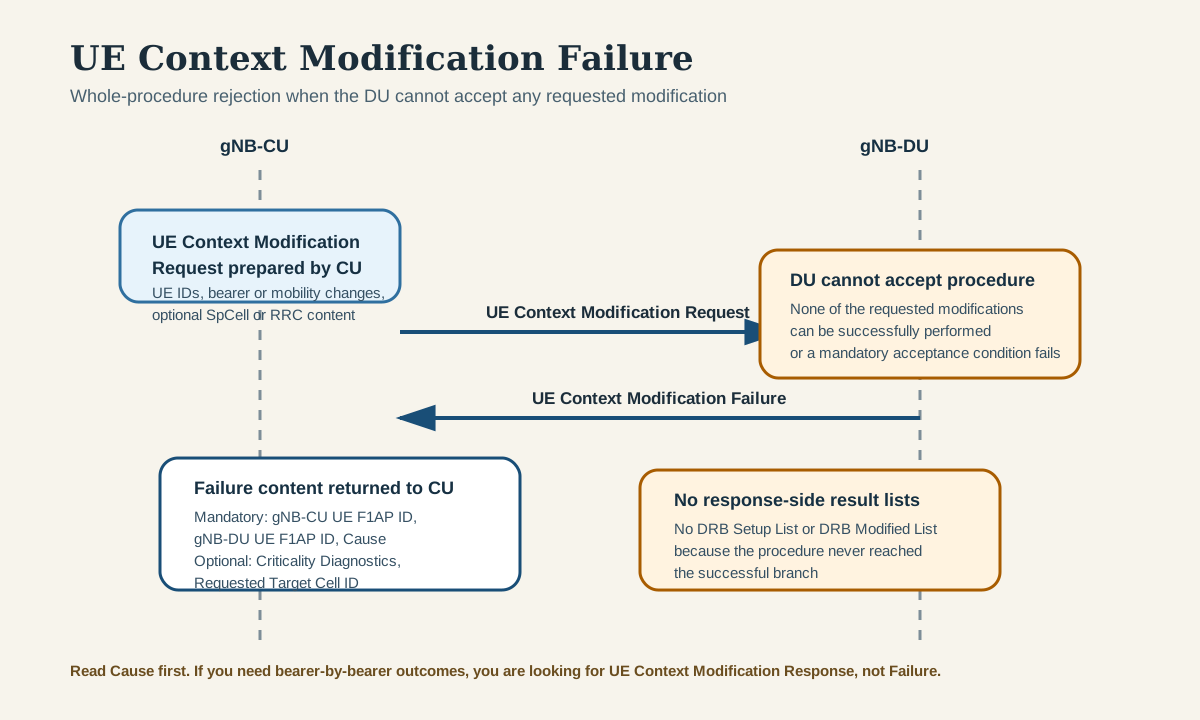
UE Context Modification Failure is the NGAP unsuccessfulOutcome message sent by the NG-RAN node to the AMF when a requested UE context modification cannot be applied.
NG-RAN evaluates UE Context Modification Request and cannot apply the requested context change because of unsupported content, invalid state, resource limitation, policy or security mismatch, or protocol handling problems.
Main purpose
Reports that NG-RAN could not apply an AMF-requested UE context modification, identifies the UE with AMF and RAN UE NGAP IDs, provides the failure reason through Cause, and may include Criticality Diagnostics for protocol-level troubleshooting.
What is UE Context Modification Failure in simple terms?
UE Context Modification Failure is the NGAP unsuccessfulOutcome message sent by the NG-RAN node to the AMF when a requested UE context modification cannot be applied.
Reports that NG-RAN could not apply an AMF-requested UE context modification, identifies the UE with AMF and RAN UE NGAP IDs, provides the failure reason through Cause, and may include Criticality Diagnostics for protocol-level troubleshooting.
Why this message matters
UE Context Modification Failure means the gNB could not apply a requested change to an existing UE context. Read Cause first, then compare it with the original request.
Where this message appears in the call flow
UE Context Modification unsuccessful outcome
Failure branch: AMF requests an in-place context change, but NG-RAN cannot apply the requested modification.
Call flow position: NG-RAN sends this unsuccessfulOutcome after AMF requested a change to an already established UE context and NG-RAN could not apply it.
Typical state: The requested UE context modification is not accepted; the existing context continues according to prior or AMF-controlled state.
Preconditions:
UE Context Modification Request was received by NG-RAN.
AMF UE NGAP ID and RAN UE NGAP ID identify the existing UE context.
NG-RAN determined that the requested modification could not be applied.
Next likely message: AMF failure handling based on Cause
Cause-driven modification rejection
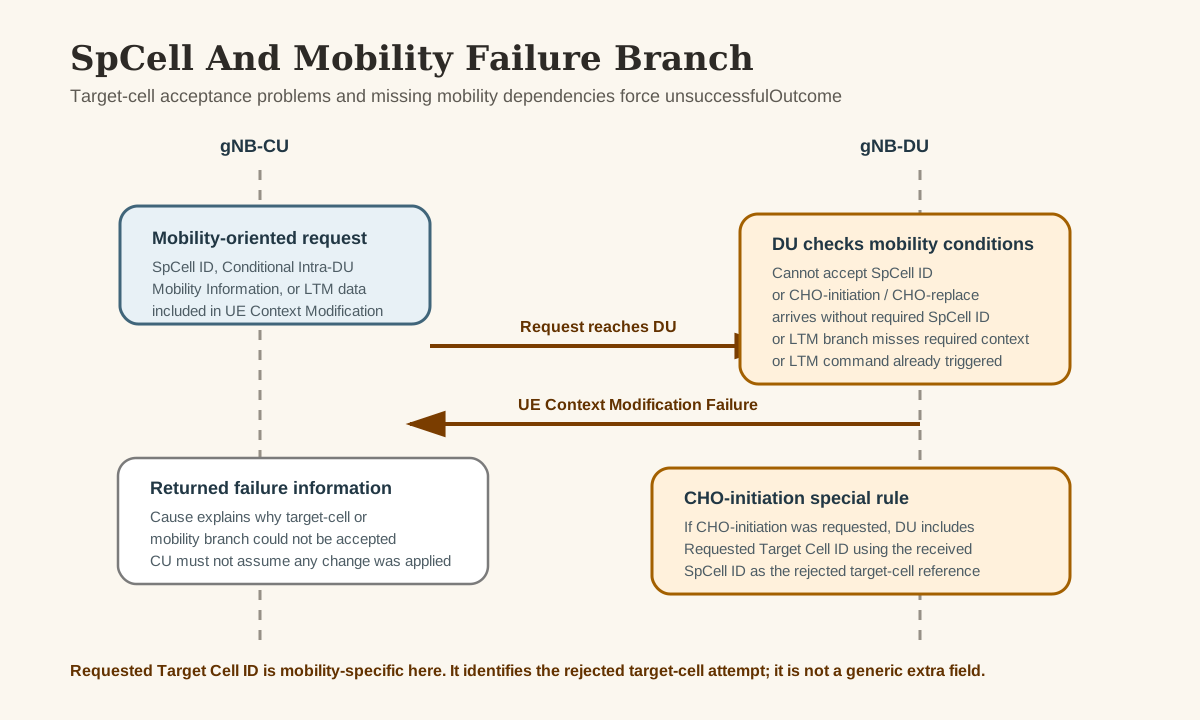
Cause branch: the failure reason may relate to unsupported parameters, invalid context state, radio resources, security, policy, or protocol handling.
Call flow position: The mandatory Cause IE identifies the domain or reason for rejecting the requested UE context modification.
Typical state: AMF must compare the failed request content with NG-RAN support, context state, resource availability, and protocol diagnostics.
Preconditions:
Cause IE is present and decoded.
The original request content is available for comparison.
Next likely message: Corrected retry, fallback handling, or context release
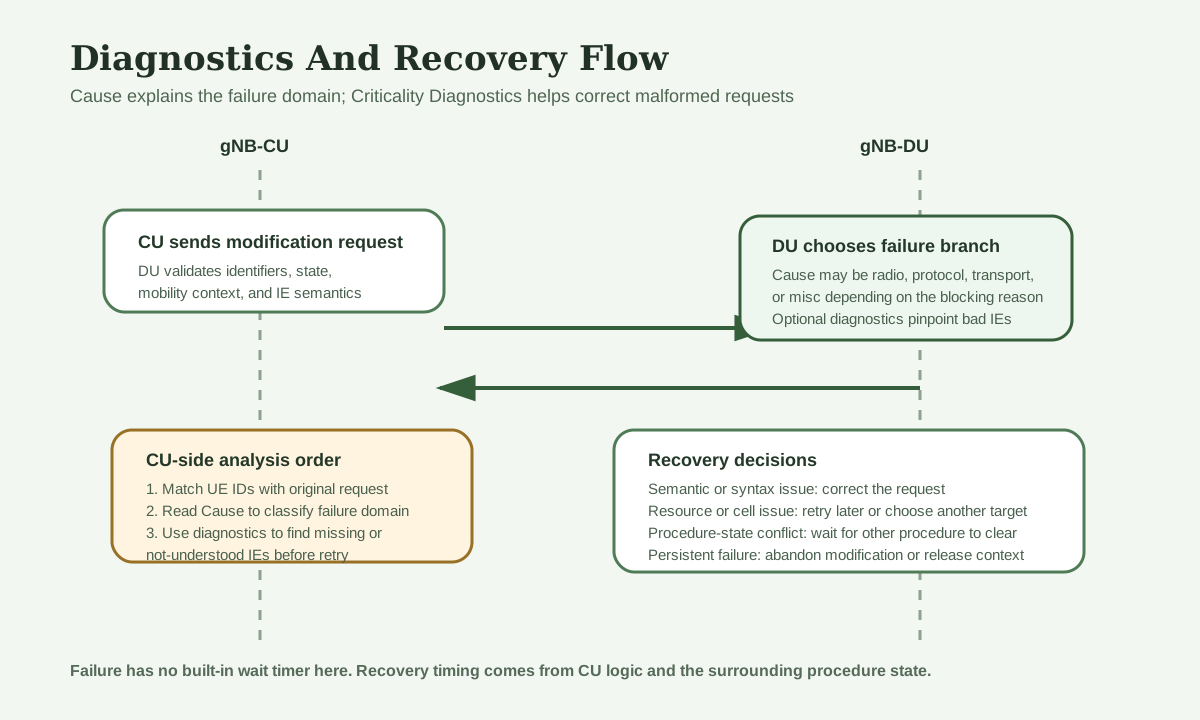
Diagnostics-assisted recovery
Diagnostics branch: Cause drives failure classification, while Criticality Diagnostics can identify problematic IEs when present.
Call flow position: Criticality Diagnostics may be present when the failure relates to IE-level, procedure-level, or criticality-handling problems.
Typical state: The failure may be repairable by correcting the original request rather than releasing the whole UE context.
Preconditions:
Criticality Diagnostics is present.
The failed request carried an unsupported, missing, malformed, or inconsistent IE.
Next likely message: Corrected UE Context Modification Request or AMF cleanup decision
Transport / encapsulation: NGAP over SCTP/IP between AMF and NG-RAN
Security context: The message reports failure to apply changes to an existing UE-associated NGAP context. It does not release the UE context by itself and does not create a new security baseline.
Message Structure Overview
UE Context Modification Failure is the NG-RAN-to-AMF unsuccessfulOutcome for the UE Context Modification procedure.
It follows UE Context Modification Request when NG-RAN cannot apply the requested delta.
AMF UE NGAP ID and RAN UE NGAP ID bind the failure to the correct UE-associated NGAP context.
Cause is mandatory and is the first field to inspect for troubleshooting.
Criticality Diagnostics is optional and helps explain protocol-level issues when present.
This message does not release the UE context by itself.
ASN.1 for 5G NGAP - UE Context Modification Failure
UEContextModificationFailure ::= SEQUENCE {
  protocolIEs ProtocolIE-Container { {UEContextModificationFailure-IEs} },
  ...
}

UEContextModificationFailure-IEs NGAP-PROTOCOL-IES ::= {
  { ID id-AMF-UE-NGAP-ID          CRITICALITY reject TYPE AMF-UE-NGAP-ID          PRESENCE mandatory } |
  { ID id-RAN-UE-NGAP-ID          CRITICALITY reject TYPE RAN-UE-NGAP-ID          PRESENCE mandatory } |
  { ID id-Cause                   CRITICALITY ignore TYPE Cause                   PRESENCE mandatory } |
  { ID id-CriticalityDiagnostics  CRITICALITY ignore TYPE CriticalityDiagnostics  PRESENCE optional  },
  ...
}
How to read this ASN.1
Decode the UE identity pair first, then Cause. Use Criticality Diagnostics as supporting evidence when present, but do not skip comparison with the original UE Context Modification Request.
5G NGAP - UE Context Modification Failure - Example Dump
Treat this as a teaching example based on the spec structure, not as a captured network trace.
The message reports failure of the modification attempt, not release of the UE context.
Cause is the primary reason field; Criticality Diagnostics is additional protocol context when present.
Compare this failure with the exact optional IEs in the original UE Context Modification Request.
Important Information Elements
IE
Presence
Description
Message Type
Mandatory
Identifies the NGAP PDU as UE CONTEXT MODIFICATION FAILURE.
AMF UE NGAP ID
Mandatory
Mandatory AMF-side UE identifier used to correlate the failure with the original request and the established UE context.
RAN UE NGAP ID
Mandatory
Mandatory NG-RAN-side UE identifier used to identify the radio-side UE context that could not be modified.
Cause
Mandatory
Mandatory failure reason explaining why NG-RAN could not apply the requested context change.
Criticality Diagnostics
Optional
Optional diagnostics that can identify IE-level, procedure-level, or criticality-handling issues behind the failure.
Detailed field explanation
Message Type
Identifies the NGAP PDU as UE CONTEXT MODIFICATION FAILURE.
Presence: Mandatory
In practice: In practice, compare this field with the original request and with any later release-dependent optional fields so you can see whether the network accepted the same service model the UE asked for.
AMF UE NGAP ID
Mandatory AMF-side UE identifier used to correlate the failure with the original request and the established UE context.
Presence: Mandatory
In practice: In practice, compare this field with the original request and with any later release-dependent optional fields so you can see whether the network accepted the same service model the UE asked for.
RAN UE NGAP ID
Mandatory NG-RAN-side UE identifier used to identify the radio-side UE context that could not be modified.
Presence: Mandatory
In practice: In practice, compare this field with the original request and with any later release-dependent optional fields so you can see whether the network accepted the same service model the UE asked for.
Cause
Mandatory failure reason explaining why NG-RAN could not apply the requested context change.
Presence: Mandatory
In practice: In practice, compare this field with the original request and with any later release-dependent optional fields so you can see whether the network accepted the same service model the UE asked for.
Criticality Diagnostics
Optional diagnostics that can identify IE-level, procedure-level, or criticality-handling issues behind the failure.
Presence: Optional
In practice: In practice, compare this field with the original request and with any later release-dependent optional fields so you can see whether the network accepted the same service model the UE asked for.
What to check in logs and traces
Confirm the failure follows a matching UE Context Modification Request.
Verify AMF UE NGAP ID and RAN UE NGAP ID match the request and active context.
Decode Cause before making assumptions about the failure domain.
Check Criticality Diagnostics when present.
Compare requested modification content with NG-RAN support, capability, and current context state.
Confirm no UE Context Modification Response exists for the same attempt.
Avoid treating this failure as UE context release unless later release signaling appears.
Common Issues and Troubleshooting
Modification Failure is interpreted as UE context release.
Likely cause: The unsuccessfulOutcome is being confused with Release Request, Release Command, or Release Complete.
What to inspect: Check the procedureCode, message name, and whether any UE Context Release messages follow.
Next step: Analyze it first as a failed modification; only move to release analysis if release signaling appears later.
The failure reason is unclear.
Likely cause: Cause IE may have been skipped or mapped too broadly.
What to inspect: Decode Cause first and compare it with the requested optional IEs in UE Context Modification Request.
Next step: Use the cause domain to decide whether the fix is request correction, resource recovery, capability alignment, or fallback handling.
The same modification repeatedly fails.
Likely cause: AMF may be retrying unsupported or inconsistent request content without correcting the original delta.
What to inspect: Compare repeated requests field by field and check whether Criticality Diagnostics identifies a problematic IE.
Next step: Correct or remove the unsupported IE before retrying.
Failure appears after mobility or re-establishment.
Likely cause: The modification may target a stale or changed UE context mapping.
What to inspect: Rebuild AMF UE NGAP ID and RAN UE NGAP ID continuity across mobility, release, and new access branches.
Next step: Retarget the current live context or release stale state instead of retrying blindly.
A security or policy update fails while the UE remains connected.
Likely cause: The context can remain active even when the requested security, RFSP, paging, bitrate, or policy delta was not accepted.
What to inspect: Check whether later AMF behavior retries, falls back, or commands release.
Next step: Separate failed delta application from overall UE connectivity status.
LTE / 5G / Variant Comparison
Compared with UE Context Modification Request
Request carries the AMF-side delta. Failure reports that NG-RAN could not apply that delta.
Compared with UE Context Modification Response
Response is the successful outcome. Failure is the unsuccessful outcome and must be interpreted through Cause.
Compared with UE Context Release Request
Modification Failure rejects a requested context change. Release Request asks AMF to release the whole UE-associated context.
FAQ
What is UE Context Modification Failure in NGAP?
It is the NG-RAN-to-AMF unsuccessfulOutcome sent when NG-RAN cannot apply an AMF-requested UE context modification.
Who sends UE Context Modification Failure?
The NG-RAN node sends UE Context Modification Failure to the AMF.
When is this message used?
It is used after UE Context Modification Request when the requested context change cannot be accepted or applied by NG-RAN.
What does the Cause IE mean?
Cause explains why the requested modification failed, such as radio, transport, protocol, policy, security, or miscellaneous reasons.
Does UE Context Modification Failure release the UE context?
No. It reports failure of the modification attempt. Release only occurs if separate UE Context Release signaling follows.
What is the difference between Modification Response and Modification Failure?
Modification Response is the successful outcome. Modification Failure is the unsuccessful outcome and carries Cause.
What should be checked before troubleshooting this message?
Match both UE NGAP IDs, decode Cause, inspect Criticality Diagnostics if present, and compare the original Modification Request content.
Can Criticality Diagnostics appear in this message?
Yes. Criticality Diagnostics is optional and may help identify IE-level or procedure-level protocol issues.
Decode this message with the 3GPP Decoder, inspect the related message database, or open the matching call flow to see where this signaling step fits in the full procedure.