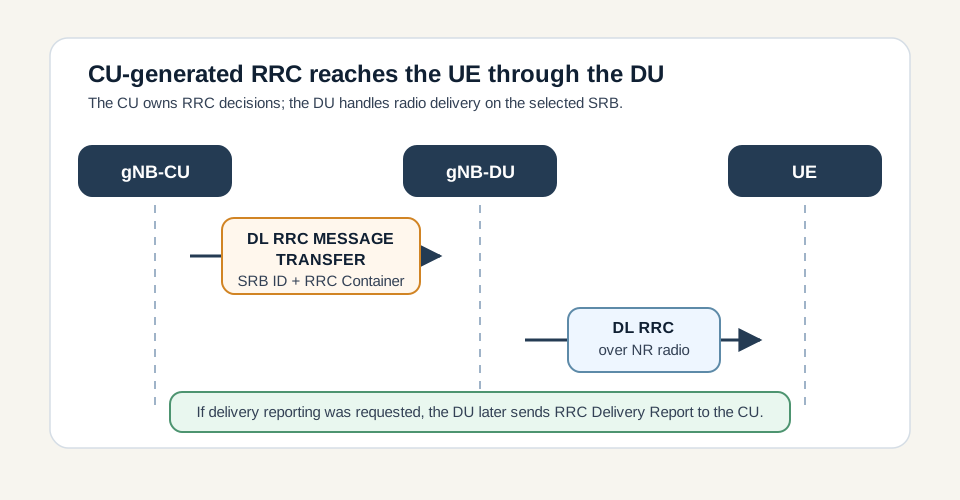
DL RRC Message Transfer is the F1AP UE-associated message the gNB-CU sends to the gNB-DU to deliver a downlink RRC message toward the UE over the selected SRB.
The gNB-CU generates a downlink RRC message for a UE after initial access, resume, re-establishment, security, bearer, mobility, or release handling and needs the gNB-DU to transmit it over NR radio.
Main purpose
Transfers downlink RRC signaling from CU to DU, enables CU-centralized RRC processing, transports transparent RRC payloads, supports UE setup, resume, mobility, security, bearer, release, and re-establishment procedures, and separates CU control logic from DU radio delivery.
DL RRC Message Transfer is the F1AP UE-associated message the gNB-CU sends to the gNB-DU to deliver a downlink RRC message toward the UE over the selected SRB.
Transfers downlink RRC signaling from CU to DU, enables CU-centralized RRC processing, transports transparent RRC payloads, supports UE setup, resume, mobility, security, bearer, release, and re-establishment procedures, and separates CU control logic from DU radio delivery.
Why this message matters
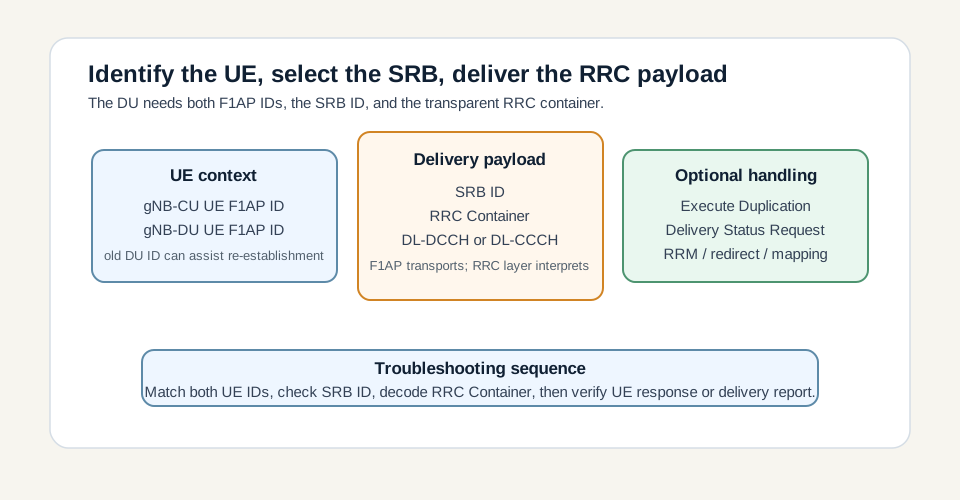
DL RRC Message Transfer is the CU's way to hand a downlink RRC message to the DU for UE delivery. Match both UE IDs, check SRB ID, decode the RRC container, and then look for a UE response or RRC Delivery Report.
Where this message appears in the call flow
Downlink RRC delivery
Delivery branch: the CU sends the RRC container over F1-C and the DU handles NR radio transmission.
Call flow position: The CU has generated an RRC message and sends DL RRC Message Transfer so the DU can deliver it to the UE on the indicated SRB.
Typical state: A UE-associated logical F1 connection normally exists; if it does not, reception of this message can establish it.
Preconditions:
The CU knows the UE F1AP context.
The downlink RRC payload is encoded in RRC-Container.
SRB ID identifies the radio bearer to use.
Next likely message: UL RRC Message Transfer or RRC Delivery Report
Payload, SRB, and delivery-status handling
Decode branch: match UE IDs, confirm SRB ID, decode the transparent RRC payload, and check status reporting if requested.
Call flow position: SRB ID selects the signaling bearer, RRC-Container carries the transparent RRC message, and optional delivery status request asks the DU to report successful delivery later.
Typical state: The DU forwards the RRC payload toward the UE without owning the full RRC procedure semantics.
Preconditions:
Both UE F1AP IDs are present.
RRC-Container contains a DL-DCCH or DL-CCCH message.
Next likely message: RRC Delivery Report if requested, otherwise UE response when the RRC procedure expects one
DL RRC versus UL RRC and NGAP
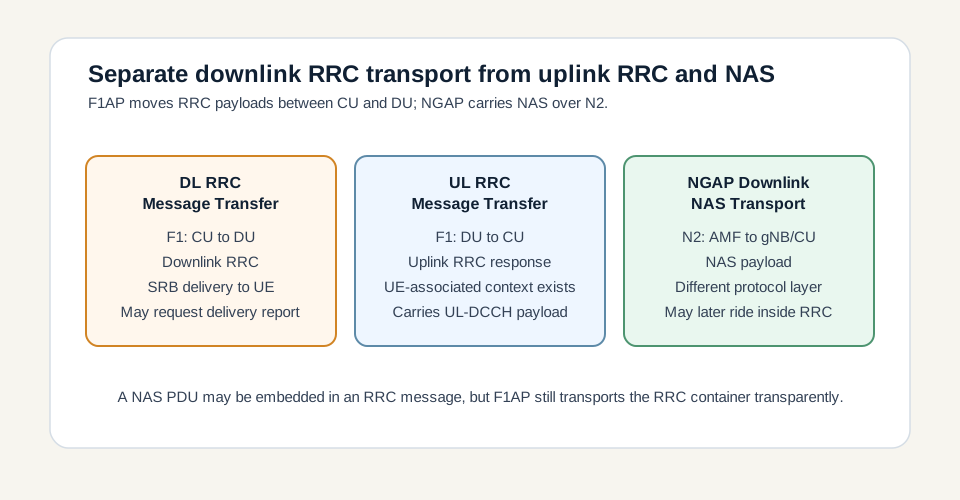
Scope branch: separate F1 downlink RRC transport from uplink RRC response and N2 NAS transport.
Call flow position: DL RRC Message Transfer is the CU-to-DU F1 step. UL RRC Message Transfer is the DU-to-CU response path. NGAP Downlink NAS Transport is a different N2 procedure.
Typical state: Trace analysis should separate RRC payload transport from NAS transport even when NAS is embedded inside RRC.
Preconditions:
A downlink RRC payload exists for UE-facing transmission.
Next likely message: UE response over UL RRC Message Transfer or later NGAP/RRC procedure handling
Transport / encapsulation: F1AP over SCTP/IP between gNB-CU and gNB-DU
Security context: DL RRC Message Transfer does not establish NAS security by itself. It transports a downlink RRC payload, which may carry NAS information depending on the RRC procedure stage.
Message Structure Overview
DL RRC Message Transfer is sent by the gNB-CU to the gNB-DU to transfer downlink RRC content toward the UE.
The procedure uses UE-associated F1AP signaling. If a UE-associated logical F1 connection does not already exist, it can be established when the DU receives this message.
The mandatory core is Message Type, both UE F1AP IDs, SRB ID, and RRC-Container.
RRC-Container carries a transparent DL-DCCH message encapsulated in a PDCP PDU or a DL-CCCH message. F1AP transports the bytes; RRC semantics are handled by the RRC layer.
RRC Delivery Status Request can make the DU send a later RRC Delivery Report.
This page follows the Release 18 message table in TS 38.473. The everyday decode path is both UE IDs, SRB ID, RRC-Container, then optional duplication or delivery-status handling.
Treat this as a teaching example based on the expected message structure, not as a captured network trace.
Match both UE F1AP IDs before following the RRC payload.
Decode SRB ID before the RRC container because SRB0, SRB1, and SRB2 point to different RRC delivery contexts.
If RRC Delivery Status Request is present, look for a later RRC Delivery Report from the DU.
If old gNB-DU UE F1AP ID or UE Context not retrievable appears, analyze the trace as a re-establishment or context-recovery branch.
Important Information Elements
IE
Presence
Description
Message Type
Mandatory
Identifies the F1AP PDU as DL RRC MESSAGE TRANSFER.
gNB-CU UE F1AP ID
Mandatory
Mandatory CU-side UE identifier for the UE-associated logical F1 connection.
gNB-DU UE F1AP ID
Mandatory
Mandatory DU-side UE identifier used by the DU to locate the stored UE context.
SRB ID
Mandatory
Mandatory signaling radio bearer identifier used to deliver the RRC message toward the UE.
RRC-Container
Mandatory
Mandatory transparent container carrying the downlink RRC DL-DCCH message encapsulated in a PDCP PDU, or a DL-CCCH message.
old gNB-DU UE F1AP ID
Optional
Optional old DU-side UE identifier used during RRC connection re-establishment so the DU can retrieve and release old context.
Execute Duplication
Optional
Optional indication asking the DU to perform configured CA-based or multi-path relay-based duplication for the SRB.
RRC Delivery Status Request
Optional
Optional request asking the DU to send an RRC Delivery Report after successful delivery of the RRC message.
RAT-Frequency Priority Information
Optional
Optional RRM information the DU may use for radio resource management.
UE Context not retrievable
Optional
Optional indication used in re-establishment handling; it may be paired with Redirected RRC message or network-sharing assistance.
Redirected RRC message
Optional
Optional RRC container used when the UE context is not retrievable and the CU redirects the UE as specified by the architecture.
New gNB-CU UE F1AP ID
Optional
Optional replacement CU-side UE identifier for further F1AP signaling when supported.
Additional RRM Policy Index / SRB Mapping Info / positioning assistance
Optional
Optional Release 18 fields used for RRM policy, relay SRB mapping, network-sharing assistance, or area-specific SRS positioning handling.
Detailed field explanation
Message Type
Identifies the F1AP PDU as DL RRC MESSAGE TRANSFER.
Presence: Mandatory
In practice: In practice, compare this field with the original request and with any later release-dependent optional fields so you can see whether the network accepted the same service model the UE asked for.
gNB-CU UE F1AP ID
Mandatory CU-side UE identifier for the UE-associated logical F1 connection.
Presence: Mandatory
In practice: In practice, compare this field with the original request and with any later release-dependent optional fields so you can see whether the network accepted the same service model the UE asked for.
gNB-DU UE F1AP ID
Mandatory DU-side UE identifier used by the DU to locate the stored UE context.
Presence: Mandatory
In practice: In practice, compare this field with the original request and with any later release-dependent optional fields so you can see whether the network accepted the same service model the UE asked for.
SRB ID
Mandatory signaling radio bearer identifier used to deliver the RRC message toward the UE.
Presence: Mandatory
In practice: In practice, compare this field with the original request and with any later release-dependent optional fields so you can see whether the network accepted the same service model the UE asked for.
RRC-Container
Mandatory transparent container carrying the downlink RRC DL-DCCH message encapsulated in a PDCP PDU, or a DL-CCCH message.
Presence: Mandatory
In practice: In practice, compare this field with the original request and with any later release-dependent optional fields so you can see whether the network accepted the same service model the UE asked for.
old gNB-DU UE F1AP ID
Optional old DU-side UE identifier used during RRC connection re-establishment so the DU can retrieve and release old context.
Presence: Optional
In practice: In practice, compare this field with the original request and with any later release-dependent optional fields so you can see whether the network accepted the same service model the UE asked for.
Execute Duplication
Optional indication asking the DU to perform configured CA-based or multi-path relay-based duplication for the SRB.
Presence: Optional
In practice: In practice, compare this field with the original request and with any later release-dependent optional fields so you can see whether the network accepted the same service model the UE asked for.
RRC Delivery Status Request
Optional request asking the DU to send an RRC Delivery Report after successful delivery of the RRC message.
Presence: Optional
In practice: In practice, compare this field with the original request and with any later release-dependent optional fields so you can see whether the network accepted the same service model the UE asked for.
RAT-Frequency Priority Information
Optional RRM information the DU may use for radio resource management.
Presence: Optional
In practice: In practice, compare this field with the original request and with any later release-dependent optional fields so you can see whether the network accepted the same service model the UE asked for.
UE Context not retrievable
Optional indication used in re-establishment handling; it may be paired with Redirected RRC message or network-sharing assistance.
Presence: Optional
In practice: In practice, compare this field with the original request and with any later release-dependent optional fields so you can see whether the network accepted the same service model the UE asked for.
Redirected RRC message
Optional RRC container used when the UE context is not retrievable and the CU redirects the UE as specified by the architecture.
Presence: Optional
In practice: In practice, compare this field with the original request and with any later release-dependent optional fields so you can see whether the network accepted the same service model the UE asked for.
New gNB-CU UE F1AP ID
Optional replacement CU-side UE identifier for further F1AP signaling when supported.
Presence: Optional
In practice: In practice, compare this field with the original request and with any later release-dependent optional fields so you can see whether the network accepted the same service model the UE asked for.
Additional RRM Policy Index / SRB Mapping Info / positioning assistance
Optional Release 18 fields used for RRM policy, relay SRB mapping, network-sharing assistance, or area-specific SRS positioning handling.
Presence: Optional
In practice: In practice, compare this field with the original request and with any later release-dependent optional fields so you can see whether the network accepted the same service model the UE asked for.
What to check in logs and traces
Confirm message direction is gNB-CU to gNB-DU.
Verify gNB-CU UE F1AP ID and gNB-DU UE F1AP ID match an active or newly established UE-associated F1 connection.
Check SRB ID and confirm it matches the expected RRC message channel.
Confirm RRC-Container is present and decodable as DL-DCCH or DL-CCCH.
Inspect Execute Duplication when SRB duplication is configured.
If RRC Delivery Status Request is present, verify a later RRC Delivery Report.
Separate RRC container decoding from any NAS payload embedded inside the RRC message.
Common Issues and Troubleshooting
No UE response after DL RRC Message Transfer.
Likely cause: The RRC payload may not have reached the UE, the SRB ID may be wrong, or the UE rejected or could not decode the message.
What to inspect: Check SRB ID, RRC-Container bytes, DU radio logs, HARQ/RLC/PDCP delivery, and RRC Delivery Report if requested.
Next step: Fix bearer selection or RRC encoding before expecting a valid UL RRC response.
DU cannot locate the UE context.
Likely cause: The DU-side UE ID may be stale, the logical F1 connection may not exist, or re-establishment needs old gNB-DU UE F1AP ID.
What to inspect: Compare both UE F1AP IDs, old gNB-DU UE F1AP ID, UE Context not retrievable, and any later Release Request or Error Indication.
Next step: Repair UE ID correlation or use the re-establishment handling expected by the procedure.
Trace analysis confuses NAS and RRC.
Likely cause: A NAS PDU embedded inside an RRC message is being treated as if F1AP directly carries NAS.
What to inspect: Decode F1AP first, then RRC-Container, then any NAS payload inside the RRC message.
Next step: Separate F1, RRC, and NGAP/NAS layers in the trace timeline.
LTE / 5G / Variant Comparison
Compared with UL RRC Message Transfer
DL RRC Message Transfer carries CU-originated downlink RRC toward the UE. UL RRC Message Transfer carries UE-originated uplink RRC from DU to CU after the UE-associated connection exists.
Compared with Initial UL RRC Message Transfer
Initial UL RRC Message Transfer carries the first UE RRC message from DU to CU. DL RRC Message Transfer is often the CU response path toward the UE.
Compared with NGAP Downlink NAS Transport
NGAP Downlink NAS Transport carries NAS from AMF to gNB/CU over N2. DL RRC Message Transfer carries an RRC container from CU to DU over F1-C; NAS may be embedded inside RRC later.
FAQ
What is DL RRC Message Transfer in F1AP?
It is the F1AP message the gNB-CU sends to the gNB-DU to transfer a downlink RRC message toward the UE.
Who sends DL RRC Message Transfer?
The gNB-CU sends DL RRC Message Transfer to the gNB-DU over F1-C.
What RRC messages can it carry?
It commonly carries RRCSetup, RRCResume, RRCReconfiguration, SecurityModeCommand, RRCRelease, or other downlink RRC payloads.
What is the purpose of the RRC Container?
RRC-Container carries the transparent downlink RRC payload. F1AP transports it, while the UE and CU RRC layers interpret the RRC semantics.
What is SRB ID used for?
SRB ID tells the DU which signaling radio bearer should carry the downlink RRC message toward the UE.
How is this different from UL RRC Message Transfer?
DL RRC Message Transfer is CU to DU for downlink RRC. UL RRC Message Transfer is DU to CU for uplink RRC.
How is this different from NGAP Downlink NAS Transport?
DL RRC Message Transfer is F1-C RRC transport between CU and DU. NGAP Downlink NAS Transport is N2 NAS transport between AMF and gNB/CU.
How do you troubleshoot DL RRC Message Transfer issues?
Check both UE F1AP IDs, SRB ID, RRC-Container decode, DU context lookup, duplication settings, delivery report behavior, and the expected UE uplink response.
Decode this message with the 3GPP Decoder, inspect the related message database, or open the matching call flow to see where this signaling step fits in the full procedure.