Handover Failure is the target-NG-RAN-to-AMF message used on the unsuccessful branch of Handover Resource Allocation to indicate that target-side resource preparation failed and the handover cannot continue on the success path.
Message Fact Sheet
Protocol
ngap
Network
5g
Spec
3GPP TS 38.413
Spec Section
Clause 8.4.2.3, clause 8.4.2.4, and clause 9.2.3.6 (Release 18 baseline)
Direction
Target NG-RAN node -> AMF
Message Type
UE Mobility Management Message
Full message name
5G NGAP - Handover Failure
Protocol
NGAP
Technology
5G
Direction
Target NG-RAN node -> AMF
Interface
N2 / NG-C
Signaling bearer / channel
UE-associated NGAP signaling / SCTP carried NGAP initiatingMessage from target to AMF in the handover resource-allocation branch
Typical trigger
The target NG-RAN cannot admit any PDU session resources or encounters another failure during target-side handover preparation after receiving Handover Request.
Main purpose
Informs the AMF that target-side handover resource allocation failed, provides the Cause for that failure, and optionally returns diagnostics or failure transparent-container information for source-side analysis.
Handover Failure is the target-NG-RAN-to-AMF message used on the unsuccessful branch of Handover Resource Allocation to indicate that target-side resource preparation failed and the handover cannot continue on the success path.
Informs the AMF that target-side handover resource allocation failed, provides the Cause for that failure, and optionally returns diagnostics or failure transparent-container information for source-side analysis.
Why this message matters
Handover Failure is the target NG-RAN telling the AMF that it could not prepare resources for the incoming UE, so the handover cannot continue on the successful target-preparation path.
Where this message appears in the call flow
Unsuccessful outcome of Handover Resource Allocation
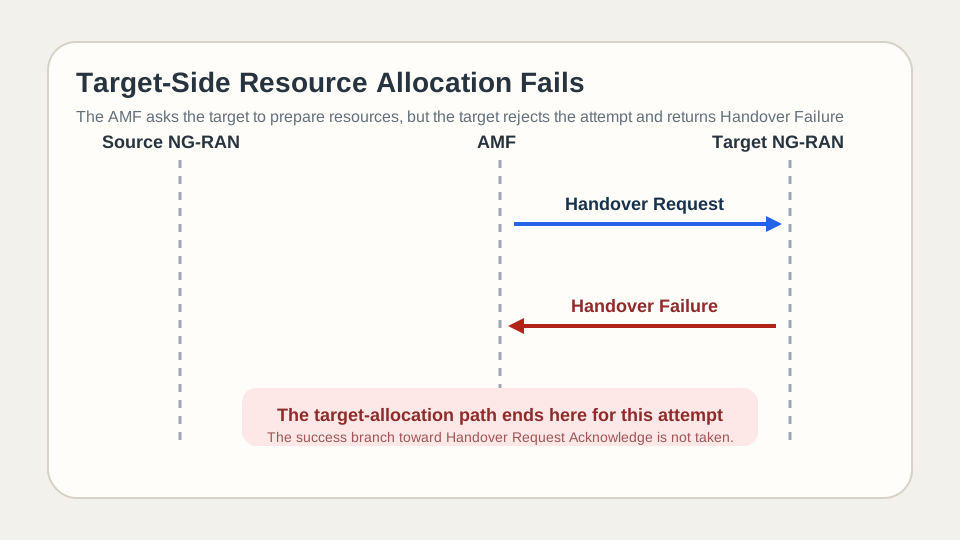
Failure branch: the target cannot complete allocation and returns Handover Failure to the AMF.
Call flow position: The source NG-RAN already triggered handover via Handover Required, the AMF sent Handover Request to the target, and the target now reports that target-side preparation failed.
Typical state: The target-side allocation path has failed, so the handover cannot continue on the success branch.
Preconditions:
The AMF sent Handover Request to the target NG-RAN.
The target attempted admission and resource allocation for the incoming UE.
The target could not complete preparation successfully.
Next likely message: AMF-side failure handling rather than Handover Request Acknowledge and later Handover Command
Target-side resource allocation fails
Failure branch: the target cannot complete allocation and returns Handover Failure to the AMF.
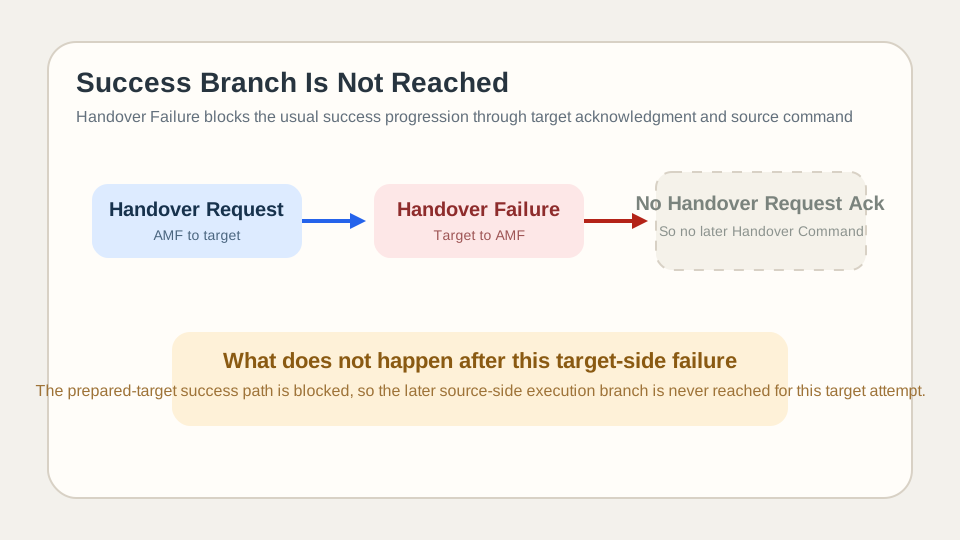
Success branch is not reached
Stop branch: once Handover Failure is returned, the successful path through Handover Request Acknowledge and later Handover Command is not taken.
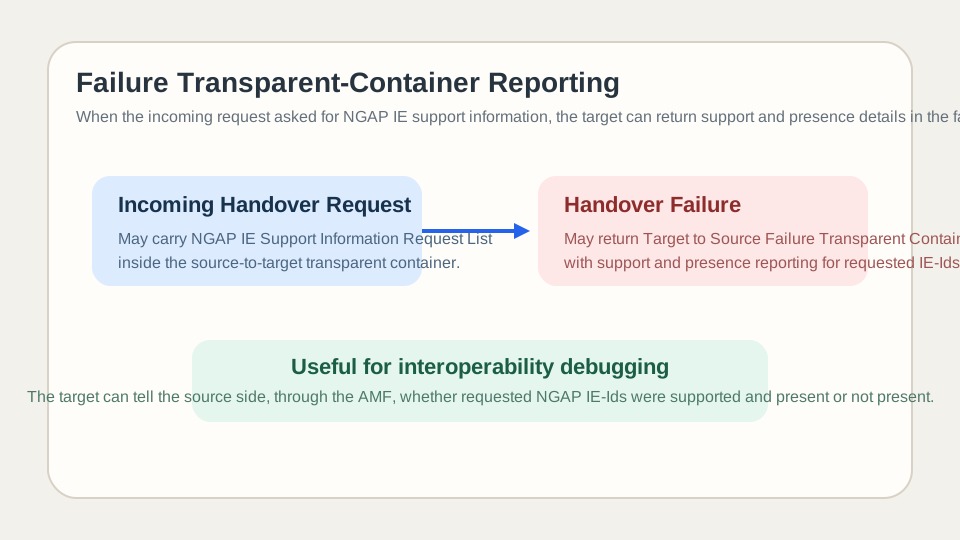
Failure transparent-container reporting
Reporting branch: the target can include failure transparent-container information when the incoming request asked for NGAP IE support and presence reporting.
Domain: UE mobility management and unsuccessful target-side handover resource allocation
Signaling bearer: UE-associated NGAP signaling
Logical channel: SCTP carried NGAP initiatingMessage from target to AMF in the handover resource-allocation branch
Transport / encapsulation: NGAP over SCTP/IP between target NG-RAN and AMF
Security context: The message reports failure on an existing UE-associated handover branch. It does not move the UE to the target and does not create a successful target execution context.
Message Structure Overview
Handover Failure is the target-NG-RAN-to-AMF failure message in the Handover Resource Allocation procedure.
AMF UE NGAP ID is mandatory and identifies the affected UE at the AMF. RAN UE NGAP ID is not part of this message definition.
Cause is mandatory and explains why the target could not complete preparation.
Criticality Diagnostics and Target to Source Failure Transparent Container are optional but operationally useful.
The success path through Handover Request Acknowledge and later Handover Command is not taken for this failed target attempt.
Decode this message in two steps: first match the AMF UE NGAP ID to the failed handover attempt, then read Cause immediately. The optional failure transparent container becomes especially useful for interoperability analysis when the target was asked to report NGAP IE support and presence information.
Treat this as a teaching example based on the spec structure, not as a captured trace.
The message is compact because its main payload is the Cause plus optional source-facing failure detail.
Do not expect Handover Request Acknowledge for the same failed target allocation attempt.
If the transparent container is present, read it together with the incoming Handover Request transparent container and any IE support request list.
Important Information Elements
IE
Presence
Description
Message Type
Mandatory
Identifies the NGAP PDU as Handover Failure.
AMF UE NGAP ID
Mandatory
Mandatory AMF-side UE identifier used to tie the failure to the correct handover attempt at the AMF.
Cause
Mandatory
Mandatory reason the target-side allocation failed. This is the primary field to inspect in traces.
Criticality Diagnostics
Optional
Optional protocol diagnostics useful when IE handling, message content, or criticality behavior contributed to the failure.
Target to Source Failure Transparent Container
Optional
Optional failure context from the target. It can carry NGAP IE support and presence information back toward the source side when requested through the incoming transparent container.
Detailed field explanation
Message Type
Identifies the NGAP PDU as Handover Failure.
Presence: Mandatory
In practice: In practice, compare this field with the original request and with any later release-dependent optional fields so you can see whether the network accepted the same service model the UE asked for.
AMF UE NGAP ID
Mandatory AMF-side UE identifier used to tie the failure to the correct handover attempt at the AMF.
Presence: Mandatory
In practice: In practice, compare this field with the original request and with any later release-dependent optional fields so you can see whether the network accepted the same service model the UE asked for.
Cause
Mandatory reason the target-side allocation failed. This is the primary field to inspect in traces.
Presence: Mandatory
In practice: In practice, compare this field with the original request and with any later release-dependent optional fields so you can see whether the network accepted the same service model the UE asked for.
Criticality Diagnostics
Optional protocol diagnostics useful when IE handling, message content, or criticality behavior contributed to the failure.
Presence: Optional
In practice: In practice, compare this field with the original request and with any later release-dependent optional fields so you can see whether the network accepted the same service model the UE asked for.
Target to Source Failure Transparent Container
Optional failure context from the target. It can carry NGAP IE support and presence information back toward the source side when requested through the incoming transparent container.
Presence: Optional
In practice: In practice, compare this field with the original request and with any later release-dependent optional fields so you can see whether the network accepted the same service model the UE asked for.
What to check in logs and traces
Confirm Handover Request is followed by Handover Failure from the target NG-RAN for the same AMF UE NGAP ID.
Decode Cause first because it is the key explanation of why target-side allocation failed.
Verify Handover Request Acknowledge is absent for the same failed attempt.
If present, decode Target to Source Failure Transparent Container for source-facing failure detail.
Check algorithm compatibility, mobility restrictions, PNI-NPN rules, and NSSAI limits against the abnormal-condition rules.
Keep this failure distinct from Handover Preparation Failure, which is the AMF-to-source message on the broader failure path.
Common Issues and Troubleshooting
Engineers confuse Handover Failure with Handover Preparation Failure.
Likely cause: Both are failure-side handover messages, but they belong to different legs of the overall flow.
What to inspect: Check sender and receiver first. Handover Failure is target NG-RAN to AMF, while Handover Preparation Failure is AMF to source NG-RAN.
Next step: Map the failed attempt to the correct branch before debugging causes or follow-on actions.
The target seems to reject handover for policy reasons, but the trace review focuses only on radio availability.
Likely cause: Restriction-driven failures such as PLMN, NPN, allowed algorithms, or NSSAI limits may be hidden behind a generic reading of Cause.
What to inspect: Cross-check Cause with abnormal-condition triggers such as encryption and integrity algorithm mismatch, Mobility Restriction List content, and NSSAI limits.
Next step: Validate policy and access constraints before retrying against the same target.
Failure transparent-container detail is missed during interoperability debugging.
Likely cause: Reviewers may ignore the optional Target to Source Failure Transparent Container.
What to inspect: If the incoming Handover Request asked for NGAP IE support information, verify whether the target returned presence and support reporting in the failure transparent container.
Next step: Use that container to troubleshoot source-target compatibility and IE support expectations.
LTE / 5G / Variant Comparison
Compared with Handover Preparation Failure
Handover Failure is target NG-RAN to AMF during Handover Resource Allocation. Handover Preparation Failure is AMF to source NG-RAN on the broader Handover Preparation failure path.
Compared with Handover Request Acknowledge
Handover Request Acknowledge is the success-side target result with prepared resources. Handover Failure is the target-side rejection or failed allocation result.
Why AMF UE NGAP ID is enough here
This message identifies the failed attempt at the AMF using AMF UE NGAP ID. Unlike some other handover messages, its definition does not include RAN UE NGAP ID.
FAQ
What is Handover Failure in 5G NGAP?
It is the target-NG-RAN-to-AMF message used to indicate that target-side handover resource allocation failed.
Who sends Handover Failure?
The target NG-RAN node sends Handover Failure to the AMF.
When is Handover Failure used?
It is used when the target cannot admit any PDU session resources or another failure occurs during target-side handover preparation after Handover Request.
What is the difference between Handover Failure and Handover Preparation Failure?
Handover Failure is target NG-RAN to AMF in the Handover Resource Allocation branch, while Handover Preparation Failure is AMF to source NG-RAN in the broader Handover Preparation failure branch.
What does the Cause IE mean in Handover Failure?
Cause is the main reason target-side allocation failed and is the first field engineers should inspect.
Why does Handover Failure carry only AMF UE NGAP ID and not RAN UE NGAP ID?
That is how the message is defined in clause 9.2.3.6. The failure is correlated at the AMF using AMF UE NGAP ID.
What is Target to Source Failure Transparent Container?
It is an optional failure detail container the target can return, especially when the source asked for NGAP IE support and presence information through the incoming request.
Can security-algorithm mismatch trigger Handover Failure?
Yes. Clause 8.4.2.4 explicitly says the target shall reject using Handover Failure when allowed encryption or integrity algorithms do not match.
Can PLMN or NPN restrictions trigger Handover Failure?
Yes. Unsupported serving PLMN, NPN access restrictions, and related mobility-restriction conditions can explicitly trigger rejection.
What happens if Allowed NSSAI and Partially Allowed NSSAI exceed the supported limit?
Clause 8.4.2.4 states that if Allowed NSSAI plus Partially Allowed NSSAI exceed eight S-NSSAIs, the target considers the procedure failed.
Decode this message with the 3GPP Decoder, inspect the related message database, or open the matching call flow to see where this signaling step fits in the full procedure.